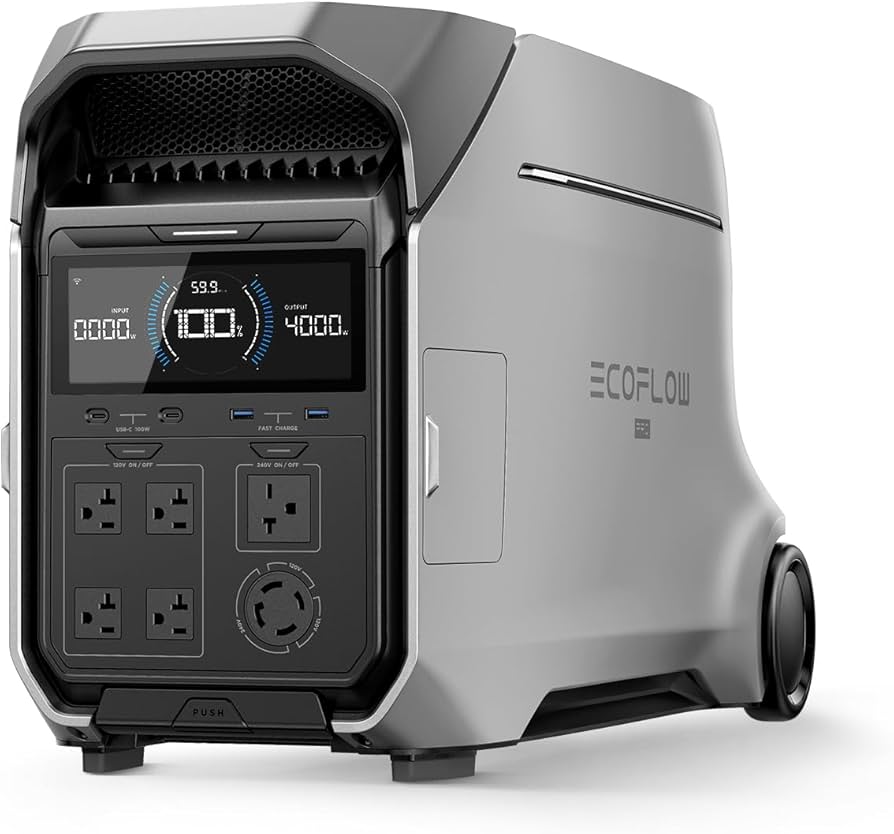
The EcoFlow DELTA Pro 3 is a professional-grade home backup power solution designed for high-capacity energy security, combining a high-capacity portable power station with a scalable energy ecosystem for maximum reliability during grid failures.
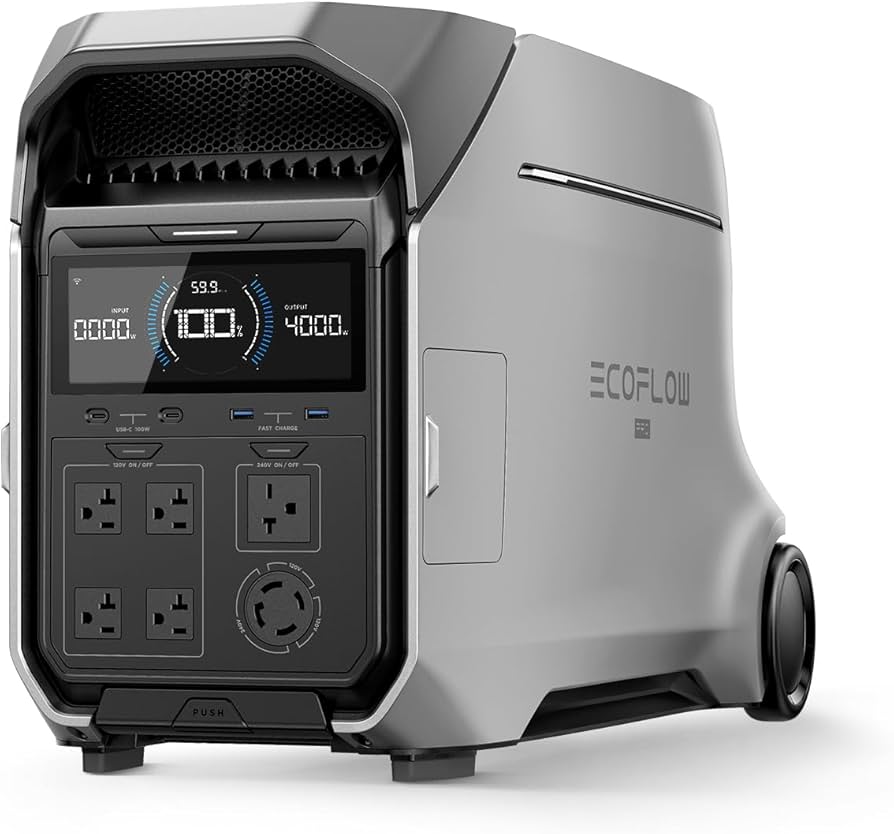
Top Pick: EcoFlow DELTA Pro 3
Score: 9.8/10 — The most versatile high-capacity power station for homeowners and professionals requiring 240V capability and rapid recharging.
EcoFlow DELTA Pro 3
The EcoFlow DELTA Pro 3 represents a significant leap in portable energy, moving beyond simple "battery boxes" into a comprehensive home energy management system. At its core, it leverages Lithium Iron Phosphate (LiFePO4) chemistry, which ensures a long operational lifespan of up to 4,000 cycles before the battery hits 80% capacity. This makes it an ideal investment for those who plan to use their unit daily for solar cycling or weekly for backup testing.
What sets the DELTA Pro 3 apart is its raw power delivery. With 4000W of continuous AC output—and a 6000W X-Boost mode—it can run heavy-duty appliances that typically defeat smaller power stations. From induction cooktops and space heaters to high-draw power tools, the unit handles surges with an 8000W peak. For homeowners, the ability to pair two units for 240V split-phase output means you can potentially power larger 240V appliances, providing a level of security previously reserved for expensive installed standby generators.
Charging versatility is another cornerstone of the DELTA Pro 3. The X-Stream technology allows the unit to hit 80% charge in roughly 50 minutes when plugged into a standard AC wall outlet. For those pursuing energy independence, the 2600W solar input is industry-leading, allowing users to replenish the massive battery bank in under two hours under ideal sunlight conditions. Whether you are looking for the EcoFlow Smart Home Panel 2 for seamless home integration or using it as a mobile power hub for a construction site, the DELTA Pro 3 is built for scale and reliability.
Pros
- Massive 4000W continuous output handles almost any home appliance
- Industry-leading LFP lifespan (4000+ cycles)
- Rapid recharging via AC (3600W) and Solar (2600W)
- Expandable ecosystem up to 48kWh for long-term outages
- 240V split-phase capability when paired with a second unit
- Robust 5-year warranty provides long-term peace of mind
Cons
- Significant weight (113 lbs) makes manual lifting difficult
- High initial cost compared to mid-range stations
- Full home integration requires professional electrical installation
- Cooling fans can be loud during high-wattage discharge
| Feature | Specification |
|---|---|
| Model Number | DELTAPRO3 |
| Battery Capacity | 4096Wh (Expandable to 48kWh) |
| Battery Chemistry | LFP (LiFePO4) |
| Cycle Life | 4,000 cycles to 80% |
| AC Output (Continuous) | 4000W (6000W X-Boost) |
| Surge Output | 8000W |
| Solar Input | 2600W max (11–60V, 15A) |
| AC Charging Speed | Up to 3600W (X-Stream) |
| Weight | ~113 lbs (51.5 kg) |
| Warranty | 5 Years |
Deep Dive: How the DELTA Pro 3 Works
To understand the value of the DELTA Pro 3, one must look at the synergy between its battery chemistry, inverter technology, and charging logic. Unlike traditional lead-acid batteries or early-generation Lithium-ion (NMC) batteries, the LiFePO4 (Lithium Iron Phosphate) cells used here are chemically more stable. They are less prone to thermal runaway and can be charged and discharged thousands of times more than NMC cells before losing capacity. This translates to a decade of use if the unit is cycled once per day.
The Pure Sine Wave Inverter is the heart of the machine. Most cheap power stations use modified sine waves, which can damage sensitive electronics or cause "humming" in motors. The DELTA Pro 3 provides a clean, stable current that mimics the power coming out of your wall outlet, making it safe for CPAP machines, high-end laptops, and medical equipment. The 4000W rating is a continuous measurement, meaning the unit can sustain that load indefinitely, provided it has battery capacity and thermal headroom.
The X-Boost Technology is a clever software-driven feature that allows the unit to power devices that exceed its nominal 4000W rating. It does this by lowering the voltage output slightly to reduce the current draw, allowing the device to run without triggering an overload shutdown. While not suitable for all devices (some precision electronics may not like the voltage drop), it is a lifesaver for resistive loads like space heaters or coffee makers.
Comprehensive Buyer's Guide: Is This Right for You?
Choosing a high-capacity power station is an investment in resilience, similar to securing your basement with a Ridgid SP-650C sump pump, much like installing a whole house water filter or upgrading your whole-house filtration system to ensure basic utility reliability. Before purchasing the DELTA Pro 3, you should perform a "Load Audit" of your home or job site—similar to how we evaluate essential loads in our Wayne ESP25 battery backup guide. Not all power needs are created equal, and the "best" unit is the one that balances your required runtime with your available budget.
Calculating Your Energy Needs
To determine if 4kWh (the base capacity) is enough, list every device you intend to run and its wattage. Remember that "startup wattage" (surge) is often 3x to 5x higher than "running wattage." For example, a refrigerator might run at 150W but require 1200W just to kick the compressor into gear.
- Critical Loads: Router, phone chargers, Ring Alarm Pro security systems (see also our ADT self-setup buying guide), LED lights, small fridge, or an EcoFlow Smart Home Panel 2 for automated circuit management). (Total: ~200-400W). The DELTA Pro 3 can handle this for days.
- Comfort Loads: Window AC unit, coffee maker, microwave, or a GE ADEL50LZ dehumidifier (perfect for basement moisture control) (see our detailed GE ADEL50LZ performance review). (Total: ~1000-2000W). The DELTA Pro 3 can handle these, but capacity will drop quickly.
- Heavy Loads: Central HVAC (see our Bosch mini-split heat pump guide or the MrCool DIY mini-split guide for efficient alternatives like the Carrier mini-split), Electric Oven, Well Pump. (Total: 5000W+). These require the 240V split-phase configuration or the DELTA Pro Ultra.
The Expansion Strategy
One of the strongest arguments for the DELTA Pro 3 is its modularity. You don't need to buy a 20kWh system on day one. You can start with the base unit and add Smart Extra Batteries as your needs grow. This is particularly useful for users who experience seasonal power instability—you might only need the base unit in summer but want four extra batteries for the winter storm season.
Charging Ecosystem Options
The way you recharge the unit determines how "independent" you actually are. Consider these three primary paths:
- Grid-Dependent: You rely on AC wall charging. The X-Stream speed is great, but if the grid is down for a week, you are limited to what you have in the tank.
- Hybrid-Solar: You use a mix of AC and solar. This is the most common setup, using solar to "top off" the battery during the day while using AC for a fast full charge before a trip.
- Fully Off-Grid: You maximize the 2600W solar input with a large roof or ground array. In this scenario, the DELTA Pro 3 becomes a solar generator that can theoretically run indefinitely without ever touching a wall plug.
Step-by-Step Setup and Integration
Setting up a DELTA Pro 3 is straightforward for standalone use, but becomes a professional project when integrated into a home's electrical system.
Standalone Mode (Plug-and-Play)
1. Unboxing and Positioning: Place the unit on a flat, hard surface. Avoid placing it on deep carpet to ensure the bottom vents have clear airflow.
2. Initial Charge: Charge the unit to 100% using the provided AC cable. This calibrates the BMS and ensures you have full capacity from the start.
3. Connecting Devices: Use the AC outlets for standard appliances. For high-draw devices, avoid using thin extension cords, as they can cause voltage drops and trigger the unit's safety cut-offs.
Home Integration Mode (The Smart Home Panel 2)
Integrating the unit into your home's circuit requires a licensed electrician. The process generally involves:
For automatic power transfer during outages, we highly recommend the EcoFlow Smart Home Panel 2 to ensure seamless home integration.
- Installation: The EcoFlow Smart Home Panel 2 is installed between your main electrical panel and your home's branch circuits.
- Circuit Selection: You choose which circuits (e.g., kitchen, living room, refrigerator) will be backed up by the DELTA Pro 3.
- Automatic Transfer: When the grid fails, the panel detects the outage and automatically switches the selected circuits to the DELTA Pro 3 in milliseconds, preventing computers from rebooting or refrigerators from thawing.
Solar Array Connection
To get the most out of the 2600W solar input, you should utilize both MPPT ports. Ensure your solar panels' Open Circuit Voltage (Voc) stays within the 11-60V range. If you exceed 60V, you risk frying the charge controller. For large arrays, use a parallel connection rather than series to keep the voltage low while increasing the amperage.
Maintenance and Long-Term Care
To ensure your DELTA Pro 3 lasts the full 4,000 cycles, a small amount of maintenance is required. Batteries are chemical devices that react to their environment.
Temperature Management
LFP batteries hate extreme cold and extreme heat. Charging a battery in freezing temperatures can cause permanent damage (lithium plating). If you store the unit in a garage during winter, bring it inside to room temperature before attempting to charge it. Conversely, avoid leaving the unit in a hot car in July, as the BMS will throttle charging speeds to prevent overheating.
Storage Best Practices
If you are storing the unit for several months, do not leave it at 0% or 100%. The "sweet spot" for long-term storage is between 40% and 60% State of Charge (SoC). Check the battery levels every 3 months and top them up if they have dropped below 30% due to natural self-discharge.
Physical Upkeep
Dust is the enemy of cooling fans (similar to how maintaining your home electrical panel prevents unexpected failures). Every few months, use a can of compressed air to blow out the intake and exhaust vents. If the fans are clogged with dust, the unit will run hotter, the fans will spin louder, and the inverter may throttle power to protect itself.
Competitive Landscape: Comparison Analysis
While the EcoFlow DELTA Pro 3 is a powerhouse, it exists in a competitive market. Understanding where it wins and loses against other brands is key to a smart purchase.
| Feature | EcoFlow DELTA Pro 3 | Typical Competitor (High-End) | Budget Alternatives |
|---|---|---|---|
| AC Output | 4000W (Clean Sine) | 2000W - 3000W | 600W - 1200W |
| Charging Speed | Ultra-Fast (X-Stream) | Standard (4-8 hours) | Slow (10+ hours) |
| Expansion | Up to 48kWh | Limited (usually 1-2 batteries) | None (Fixed capacity) |
| LFP Lifespan | ~1 |