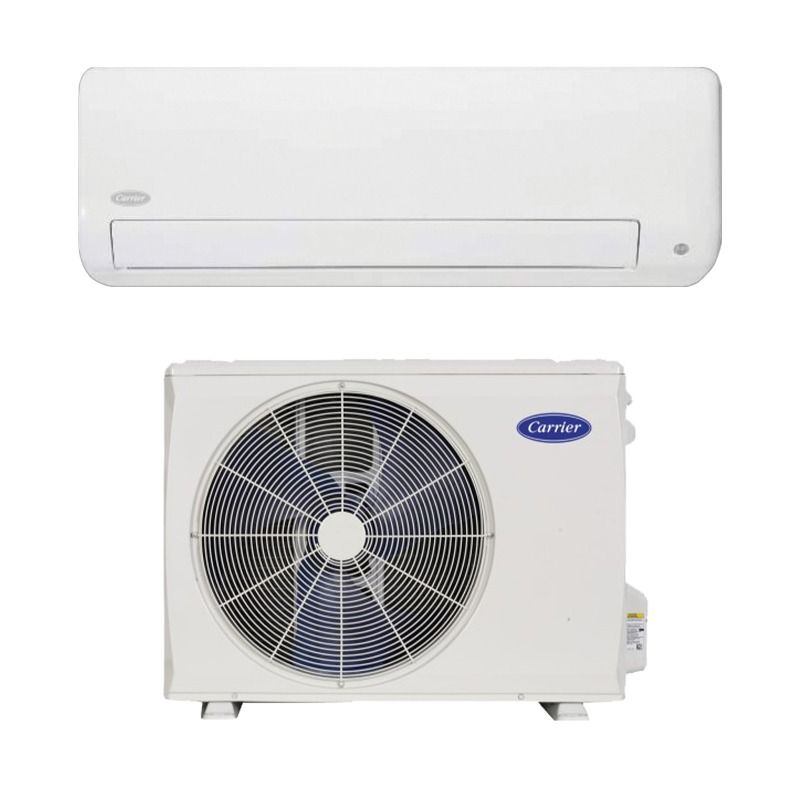
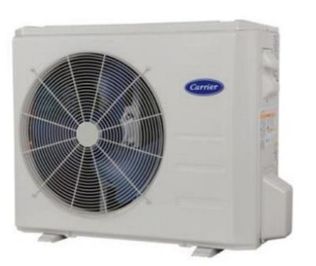
Adding targeted climate control to a home doesn't always require tearing open walls to install ductwork. For those looking to optimize a home office, bedroom, or a new sunroom addition, the Carrier Performance Series Ductless Mini-Split Heat Pump 9000 BTU Single Zone provides a highly efficient, professional-grade solution for year-round comfort in small spaces.
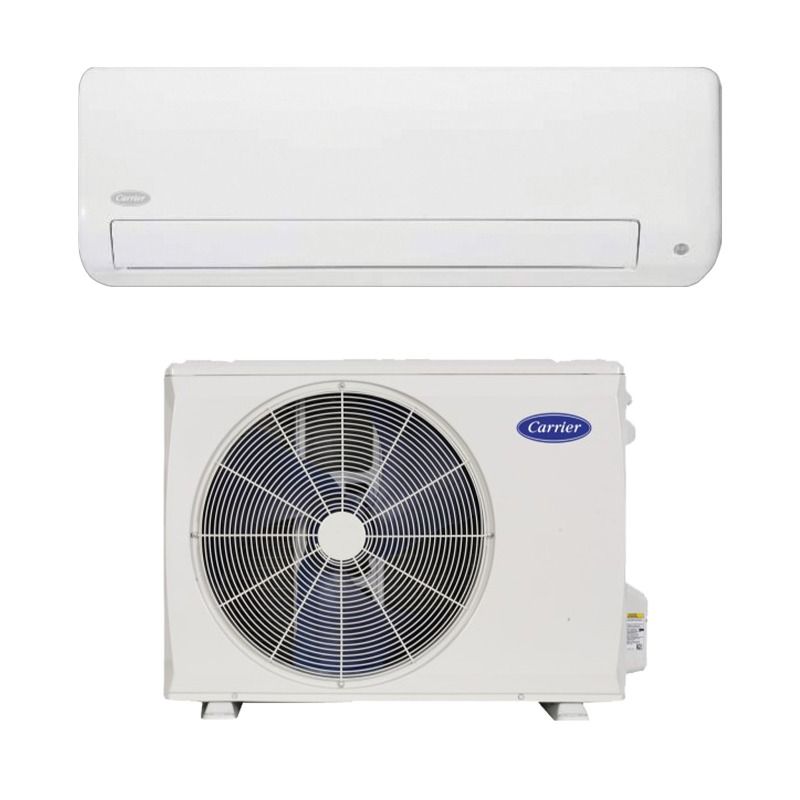
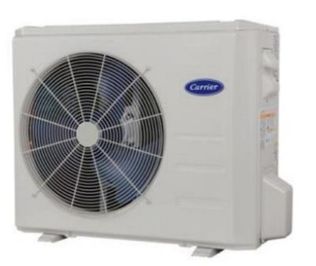
Note: Most ductless mini-splits require a dedicated 220V-240V circuit, typically requiring a licensed electrician for the breaker and wiring installation.
Best for small single-zone comfort: Carrier Performance Series Ductless Mini-Split Heat Pump 9000 BTU Single Zone
Score: 8.7/10 — A strong choice for efficient, quiet single-zone heating and cooling in smaller rooms from a trusted HVAC brand like Carrier.
Carrier Performance Series Ductless Mini-Split Heat Pump 9000 BTU Single Zone
The Carrier Performance Series Ductless Mini-Split Heat Pump 9000 BTU Single Zone is designed for buyers who prioritize brand reliability and long-term support. If you're undecided between brands, our Mitsubishi vs Senville vs LG comparison can help you determine the best fit for your specific room size.
With up to 19 SEER efficiency, heating capabilities down to 5°F, and integration with the Côr thermostat ecosystem, it is a high-performance tool for supplemental heating and cooling in spaces where central air is lacking.
This system is specifically engineered for targeted climate control. Unlike central air systems that push air through a network of ducts, this mini-split places the cooling and heating source directly in the room where it is needed. With a 9,000 BTU capacity, this unit is ideally sized for bedrooms, home offices, finished basements, or small additions. It effectively eliminates the "hot room/cold room" syndrome often found in older homes with inefficient ductwork or poor insulation.
Efficiency is a cornerstone of the Carrier Performance Series Ductless Mini-Split Heat Pump 9000 BTU Single Zone's design. Offering up to 19 SEER (Seasonal Energy Efficiency Ratio), it significantly outperforms traditional window units and LG Dual Inverter Portable Heat Pump 14000 BTU. The system utilizes a heat pump mechanism, meaning it doesn't just cool the air in the summer; it reverses the process in the winter to extract heat from the outside air and pump it indoors. This dual-functionality makes it a versatile year-round investment, reducing the need for space heaters that can be energy-intensive and potentially hazardous.
One of the standout features of this Carrier model is the "Greenspeed intelligence." Traditional HVAC systems often operate on a binary "on or off" cycle, which can lead to temperature swings and loud starts. Greenspeed allows the system to modulate its output, adjusting the compressor speed to match the exact thermal load of the room. This leads to a steadier temperature, lower energy consumption, and a much quieter indoor experience—making it an excellent choice for bedrooms where sleep quality is paramount.
For the modern homeowner, connectivity is key. This unit integrates with Carrier’s Côr thermostat ecosystem, allowing for smarter scheduling and remote management. While many budget mini-splits rely on simple infrared remotes, the Carrier ecosystem provides a path toward a more holistic home energy management strategy. Additionally, the unit's ability to provide heat even when outdoor temperatures drop to 5°F ensures that the room remains habitable during late autumn and early spring.
Pros
- Compact 9,000 BTU capacity is perfectly scaled for smaller rooms.
- High efficiency (up to 19 SEER) lowers monthly operational costs.
- Year-round utility providing both heating and cooling.
- Extremely quiet indoor blower minimizes sleep and work distractions.
- Greenspeed intelligence prevents jarring temperature fluctuations.
- Operates in heating mode down to 5°F outdoor temperatures.
- Strong brand backing and Côr ecosystem compatibility.
Cons
- Insufficient capacity for large open-concept living areas.
- Requires professional installation (not a DIY-friendly unit). If you are looking for a self-install option, see our MrCool DIY-24-HP-WIF115 Mini-Split Buying Guide featuring the MrCool DIY 24000 BTU Ductless Mini-Split Heat Pump with Wi-Fi for a detailed breakdown of DIY alternatives.
- Single-zone limitation means one unit per room. For larger spaces requiring more power, a Mitsubishi Ductless Mini-Split Heat Pump 15000 BTU Single Zone is a viable alternative (see the Pioneer Diamante Series 18,000 BTU Mini-Split Heat Pump for a higher-capacity comparison).
- Smart features may require additional compatible hardware.
- Not a primary heat source for extreme arctic climates.
| Specification | Detail |
|---|---|
| Model Number | 38MAQB09R-3 |
| System Type | Ductless Mini-Split Heat Pump |
| Cooling/Heating Capacity | 9,000 BTU |
| Energy Efficiency | Up to 19 SEER |
| Heating Limit | Down to 5°F Outdoor Temp |
| Technology | Greenspeed Intelligence |
| Compatibility | Carrier Côr Ecosystem |
| Configuration | Single Zone |
As an affiliate site, we may earn a commission if you purchase through our links. Pricing, availability, and installer requirements can vary, so confirm the full equipment package before ordering.
Deep Dive: How a Ductless Mini-Split Works
To understand why the Carrier Performance Series 38MAQB09R-3 is an efficient choice, it is helpful to understand the mechanics of a ductless heat pump. A traditional central AC system uses a large compressor, a blower motor, and an extensive network of ducts to move air. Every foot of ductwork introduces "friction loss" and potential air leaks, which waste energy. In some older homes, up to 30% of conditioned air is lost through leaks in the ducts before it even reaches the room.
The mini-split "splits" the system into two main components: the Outdoor Condenser and the Indoor Air Handling Unit. The outdoor unit contains the compressor and a heat exchanger. A refrigerant line connects the two units, carrying the cooling or heating medium between them. Because there are no ducts, the air is conditioned exactly where you are sitting, which significantly reduces the energy required to maintain a specific temperature.
In cooling mode, the refrigerant absorbs heat from your indoor air and carries it outside. The indoor unit's evaporator coil becomes cold; the blower pushes warm room air over these coils, which strips the heat away. The refrigerant then travels to the outdoor unit, where the heat is released into the external atmosphere.
In heating mode, the system utilizes a reversing valve to change the direction of the refrigerant flow. It extracts heat from the outside air—even when it's cold—and releases it into your room. This is the fundamental "magic" of heat pump technology: it doesn't "create" heat through an electrical heating element (like a space heater or electric baseboard), but rather "moves" heat from one place to another. This process is incredibly efficient, often achieving 300% to 400% efficiency compared to the 100% maximum efficiency of electric resistance heat.
The Carrier Performance Series Ductless Mini-Split Heat Pump 9000 BTU Single Zone employs an inverter-driven compressor, ensuring precise temperature control and energy efficiency.
Unlike standard compressors that are either 100% on or 100% off, the inverter allows the compressor to ramp up or down. If the room is only 1 degree away from the target temperature, the system slows down to a whisper, maintaining the temperature with minimal energy. This prevents the "blast of cold air followed by silence" cycle typical of cheaper units.Comprehensive Buyer's Guide: Choosing the Right Heat Pump
Selecting a heat pump is not as simple as picking the one with the highest BTU rating. Over-sizing or under-sizing a unit can lead to poor dehumidification, higher energy bills, and premature wear on the compressor. Here is a detailed breakdown of what you should consider when shopping for a system like the Carrier Performance Series.
Understanding BTU and Room Sizing
BTU (British Thermal Units) measures the heating or cooling capacity of the unit. The 9,000 BTU rating of the 38MAQB09R-3 is generally ideal for rooms between 250 and 450 square feet. However, square footage is only one part of the equation. You must also consider several environmental variables:
- Ceiling Height: High vaulted ceilings increase the total volume of air that needs to be conditioned. A room with 12-foot ceilings requires more BTUs than a room with 8-foot ceilings, even if the square footage is identical.
- Insulation Quality: A room with old, single-pane windows or thin walls will lose heat much faster than a modern, well-insulated room. If the room is an uninsulated garage conversion, you may need a higher BTU unit, such as those detailed in our MrCool DIY-24-HP-WIF115 Mini-Split Buying Guide or Pioneer WYS018GMFI22RL Mini-Split Heat Pump Buying Guide featuring the Pioneer Diamante Series 18,000 BTU Mini-Split Heat Pump.
- Sun Exposure: A south-facing room with large windows will experience significantly higher "solar gain," requiring more cooling power to maintain a comfortable temperature during the summer.
- Room Usage: A home office with two high-performance computers and multiple monitors generates a constant heat load that a guest bedroom does not. This internal heat gain must be accounted for in the BTU calculation.
The Role of SEER and Efficiency
SEER stands for Seasonal Energy Efficiency Ratio. It is the ratio of the cooling output over a typical cooling season to the total electric energy consumed. A higher SEER rating means lower utility bills. For another high-efficiency example, check out our Daikin RXB12AXVJU Buying Guide featuring the Daikin 17 SEER Single-Zone Ductless Mini-Split Heat Pump 12000 BTU with WiFi. The 19 SEER rating of the Carrier Performance Series is highly competitive for a single-zone unit, outperforming entry-level options like the Senville LETO Series 12,000 BTU Mini-Split Air Conditioner and Heat Pump. When calculating potential savings, consider that a 19 SEER unit will use significantly less electricity than a standard 12-14 SEER window unit to achieve the same cooling effect.
Heating Performance in Cold Climates
One of the most critical questions for buyers in Northern climates is: "Will this actually keep me warm in January?" Standard heat pumps lose efficiency as the outdoor temperature drops because there is less ambient heat to extract from the air.
The 38MAQB09R-3 is rated to operate down to 5°F. While this is impressive for a performance-series model, it is important to understand the "heating capacity curve." At 40°F, the unit may provide a full 9,000 BTUs of heat. At 5°F, that capacity may drop. If you live in a region where temperatures regularly drop to -10°F or -20°F, you might consider a dedicated cold-climate model like the Bosch Ductless Mini-Split Heat Pump 18000 BTU Cold Climate Single Zone (refer to our Bosch BMS500-18HDN1 Mini-Split Heat Pump Buying Guide for a deeper dive into cold-climate specifications), or use this unit as a supplemental heat source alongside a primary system (like a modern furnace with an updated control board with a reliable draft inducer motor or wood stove) rather than the sole source of heat.
Installation and Setup Requirements
Unlike a window AC unit that you can slide into a frame and plug into a wall, a ductless mini-split is a permanent home improvement. The installation of the Carrier 38MAQB09R-3 involves several technical steps that require professional certification and specialized tools.
Electrical Needs
The outdoor condenser requires a dedicated electrical circuit. This usually means a new 220V-240V line run from your main electrical panel (which may require modern AFCI protection) (see our guide on replacing circuit breakers safely or compare brands in our Square D vs Eaton analysis if you are upgrading your panel) to a weather-proof disconnect box mounted on the exterior wall. Because these systems involve high-voltage electricity and sensitive inverter boards, improper wiring can lead to catastrophic board failure. Using an extension cord or sharing a circuit with other high-draw appliances is a safety hazard and will void the manufacturer's warranty.
Physical Placement Strategy
Placement is key to maximizing the efficiency of the 9,000 BTU output. The indoor unit should be mounted on an interior wall with sufficient clearance around the top and sides to allow for proper airflow. A common mistake is placing the unit directly above a doorway or behind a curtain; this can "trick" the unit's temperature sensor, causing it to shut off prematurely or run indefinitely.
The outdoor unit needs a level, stable surface. Most installers use a reinforced plastic or concrete pad to prevent the unit from sinking into the soil over time. If you are installing this unit for a basement conversion, ensure your foundation is dry; you may want to reference our Ridgid SP-650C Sump Pump Buying Guide for a deep dive into wet basement solutions (or see our Wayne ESP25 battery backup sump pump review for backup options) or detailed review of the Ridgid SP-650C for managing groundwater. It must be placed where it has plenty of "breathing room"—typically at least 12 to 24 inches from