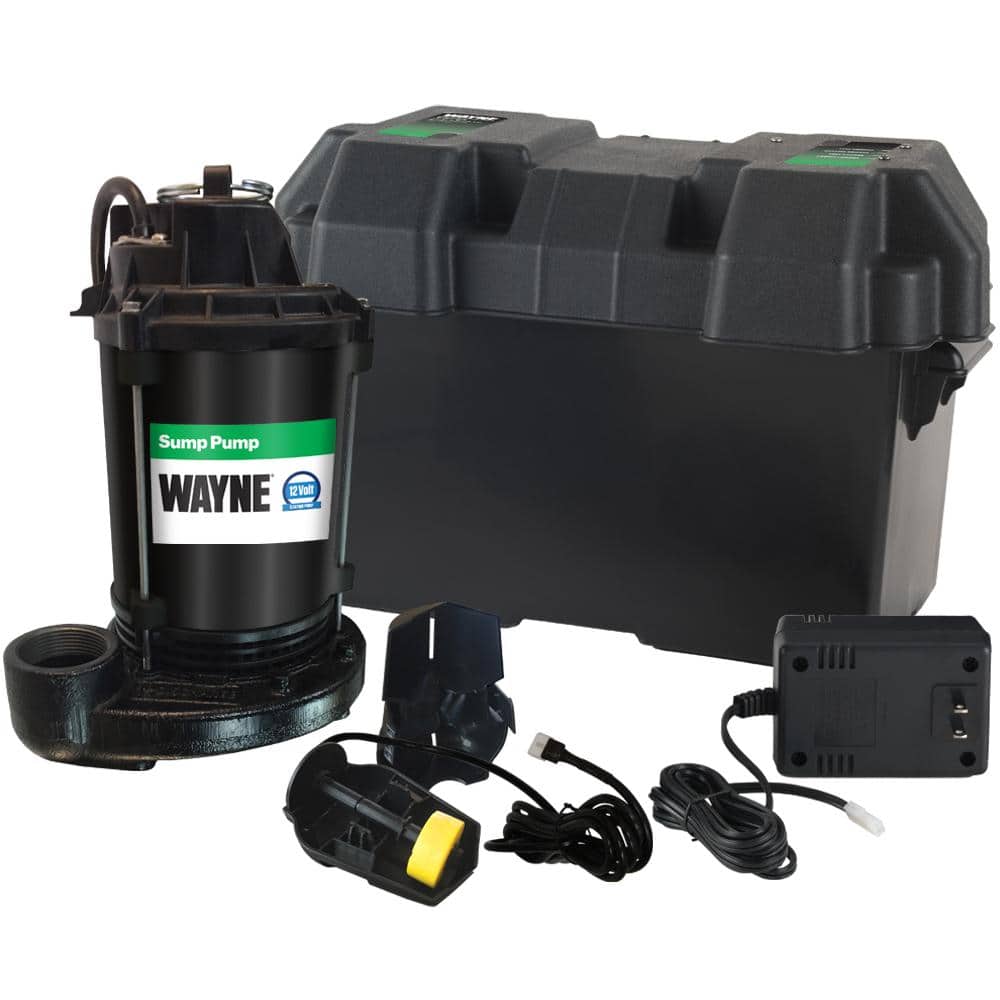
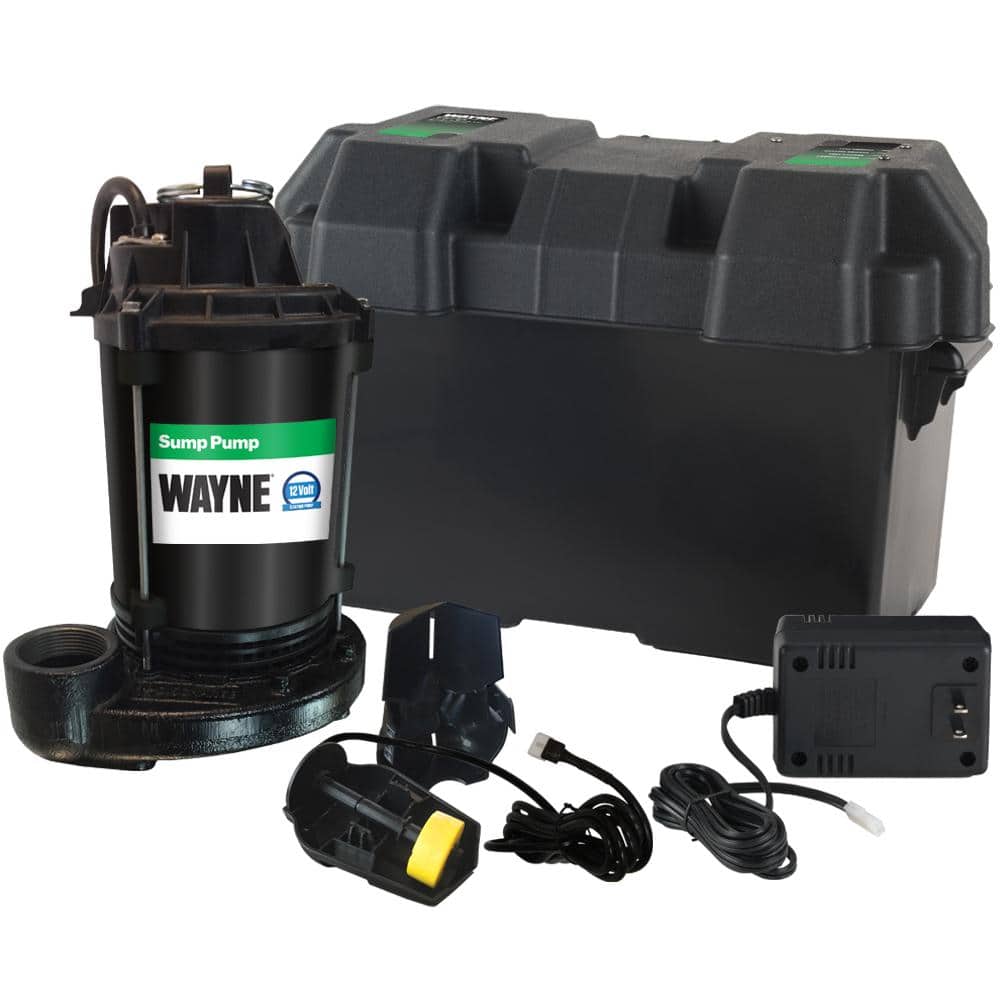
Wayne Battery Backup Sump Pump 2700 GPH (ESP25)
Score: 8.6/10 — A robust, automatic insurance policy for your basement that provides critical flood protection when primary pumps fail or power outages strike.
This review contains affiliate links. We may earn a commission if you make a purchase through these links at no extra cost to you.
Wayne ESP25 Battery Backup Sump Pump Overview
In this review, we’re evaluating the Wayne Battery Backup Sump Pump 2700 GPH to see if it's the best insurance against basement flooding during power outages. This heavy-duty system provides 2700 GPH protection, designed to take over when your primary pump fails or power outages strike, preventing costly basement flooding during critical storms.It is not meant to replace a primary sump pump; instead, it adds a second layer of protection for basements, crawl spaces, and low-lying areas vulnerable to water intrusion during storms.
If you need a primary pump instead of backup-only protection, we recommend the Basement Watchdog (see our detailed review) (see our detailed review) or the Basement Watchdog 1/3-HP Cast Iron Submersible Sump Pump (see our buying guide). You can also compare high-capacity units like the Ridgid Cast Iron Submersible Sump Pump Half Horsepower (see our Ridgid SP-650C Sump Pump Review and buying guide) or Zoeller Mighty-Mate Submersible Sump Pump. Understanding the difference between a primary "workhorse" pump (see our Ridgid SP-650C sump pump buying guide) and a "safety net" backup is critical; while primary pumps—such as those in this Basement Watchdog BW1033 review or our Ridgid SP-650C buying guide—are designed for continuous heavy-duty cycles, backup pumps like the Wayne Battery Backup Sump Pump 2700 GPH are optimized for emergency bursts of activity powered by DC current.
Its biggest appeal is peace of mind. When severe weather knocks out power, a standard AC sump pump becomes useless unless you have a generator or backup system. The Wayne Battery Backup Sump Pump 2700 GPH uses battery power to keep water moving out of the pit, helping reduce the risk of basement flooding when you need protection most.
If extended outages are a recurring problem in your region, establishing a comprehensive power strategy for your home—perhaps by adding a Westinghouse iGen4500 portable generator for your main appliances—is advisable, including knowing how to replace a circuit breaker safely if you're updating your basement electrical panel (see our guide on AFCI vs Standard Circuit Breakers).This model is best for homeowners in flood-prone regions, anyone with a finished basement, and buyers who have already experienced sump pump failure during heavy rain. It is also a practical upgrade for people who travel often and want an automatic backup system with an alarm to warn of activation or trouble conditions. If you are looking for a high-power primary unit from the same brand, check out the Wayne 3/4 HP Submersible Cast Iron and Steel Sump Pump for high-capacity primary pumping. For ongoing humidity control in a finished basement, pair flood protection with a high-capacity primary pump to manage the moisture that remains after a storm event.
How a Battery Backup Sump Pump Works
To understand the value of the Wayne Battery Backup Sump Pump 2700 GPH, it is helpful to understand the mechanics of a dual-pump system. In a standard setup, the primary pump is plugged into a wall outlet (AC power). When the water level in the sump pit reaches a certain height, the primary float switch triggers the motor, and water is pushed out of the house.
The Wayne Battery Backup Sump Pump 2700 GPH operates on a different electrical plane. It is connected to a 12-volt deep-cycle battery. This battery acts as a reservoir of energy, kept topped up by a built-in charger while the house power is on. The "magic" happens when the water level continues to rise despite the primary pump's efforts—or when the primary pump fails entirely due to a power outage or mechanical seizure. The backup pump has its own dedicated float switch set slightly higher than the primary pump's switch.
When the water reaches this higher secondary threshold, the Wayne backup pump engages. Because it draws from the battery, it doesn't care if the grid is down. It begins pumping water out through its own discharge line (or a shared line via a check valve), preventing the pit from overflowing into your basement. Once the water level drops below the backup float, the pump shuts off to conserve battery life, leaving the primary pump to handle the remaining low-level water once power is restored.
Key Features
Runs from a compatible 12-volt deep-cycle battery, allowing the system to operate when household power is unavailable.
Turns on when the primary pump fails, the float rises, or power goes out, giving the sump pit a secondary line of defense.
Rated as a 2700 GPH-class backup pump, with listed pumping protection up to 2,580 gallons per hour depending on lift height.
Includes alerts to help notify homeowners when the backup pump is operating or when attention is needed.
Installs as a companion to a primary sump pump rather than requiring a full replacement of the current setup.
Built for outage scenarios where heavy rainfall and utility failure often coincide.
| Feature | Value |
|---|---|
| Product name | Wayne Battery Backup Sump Pump 2700 GPH (ESP25) |
| Model number | ESP25 |
| Category | Water Pumps |
| Pump type | Battery backup sump pump |
| Primary purpose | Emergency backup pumping during outages or primary pump failure |
| Catalog flow rating | 2700 GPH class |
| Listed pumping protection | Up to 2,580 gallons per hour (depending on lift/conditions) |
| Power source | Compatible 12-volt battery backup system |
| Activation | Automatic via secondary float switch |
| Alarm | Yes, audible alert for backup operation |
| Best use case | Homes with existing sump pump systems in flood-prone areas |
| Installation style | Companion install alongside existing primary pump |
Pros & Cons
Pros
- Automatic protection during AC power outages.
- Strong emergency pumping capacity (2,580 GPH potential).
- Essential for finished basements and high-risk flood zones.
- Audible alarm provides critical awareness of system status.
- Non-destructive installation; doesn't require removing the primary pump.
- Reliable "insurance" policy against mechanical failure of the main unit.
Cons
- Requires the separate purchase of a 12V deep-cycle battery.
- Not suitable as a standalone primary pump.
- Runtime is strictly limited by battery capacity and water inflow rate.
- Installation requires precision in float and check valve placement.
- Demands periodic manual testing to ensure battery health.
Performance
In real-world use, the Wayne Battery Backup Sump Pump 2700 GPH is most valuable during the exact situation where many basements are at their highest risk: heavy rainfall combined with a power outage. A primary sump pump can be excellent under normal conditions, but it cannot help if the electricity fails. This backup system addresses that gap by giving the sump pit a battery-powered pump that can continue moving water when the main pump is offline.
The rated pumping capacity is strong for a residential backup system, especially for homeowners dealing with moderate to heavy water inflow. As with any sump pump, actual performance depends on vertical lift (the distance the water must be pushed up from the pit to the exit point), discharge pipe layout, check valve quality, battery condition, and how quickly water enters the pit. A shorter, cleaner discharge path will generally allow better output than a long or restrictive installation. For more on choosing the right hardware for different water-removal scenarios, see our Ridgid SP-650C buying guide for draining water fast (detailed review here).
The automatic activation is the key performance feature. A backup sump pump is only useful if it starts without homeowner intervention, and the Wayne Battery Backup Sump Pump 2700 GPH is built for that standby role. Once the water level reaches the backup float, the pump can engage and help prevent the pit from overflowing. This ensures that even if you are sleeping or away from home during a storm, the system is actively protecting your home.
The alarm system is also important. It does not just add convenience; it helps homeowners understand when the backup system is being used. If the alarm sounds, it may indicate a power outage, a failed primary pump, or water levels high enough to require backup pumping. That warning can give you time to investigate before the situation becomes a full-scale flood, potentially allowing you to clear debris from a discharge pipe or check the primary pump's status.
Detailed Installation and Setup Guide
Installing the Wayne Battery Backup Sump Pump 2700 GPH requires a different approach than installing a standard pump. Because it is a companion unit, you must manage two sets of plumbing and electrical needs in a single basin.
1. Positioning the Pumps
The primary pump should generally be centered or placed in its designated spot. The Wayne backup pump should be positioned so that its float switch has plenty of room to move upward without hitting the walls of the basin or the primary pump's equipment. If the float gets snagged, the pump will never activate, rendering the entire system useless. In smaller basins, you may need to carefully offset the backup pump to the side to avoid "clashing" floats.
2. Setting the Float Levels
This is the most critical part of the setup. The primary pump's float should be set to trigger first. The Wayne backup pump's float should be set slightly higher. This ensures the battery is only used as a last resort. If the backup float is set too low, it will run every time the primary pump does, rapidly draining your battery and shortening its lifespan. Ideally, there should be a gap of 2 to 4 inches between the activation height of the primary pump and the activation height of the backup pump.
3. Plumbing and Check Valves
You cannot simply drop the pump in; you must connect it to a discharge line. Most installers use one of two methods:
- Separate Discharge Line: The backup pump has its own dedicated pipe leading out of the house. This is the safest method as it eliminates the risk of a single-point failure. If the primary line clogs, the backup line still works.
- T-Joint into Main Line: The backup pump connects to the primary line via a T-junction. If you choose this, you must install a high-quality check valve on the backup line. Without a check valve, the primary pump could accidentally push water backward through the backup pump's pipe and back into the pit, creating a "loop" that prevents water from leaving the house.
4. Battery Integration
The ESP25 requires a 12-volt deep-cycle battery. Standard car batteries are not recommended because they are designed for a single high-burst start and then immediate recharging. Deep-cycle batteries (like those used in boats or RVs) are designed for the slow, steady discharge and recharge cycles required by a sump pump. Ensure the battery is placed in a dry, ventilated area—ideally in a plastic battery box to prevent acid leaks from touching your basement floor. Check the polarity of the connections carefully; reversing positive and negative leads can damage the pump's electronics.
Maintenance and Longevity
A battery backup system is not a "set it and forget it" device. Because it spends 99% of its life in standby mode, the components can degrade without you noticing until the moment they are needed most.
Battery Health and Replacement
The 12V battery is the weakest link in the chain. Lead-acid batteries naturally lose capacity over time through a process called sulfation. We recommend replacing the battery every 3 to 5 years, regardless of whether it seems to be working. Even if the charger says it is "full," an old battery may lack the amperage to actually push 2,580 gallons per hour under load. Additionally, check the terminals for corrosion; a crusty terminal can create enough resistance to prevent the pump from reaching full GPH capacity during an emergency. Use a wire brush and a small amount of terminal protectant to keep connections clean.
Debris Management
Sump pits collect silt, sand, and organic debris. Over time, this "sludge" can accumulate at the bottom of the pit. Since the Wayne backup pump sits on the floor of the basin, it can become buried in sediment, which may clog the intake or jam the motor. Once a year, use a wet-vac or a bucket to clean out the pit sludge. If you have a particularly sandy area, consider placing a perforated plastic liner or "sump pump stand" under the pumps to keep them slightly elevated above the heaviest sediment.
For those needing to drain a flooded basement floor outside of a pit, the Flotec Submersible Utility Pump 1/4 HP Thermoplastic is a more appropriate tool (explore our guide to sump pump hardware).
The "Bucket Test"
Every spring, perform a manual test. Pour a five-gallon bucket of water into the pit quickly. Watch the primary pump kick in and empty the water. Then, manually lift the backup float to ensure the motor engages and the alarm sounds. This confirms that the electrical path from the battery to the motor is intact. If the motor hums but doesn't move water, you may have a blockage in the discharge pipe or a failing check valve.
Comprehensive Buyer's Guide: Do You Need a Battery Backup?
Deciding whether to invest in the Wayne Battery Backup Sump Pump 2700 GPH depends on your home's geography and your risk tolerance. While a primary unit like the