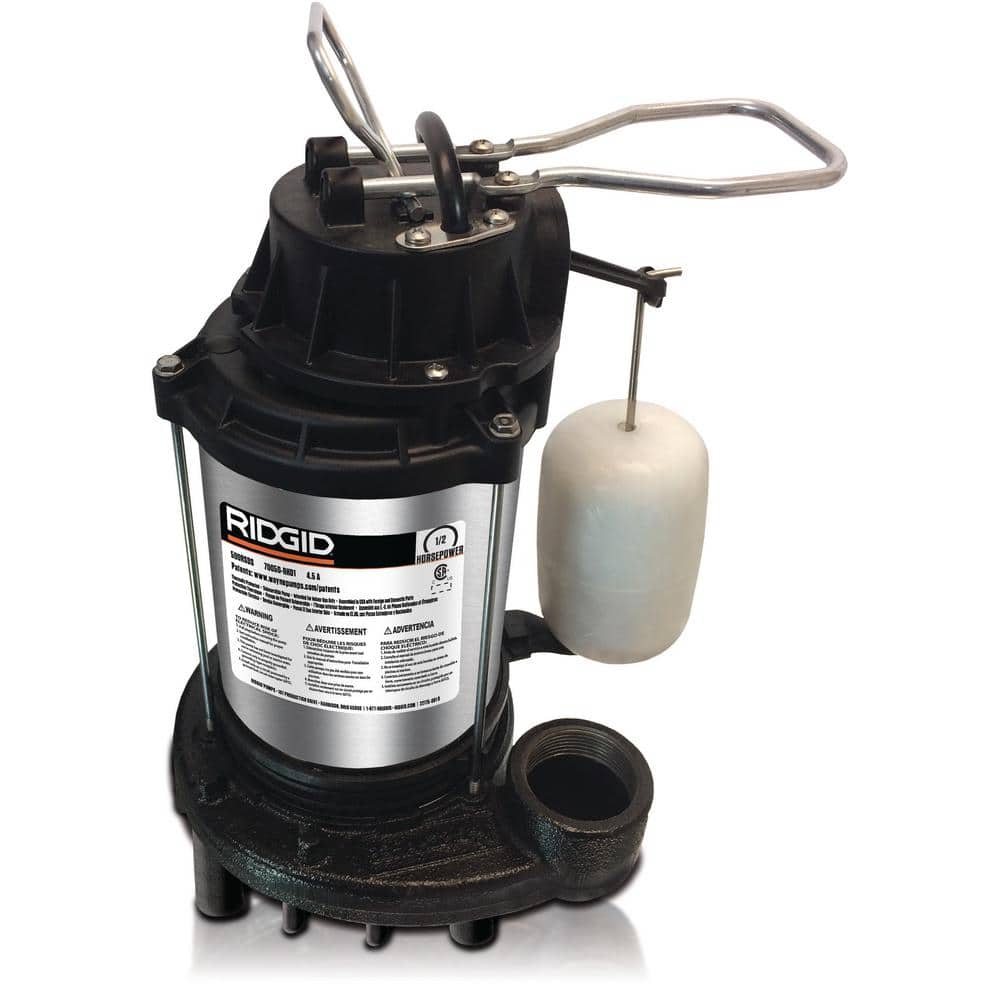
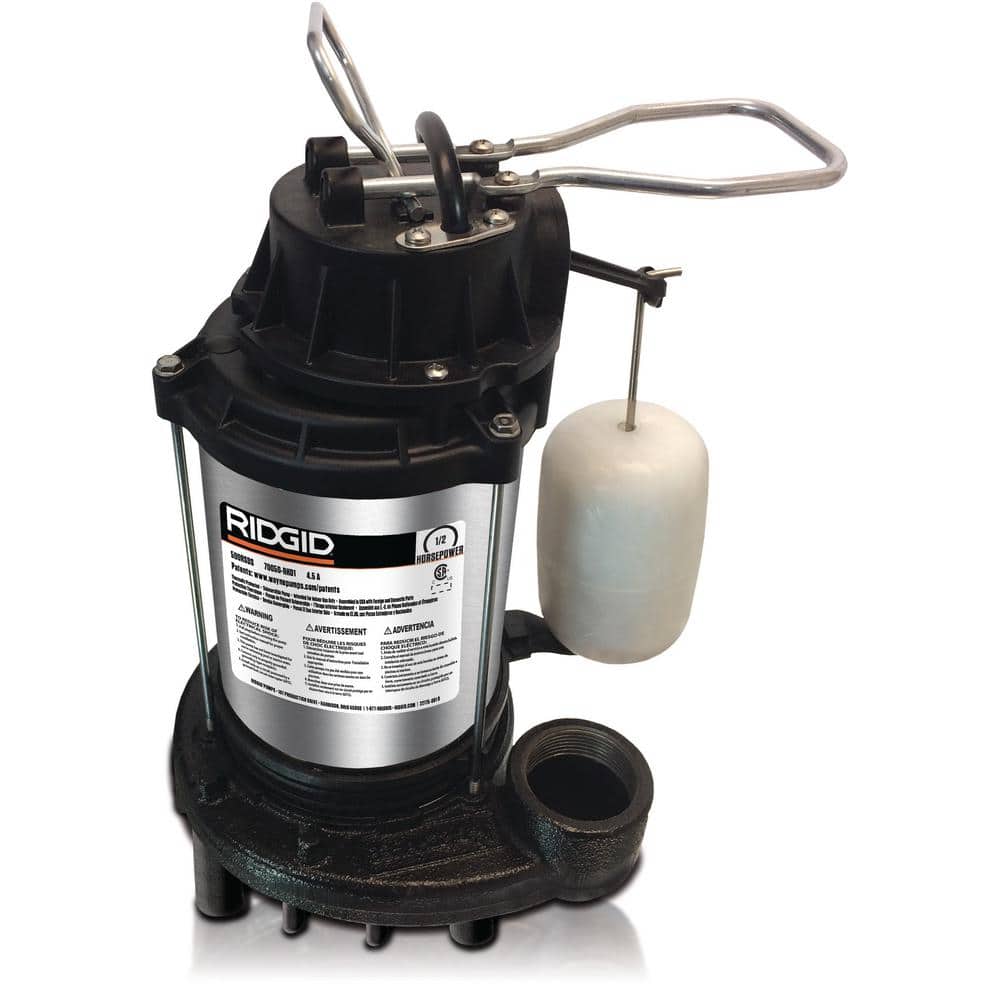
Ridgid Cast Iron Submersible Sump Pump Half Horsepower
Score: 8.6/10 — A rugged, high-capacity sump pump that is best for homeowners who want dependable basement protection without the complexity of smart features.
This review is affiliate-supported; we may earn a commission when you buy through our links, at no extra cost to you.
Overview
In this review, we test the performance and durability of the Ridgid Cast Iron Submersible Sump Pump Half Horsepower, a heavy-duty solution designed for high-volume water removal and professional-grade basement protection.
With a 1/2 horsepower motor and a rated pumping capacity of up to 4,020 gallons per hour, it is built for homeowners dealing with regularly wet basements, active sump systems, or areas that see heavy rain and groundwater intrusion. For help matching horsepower, basin size, and flow rate before you buy, see our Ridgid SP-650C buying guide for wet basements.
The standout appeal of the Ridgid Cast Iron Submersible Sump Pump Half Horsepower is its workhorse design. The cast iron construction gives it a more substantial, durable feel than lightweight thermoplastic pumps (see our detailed sump pump buying guide, including options like the Flotec Submersible Utility Pump 1/4 HP Thermoplastic or the Basement Watchdog (BW1033) review, while the stainless steel shaft and wide-angle float switch point toward long-term reliability in demanding conditions. When a storm hits and the water table rises rapidly, the physical integrity of the pump housing and the efficiency of the motor are the only things standing between a dry floor and a flooded basement.
This is not the most feature-packed option if you want app alerts, built-in outage protection, or smart-home integration. If power-loss protection is a priority, we recommend a secondary system:
For those seeking power-loss protection, the Wayne Battery Backup Sump Pump 2700 GPH is an excellent companion; read our Wayne (ESP25) review for a detailed performance analysis of battery backup systems.
Instead, the Ridgid Cast Iron Submersible Sump Pump Half Horsepower is best for buyers who prioritize pumping power, rugged materials, and straightforward operation over connected features.Key Features
The Ridgid Cast Iron Submersible Sump Pump Half Horsepower uses a half-horsepower motor, giving it enough strength for frequent sump pump cycling and heavier water loads.
With a maximum output of up to 4,020 gallons per hour, the Ridgid Cast Iron Submersible Sump Pump Half Horsepower is suited to high-volume water removal.
The cast iron body helps the Ridgid Cast Iron Submersible Sump Pump Half Horsepower feel durable and stable inside a sump basin.
The wide-angle float switch automatically activates the Ridgid Cast Iron Submersible Sump Pump Half Horsepower as water rises, making it convenient for unattended basement protection.
A stainless steel shaft adds durability to one of the pump’s key internal components, supporting longer-term reliability.
The Ridgid Cast Iron Submersible Sump Pump Half Horsepower is a practical fit for homeowners with active sump pits, seasonal flooding risk, or consistently damp lower levels (for more on managing wet basements, see our Ridgid SP-650C buying guide).
| Feature | Value |
|---|---|
| Product Name | Ridgid Cast Iron Submersible Sump Pump Half Horsepower (SP-650C) |
| Model Number | SP-650C |
| Category | Water Pumps |
| Pump Type | Submersible sump pump |
| Motor Power | 1/2 HP |
| Maximum Pumping Capacity | Up to 4,020 gallons per hour |
| Housing Material | Cast Iron |
| Switch Type | Wide-angle float switch |
| Shaft Material | Stainless Steel |
| Best Use Case | High-volume basement sump pumping |
| Smart Features | None |
| Battery Backup | Not included |
Pros & Cons
Pros
- Strong 1/2 HP motor for demanding residential sump applications
- High pumping capacity of up to 4,020 gallons per hour
- Cast iron construction feels more durable than thermoplastic alternatives
- Wide-angle float switch supports reliable automatic operation
- Stainless steel shaft reduces wear and corrosion
- Excellent stability inside the sump basin
Cons
- Heavier installation process due to cast iron weight
- Wide-angle float requires a larger basin for full movement
- Lacks smart monitoring or mobile app alerts
- No integrated battery backup for power outages
- May be overkill for very dry basements
Performance
The Ridgid Cast Iron Submersible Sump Pump Half Horsepower is clearly aimed at performance-first basement water removal. A 1/2 HP sump pump with up to 4,020 GPH of flow capacity gives homeowners a meaningful margin of safety during heavy rain, rapid snowmelt, or periods when groundwater is pushing into the sump basin more frequently than usual. In the world of sump pumps, "head height" (the vertical distance the pump must push water) significantly impacts flow. While the maximum GPH is high, the 1/2 HP motor ensures that even when pushing water up several feet to a discharge point, the flow remains robust.
In practical use, the biggest advantage of the Ridgid Cast Iron Submersible Sump Pump Half Horsepower is its ability to move a lot of water quickly. That matters because sump pump performance is not just about turning on; it is about keeping up with incoming water fast enough to prevent the basin from overflowing. For homes with a history of wet basement issues, the extra capacity can be reassuring.
The cast iron housing also helps the Ridgid Cast Iron Submersible Sump Pump Half Horsepower feel like a serious long-term installation. Cast iron is preferred over plastic for three reasons: durability, stability, and heat dissipation. A pump that cycles frequently during a three-day storm generates heat; cast iron acts as a more efficient heat sink (unlike the lighter materials found in basic utility pumps like the Flotec Submersible Utility Pump 1/4 HP Thermoplastic), potentially extending the life of the internal motor windings. Furthermore, the weight of the cast iron prevents the pump from "dancing" or shifting in the basin due to vibration during high-velocity discharge.
The wide-angle float switch is another practical performance feature. It allows the pump to activate automatically when the water level rises, but it does require enough room in the sump pit to swing properly. If the basin is narrow, crowded, or has obstructions near the switch path, homeowners should confirm that the float can move freely before relying on the pump during a storm.
How the SP-650C Works
To understand why the Ridgid Cast Iron Submersible Sump Pump Half Horsepower is effective, it helps to understand the mechanics of a submersible system. Unlike "pedestal" pumps where the motor sits above the water line, the SP-650C is fully immersed. The motor is sealed within the cast iron housing, allowing it to push water directly from the bottom of the pit up through the discharge pipe.
The process begins with the wide-angle float switch. As water collects in the basin, the float rises. Once it reaches a specific angle, it completes an electrical circuit that triggers the 1/2 HP motor. The impeller, connected to the stainless steel shaft, begins to spin at high speed, creating a centrifugal force that flings water upward and outward into the discharge port. This process is repeated every time the water level hits the "on" trigger, ensuring that the basin never overflows.
The choice of stainless steel for the shaft is critical here. Because the shaft is the rotating core of the pump, it is subjected to constant friction and exposure to minerals in the groundwater. Stainless steel resists the corrosion that would otherwise cause the shaft to pit or seize, ensuring that the motor can spin freely for years. The cast iron exterior provides the structural rigidity needed to maintain alignment between the motor and the impeller, even under high pressure. This prevents the "wobble" that can lead to seal failure in cheaper, plastic-housed pumps.
Furthermore, the SP-650C utilizes a cooling mechanism where the water surrounding the cast iron housing helps regulate the motor's temperature. Since the motor is submerged, the water acts as a natural coolant. This is a significant advantage over pedestal pumps, which rely on air cooling and are more prone to overheating if the basement is poorly ventilated or if the pump has to run for extended periods during a flood event.
Setup and Installation Process
Installing the Ridgid Cast Iron Submersible Sump Pump Half Horsepower (SP-650C) is a straightforward process for those comfortable with basic plumbing, but given the weight of the cast iron, a second set of hands is often helpful. Proper installation is the difference between a pump that lasts ten years and one that fails in two.
1. Basin Preparation
Before dropping the pump into the pit, ensure the basin is clear of debris, gravel, and old sediment. If you are replacing an old pump, use a shop vac to remove any sludge from the bottom. This prevents the new pump from sucking up debris that could clog the impeller or cause premature wear on the stainless steel shaft. If you have a very sandy soil area, consider placing a few inches of clean washed gravel at the bottom of the pit to act as a pre-filter.
2. Positioning the Pump
Lower the pump carefully into the center of the basin. The goal is to ensure the wide-angle float switch has a clear path of travel. If the pump is pushed too close to the wall, the float may get "stuck" in the up or down position, leading to either a flooded basement or a pump that runs dry and burns out. Test the float movement by hand several times before finalizing the position to ensure it swings freely without hitting the PVC discharge pipe.
3. Plumbing the Discharge
Connect the discharge pipe to the pump's outlet. Most users utilize PVC piping. It is crucial to install a check valve in the discharge line. A check valve is a one-way valve that prevents water remaining in the vertical pipe from flowing back into the basin once the pump shuts off. Without a check valve, the pump will end up pumping the same few gallons of water over and over again, leading to "short-cycling" and unnecessary wear on the 1/2 HP motor. Ensure the check valve is installed in the correct direction—water should only flow away from the pump.
4. Electrical Connection
The SP-650C is a plug-and-play unit. Plug it into a GFCI (Ground Fault Circuit Interrupter) outlet to ensure safety in the damp environment of a basement. If the outlet is far from the pit, use a heavy-duty, outdoor-rated extension cord, though a direct hardwired connection or a nearby dedicated outlet is always preferred for maximum reliability. Avoid using thin household extension cords, as the 1/2 HP motor can draw a significant amount of current during startup, which may cause voltage drops if the wire gauge is too thin.
Long-Term Maintenance and Care
While the Ridgid Cast Iron Submersible Sump Pump Half Horsepower is designed to be "set and forget," a small amount of preventative maintenance will double the life of the unit. Sump pumps are the most critical "invisible" part of home maintenance; if they fail, the results are immediate and expensive.
Quarterly Float Testing
Every three months, manually lift the float switch to ensure the motor kicks in immediately. This confirms that the switch hasn't become stuck and that the electrical connection is still secure. This is best done before the rainy season begins (typically early spring) and again before the autumn rains. If you hear the motor hum but no water moves, you may have a blockage or a seized impeller.
Debris Removal and Cleaning
Periodically check the basin for accumulation of dirt, sand, or organic matter. While the pump is heavy-duty, pumping abrasive sand over several years can erode the impeller. If your basin collects a lot of sediment, consider adding a perforated liner or a "sump pit filter" to keep the water cleaner. Every few years, it is a good idea to pull the pump out of the basin and wipe down the cast iron exterior to remove any slime or mineral buildup that could hinder heat dissipation.
Winterization and Discharge Management
If your discharge pipe leads to an outdoor area, ensure the exit point is not blocked by ice or snow. If the pipe freezes shut, the pump will continue to push water against a wall of ice, which can cause the motor to overheat or the pipe to burst. Many homeowners in colder climates use a "freeze-proof" discharge setup or wrap the exterior portion of the pipe in foam insulation. Additionally, ensure the water is being discharged at least 10 feet away from the foundation to prevent the pump from simply recycling the same groundwater back into the pit.
Buyer's Guide: Is 1/2 HP Right for You?
Choosing the right horsepower is the most common point of confusion for homeowners. The Ridgid Cast Iron Submersible Sump Pump Half Horsepower sits in the "sweet spot" for most residential needs, but here is a detailed breakdown of how to determine if this model fits your specific home.
When 1/3 HP is Sufficient
Smaller 1/3 HP pumps are generally suitable for homes in areas with low water tables or those who only experience occasional dampness. If your pump only runs once or twice a week, a Basement Watchdog 1/3-HP Cast Iron Submersible Sump Pump is often enough; check out our Basement Watchdog BW1033 review for more de