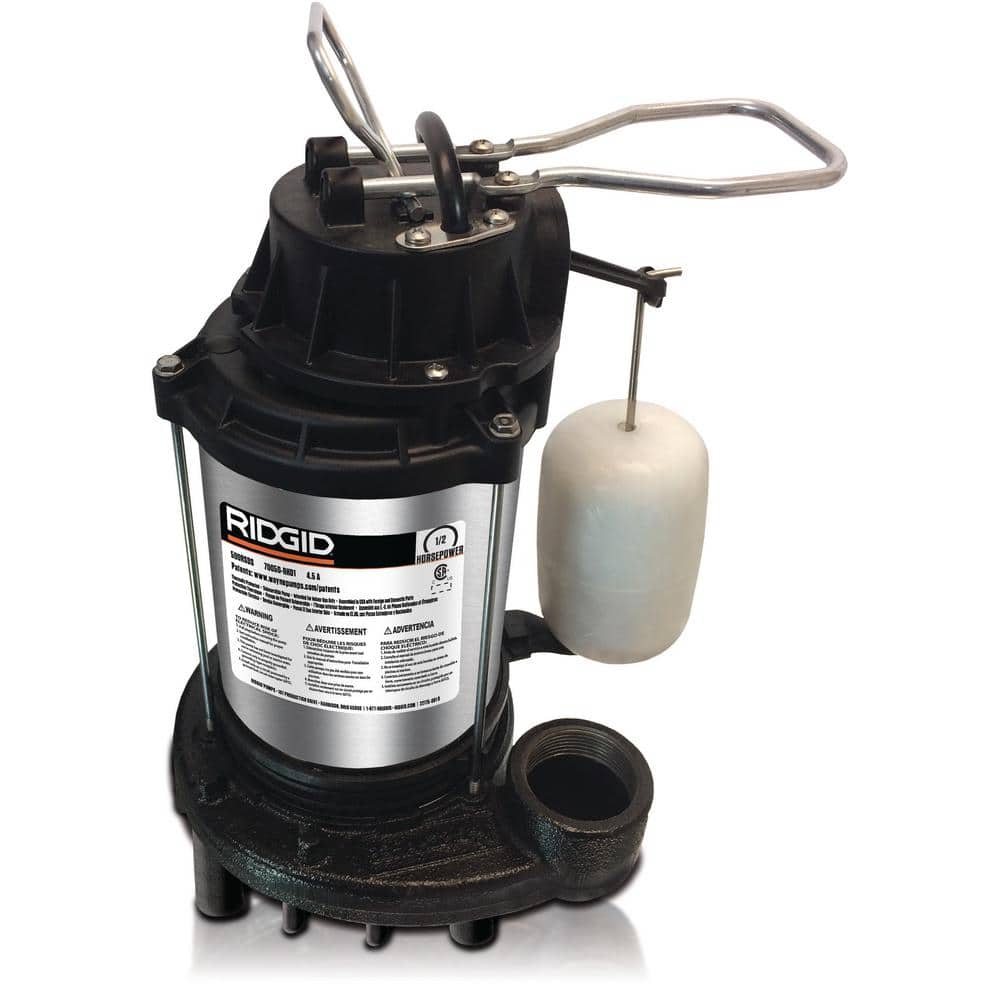
If you're fighting a wet basement—perhaps alongside a high-capacity dehumidifier or by following a guide on reducing basement humidity—you need a primary sump pump that can move water quickly and tolerate repeated use during heavy rain and snowmelt. The Ridgid Cast Iron Submersible Sump Pump Half Horsepower—which we analyze in depth in our Ridgid SP-650C sump pump review—is a heavy-duty solution for homeowners who require a dependable workhorse for regularly active sump pits.
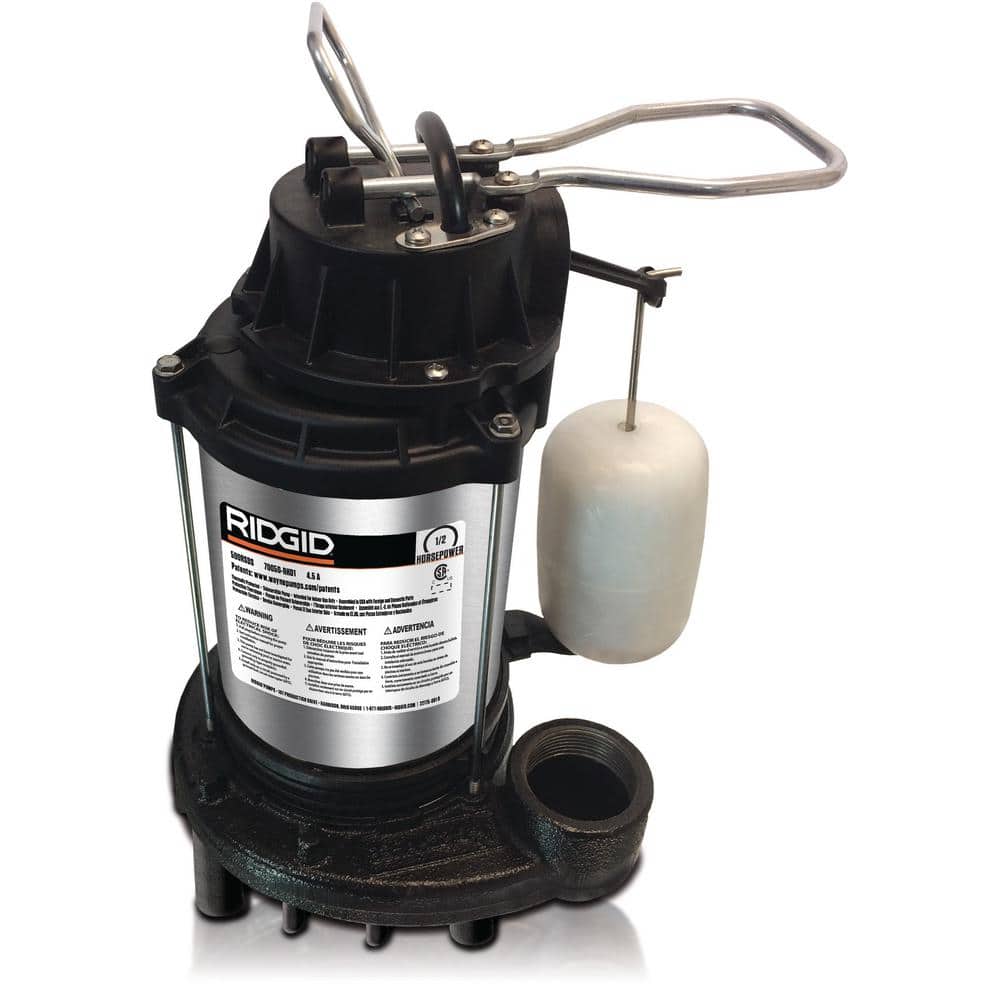
Top Pick: Ridgid Cast Iron Submersible Sump Pump Half Horsepower
Score: 9.1/10. A strong choice for regularly wet basements thanks to its durable cast iron build, 1/2 HP motor, high pumping capacity, and reliable wide-angle float switch.
Not sure which pump fits your home? Check out our guide on the best submersible utility pumps or our Basement Watchdog buying guide before choosing a primary system.
Ridgid Cast Iron Submersible Sump Pump Half Horsepower
The Ridgid Cast Iron Submersible Sump Pump Half Horsepower is engineered for homeowners who deal with more than the occasional trickle of water.
With a 1/2 HP motor and a rated pumping capacity of up to 4,020 gallons per hour, it is specifically designed for basements where the sump pit fills frequently during heavy storms, spring snowmelt, or periods of high groundwater saturation. When your basement is at risk of flooding, the speed at which water is removed is the only metric that truly matters, and this pump provides the necessary headroom to prevent overflow.Its cast iron construction is a primary differentiator from the cheaper, thermoplastic models found in many big-box stores. Cast iron is not only more resistant to physical impact and wear, but it also provides significant thermal mass. This helps dissipate heat more effectively during long pumping cycles, which is critical for maintaining the lifespan of the motor when the pump is running continuously during a flood event. Combined with a stainless steel shaft, this build quality ensures that the pump remains operational even after months of constant submersion in mineral-rich groundwater.
This unit utilizes a wide-angle float switch, which acts as the "brain" of the operation. As the water level rises, the float lifts, triggering the motor to engage. Once the water drops to a safe level, the float descends and shuts the pump off. This mechanical simplicity is often preferred over electronic sensors in high-stakes environments because it is easier to diagnose and troubleshoot. However, this design requires adequate clearance; the float must be able to move freely without rubbing against the basin walls or the discharge piping.
For those seeking a primary defense against basement flooding (see our Ridgid SP-650C performance review for full test results), the Ridgid Cast Iron Submersible Sump Pump Half Horsepower (see our full Ridgid SP-650C review) represents a balanced intersection of power and durability. While rigid PVC is preferred for the main run, some use flexible piping for the final exterior exit to allow for ground shift; however, always ensure the pipe is sloped away from the foundation. While it may be overkill for a dry basement that only sees water once a decade, it is an ideal fit for high-water-table areas where reliability is non-negotiable. When paired with a proper check valve and a secure discharge line, it transforms a potential disaster into a routine mechanical process.
Pros
- Powerful 1/2 HP motor handles frequent cycles and high water volume
- High flow rate of up to 4,020 GPH minimizes risk of basin overflow
- Cast iron housing offers superior durability and heat dissipation
- Stainless steel shaft prevents corrosion and mechanical failure
- Wide-angle float switch provides reliable, mechanical automation
Cons
- Higher power draw may be unnecessary for very dry basements
- Float switch requires specific basin clearance to avoid jamming
- Heavy weight makes installation and removal more physically demanding
- Requires a separate battery backup system for power-outage protection
Detailed Specifications
| Specification | Ridgid SP-650C Detail |
|---|---|
| Product Type | Submersible Sump Pump |
| Model Number | SP-650C |
| Motor Power | 1/2 HP |
| Maximum Capacity | Up to 4,020 Gallons Per Hour (GPH) |
| Housing Material | Cast Iron |
| Shaft Material | Stainless Steel |
| Switch Type | Wide-Angle Float Switch |
| Application | High-volume residential water removal |
Understanding Sump Pump Mechanics: How it Works
To appreciate the value of the Ridgid Cast Iron Submersible Sump Pump Half Horsepower, it is important to understand the physics of water removal in a residential setting. A sump pump operates on a simple loop: collection, detection, and evacuation. The sump pit (or basin) is the lowest point in your basement, designed to collect groundwater that would otherwise seep through your foundation walls or floor. This groundwater is diverted via perforated drains (French drains) and collected in the basin, where the pump waits to evacuate it.
The Role of Horsepower (HP) and Head Pressure
Horsepower in a sump pump doesn't just dictate how "fast" the water moves, but how much work the pump can do against gravity. This is known as "Total Dynamic Head" (TDH). If your pump has to push water up a 10-foot vertical climb and then across 50 feet of piping to reach the yard, it needs more power. A 1/2 HP motor, like that in the Ridgid Cast Iron Submersible Sump Pump Half Horsepower provides the necessary torque to push high volumes of water vertically without straining the motor.
Low-horsepower pumps, such as the Basement Watchdog Cast Iron Submersible Sump Pump (detailed in our Basement Watchdog BW1033 buying guide), are often sufficient for shallow basements with low water tables. However, when you have a deeper pit or a longer distance to the discharge point, the efficiency of a 1/3 HP pump drops significantly (see our Basement Watchdog BW1033 buying guide and review for more on lower-HP options).
The 1/2 HP motor in the SP-650C ensures that the flow rate remains high even as the vertical distance increases, preventing the "bottleneck" effect that can lead to basin overflow during peak rain events.The Importance of Cast Iron vs. Plastic
Most budget pumps use reinforced plastic. While these are fine for light duty, they are prone to cracking over time due to temperature fluctuations and the pressure of the water. Cast iron is virtually indestructible in a basement environment. More importantly, the motor inside a submersible pump is cooled by the water surrounding it. Cast iron conducts heat away from the motor more efficiently than plastic, reducing the risk of overheating during a massive storm event where the pump may run for hours without stopping.
Furthermore, the weight of a cast iron pump provides stability. Lightweight plastic pumps can sometimes "dance" or shift in the pit due to the vibration of the motor and the force of the water being ejected. A cast iron unit stays put, which reduces the risk of the discharge pipe vibrating loose or the float switch getting tangled in the pump's own movement.
The Float Switch Cycle and Short-Cycling Prevention
The wide-angle float switch on the Ridgid model acts as a buoyant trigger. When the water reaches a critical level, the float rises, closing an electrical circuit that powers the motor. The "wide-angle" aspect refers to the range of motion. A wider angle often means a slightly larger gap between the "on" and "off" levels, which prevents "short-cycling"—the damaging process where a pump turns on and off every few seconds because the water level is hovering exactly at the trigger point.
Short-cycling is one of the primary causes of premature motor failure. Every time a motor starts, there is a surge of current (inrush current) that generates heat. If a pump starts and stops 20 times in an hour, it creates significantly more wear and tear than a pump that runs for ten minutes and then rests for an hour. The SP-650C's mechanical float is designed to minimize this by ensuring a substantial volume of water is moved per cycle.
The Comprehensive Buyer's Guide: Choosing Your Sump Pump
Selecting a sump pump is not a one-size-fits-all decision. The "best" pump depends entirely on your home's geography, the depth of your water table, and your risk tolerance for flooding. When evaluating your options, consider the following pillars of pump performance.
1. Evaluating Water Volume (GPH)
Gallons Per Hour (GPH) is the primary metric for capacity. If you live in an area with clay soil (which holds water) or a high water table, you need a pump that can evacuate water faster than it can enter the pit. The Ridgid SP-650C's 4,020 GPH rating puts it in the "high capacity" category for residential pumps.
To determine if you need this level of capacity, monitor your pit during the next heavy rain. For those who only need occasional water removal, check out our guide on the best submersible utility pumps for draining water fast. If the water is discharged too close to the foundation, it can seep back into the soil and increase the load on your pump, creating a counterproductive cycle.r level rises faster than a basic pump can handle, or if the pump runs continuously for hours without the water level dropping significantly, you are under-powered. A high-GPH pump like the SP-650C provides "headroom"—it clears the pit quickly and then shuts off, giving the motor time to cool and reducing the risk of overflow if the inflow increases suddenly.
2. Material Durability and Environmental Factors
When shopping, you will encounter three main materials: Plastic, Steel, and Cast Iron. Each has a specific use case based on the chemistry of your groundwater.
- Plastic/Thermoplastic: Best for temporary use or very dry basements (e.g., the Flotec Submersible Utility Pump 1/4 HP Thermoplastic (see our comprehensive guide to the best submersible utility pumps for draining water fast for temporary use). While corrosion-resistant, they lack the thermal dissipation of metal and are prone to structural cracking over a decade of use.
- Steel: Strong and rigid, but can rust if the protective coating is chipped or worn away by abrasive silt in the water.
- Cast Iron: The gold standard for primary pumps. It is heavy, durable, and excellent for heat dissipation. For a "set it and forget it" installation, cast iron is the only logical choice; the Zoeller Mighty-Mate Submersible Sump Pump 1/3 HP Cast Iron is another industry-standard cast iron option (see our Wayne vs Zoeller sump pump comparison guide for more details).
3. Switch Types and Their Trade-offs
The switch is the most common failure point in any sump pump. There are three common switch types you'll find in the market:
- Vertical Float: Moves up and down a rigid rod. These are great for very narrow pits where a swinging float would get stuck. However, the rod can sometimes bend or the float can jam.
- Tethered/Wide-Angle Float: Moves freely in the basin. These are extremely reliable and a favorite among plumbers because they are simple to test and replace. This is the system used by the Ridgid SP-650C.
- Electronic/On-Demand: Uses electronic sensors or "tips" to detect water. Very precise and compact, but more prone to electronic failure and sensitive to mineral buildup on the sensors.
4. The Necessity of the Check Valve
No matter which pump you buy, it must be installed with a check valve. This is a one-way valve installed in the discharge pipe. Without it, all the water the pump just pushed up into the pipe will fall right back down into the basin the moment the motor stops. This causes several problems:
- Increased Cycling: The pump will trigger immediately as the returning water raises the float.
- Motor Wear: The pump has to work twice as hard to move the same volume of water.
- Water Hammer: The sudden crash of water back into the pit can create a pressure wave that stresses the piping.
Installation and Setup Guide for the Ridgid SP-650C
Installing a cast iron pump requires more care than a plastic one due to the weight and the specific requirements of the float switch. Follow these steps to ensure a leak-free and reliable installation.
Step 1: Preparing the Basin
Before dropping the pump in, clear the basin of any debris, gravel, or sludge. Debris can clog the intake screen or jam the float switch. Use a shop vacuum or a bucket to remove sediment. If your basin has a perforated liner, ensure the holes aren't clogged with lime or calcium deposits, as this restricts water flow into the pump.
Step 2: Positioning the Pump
Place the pump carefully in the center of the pit. Because the Ridgid SP-650C is cast iron, it will settle firmly at the bottom. Ensure the power cord is not kinked and that the discharge pipe is aligned vertically. A critical mistake often made during installation is allowing the float switch to wrap around the power cord or the discharge pipe. The float must have a clear, 360-degree path to rise and fall without interference.
Step 3: Connecting the Discharge Line
Connect the pump outlet to your PVC discharge piping. Use high-quality PVC cement and primer for all joints. Install the check valve roughly 2-3 feet above the pump. This ensures that the "column" of water resting on the valve isn't so heavy that it prevents the valve from closing properly, and it allows you to remove the pump for maintenance without having to disassemble the entire plumbing line.
Step 4: Electrical Setup and Safety
Plug the pump into a dedicated