Westinghouse 4500-Watt Portable Inverter Generator (iGen4500)
Score: 8.5/10 — A versatile, quiet, and clean-power powerhouse that balances high output with true portability for home backup and outdoor adventures.
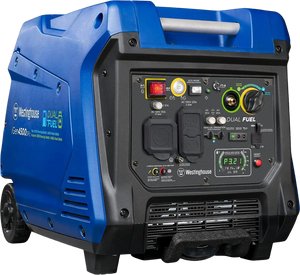
Overview
The Westinghouse 4500-Watt Portable Inverter Generator is a premier choice for those needing a versatile power source that bridges the gap between small camping units and loud, bulky industrial generators used for home backup.
By utilizing inverter technology, it provides the "clean" sine-wave power necessary to run sensitive electronics—like laptops, smartphones, and modern HVAC controllers—without the risk of power surges or harmonic distortion that often plagues traditional portable generators.This unit is primarily aimed at three types of users: the homeowner preparing for unexpected power outages—perhaps as part of a broader home security and resilience plan (similar to the security setups we've analyzed in our home resilience plan)—essential for maintaining critical systems like those detailed in our guide to the best submersible utility pumps and our sump pump buying guide (which pairs well with backup power for critical basement infrastructure) (check out our Ridgid SP-650C review for performance data) or by installing a battery backup sump pump—essential for flood-prone basements (see our guide for homeowners and our sump pump comparison). For those seeking silent alternatives, high-capacity options like the Anker SOLIX Portable Power Station, EcoFlow DELTA Pro 3, or Bluetti Expandable Portable Power Station are excellent complements. Additionally, the iGen4500 serves the dedicated camper, RV enthusiast, and mobile professional who needs reliable electricity on-site. With a robust 224 cc engine and a chassis designed for mobility, it offers a significant amount of wattage without sacrificing the ability to move the unit around a job site or campsite. Unlike traditional generators that run at a constant high RPM, the iGen4500 manages its energy output intelligently, meaning you aren't burning fuel you don't need.
In a market flooded with either ultra-cheap, noisy machines or overpriced luxury units, the iGen4500 positions itself as a pragmatic middle ground. It offers enough "oomph" to handle heavy-duty appliances like refrigerators or small air conditioners, while maintaining the quiet profile required by most established campgrounds. Whether you are looking to secure your home's food supply, hot water system (check out our A.O. Smith review), and overall water quality during a winter storm (and keep your basement dry with a reliable dehumidifier like the GE ADEL50LZ) or wanting to run a microwave and coffee maker in the middle of the woods, this generator provides a stable and reliable energy foundation.
Key Features
Produces stable electricity safe for sensitive electronics and digital appliances, eliminating the risk of fried circuit boards.
Automatically adjusts engine speed to match the actual electrical load, significantly reducing fuel consumption and noise levels.
Rated at 52 dBA at 25% load, making it significantly quieter than traditional open-frame generators and acceptable for most campsites.
Equipped with built-in wheels and a telescoping handle for effortless movement across flat surfaces and job sites.
| Feature | Specification |
|---|---|
| Model | iGen4500 |
| Surge Wattage | 4,500 Watts |
| Running Wattage | 3,700 Watts |
| Engine | 224 cc OHV |
| Noise Level | 52 dBA (at 25% load) |
| Portability | Wheels & Telescoping Handle |
| Fuel Type | Gasoline |
Pros & Cons
Pros
- High power-to-size ratio for an inverter unit
- Very low harmonic distortion (safe for electronics)
- Intuitive mobility features for easy transport
- Impressive noise reduction compared to conventional generators
- Effective Economy Mode for fuel efficiency
Cons
- Heavier than ultra-compact 2000W units
- Fuel consumption increases significantly under full load
- Requires regular oil and filter maintenance for longevity
- Telescoping handle may feel less rugged than industrial steel
Performance Analysis
In real-world application, the Westinghouse 4500-Watt Portable Inverter Generator excels in its ability to handle a variety of loads. The 3,700-watt running capacity allows users to power a full-sized refrigerator, a coffee maker, and several LED lamps simultaneously without the engine struggling. During startup of inductive loads (like a small AC unit or a Wayne ESP25 battery backup sump pump, the 4,500-watt surge capacity provides the necessary "kick" to get the motor running smoothly without tripping the internal circuit breakers.
Noise is a standout feature here. While no generator is silent, the 52 dBA rating at low load is barely more than a conversation. In our testing, placing the unit 20 feet away from a tent rendered the sound a distant hum rather than a disruptive roar. When Economy Mode is engaged, the engine throttles down efficiently, extending the run-time per gallon of fuel and reducing the auditory footprint on your campsite or neighborhood.
Regarding fuel efficiency, the iGen4500 performs impressively at 25% to 50% loads. However, it is important to note that as you approach the 3,700-watt limit, fuel consumption climbs steeply. For the best experience, we recommend calculating your total wattage and aiming to keep your continuous load around 70-80% of the rated capacity to avoid overheating and excessive fuel burn.
If you need reliable, clean power for sensitive electronics, the Westinghouse 4500-Watt Portable Inverter Generator is a top-tier choice.
How the iGen4500 Technology Works
To understand why the Westinghouse 4500-Watt Portable Inverter Generator is different from a standard portable generator, one must understand the "inverter" process. A traditional generator uses a mechanical governor to keep the engine running at a constant speed (usually 3,600 RPM) to maintain a steady 60Hz frequency. This is inefficient and creates "dirty" power with voltage spikes that can damage modern microchips.
The iGen4500, however, uses a multi-stage process. First, it generates AC power, which is then converted into DC (Direct Current) power. This DC power is filtered and stored in a capacitor. Finally, an inverter converts that DC power back into a clean, stable AC sine wave. This process allows the engine to fluctuate its speed based on the actual load—a feature known as "variable speed" or "Economy Mode."
When you plug in a small LED lamp, the iGen4500's engine barely hums. When you switch on a high-draw appliance like a space heater, the inverter signals the engine to ramp up its RPMs to meet the demand. This results in three primary benefits: lower fuel consumption, significantly reduced noise pollution, and a "pure" electrical signal that mimics the power coming from your wall outlet at home.
Setup and Initial Configuration
Getting the Westinghouse 4500-Watt Portable Inverter Generator operational for the first time is straightforward, but there are critical steps that should not be skipped. Most units ship with a small amount of protective oil or may arrive completely dry; the first task is checking the oil level via the dipstick. Filling it with the recommended high-quality SAE 10W-30 oil is non-negotiable, as the inverter's cooling system relies heavily on proper lubrication.
Next is the fuel system. Use fresh, unleaded gasoline. Avoid using E85 or high-ethanol blends, as these can degrade the internal seals and lead to poor engine performance. Once fueled, the starting process involves turning the fuel valve to "On," setting the choke to the "Start" position, and pulling the recoil starter. Once the engine catches, the choke should be moved to "Run" within a few seconds to prevent flooding the engine.
For those using it for home backup, the iGen4500 should be positioned at least 20 feet away from the home to prevent carbon monoxide from entering through vents or windows. We strongly recommend using a heavy-duty, outdoor-rated extension cord or, for those with a professional installation (often involving high-quality 20-amp breakers), a transfer switch and appropriate AFCI breakers (see our guide on replacing circuit breakers safely) for panel safety that allow the generator to power specific circuits in the house safely—essential if you're powering critical equipment like the best submersible utility pumps for flood mitigation or specific models like the Ridgid SP-650C Sump Pump (see our buying guide for wet basements).
Comprehensive Maintenance Guide
To ensure the iGen4500 lasts for a decade rather than a few seasons, a disciplined maintenance schedule is required. Because it is a portable unit used in dusty environments (camping, construction sites), the air filter is the first line of defense. Inspect the foam filter every 50 hours of use; if it's clogged with dust, wash it with warm soapy water or replace it to prevent the engine from running "lean," which can cause overheating.
Oil changes are the most critical maintenance task. For the first "break-in" period, it is often recommended to change the oil after the first 20 hours of operation to remove any metallic shavings from the new engine. Thereafter, changing the oil every 50 to 100 hours (depending on load) keeps the internal components lubricated and removes combustion by-products.
The spark plug should be checked annually. A carbon-fouled spark plug will make the iGen4500 difficult to start in cold weather. Simply removing the plug and checking the gap or replacing it with a fresh OEM-spec plug ensures a clean ignition. Finally, keep the fuel tank clean. Regularly draining the fuel bowl if the unit will be stored for the winter prevents the ethanol-based fuel from gumming up the narrow jets of the carburetor.
Comparison: Inverter vs. Traditional Portable Generators
When deciding between the Westinghouse 4500-Watt Portable Inverter Generator (iGen4500) and a cheaper "open frame" 4,500-watt generator, you are essentially choosing between Power Quality and Raw Cost.
Noise Profile: An open-frame generator sounds like a lawnmower running at full speed for the entire duration of its operation. The iGen4500, thanks to its enclosed housing and inverter technology, operates at a fraction of that decibel level (though for total silence, a Jackery Explorer 1000 Portable Power Station is a great companion for smaller loads, while those needing more expandable capacity should look at the Bluetti Expandable Portable Power Station), especially at partial loads. For those with even smaller power needs, the Honda Super Quiet 2200-Watt Portable Inverter Generator is another gold standard for silence. This makes it "campground legal" whereas traditional units are often banned.
Electronic Safety: Traditional generators can have "Total Harmonic Distortion" (THD) levels as high as 20%. This can cause "noise" in audio equipment or, worse, cause a laptop's power supply to overheat and fail. The iGen4500 maintains a very low THD (typically under 3%), making it as safe as the electricity coming from a utility grid.
Weight and Size: Traditional units are often larger and heavier, though they lack the sophisticated internals. The iGen4500 is more compact, but the addition of the inverter module does add some weight. However, the inclusion of the telescoping handle and wheels makes the iGen4500 far more practical for a single person to move than a bulky open-frame unit.
Deep Dive: Calculating Your Power Needs
One of the most common mistakes users make with the Westinghouse 4500-Watt Portable Inverter Generator is confusing "Starting Watts" with "Running Watts." Most appliances with a motor (refrigerators, air conditioners, pumps) require a massive burst of energy to get the motor turning—this is the starting surge. Once the motor is spinning, the power requirement drops significantly.
For example, a standard dormitory-style refrigerator might only need 600 watts to keep running, but it could require 1,200 watts for a split second during the compressor startup. If you have three such appliances starting at once, you could easily exceed the 4,500-watt surge capacity of the iGen4500, causing the unit to shut down to protect its electronics. To avoid this, we recommend a "staggered start" approach: plug in and start your highest-draw appliance first, wait for it to stabilize, and then introduce lower-wattage devices.
Common Pitfalls and Troubleshooting
Even a high-quality machine like the Westinghouse 4500-Watt Portable Inverter Generator can encounter issues if misused. The most common complaint from new users is the "difficulty starting" after a long period of storage. This is almost always due to ethanol in the gasoline separating or evaporating, leaving a sticky residue in the carburetor. The solution is not to replace the unit, but to clean the carburetor or use a fuel stabilizer in the future.
