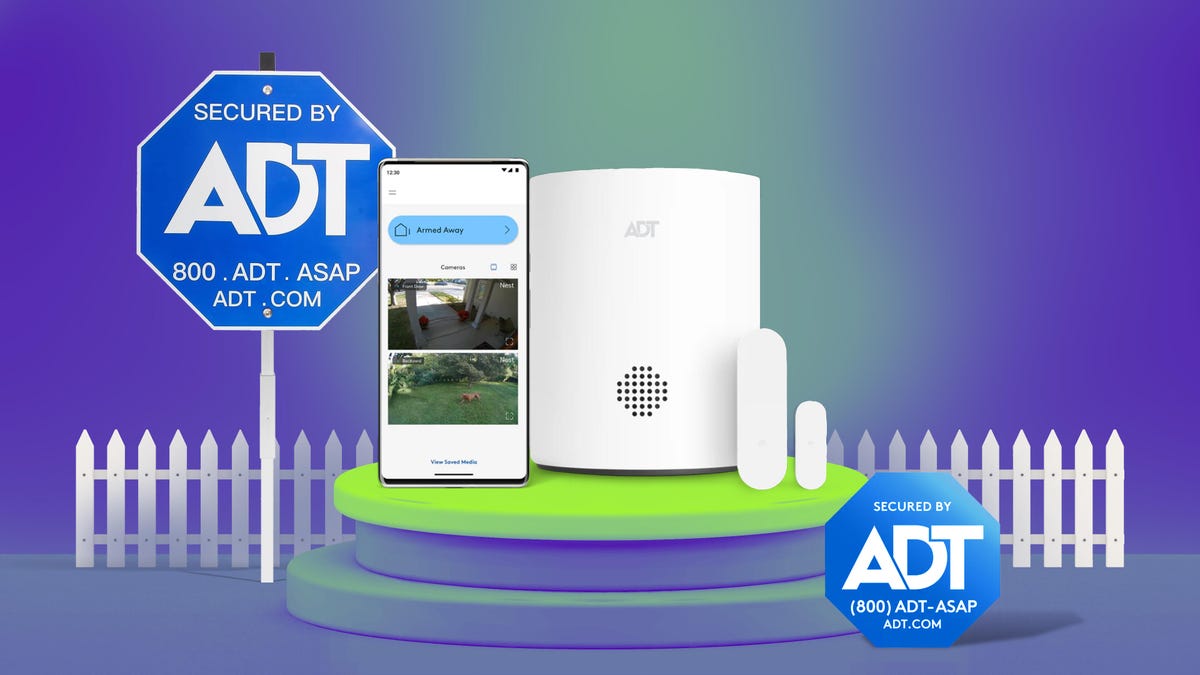
For homeowners and renters seeking professional-grade protection without the installation hassle, the ADT Self Setup 9-Piece Home Security Kit (see our Vivint (VPK-2GIG-GO2) review for a professional comparison) is a top-rated DIY solution that bridges the gap between self-installation and 24/7 professional monitoring. It provides the reliability of professional monitoring without the complex installation process, offering a compelling alternative to the Ring Alarm Pro 14-Piece Wireless Home Security System for those who prefer professional-grade monitoring over a pure smart-home ecosystem. Combining cellular backup, 24/7 monitoring, and a user-friendly app, it is ideal for securing small-to-medium spaces with the peace of mind associated with the ADT brand.
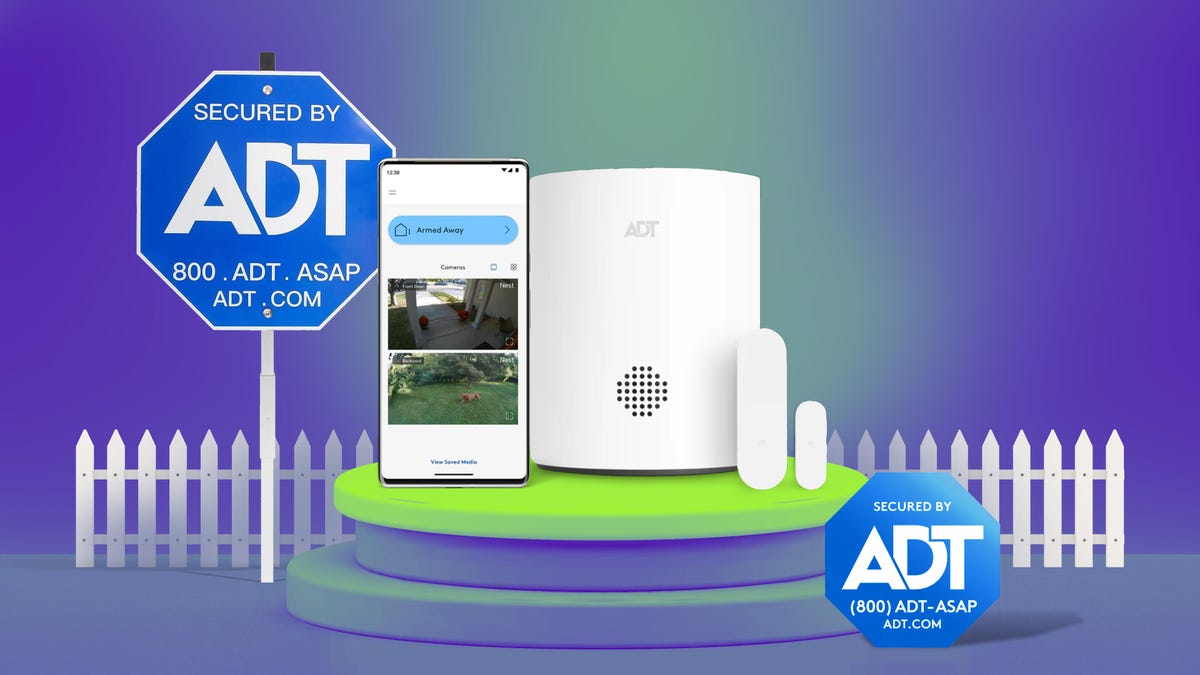
Top Pick: ADT Self Setup 9-Piece Home Security Kit with 24/7 Professional Monitoring
Score: 9/10. A strong DIY security kit for buyers who want ADT-backed 24/7 professional monitoring, cellular connectivity, and app-based control without scheduling a professional installation.
ADT Self Setup 9-Piece Home Security Kit
The ADT Self Setup 9-Piece Home Security Kit with 24/7 Professional Monitoring is designed to bridge the gap between traditional professionally installed alarm systems and newer DIY security kits.
Related parts & accessories
Instead of requiring a technician visit, this package is intended for self-installation while still giving you access to professional monitoring from ADT, one of the most recognized names in the security industry. This removes the friction of scheduling appointments and waiting for a contractor, allowing you to secure your perimeter on your own timeline.
The system is centered around a hub that connects the included sensors and communicates alarm events. The 9-piece bundle is meant to give buyers a practical starting point for securing common entry areas, such as front doors, back doors, first-floor windows, or other access points depending on the home layout. For many apartments and smaller homes, the included hardware should cover the most important openings; larger homes may need additional sensors to ensure complete coverage of every ground-floor entry point.
One of the most important features of the ADT Self Setup 9-Piece Home Security Kit is cellular connectivity. Wi-Fi-only security systems can become less useful if the home internet connection drops or if a burglar disables the router by cutting the external cable. Cellular backup helps keep the system connected for alarm communication and monitoring, ensuring that the signal reaches the ADT monitoring center regardless of your local network status. This redundancy is what separates professional-grade kits from basic "smart" alarms.
The companion app adds day-to-day convenience by allowing remote arming, alerts, and system status checks from outside the home. This is especially useful for households that frequently come and go, renters who want flexibility when moving, or homeowners who want the credibility of ADT monitoring without committing to a full professional installation appointment. By digitizing the control panel, ADT has made the management of home security as intuitive as checking an email.
Pros
- DIY installation avoids scheduling a technician visit
- Backed by ADT 24/7 professional monitoring
- Cellular connectivity helps keep the system active if Wi-Fi goes down
- Companion app supports remote arming, alerts, and status checks
- Good starter kit size for renters and many small-to-medium homes
- Flexible enough for apartments, condos, and houses
Cons
- Professional monitoring typically means ongoing service costs
- Larger homes may require additional sensors or accessories
- Not the best match for buyers who want a fully self-monitored system
- DIY setup still requires careful sensor placement and testing
Note: This kit requires a subscription for professional monitoring services to utilize the 24/7 response features.
| Specification | ADT Self Setup 9-Piece Kit |
|---|---|
| Catalog model | ADTBLU9PC |
| Product type | DIY home security system |
| Monitoring | 24/7 professional monitoring |
| Installation | Self setup / DIY installation |
| Connectivity | Cellular connectivity plus app-based control |
| Best for | Renters, homeowners, apartments, condos, and small-to-medium homes |
| Key benefit | ADT monitoring credibility with a no-technician setup process |
How the ADT Self Setup System Works
Understanding the architecture of the ADT Self Setup 9-Piece Home Security Kit is key to maximizing its effectiveness. The system operates on a "Hub-and-Spoke" model. The Hub serves as the brain of the operation; it is the central point that communicates with every sensor in the house and transmits that data to the ADT monitoring centers via cellular or Wi-Fi signals. This centralized approach ensures that if any single component is tampered with, the Hub recognizes the loss of signal and can trigger an alert.
When a sensor is triggered—such as a door opening while the system is armed—the sensor sends a wireless signal to the Hub. The Hub then triggers the local siren (if applicable) and immediately sends an alert to the ADT professional monitoring station. Because this kit emphasizes cellular connectivity, the Hub does not rely solely on your home's internet router. If a power outage takes down your Wi-Fi (similar to why homeowners invest in a Wayne ESP25 battery backup sump pump or check out our Wayne ESP25 review for similar backups), the Hub's cellular radio maintains a dedicated link to the monitoring center, ensuring that a break-in doesn't go unnoticed simply because the internet is off.
From a user perspective, the interaction happens primarily through the mobile app or the Hub's interface. You can toggle between "Stay" mode (which arms perimeter sensors but allows you to move inside) and "Away" mode (which typically arms all sensors). The app provides real-time notifications, allowing you to know exactly which door or window was opened and at what time. This granularity is essential for distinguishing between a child coming home from school and a potential security breach.
The integration of the 24/7 monitoring center is the "invisible" part of the workflow. When the Hub signals a breach, the ADT dispatcher doesn't just send a push notification to your phone; they initiate a professional protocol. This includes attempting to contact the homeowner via the app or phone and, upon failure to provide a correct disarm code, dispatching local emergency services. This tiered response reduces the risk of "alert fatigue" where users ignore phone notifications but ensures a critical response when necessary.
Furthermore, the system employs encrypted wireless protocols to prevent "signal jamming" or "spoofing," which are techniques used by sophisticated intruders to fool a security hub into thinking a door is closed when it is actually open. By utilizing a proprietary communication frequency between the sensors and the hub, the system maintains a high integrity of signal, ensuring that the transition from a secure state to an alarmed state happens in milliseconds.
Comprehensive Home Security Buying Guide
Choosing a security system is not just about the number of pieces in a box; it is about the strategy of protection. For those weighing different DIY options, checking out our Vivint (VPK-2GIG-GO2) review or comparing it to the SimpliSafe 13-Piece Wireless Home Security System can provide a helpful comparison of hub capabilities. If you are comparing ecosystems, you might also look at the SimpliSafe Review to see how professional monitoring differs across brands. When evaluating the ADT Self Setup 9-Piece Kit, consider the following dimensions of home security to determine if this specific configuration fits your lifestyle.
Monitoring: Professional vs. Self-Monitored
The primary differentiator for the ADTBLU9PC is its integration with ADT's professional monitoring. In a self-monitored system, your phone pings when a door opens. If you are in a meeting, in a movie theater, or asleep, that alert might be missed. In a professionally monitored system, a human dispatcher sees the alert. If you don't respond to their call or if you provide a distress code, they contact emergency services on your behalf. This is critical for those who want a "fail-safe" where human intervention is guaranteed.
While professional monitoring carries a monthly cost—a point often discussed in our SimpliSafe (SS3-13PKGCAM) review—it provides a psychological layer of security that self-monitoring cannot match. The knowledge that a professional center is watching your home 24/7 allows for a level of relaxation during vacations or long workdays that "DIY-only" alerts cannot provide. For many, the cost of the monthly subscription is an investment in the certainty that help is coming even if their own phone is dead or lost.
The Importance of Cellular Backup
Many budget DIY systems rely exclusively on Wi-Fi. However, sophisticated intruders sometimes cut the external internet line or use signal jammers to isolate a home. Even more commonly, home routers crash or lose power during storms. A system with built-in cellular connectivity, like the ADT 9-Piece Kit, bypasses the home network entirely for its critical alarm signals. This ensures that the link between your home and the monitoring center remains unbroken, effectively neutralizing the "internet outage" vulnerability.
In a traditional Wi-Fi system, if your ISP goes down, your security system is effectively blind to the outside world. While the local siren might still sound, no one at a monitoring center will know there is an emergency. The cellular radio in the ADTBLU9PC operates as a dedicated emergency lane, ensuring that the "SOS" signal always has a path to the dispatcher.
Scaling for Your Space
A 9-piece kit is an excellent entry point, but you must audit your home's "vulnerable points." A vulnerable point is any entrance that is not visible from the street or is easily accessible from a backyard. In a standard 2-bedroom apartment, 9 pieces (Hub plus sensors) are usually sufficient to cover the front door and a few primary windows. However, in a 3-bedroom house with a basement and a garage, you may find that after covering the front and back doors, you only have a few sensors left for the windows.
For those who prefer a different approach to professional monitoring, we also recommend the Cove Home Security System Deluxe Package. We recommend mapping your home on paper before installation to see if you need to purchase additional sensor packs. Don't forget to consider high-risk areas like sliding glass doors or basement window wells, which are often targeted by intruders; pairing your sensors with cameras like the Arlo Pro 4 Spotlight Camera 4-Pack Security Bundle or the Arlo Essential (read our Arlo Essential (VMK4352W) review for details) can provide visual verification of these gaps. Depending on your home size, you might prefer the ADT Self Setup 7-Piece Home Security System for small apartments or the more comprehensive ADT Self Setup 12-Piece Home Security Kit
Remember that a security system is only as strong as its weakest uncovered entry point. For those also looking to protect their home's infrastructure, from replacing a circuit breaker safely to ensuring electrical stability with the right AFCI breaker to Pelican PC600 water softening solutions, a proactive approach to comprehensive home maintenance is key.Mapping Tip: Prioritize the "ground floor" first. Secure all doors, then focus on windows that are hidden from public view or are near overgrown shrubbery where an intruder could hide.
Step-by-Step Installation and Setup
The "Self Setup" aspect of the ADTBLU9PC is designed for users who are not necessarily "tech-savvy" but are comfortable following a mobile app's instructions. The installation typically follows a four-stage process to ensure the system is secure and error-free.
1. Hub Placement
The Hub should be placed in a central location in your home, away from large metal objects or thick concrete walls that might interfere with the wireless signal to the sensors. It needs to be near a power outlet and in a spot where it can be easily accessed to arm or disarm the system, though the app handles most of this. Avoid placing it in a closet or a basement corner where the cellular signal might be dampened by the structure of the house. The goal is to minimize the distance between the hub and the furthest sensor to ensure a strong, stable connection.
2. Sensor Pairing
Each sensor in the 9-piece kit comes with a unique identifier. Using the app, you "pair" each sensor to the Hub. This is usually done by scanning a QR code or entering a serial number. Once paired, you can name the sensor (e.g., "Front Door" or "Kitchen Window") so that alerts are specific and actionable. Naming sensors accurately is vital; seeing "Sensor 4 triggered" is far less helpful during an emergency than seeing "Back Patio Door triggered." This step ensures the hub knows exactly which piece of hardware is reporting an event.
3. Physical Mounting
The sensors are typically peel-and-stick. While adhesive is convenient, we recommend cleaning the surface with rubbing alcohol first to remove dust and oils, ensuring a strong bond. For doors, the larger piece goes on the frame, and the smaller magnet piece goes on the door itself. The two must be aligned within a small gap (usually less than an inch) to maintain a "closed" circuit. If the gap is too wide, the system will report the door as "open" even when it is shut. For windows, ensure the sensor is placed on the side that is most likely to be forced open.
4. Testing and Calibration
The most skipped step is the test. Once the system is armed, walk through every door and open every window covered by the system. Ensure the Hub triggers and the app sends the correct notification. This confirms that your placement is correct and the signal strength is sufficient throughout the home. If a sensor fails to trigger, you may need to move the Hub closer to that area or check the battery tab on the sensor. This "walk-test" phase is critical to avoid false alarms or, worse, a failure to trigger during a real event.
Maintenance and Long-Term Care
A security system is not a "set it and forget it" device. To ensure your ADT Self Setup 9-Piece Home Security Kit remains reliable over several years, follow these maintenance guidelines to prevent failures at critical moments.
Battery Management
The sensors are battery-powered. While they are designed to last a long time, batteries will eventually deplete. The ADT app typically notifies you when a sensor's battery is running low, but it is a good practice to check these levels quarterly. When r