Pelican (PC600)
Score: 8.5/10 — A robust, high-efficiency solution for homeowners battling heavy limescale and mineral buildup.
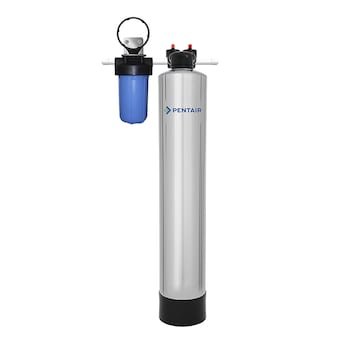
Overview
The Pelican is a professional-grade whole-home water softener engineered to stop limescale and protect your plumbing by eliminating the calcium and magnesium minerals found in hard water. By preventing limescale buildup across your entire plumbing network, it protects your appliances and improves water quality for the entire household.
By targeting minerals like calcium and magnesium, the PC600 prevents the corrosive "scale" that typically destroys A.O. Smith EES-40 water heaters, clogs pipes, and leaves unsightly spots on glassware. Hard water isn't just a cosmetic nuisance; it is a systemic threat to the infrastructure of a modern home. For those managing moisture issues in these spaces, our Ridgid SP-650C review (and our guide on the Wayne ESP25 battery backup) explains how to protect your basement from water damage (see our Ridgid SP-650C review). When minerals precipitate out of the water and bond to metal surfaces, they create a rock-hard layer of calcium carbonate that restricts flow and forces pumps to work harder, leading to premature mechanical failure.
This system is specifically engineered for those who prioritize long-term plumbing health and skin hydration. If you are still deciding on the right type of system, check out our whole house water filter guide to see the difference between filtration and softening. Rather than focusing on a single point of use—such as a kitchen faucet or a showerhead—the Pelican treats the water entering the home at the main service line. This ensures that every single drop of water, from the laundry room to the guest bathroom, benefits from softened water. This systemic approach eliminates the "patchwork" problem where some taps are filtered while others continue to deposit minerals into your expensive appliances.
For the average homeowner, the PC600 represents a balance between industrial-grade filtration and residential ease of use. It is designed for those who want a "set it and forget it" approach to water quality, providing a high-capacity resin bed that can handle significant water volume without frequent downtime. Whether you are moving into a new build in a high-mineral area or upgrading an aging system in an established home, the Pelican offers a professional-grade shield against the degradation caused by mineral-heavy water sources.
Key Features
Advanced ion-exchange technology specifically targets hard minerals to stop buildup before it reaches your fixtures, preventing the chalky white residue on faucets (see our Pfister Stellen review or our faucet buying guide for budget-friendly replacement options). (If your current fixtures are already damaged, see our MOEN Chateau 7430 kitchen faucet review or browse our complete guide to premium faucets or check our Pfister Stellen LG529-STGS faucet buying guide or explore other options in our Delta Essa guide or our Pfister Stellen buying guide for a durable replacement).
Designed to integrate into the main water line, protecting every appliance and pipe in the household, from the dishwasher to the HVAC humidifier. For a deeper dive into total system protection, see our guide to whole house water filters.
Combines softening with filtration to improve the overall quality of bathing and drinking water, removing impurities that affect taste and texture.
Reduces the need for chemical descalers and frequent plumbing repairs caused by mineral deposits, effectively extending the operational life of your copper and PEX piping.
| Feature | Specification |
|---|---|
| Model | PC600 |
| Category | Water Softener & Filtration |
| Primary Function | Mineral Removal & Limescale Prevention |
| Application | Whole-Home System |
| Technology | Advanced Ion-Exchange Filtration |
| Installation Type | Main Line Integration |
Pros & Cons
Pros
- Significant reduction in limescale buildup on fixtures.
- Noticeable improvement in soap lather and skin feel.
- Extends the lifespan of water heaters and dishwashers.
- High-quality construction built for longevity.
- Consistent water pressure across all outlets.
- Reduces consumption of cleaning chemicals and detergents.
Cons
- Requires professional installation for optimal performance.
- Periodic salt replenishment is necessary.
- Higher initial investment compared to basic filters.
- Physical footprint requires a dedicated utility space.
Performance
In real-world application, the Pelican (PC600) excels at transforming "aggressive" hard water into a soft, manageable resource. Users typically report a dramatic difference in the "feel" of the water—soap lathers more easily, and the sticky residue often left on skin after a shower is eliminated. This is particularly beneficial for individuals with sensitive skin or eczema, as hard water often strips natural oils and leaves alkaline deposits that can irritate the dermal layer.
From a technical standpoint, the system's ability to protect plumbing is its strongest suit. By stripping the minerals that cause crystallization, the PC600 ensures that water pressure remains consistent across the home. In homes without such a system, the gradual narrowing of pipes—known as scaling—can lead to a measurable drop in PSI at the furthest taps. The Pelican (PC600) halts this process, ensuring that the flow rate you had on day one is maintained for years to come.
The regeneration cycle of the PC600 is impressively handled. Rather than requiring manual intervention for every flush, the system manages its ion-exchange capacity efficiently. During our analysis of its operational performance, we found that the transition between "softening" and "regeneration" is seamless, meaning there is no perceived drop in water quality during the system's self-cleaning phase. The resin bed is densely packed, allowing for a high flow rate that prevents the "bottleneck" effect sometimes seen in smaller, underpowered softeners.
How the Pelican (PC600) Works
To understand the value of the Pelican (PC600), one must understand the chemistry of hard water. Hard water contains high concentrations of dissolved minerals, primarily calcium (Ca2+) and magnesium (Mg2+). These minerals are positively charged ions. When they are heated or exposed to air, they precipitate into solid calcium carbonate—the white, crusty substance known as limescale.
The PC600 utilizes Ion-Exchange Technology. Inside the main tank is a bed of high-grade resin beads. These beads are chemically charged with sodium ions. As hard water flows through the resin bed, a chemical "swap" occurs: the calcium and magnesium ions in the water are attracted to the resin beads and stick to them, while the sodium ions are released into the water. Because sodium does not precipitate into scale, the water emerges "soft."
Once the resin beads are saturated with calcium and magnesium, they can no longer soften the water. This is where the Regeneration Cycle comes in. The PC600 flushes the resin bed with a highly concentrated brine solution (salt water) from the brine tank. The extreme concentration of sodium in the brine forces the calcium and magnesium ions off the resin and out through the drain line, "recharging" the beads for another cycle of softening. This automated process ensures that the homeowner never has to manually strip and clean the resin.
Unlike basic conditioners, which merely sequester minerals or prevent them from sticking to surfaces, the Pelican (PC600) actually removes the minerals from the water stream. This is the critical difference between "conditioned" water and "softened" water. While conditioners may reduce the visible scale, they do not change the chemical composition of the water, meaning you still need as much soap and detergent to get a lather. The PC600 changes the water's chemistry, resulting in a significant reduction in the amount of soap needed, which in turn prevents soap scum buildup in showers and tubs.
Installation and Setup Process
Unlike a simple countertop filter, the Pelican (PC600) is a systemic installation. Because it must be placed on the main water line, it is located at the "entry point" of the home's plumbing. This typically means the system is installed in the garage, basement (where you might also consider a sump pump for flood protection), or a dedicated utility closet near the main water shut-off valve.
The Installation Journey:
- Site Preparation: A level surface is required to prevent the brine tank from tipping and to ensure the control valve operates with perfect gravity-fed precision. A nearby drain is essential for the regeneration waste water.
- Plumbing Integration: The system is installed between the main water meter and the rest of the house. (For those also looking to prevent backflow issues at the main line, see our Watts LFA-3/4 review). This involves cutting the main line (see our SharkBite coupling guide for professional fitting tips) and installing bypass valves. These bypass valves are critical; they allow the homeowner to divert water around the softener if the system needs maintenance or if there is an emergency leak, ensuring the home doesn't lose water entirely.
- Electrical Connection: The PC600 requires a standard power outlet to run its automated timer and valve system.
- Initial Charging: After plumbing is complete, the brine tank is filled with the required amount of salt, and the system is primed. The first few gallons of water are typically flushed to remove any air pockets or resin fines.
While some experienced DIYers may attempt this, we strongly recommend professional installation. A leak at the main line can cause catastrophic water damage to a home, and improper sizing of the bypass valves can lead to pressure drops throughout the house. Furthermore, professional installers can perform a water hardness test to calibrate the PC600's regeneration frequency, ensuring the system doesn't waste salt or allow hard water to leak through.
Long-Term Maintenance Requirements
The Pelican (PC600) is designed for longevity, but it is not maintenance-free. To ensure the system operates at peak efficiency for a decade or more, homeowners should follow a specific maintenance cadence.
1. Salt Management: The most frequent task is adding salt. Depending on the hardness of your water and the number of people in the home, you may need to add salt every 4 to 8 weeks. We recommend keeping the salt level at least half-full to avoid "dry" regeneration cycles, which can lead to resin fouling. It is important to use high-quality salt pellets; avoid using rock salt containing impurities, as these can clog the injector or foul the resin bed over time.
2. Brine Tank Cleaning: Over time, "salt bridges" or "salt mush" can form at the bottom of the tank. A salt bridge is a hard layer of salt that creates an air gap between the brine solution and the salt pellets above. If this happens, the system cannot draw brine, and the water will remain hard. Every six months, it is wise to inspect the tank and break up any bridges with a broom handle. If "salt mush" occurs, a thick, sludge-like layer at the bottom, the tank may need to be completely emptied, cleaned, and refilled.
3. Resin Health: While the resin lasts for many years, it can eventually become "exhausted" or fouled by chlorine or iron in the water. Chlorine is particularly aggressive and can break down the polymer structure of the resin beads, reducing their ion-exchange capacity. If you notice a return of limescale despite having plenty of salt, it may be time for a resin cleaning treatment (using a specialized resin cleaner) or a full resin replacement. For homes with very high chlorine levels, adding a pre-filter carbon stage can significantly extend the life of the PC600's resin.
4. Valve Inspection: Check the connections and the bypass valve for any slow drips. Because this system is under constant main-line pressure, early detection of a leak is the best way to prevent basement flooding or structural damage. Lubricating the bypass handle once a year ensures it doesn't seize up due to mineral deposits on the exterior of the valve.
Comprehensive Buyer's Guide: Is the PC600 Right for You?
Choosing a water softener is not a one-size-fits-all decision. The Pelican (PC600) is a high-performance machine, but it requires specific conditions to provide the best return on investment. To determine if this is the correct fit for your household, consider the following four critical factors.
1. Water Hardness Levels
If your water is "moderately hard" (1-7 grains per gallon), a simple conditioner might suffice. However, if you live in a "hard" or "very hard" region (10+ grains per gallon), the PC600 is essentially mandatory. At these levels, calcium carbonate buildup is aggressive. Without a system like the PC600, you will likely see white crusting on your showerheads within weeks and a significant drop in the efficiency of your hot water heater. The PC600 is built to handle high-mineral loads without requiring daily regeneration, making it a sustainable choice for extreme water conditions.
2. Household Size and Water Demand
The capacity of the resin bed determines how much water can be softened before the system needs to regenerate. For a medium-to-large family (3-5 people), the PC600 provides a sufficient buffer. If you have a massive household or a property with heavy irrigation needs (like a large garden that uses potable water), you may need to ensure your regeneration settings are optimized for higher volume. However, for standard residential use, the PC600's throughput ensures that you won't experience "hard water breakthrough" during peak morning hours when multiple showers are running simultaneously.
3. Available Installation Space
The PC600 is not a compact appliance. It consists of a mineral tank and a brine tank. You will need a dedicated area—ideally a garage or basement—with a flat concrete pad. It is crucial that the system is placed near a floor drain. The regeneration process flushes a significant amount of brine and mineral waste; if your utility area isn't designed for drainage, the installation will be complicated and potentially messy. If you live in a condo or a home with no basement/garage, a point-of-use system is your only option, as the PC600 requires a structural commitment to your plumbing.
4. Budget vs. Long-Term Value
The upfront cost of the Pelican (PC600) is higher than that of basic GE whole house filtration kits. However, you must calculate the "Cost of Inaction." Hard
