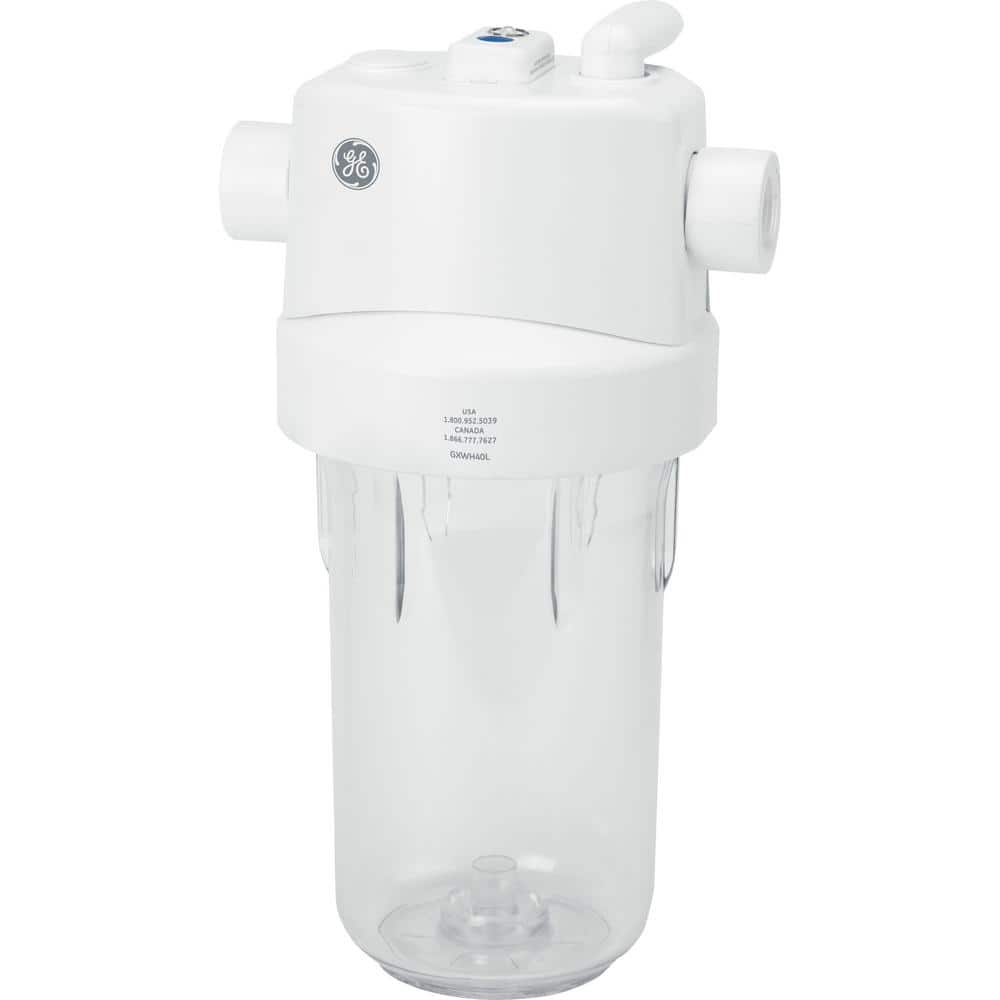
Upgrading your home's water quality starts at the main line. The GE High Flow Whole House Water Filtration System is a top-rated entry-level whole-house water filter solution for homeowners looking to reduce sediment, chlorine taste, and odors in every faucet and shower. In this comprehensive GE GXWH40L buying guide, we analyze the technical capabilities, installation requirements, and long-term maintenance costs of this popular whole-house inline filter.
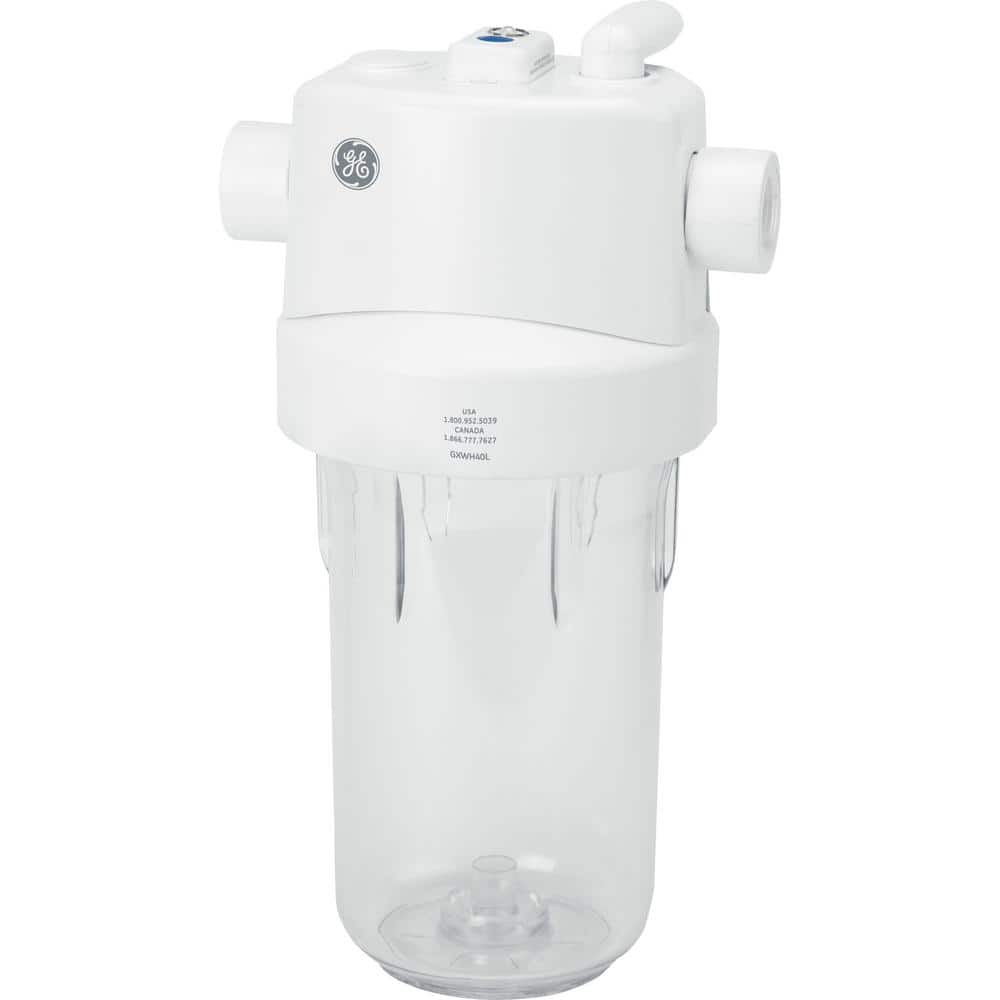
We recommend the GE High Flow Whole House Water Filtration System for effective, whole-home sediment and chlorine reduction.
Best Entry-Level Whole-House Filter: GE High Flow Whole House Water Filtration System
Score: 8.6/10. A practical, trusted-brand whole-house filter for reducing sediment, chlorine taste, and odor with simple cartridge changes and broad filter compatibility.
GE High Flow Whole House Water Filtration System Review
The GE High Flow Whole House Water Filtration System is engineered for homeowners who want a straightforward filtration upgrade without the complexity of a multi-stage treatment plant or the high cost of specialized industrial systems.
By installing this unit on the home’s main water line (similar to adding a water hammer arrestor for protection (see our Uponor AquaPEX review for more on modern plumbing materials)), you effectively create a "gatekeeper" for your plumbing, ensuring that water entering your sinks, showers, washing machines, and dishwashers has been stripped of common impurities.Looking for a reliable entry-level system? The GE High Flow Whole House Water Filtration System offers high capacity without sacrificing pressure.
The primary appeal of the GXWH40L is its balance of flow rate and filtration efficiency. Unlike some point-of-use filters that significantly restrict water pressure, the "High Flow" design aims to maintain consistent pressure across the household while still trapping particulate matter and neutralizing the chemical taste of chlorine. This makes it an ideal choice for larger families or homes with multiple bathrooms where water demand is high and pressure drops are unacceptable.
From a maintenance perspective, GE has focused on accessibility. The system utilizes a replaceable cartridge rated for up to 30,000 gallons. While the lifespan varies based on the turbidity and chemical load of your incoming water, the tool-free cartridge replacement mechanism removes the dread often associated with filter changes. Instead of wrestling with heavy-duty wrenches or specialized tools, homeowners can swap filters quickly, minimizing the downtime of their water supply.
It is important to categorize this system correctly: it is a filtration system, not a treatment system. If you are struggling with mineral buildup, you may want to explore our Pelican (PC600) review to see the difference between filtration and softening.
This means it is designed to remove physical particles and chemical odors rather than altering the chemical composition of the water (like an Aquasana Salt-Free Whole-Home Water Softener and Conditioner) or removing dissolved minerals (like the Waterdrop Tankless Under-Sink Reverse Osmosis System 800 GPD (see our detailed review)). For the vast majority of municipal water users who simply want "cleaner-feeling" water and a reduction in the "swimming pool" smell of chlorine, the GXWH40L is a highly effective and budget-friendly starting point.| Specification | GE High Flow Whole House Water Filtration System |
|---|---|
| Model Number | GXWH40L |
| Product Category | Water Treatment Systems |
| System Type | Whole-house inline water filtration |
| Primary Filtration Targets | Sediment, chlorine taste, and odor |
| Filter Capacity | Up to 30,000 gallons |
| Maintenance Style | Tool-free cartridge replacement |
| Best Use Case | Entry-level general taste and sediment improvement |
Pros
- Filters all water entering the home from a single point
- Effective reduction of sediment, chlorine taste, and odor
- Tool-free replacement makes maintenance accessible
- Compatible with standard filter sizes for flexible sourcing
- Trusted brand reliability with a focus on high-flow rates
- 30,000-gallon capacity is sufficient for typical household cycles
Cons
- Does not remove hard water minerals (not a softener)
- Single-stage design cannot target specialized contaminants (like lead/PFAS)
- Filter longevity varies wildly based on local water quality
- Requires plumbing modifications for installation
- Less comprehensive than multi-stage industrial systems
Note: Commission may be earned if you purchase through our links to retail partners.
Deep Dive: How the GE GXWH40L Works
To understand the value of the GE High Flow system, one must understand the mechanics of inline filtration. Most home filtration happens at the "Point of Use" (POU), such as a Brita Standard 10-Cup Pitcher with 1 Filter or a fridge filter. The GXWH40L operates as a "Point of Entry" (POE) system, similar in concept to the Culligan (WH-HD200-C) review but designed for entry-level needs. This means it captures contaminants before they even enter your home's internal plumbing, protecting your pipes and appliances from sediment buildup.
The heart of the system is the replaceable cartridge, which typically employs a combination of mechanical filtration and chemical adsorption. For those managing overall air quality alongside water, you might also explore our Panasonic WhisperGreen Select buying guide or consider the Hunter Comfort Select HFC-10590 for professional-grade whole-home humidity control (see the Aprilaire 700 Whole House Humidifier for a high-capacity option). The outer layers of the filter act as a physical screen, trapping silt, rust, and sand—particles that can cause "cloudy" water or clog the aerators in your kitchen faucets (such as the MOEN Chateau 7430) (similar to those in the Pfister Stellen series). As the water moves deeper into the filter medium, specialized materials (often activated carbon or similar resins) bind to chlorine molecules. This process, known as adsorption, removes the chemical taste and smell associated with municipal water treatment.
The "High Flow" designation is critical. In many whole-house filters, the density of the filter medium can create a bottleneck, leading to a noticeable drop in water pressure when two showers are running simultaneously. GE has optimized the surface area and porosity of the GXWH40L medium to allow for a higher volume of water to pass through per minute without sacrificing the filtration quality. This ensures that while your water is being cleaned, your shower experience remains powerful.
Furthermore, the internal architecture of the GXWH40L is designed to prevent "channeling." Channeling occurs when water finds a path of least resistance through a filter medium, essentially bypassing the filtration material and allowing untreated water to pass through. GE's high-flow cartridges are densely packed and structurally reinforced to ensure that water is forced evenly through the entire volume of the filter, maximizing the contact time between the water and the carbon media.
Installation and Setup Guide
Installing a whole-house filter like the GXWH40L is a significant plumbing task. Because this unit is installed on the main water line, it typically requires cutting into the copper or PEX piping that brings water from the meter into the home. For most homeowners, this is a job for a licensed plumber, but for those with DIY experience, it is a manageable project.
Installation Tip: Always install a "bypass valve" loop alongside your filtration system. This allows you to route water around the filter if you need to perform maintenance or if the filter becomes completely clogged, ensuring your home still has water while the system is being serviced.
Step-by-Step Integration Process
1. Shut-off: The main water supply must be turned off at the street or the main valve. All faucets should be opened to drain remaining pressure. This prevents accidental flooding when the pipes are cut.
2. Placement: The unit should be installed after the main shut-off valve but before the water heater. Placing it before the heater prevents sediment from settling in the bottom of your tank, which can extend the life of your water heater (see our Fleck 5600SXT water softener review for more on energy-efficient heating) and improve heating efficiency by preventing sediment blankets.
3. Fitting: The GXWH40L uses standard fittings. Depending on your pipe material, you will need adapters (e.g., threaded to PEX or threaded to copper). Using high-quality plumber's tape (PTFE) and the right connectors—like those found in our Uponor AquaPEX piping review—on all threaded connections is essential to prevent slow leaks that can damage flooring over time.
4. Flush: Once installed, it is vital to run the water for several minutes. This flushes out any air pockets and removes any initial "carbon fines" (tiny black particles) that may have been present in the new filter cartridge. Do not be alarmed if the water looks gray for the first few seconds; this is normal for carbon-based systems.
Comprehensive Maintenance Strategy
The longevity of your GE High Flow system depends entirely on your maintenance schedule. A "set it and forget it" mentality is the fastest way to ruin a filtration system. When a filter reaches its maximum capacity, it can either become "blinded" (completely clogged), which causes a massive drop in water pressure, or it can experience "breakthrough," where contaminants begin to pass through the saturated medium.
Monitoring Filter Life
While GE rates the cartridge for 30,000 gallons, this is a theoretical maximum. In a home with high sediment (common in older cities with rusting iron pipes), you may reach capacity in 10,000 gallons. In a home with very clean municipal water, you might get 40,000. The two best indicators for replacement are:
- Pressure Drop: If you notice that your shower pressure has dipped significantly while other appliances are running, your filter is likely clogged with sediment.
- Taste Return: If that distinct chlorine smell returns to your tap water, the chemical adsorption sites on the carbon are saturated.
The Replacement Process
The tool-free design is the standout feature here. By twisting the housing or releasing the locking mechanism (depending on the specific housing version), the old cartridge can be slid out. Before inserting the new filter, it is recommended to wipe down the inside of the housing with a damp cloth to remove any accumulated sludge. Ensuring a tight seal during re-installation is paramount to prevent leaks that could cause water damage in your basement (which may require a Ridgid SP-650C sump pump (see also our sump pump buying guide) or a Ridgid (SP-650C) utility pump for fast drainage or a Wayne ESP25 battery backup sump pump review for maximum protection) or utility closet. If you're managing a damp basement area, you might also consider a Basement Watchdog BW1033 sump pump or check our Basement Watchdog BW1033 buying guide to protect your equipment from flooding.
For those living in areas with extreme sediment, we recommend adding a simple spin-down sediment pre-filter before the GXWH40L. This "sacrificial" filter catches the largest particles (sand, grit) and can be flushed out with a valve, extending the life of the more expensive GE carbon cartridge by several months.
Buying Guide: Is the GXWH40L Right for You?
Choosing a water filter requires an honest assessment of your water source. Not all "bad water" is the same, and using the wrong filter is a waste of money. To determine if this system fits your needs, match your home's profile to the scenarios below.
Scenario A: The Municipal User
If you live in a city and your water is safe to drink but smells like a swimming pool or contains occasional brown sediment after city pipe repairs, the GE GXWH40L is perfect. It targets exactly these issues and provides a blanket of protection for your entire home. It is the most cost-effective way to eliminate "city water taste" from every tap. For those needing more heavy-duty filtration, see our Culligan (WH-HD200-C) review for a deeper look at professional-grade, high-capacity whole-house filtration.
Scenario B: The Hard Water Home
If you have white crusty buildup (scale) on your faucets and your soap doesn't lather, you have hard water. A filter like the GXWH40L cannot remove calcium and magnesium. While it will remove the sediment that accompanies hard water, it will not stop the scale. To handle severe scaling, you may want to read our Pelican (PC600) review or compare other professional water softening options like the Fleck 5600SXT to see how dedicated systems compare.
For hard water issues, the Aquasana Salt-Free Whole-Home Water Softener and Conditioner is an excellent companion to a filtration system; many homeowners install the GE filter first to remove chlorine, then a softener to remove minerals.
Scenario C: The Well Water Owner
Well water often contains iron, sulfur (rotten egg smell), or manganese. While the GE system can trap some of these as sediment, it is generally not robust enough to handle the high mineral loads of a well. Well owners usually require a multi-stage system including a sediment pre-filter, a backwashing iron filter, and a UV sterilizer for bacteria. The GXWH40L is an excellent polishing filter for well water, but it should not be your only line of defense.
Buyer Warning: If you suspect your water contains lead, arsenic, PFAS, or nitrates, a single-stage sediment/carbon filter is insufficient. You must perform a professional water test (and consider your overall plumbing configuration (see our Uponor AquaPEX review)) and look into high-performance Reverse Osmosis (