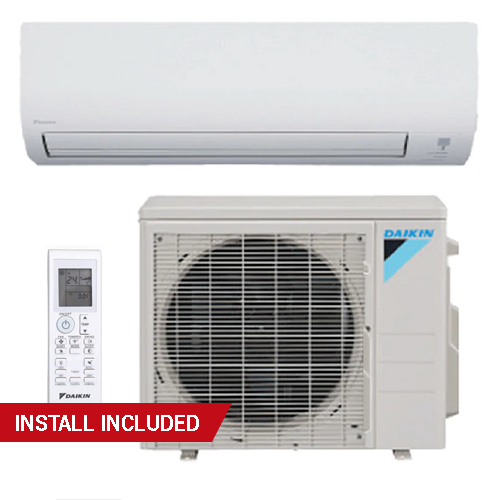
For homeowners seeking a high-efficiency heating and cooling solution for a single room without the expense of new ductwork, the Daikin 17 SEER Single-Zone Ductless Mini-Split Heat Pump is a top-tier choice. This 12,000 BTU system is an ideal energy-efficient upgrade for bedrooms, home offices, and garage conversions, combining quiet inverter operation with smart WiFi control to maximize residential energy efficiency. If you prefer a DIY-friendly approach, see our comprehensive MrCool DIY Mini-Split Buying Guide.
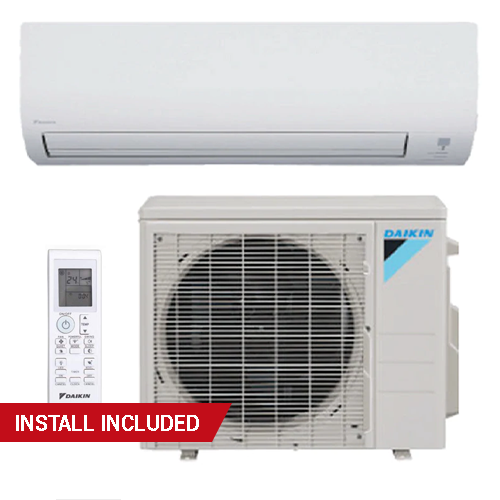
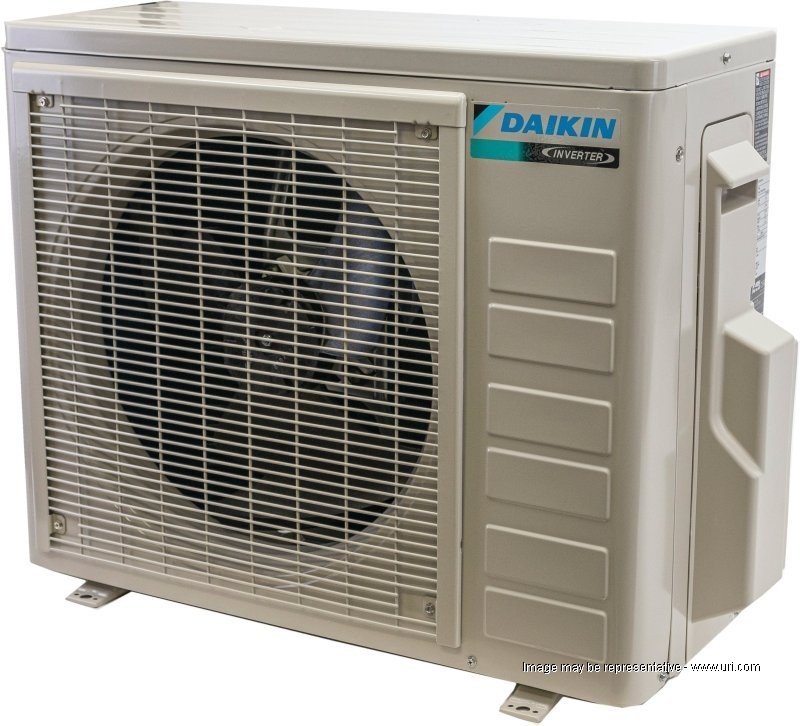
Best Single-Zone Pick: Daikin 17 SEER Single-Zone Ductless Mini-Split
Score: 8.8/10 — A dependable single-zone ductless heat pump for homeowners who want efficient 12,000 BTU heating and cooling, quiet inverter comfort, and convenient WiFi control for one targeted room.
Daikin 17 SEER Single-Zone Ductless Mini-Split Heat Pump 12000 BTU with WiFi
Explore more high-efficiency systems from Daikin.
The Daikin 17 SEER Single-Zone Ductless Mini-Split Heat Pump 12000 BTU with WiFi is designed for homeowners who need focused comfort in one specific area rather than a full HVAC system overhaul. If you're comparing brands for a small room, check out our Mitsubishi vs Senville vs LG comparison.
Looking for an efficient solution? Check the current price of the Daikin 17 SEER Single-Zone Ductless Mini-Split.
With a 12,000 BTU capacity, it is commonly suited to spaces such as bedrooms, small living rooms, sunrooms, additions, workshops, and offices, assuming the room size, insulation, ceiling height, window exposure, and climate are appropriate.Its biggest advantage is the combination of ductless installation and inverter-driven operation. Instead of cycling fully on and off like many traditional systems, an inverter compressor can modulate output to help maintain steadier room temperatures. That can improve comfort, reduce temperature swings, and help keep noise levels lower during normal operation.
The 17 SEER efficiency rating places this unit in the practical efficiency range for buyers who want better performance than basic room air conditioners without necessarily moving into premium high-SEER pricing. Because it is a heat pump, it provides both cooling and heating, making it a year-round comfort upgrade for a single zone rather than just a summer cooling appliance.
Built-in WiFi is another major reason to consider this model. Smart control is especially helpful for rooms that are used on a schedule, such as a home office during work hours or a bedroom at night. Features such as auto-restart and a self-cleaning function add convenience, particularly for homeowners who want a low-fuss system for everyday use.
| Spec | Daikin RXB12AXVJU |
|---|---|
| Product type | Single-zone ductless mini-split heat pump |
| Model number | RXB12AXVJU |
| Cooling/heating coverage | Designed for one room or single zone |
| Capacity | 12,000 BTU |
| Efficiency rating | 17 SEER |
| System style | Wall-mounted ductless indoor unit with outdoor heat pump system |
| Compressor type | Inverter-driven |
| Smart features | Built-in WiFi adapter for connected control |
| Convenience features | Auto-restart and self-cleaning function |
| Best use case | Bedrooms, additions, small living spaces, home offices, and similar single-zone areas |
Pros
- Provides both heating and cooling for year-round single-room comfort
- 17 SEER efficiency is a solid fit for everyday residential use
- Inverter-driven compressor helps maintain more consistent temperatures
- Built-in WiFi makes scheduling and remote control easier
- Ductless design is ideal for rooms without existing ductwork
- Auto-restart and self-cleaning features reduce day-to-day hassle
Cons
- Only serves one zone, so it is not a whole-home solution by itself
- Professional sizing and installation are strongly recommended. For other critical home utility installations, see our Ridgid SP-650C Sump Pump Buying Guide.
- 12,000 BTU may be too much or too little depending on room conditions
- Wall-mounted indoor unit is visible in the room
- Performance depends on proper placement, line-set installation, and maintenance
How Mini-Split Heat Pumps Work: The Technology Inside
To understand why the Daikin RXB12AXVJU is an efficient choice, it helps to understand the fundamental mechanics of a ductless mini-split. For those comparing different installation types, evaluating DIY-specific models can help determine the best fit for your home and budget.
Unlike a central air system that pushes air through a network of ducts, a mini-split uses a direct-expansion (DX) system. This means the refrigerant cools the air right at the point of delivery—the wall-mounted indoor unit. This eliminates the energy loss associated with duct leakage, which can account for up to 30% of energy loss in traditional HVAC systems.The Role of the Inverter Compressor
The core of the Daikin system's efficiency is the inverter-driven compressor. Traditional HVAC systems operate on a binary "on or off" cycle. When the thermostat detects the room has warmed up, the compressor kicks in at 100% power until the target temperature is reached, then shuts off completely. This creates a "sawtooth" temperature pattern, resulting in noticeable fluctuations and audible "clunks" when the system starts and stops.
An inverter compressor, however, functions like a dimmer switch. It can continuously adjust its speed and output based on the real-time cooling or heating load. Once the target temperature is achieved, the compressor slows down to a low, steady hum, maintaining the temperature with minimal energy expenditure. This modulation reduces electrical spikes, extends the lifespan of the hardware, and provides a much more stable thermal environment.
The Heat Pump Cycle and Refrigerant Management
Since this unit is a heat pump, it possesses the ability to reverse the flow of refrigerant. In the summer, it extracts heat from the indoor air and pumps it outside. In the winter, a reversing valve flips the process, extracting heat from the outdoor air—even in cold temperatures—and pumping it into the living space.
This process is significantly more efficient than electric resistance heating (used in standard space heaters), which simply converts electricity into heat. Heat pumps move heat rather than creating it, allowing them to deliver more BTUs of warmth per watt of electricity consumed. The 17 SEER (Seasonal Energy Efficiency Ratio) rating measures this total cooling output against total energy consumption over a season, placing the RXB12AXVJU in a "sweet spot" of high efficiency without the prohibitive cost of ultra-premium 20+ SEER units.
Deep Dive: The 12,000 BTU Capacity and Room Sizing
When selecting the Daikin 17 SEER model, the 12,000 BTU (British Thermal Units) rating is the most critical specification. BTU measures the amount of heat the system can move per hour. While many retailers provide a generic square footage chart, real-world application requires a more nuanced approach to "load calculation."
Critical Factors That Affect BTU Needs
To determine if the RXB12AXVJU is the correct size for your space, consider these four thermal variables:
- Ceiling Height: Standard BTU charts assume an 8-foot ceiling. If you have vaulted ceilings or a loft, you have a significantly larger volume of air to treat. A 400 sq ft room with 12-foot ceilings effectively requires the same cooling power as a 600 sq ft room with standard ceilings.
- Insulation Quality: Rooms with single-pane windows, gaps around door frames, or uninsulated exterior walls leak energy. In these "leaky" environments, the unit must work harder to counteract the infiltration of outdoor air, meaning you may need a higher BTU rating than the floor area suggests.
- Sun Exposure: A south-facing room with large, unshaded windows acts as a solar collector. This adds a massive "thermal load" to the room, requiring the system to remove not only the ambient air heat but the radiant heat coming through the glass.
- Internal Heat Sources: A home office with multiple monitors, a high-end gaming PC, and several people generates significant internal heat. Similarly, a kitchen area requires more cooling power than a guest bedroom due to the heat produced by appliances.
The Danger of Undersizing vs. Oversizing
Finding the right balance is essential for the longevity of the Daikin unit. If you undersize your system, the unit will run at maximum capacity almost constantly to reach the target temperature. This leads to increased electricity bills, louder operation, and a significantly shorter lifespan for the compressor.
Conversely, if you oversize the system (e.g., placing a 12,000 BTU unit in a small 200 sq ft room), the unit will "short cycle." It reaches the target temperature so quickly that it shuts off before the air has a chance to be properly dehumidified. This results in a room that feels cold and clammy—the "cold-damp" effect. (If you need more power for a larger space, consider a higher-capacity alternative like the MrCool DIY 24000 BTU Ductless Mini-Split Heat Pump, as detailed in our guide).
Installation and Setup Expectations
Unlike a window AC unit, the Daikin RXB12AXVJU is a permanent architectural installation. It is a sophisticated piece of machinery that requires precise handling of refrigerants and high-voltage electrical connections.
The Connection Process
The system consists of two main components: the indoor air handler (the wall-mounted head) and the outdoor condensing unit. These are connected via a "line set," which includes two copper tubes for the refrigerant (liquid and suction lines) and a communication cable for electrical signals and data. A small hole, typically around 3 inches in diameter, must be drilled through the exterior wall to allow these lines and the condensate drain pipe to pass through.
Strategic Placement for Maximum Performance
For the indoor unit, mount it on an interior wall with ample clearance above and to the sides to ensure unobstructed airflow. Avoid placing it directly above a doorway or too close to a corner, which can create "dead zones" where air fails to circulate. Mounting the unit high on the wall is ideal, as cool air naturally sinks, allowing the air to "fall" through the room for more even distribution.
The outdoor unit must be placed on a level concrete pad or a sturdy wall bracket. It is critical that the unit is not placed in a confined space where it can "re-breathe" its own hot exhaust air. Maintain at least 12-24 inches of clearance from walls and keep the area free of dense vegetation that could clog the coils with leaves or debris.
Comprehensive Maintenance Guide
To maintain the 17 SEER efficiency rating over several years, regular maintenance is non-negotiable. Because the unit is an open-air system, it acts as a high-volume filter for dust, pet dander, and pollen from your home.
The Filter Cleaning Cycle
The indoor unit features removable mesh filters. Depending on the amount of dust and pets in your home, these should be checked every 2 to 4 weeks. Clogged filters restrict airflow, which forces the inverter compressor to run longer and harder to maintain the temperature, increasing energy costs and straining the fan motor.
Cleaning is straightforward: slide the filters out, vacuum the dust, or rinse them with lukewarm water and mild soap. (For a deeper dive into managing room moisture and air quality, see our review of the Filtrete 20x25x1 AC Furnace Air Filter for managing air quality). Ensure they are 100% dry before reinstalling. Neglecting this simple step is the number one cause of decreased efficiency and "musty" smells in mini-split systems. For areas with poor natural airflow, combining a mini-split with a high-quality ventilation fan (see our IPX4 55CFM review) can further improve indoor air quality.
Condensate Drain Maintenance
Because the unit removes moisture from the air, that water must be drained via a condensate pipe. Over time, algae or biological slime can build up inside the drain line, causing the water to back up and leak inside your wall. A professional should clear the drain line annually, but homeowners can periodically check the exit point of the pipe to ensure water is flowing freely.
Outdoor Unit Care
The outdoor unit's coils are the lungs of the system. If they are covered in grass clippings, spider webs, or dust, the system cannot reject heat efficiently. Use a garden hose (low pressure) to gently rinse the coils once a season. Avoid using a pressure washer, as the high-pressure stream can bend the delicate aluminum fins, permanently restricting airflow.
Comparative Analysis: Daikin RXB12AXVJU vs. Alternatives
When shopping for a 12,000 BTU system, buyers often compare the Daikin model against traditional window units, portable ACs, and higher-capacity options like the Carrier Performance Series Ductless Mini-Split Heat Pump (detailed Carrier analysis) or the Pioneer Diamante Series Mini-Split Heat Pump (detailed Pioneer analysis). The following table breaks down these differences.
| Feature | Daikin RXB12AXVJU | Window AC Unit | Premium 22+ SEER Split |
|---|---|---|---|
| Efficiency | High (17 SEER) | Low to Moderate | Very High |
| Noise Level | Very Quiet (Inverter) | Loud / Disruptive | Ultra Quiet |
| Heating | Yes (Heat Pump) | Usually No | Yes (High Efficiency) |
| Installation | Professional Required | DIY / Simple | Professional Required |
| Smart Control | Built-in WiFi | Limited / App-based | Advanced Ecosystems |
| Lifespan | Long (10-15+ Years) | Short (5-8 Years) | Very Long< |