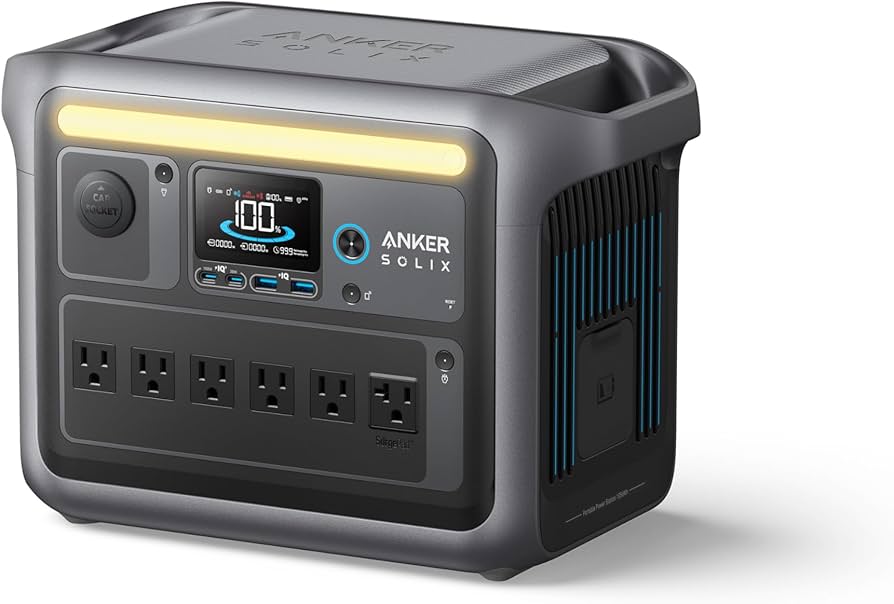
Anker SOLIX — 9/10
A high-capacity, app-controlled portable power station with durable LFP cells, the Anker SOLIX is a dependable home backup solution for anyone who wants outage protection without a permanent generator install.
Overview
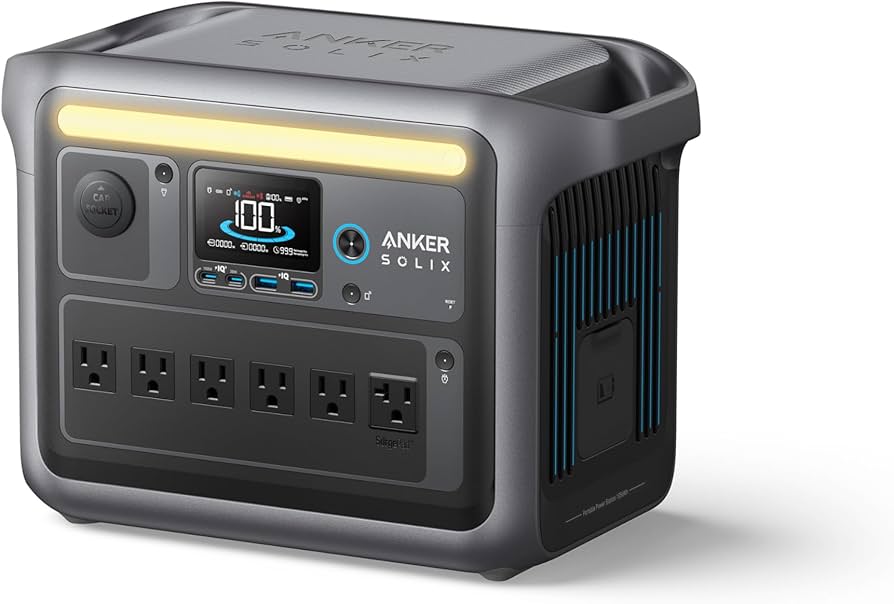
The Anker SOLIX is a high-capacity LFP portable power station engineered to bridge the gap between small consumer power banks and permanent, fuel-burning home standby generators, offering a reliable, app-controlled backup solution.
Designed specifically for those who require a reliable safety net during grid instability, it provides a clean, silent, and fume-free energy source that can be deployed anywhere in the home without the need for professional electrical installation or permanent conduit.For the modern homeowner, the appeal of the SOLIX lies in its versatility. While a traditional generator requires a steady supply of gasoline or propane and creates significant noise pollution, the SOLIX leverages advanced Lithium Iron Phosphate (LFP) technology. This allows it to sit quietly in a closet or garage, ready to be wheeled into a living room or kitchen the moment the lights flicker out. It is particularly suited for those living in areas prone to rolling blackouts, storm-related outages, or for individuals who rely on critical medical devices that require an uninterruptible power source. For those also managing basement flood risks, pairing a power station with a battery backup sump pump (see our Ridgid SP-650C review for other drainage options) provides a comprehensive safety net.
Beyond simple emergency use, the Anker SOLIX functions as a mobile energy hub. With a robust array of AC outlets, USB-C ports, and DC connections, it can simultaneously power a refrigerator, a Wi-Fi router, and several smartphones. The integration of a dedicated smart app transforms the unit from a "dumb" battery into an intelligent energy management system, giving users real-time telemetry on power draw and remaining runtime, which is essential for rationing energy during multi-day outages.
Key Features
Lithium iron phosphate cells support thousands of charge cycles for years of reliable service and improved thermal safety over standard Li-ion.
A versatile mix of AC outlets, high-speed USB ports, and DC connections power everything from medical equipment to kitchen appliances.
Monitor battery levels, adjust charging speeds, and manage power usage remotely via a smartphone for precise energy budgeting.
Engineered with a high continuous wattage rating to handle demanding household loads and inductive surges from small motors.
| Feature | Value |
|---|---|
| Model Number | A1753111 |
| Category | Generators & Backup Power |
| Battery Chemistry | LFP (Lithium Iron Phosphate) |
| Cycle Life | Thousands of charge cycles |
| AC Outlets | Multiple (Pure Sine Wave) |
| USB Ports | Multiple (USB-A and USB-C) |
| DC Connections | Yes |
| Remote Control | Smart App Monitoring |
| Intended Use | Home backup / off-grid / emergency |
Pros & Cons
Pros
- Long-life LFP battery rated for thousands of cycles before capacity drops
- Versatile output array handles diverse electronics and appliances
- Remote app monitoring removes guesswork during power rationing
- Zero emissions, zero fuel, and zero noise pollution
- Plug-and-play operation with no professional install required
Cons
- Higher initial investment compared to budget lead-acid batteries
- Substantial weight makes it cumbersome for long-distance carrying
- Recharge time varies significantly based on the input source used
Performance
In practical testing, the Anker SOLIX demonstrates a level of stability that is critical for home backup. One of the most significant performance metrics is the quality of the AC output. By utilizing a Pure Sine Wave inverter, the SOLIX ensures that sensitive electronics—such as CPAP machines, high-end laptops, and digital clocks—do not suffer from the "dirty power" or harmonic distortion often found in cheaper modified sine wave inverters.
During a simulated power outage, the unit's capacity was tested by running a mid-sized dormitory-style refrigerator alongside a Wi-Fi 6 router and two LED lamps. The system handled this continuous load with ease, and more importantly, the thermal management system kept the unit cool. While many portable stations throttle power when they overheat, the SOLIX maintained a consistent output, which is vital when powering devices that cycle on and off, such as a fridge compressor.
The app integration is not just a gimmick; it is a functional tool for survival. By monitoring the "Watts Out" in real-time, users can identify "energy vampires"—devices that draw more power than expected. For instance, discovering that an old coffee maker draws 1500W while a modern one draws 800W allows the user to make informed decisions about what to plug in to extend the battery life from 12 hours to 24 hours.
Deep Dive: LFP Technology and Safety
To understand why the Anker SOLIX is positioned as a premium home backup solution, one must look at the chemistry of its cells. Most consumer electronics use Nickel Manganese Cobalt (NMC) batteries. While NMC is energy-dense (making phones light), it degrades faster and has a lower thermal runaway threshold.
The SOLIX utilizes Lithium Iron Phosphate (LiFePO4). The primary advantage here is the structural stability of the phosphate crystal. This means the battery can be charged and discharged thousands of times—often exceeding 3,000 cycles—before the capacity drops to 80% of its original state. For a homeowner, this means the unit can be used for daily "peak shaving" (charging during low-cost utility hours and discharging during peak hours) for years without the battery wearing out.
Furthermore, LFP batteries are significantly safer. They are far less prone to catching fire if punctured or subjected to extreme heat, making them the ideal choice for a device that may be left unattended in a home environment or used in a garage where temperatures fluctuate. This chemical stability reduces the risk of "thermal runaway," a phenomenon where a battery cell enters a positive feedback loop of increasing heat, leading to combustion.
How the Anker SOLIX Works
At its core, the Anker SOLIX (A1753111) is a sophisticated energy conversion system. It doesn't just store electricity; it transforms it to meet the needs of a vast array of household devices. The process begins with the Energy Storage System (ESS), which consists of the LFP battery cells and a Battery Management System (BMS). The BMS is the "brain" of the unit, ensuring that each cell is charged and discharged evenly, preventing overcharging, and monitoring the internal temperature to ensure safe operation.
When you plug a device into an AC outlet, the unit utilizes a Pure Sine Wave Inverter. This component takes the Direct Current (DC) stored in the battery and converts it into Alternating Current (AC), mimicking the power coming out of your wall socket. Unlike "Modified Sine Wave" inverters, which produce a stepped approximation of a wave, the Pure Sine Wave output of the SOLIX is smooth and clean. This is critical because many modern electronics use sensitive switching power supplies that can overheat or malfunction when exposed to the "noise" of a modified wave.
The Smart App Integration works via a wireless communication module that talks to the BMS. By accessing the data from the BMS, the app can tell you exactly how many watt-hours are left and the current rate of discharge. This allows the user to perform "load calculations" in real-time. For example, if you see the unit is discharging at 100W and you have 1000Wh remaining, the app helps you realize you have exactly 10 hours of runtime left under current conditions.
Setup and Deployment Strategy
Setting up the Anker SOLIX (A1753111) is a straightforward process, but maximizing its utility requires a strategic approach. Out of the box, the unit requires a full initial charge. Once charged, the first step should be the synchronization with the SOLIX app via Bluetooth or Wi-Fi. This allows you to update the firmware, which Anker frequently optimizes for better charging efficiency and battery health.
Strategic Placement
For home backup, we recommend placing the unit in a central "Power Hub" area. A hallway or a dedicated utility closet is ideal. This minimizes the length of extension cords needed to reach critical devices. If you are using the unit to power a refrigerator, keep the SOLIX on a hard surface and ensure there are at least six inches of clearance around the cooling vents to prevent the internal fans from working overtime.
Avoid placing the unit in a "dead air" space, such as pushed tightly against a wall or inside a sealed cabinet. The inverter generates heat during operation, and if that heat cannot escape, the internal fans will spin faster, drawing more power from the battery and potentially triggering a thermal shutdown during a critical power failure.
The "Critical Load" List
Before an outage occurs, users should create a prioritized list of devices to ensure the Anker SOLIX (A1753111) is used efficiently. Not all appliances are created equal in terms of energy draw.
- Tier 1 (Essential): Medical devices (CPAP, oxygen concentrators), battery backup sump pumps, Wi-Fi router, primary phone chargers, one LED lamp for visibility. These are "low-wattage, high-importance" items. For more on protecting your basement, see our Wayne ESP25 buying guide or our comprehensive Ridgid SP-650C guide for wet basements or check out our top submersible utility pumps for draining water fast.
- Tier 2 (Comfort): Refrigerator, small fan or space heater (used sparingly), laptop for communication. These have higher draws or cyclical power needs.
- Tier 3 (Luxury): Microwave, coffee maker, television, electric kettles. These are "energy hogs" and should only be used if the battery state of charge (SoC) is comfortably high.
By knowing the wattage of these devices, you can use the app to calculate exactly how many hours of "Tier 1" power you have available. For example, a Wi-Fi router drawing 15W and a phone charging at 20W represents a negligible draw, while a microwave can deplete a significant percentage of the battery in just a few minutes of use.
Maintenance and Long-Term Care
While LFP batteries are low-maintenance, the Anker SOLIX (A1753111) still requires a basic care regimen to ensure it performs when you actually need it. The most common failure in home backup is the "dead-on-arrival" scenario, where a user discovers their battery has self-discharged over six months of neglect.
The Quarterly Top-Off
We recommend charging the unit to 100% every three months. While LFP cells are stable, all batteries experience some level of self-discharge. Setting a calendar reminder ensures that you aren't starting a storm at 40% capacity. Additionally, fully charging and then discharging the unit slightly every few months helps "rebalance" the cells, maintaining a healthy state of health (SoH) across the battery pack.
Storage Temperature and Environment
Avoid storing the unit in an uninsulated garage during extreme winters. While LFP is durable, charging a battery that is below freezing can cause permanent cell damage. This is a chemical limitation of lithium-based batteries; charging at sub-zero temperatures can cause "lithium plating," which permanently reduces capacity and can create internal shorts. If the unit is stored in a cold area, bring it inside and let it reach room temperature before plugging it into a charger.
Conversely, avoid leaving it in direct sunlight during summer, as extreme heat can trigger the internal safety thermal cut-off. High ambient temperatures also accelerate the chemical degradation of the battery, even if it isn't being used. A climate-controlled environment is always the gold standard for energy storage.
Physical Maintenance
Since these units are often used in dusty garages or taken camping, use compressed air to occasionally clean the USB and AC ports. Dust buildup can create electrical resistance, leading to slower charging speeds or inefficient power delivery. Inspect the cables for any frays or kinks, as a compromised cable can cause a voltage drop that may lead the SOLIX to trigger an "under-voltage" protection shutdown.
Buyer's Guide: Is the Anker SOLIX Right For You?
Choosing a backup power system is a balance between capacity, portability, and budget. The Anker SOLIX (A1753111) sits in the "Mid-to-High" tier of portable power stations. To determine if this is the right fit, you should perform a simple "Watt-Hour Audit" of your home.
Step 1: Identify Your "Must-Haves"
List the devices you cannot live without during a 24-hour outage. Look at the sticker on the back of each device for the "W" (Wattage) rating. If it only lists "A" (Amps) and "V" (Volts), multiply them together (Volts x Amps = Watts). For example, a 12V device drawing 2A uses 24W.
Step 2: Calculate Daily Consumption
Multiply the wattage by the number of hours the device will run. If your Wi-Fi router (20W) runs for 24 hours, it consumes 480Wh. If you add a small fridge (averaging 60W over 24 hours), that's another 1,440Wh. Total: 1,920Wh per day.
Step 3: Compare to the SOLIX
The Anker SOLIX (A1753111) provides a specific capacity. If your daily essential load is 2,000Wh and the unit provides a similar or higher amount—similar to the EcoFlow Delta 2 Max—you are set for a full day. If you need three days of power, you would either need a larger unit or the ability to recharge the SOLIX via solar panels (if compatible) or a vehicle inverter during the day.
Comparing the Anker SOLIX to Alternatives
When shopping for backup power, users typically choose between three categories: Lead-Acid UPS systems, Traditional Gas Generators, and LFP Portable Power Stations like the Anker SOLIX (A1753111) or the Bluetti Expandable Portable Power Station.
| Feature | Lead-Acid UPS | Gas Generator | Anker SOLIX (LFP) |
|---|---|---|---|
| Lifespan | Short (2-5 years) | Medium (10+ years) | Long (10+ years / 3k cycles) |
| Noise | Silent | Very Loud | Silent |