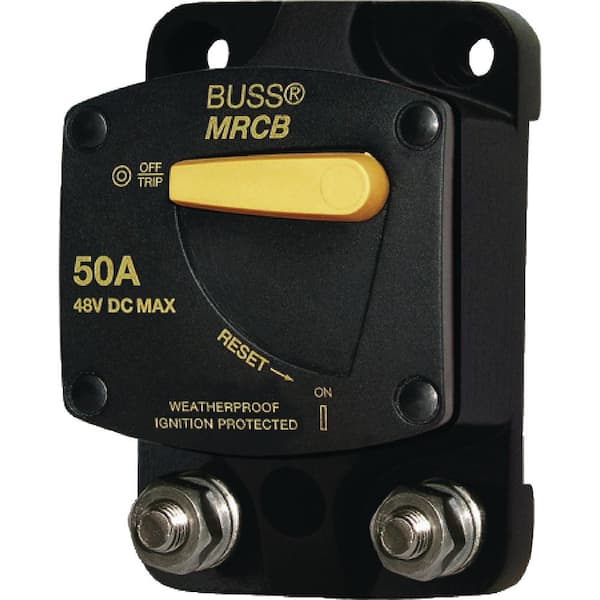
DC power faults can damage wiring, batteries, and electronics quickly—especially in marine, RV, solar, and high-demand auxiliary battery systems. In this Blue Sea Systems 5193 buying guide, we explore why a properly sized thermal circuit breaker provides a critical, resettable protection point without the hassle of disposable fuses. This guide examines the Blue Sea Systems Marine Thermal Circuit Breaker for DC Applications from Blue Sea Systems and its essential role in 12V and 24V DC power systems.
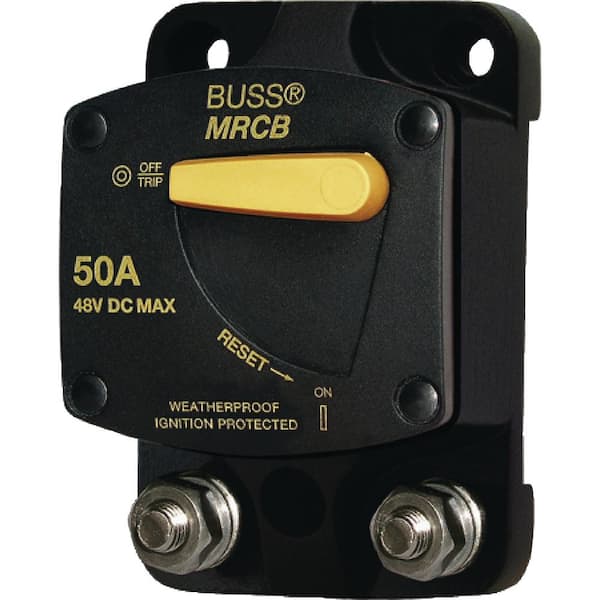
Best Overall: Blue Sea Systems Marine Thermal Circuit Breaker
Score: 9.2/10. A rugged, resettable DC circuit breaker that is best suited for marine, RV, solar, off-grid, and auxiliary battery systems needing accessible overload protection.
For those building out a 12V or 24V electrical system, the Blue Sea Systems Marine Thermal Circuit Breaker for DC Applications provides a professional-grade alternative to disposable fuses from Blue Sea Systems. By using thermal trip technology, it protects wiring from overheating and offers a manual reset for convenience in the field. It is specifically engineered for the high-vibration, high-moisture environments typical of boats and off-grid vehicles.
Blue Sea Systems Marine Thermal Circuit Breaker for DC Power Protection
The Blue Sea Systems Marine Thermal Circuit Breaker for DC Applications is designed for low-voltage DC electrical systems where overload protection needs to be durable, accessible, and resettable.
It is commonly used in boats, RVs, solar battery banks, off-grid home power systems, and auxiliary vehicle electrical builds.
For those integrating wider power management, the Blue Sea Systems 6-Circuit ST Blade Fuse Block with Cover is a professional-grade distribution solution to use alongside a primary breaker.
Instead of replacing a fuse after a fault, you can manually reset the breaker once the issue has been corrected, significantly reducing downtime during troubleshooting in the field.Its surface-mount format makes it practical for installation near batteries, bus bars, charge controllers, inverters, or high-current accessory circuits. For installers working in tight compartments or utility spaces, this style of breaker is easier to inspect and service than hidden inline protection. The manual reset design also helps make troubleshooting more straightforward because the tripped state is visible and intentional, preventing the "invisible failure" common with recessed fuses.
The Blue Sea Systems Marine Thermal Circuit Breaker for DC Applications is built specifically for 12V and 24V DC applications and is engineered for environments where vibration, moisture, and temperature swings are constant. This makes it especially useful for marine and mobile systems, where wiring protection must remain dependable while the vehicle or vessel is in motion. It is also a primary choice for hobbyists building solar or auxiliary power systems who want a professional-grade protection method that exceeds the capabilities of basic plastic inline fuse holders.
To manage multiple smaller circuits, we recommend pairing this breaker with the Blue Sea Systems 6-Circuit ST Blade Fuse Block with Cover for organized DC distribution.
This breaker is best for buyers who understand the required amp rating for their circuit or are following a wiring diagram that specifies the correct breaker size. Like any DC protection device, it must be matched to the wire gauge, expected load, and system voltage. If you are protecting a critical circuit, such as a winch, one of the best submersible utility pumps, or a high-output alternator, confirming your installation plan against applicable marine (ABYC) or RV (ANSI) electrical standards—especially if powering high-draw equipment like the Ridgid SP-650C sump pump—is highly recommended before energizing the system.
| Specification | Detail |
|---|---|
| Model Number | 5193 |
| Voltage Compatibility | 12V / 24V DC |
| Mounting Type | Surface Mount |
| Reset Mechanism | Manual Reset |
| Application | Marine, RV, Solar, Auxiliary DC |
| Protection Method | Thermal Trip |
Pros
- Resettable protection is more convenient than replacing fuses after a trip.
- Surface-mount design is easy to access, inspect, and service.
- Optimized for 12V and 24V DC systems in boats, RVs, and solar builds.
- Engineered for high-vibration environments where household breakers fail.
- Manual reset prevents immediate automatic re-energizing during a short circuit.
Cons
- Requires precise sizing based on wire gauge and load; not a universal fit.
- Surface mounting requires dedicated physical space in the electrical bay.
- Does not replace the need for high-quality terminals and cable management.
- Overkill for very low-current accessories where a simple fuse is sufficient.
Deep Dive: How Thermal Circuit Breakers Work
Unlike magnetic breakers found in residential load centers (detailed in our AFCI vs Standard Circuit Breakers guide), the Blue Sea Systems Marine Thermal Circuit Breaker for DC Applications utilizes thermal technology to detect overloads. To understand why this is critical for DC systems, one must understand the physics of heat and current. Most homeowners are accustomed to the "click" of a magnetic breaker (such as those detailed in our Eaton BRCAF115 review (ideal for AC applications)) that reacts almost instantaneously to a massive surge. In DC environments, particularly those involving batteries and motors, a slightly different approach is often more reliable. For those comparing AC brands for home use, our detailed comparison of Square D vs Eaton circuit breakers offers critical context for those transitioning from residential AC to DC projects.
Inside the breaker is a bimetallic strip composed of two different metals bonded together. While this thermal method is ideal for DC, it differs significantly from the AC protection strategies used in residential wiring, such as those employing arc-fault circuit interrupters (AFCI) to prevent house fires. These metals expand at different rates when heated. As current flows through the strip, it generates heat. Under normal operating loads, the strip remains relatively straight. However, when the current exceeds the rated capacity of the breaker, the strip heats up enough to bend. This bending action eventually triggers the mechanical release, "tripping" the circuit and cutting off power to the load.
This thermal response is beneficial for DC power systems because it mimics the heat buildup that occurs in the wiring itself. If a wire starts to overheat due to an overload, the breaker will typically trip before the insulation on the wire reaches its melting point. This provides a layer of safety that is inherently linked to the physical realities of the electrical installation. It essentially acts as a sentinel for the temperature of the circuit.
Furthermore, the thermal design is less susceptible to "nuisance tripping" caused by momentary spikes in current that are normal for certain DC devices. For example, when a compressor or a pump first kicks on, there is often an "inrush current" that can be several times higher than the running current. A purely magnetic breaker might trip instantly; a thermal breaker allows for this brief window, provided the current settles down to a safe level quickly.
Installation Guide and Best Practices
Installing the Blue Sea Systems 5193 correctly is the difference between a safe system and a fire hazard. While this is a DC-specific device, the general principles of electrical safety are similar to those found in our guide on how to replace a circuit breaker safely at home, which covers the fundamental safety precautions required for any breaker installation. Because this is a surface-mount device, it should be placed as close to the power source (the battery) as possible. This minimizes the length of "unprotected" wire between the energy source and the safety device, ensuring that if a short occurs anywhere along the line, the breaker can intervene.
Step 1: Determining the Correct Rating
The most common mistake in DC wiring is choosing a breaker based on the device's power draw rather than the wire's capacity. The breaker's primary job is to protect the wire, not the device. If you use a 30A breaker on 14-gauge wire, the wire may melt before the breaker ever trips. Always consult a wire gauge chart—or check our guide on the best 20-amp circuit breakers for sizing context—to ensure the breaker is rated lower than the maximum ampacity of your cable.
For example, if your wire is rated for 40 amps of continuous load, a 30A or 35A breaker ensures the wire never reaches its thermal limit. This "safety headroom" prevents the insulation from degrading over time due to chronic over-current conditions that might not be high enough to trip a larger breaker but are high enough to cause long-term damage.
Step 2: Mounting and Clearance
Use the provided mounting holes to secure the 5193 to a non-conductive surface or a grounded chassis. Ensure there is adequate airflow around the breaker. Because it relies on thermal expansion, placing it in a completely sealed, airtight, high-heat environment—such as directly against a hot engine block—can actually cause the breaker to trip sooner than its rated value. This is known as thermal derating.
To ensure the breaker operates at its true specified amperage, maintain at least an inch of clearance from extreme heat sources. In marine environments, mounting on a bulkhead is ideal, as this allows for air circulation and keeps the device accessible for manual resets during an emergency.
Step 3: Wiring Connections
Use high-quality ring terminals and crimp them securely using a professional ratcheting crimper. Avoid "wing-nut" or loose-fitting connections. Loose connections create electrical resistance; resistance creates heat. If the connection at the breaker terminal is loose, the heat generated at that specific point can "trick" the thermal strip into bending, causing the breaker to trip even when the actual circuit load is normal. This is a common source of frustration for DIY installers.
Comprehensive Comparison: Thermal Breakers vs. Traditional Fuses
Many DIYers struggle to decide between the Blue Sea Systems 5193 and a standard ANL or ATC fuse holder. While both provide overcurrent protection, they offer very different operational experiences. A fuse is a sacrificial device; once it blows, it must be replaced.
For emergency repairs, it is always wise to keep a Littelfuse ATO 5-30 Amp Blade Fuse Assortment Pack on hand (see our full Littelfuse review).
A thermal breaker is a mechanical switch that can be toggled back and forth.| Feature | Blue Sea 5193 (Thermal Breaker) | Standard Fuse (Disposable) |
|---|---|---|
| Reset Process | Manual flip/push reset; instant. | Requires physical replacement of the fuse. |
| Visual Feedback | Clear "tripped" position. | Must visually inspect the fuse element. |
| Long-term Cost | Higher upfront cost; zero replacement cost. | Lower upfront cost; recurring fuse costs. |
| Speed of Action | Slightly slower (thermal lag). | Extremely fast (blows instantly). |
| Maintenance | Periodic checking of terminal tightness. | Keeping spare fuses of the correct rating. |
Common Pitfalls and Troubleshooting
Even with a high-quality component like the Blue Sea Systems Marine Thermal Circuit Breaker for DC Applications (see our Blue Sea Systems review), installation errors can lead to system instability. Recognizing the signs of a problematic installation can prevent equipment failure.
The "Nuisance Trip"
If your breaker trips frequently despite the load being under the rated amperage, check for these two primary culprits:
- Ambient Heat: Is the breaker mounted next to a hot engine, a high-heat inverter, or in a small, unventilated locker? If the surroundings are hot, the bimetallic strip starts at a higher temperature, meaning it takes less current to reach the "trip" point.
- Undersized Wiring: If the wires are too thin for the length of the run, voltage drop increases. To compensate, some electronic devices (like switch-mode power supplies) will draw more current to maintain the same power output, which can potentially trip the breaker.
The "Non-Trip" Danger
If a breaker fails to trip during a known overload, it may be due to internal mechanical failure (though rare for the Blue Sea Systems Marine Thermal Circuit Breaker for DC Applications) or, more likely, the br