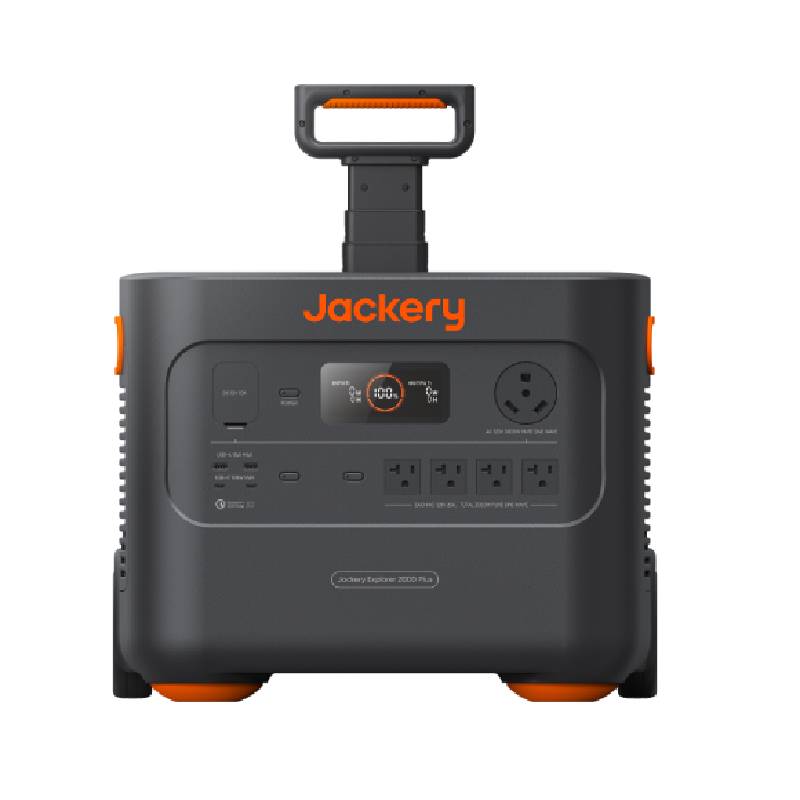
Whether you are preparing for storm-season blackouts or planning an off-grid adventure, this complete guide to the Jackery Explorer 2000 Plus explores why this modular LiFePO4 home backup power station is a top choice for reliable emergency power and scalable energy storage. Featuring long-life LiFePO4 chemistry and a 3,000W AC output, this system expands from a 2,042Wh base capacity up to 12kWh, providing a reliable energy solution to keep critical appliances running during power outages—a key part of any home backup strategy, similar to how a battery backup sump pump protects your basement.
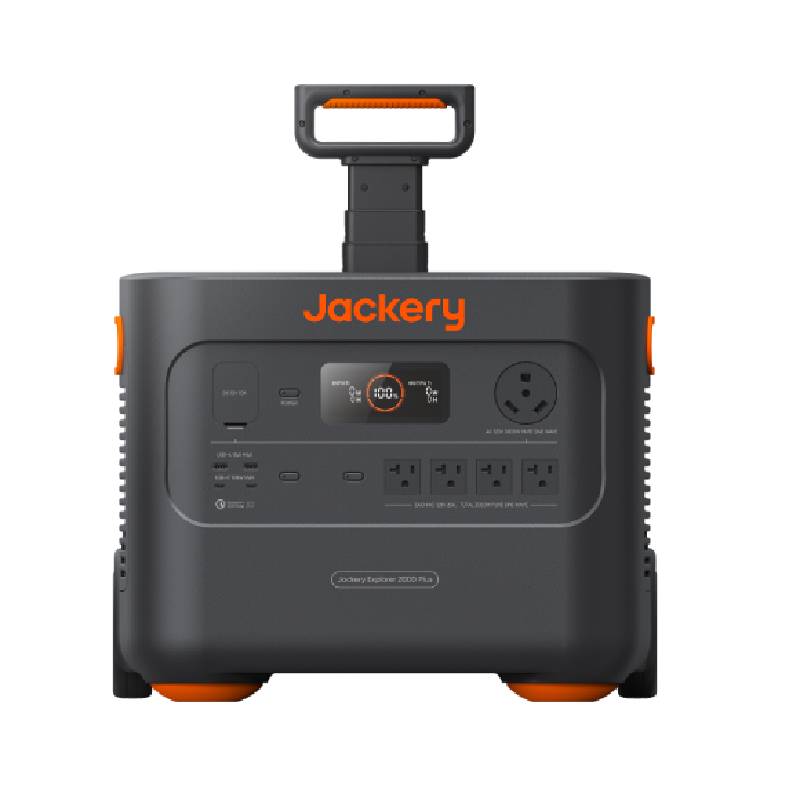
Top Pick: Jackery Explorer 2000 Plus
Score: 9.4/10 — The most reliable, expandable "prosumer" power station for those who need high wattage and long-term battery longevity without the complexity of a permanent installation.
Jackery Explorer 2000 Plus
The Jackery Explorer 2000 Plus represents a significant shift in portable power, moving away from "disposable" lithium-ion cells toward a long-life LiFePO4 (Lithium Iron Phosphate) architecture.
Related parts & accessories
For the home user, the 2000 Plus acts as a sophisticated Uninterruptible Power Supply (UPS). By plugging essential devices into the unit and the unit into a wall outlet, you create a safety net that kicks in within 20 milliseconds during a blackout.
For those protecting a basement from flooding, pairing this unit with a Wayne ESP25 battery backup sump pump (see our full buying guide) ensures critical drainage never fails—a must for those relying on CPAP machines, home servers, or medication refrigerators where a gap in power is not an option.The modular design ensures that as your power needs grow—perhaps moving from a weekend cabin to a full-time van conversion—you can simply add battery packs rather than investing in multiple smaller, non-expandable units. For those prioritizing overall home security during outages, combining this with a robust Ring Alarm Pro home security system (see our comprehensive ADT setup guide for more options) ensures total peace of mind. For those building out a fully resilient home, combining backup power with a GE GXWH40L whole house water filtration system (or another Culligan WH-HD200-C filtration unit) ensures both energy and water security for the entire household.
In terms of sustainability and recharging, the Explorer 2000 Plus is built for the "solar-first" lifestyle. It supports a massive 1,400W solar input, which, when paired with compatible high-efficiency panels, can replenish the base battery in as little as two hours under ideal sunlight. This eliminates the dependency on the grid and makes it a true "infinite" power source for remote job sites or extended overlanding trips where refueling a gas generator is impractical.
Strengths
- LiFePO4 chemistry provides 4,000+ cycles of life
- 3,000W continuous output handles heavy appliances
- Modular expansion allows for massive energy scaling
- Fast AC and Solar recharging capabilities
- Robust 5-year warranty and intuitive app control
Weaknesses
- Substantial weight (~61 lbs) makes it less "portable"
- High initial cost for full expansion kits
- Requires specific adapters for third-party solar arrays
Technical Specifications
| Feature | Specification (JE-2000B) |
|---|---|
| Battery Capacity | 2,042.8Wh (Base) |
| Battery Type | LiFePO4 (LFP) |
| AC Output (Continuous) | 3,000W Pure Sine Wave |
| Surge Power | 6,000W |
| Cycle Life | 4,000 cycles to 70% capacity |
| Expansion Capability | Up to 12kWh total |
| Solar Input | 1,400W Maximum |
| AC Charging Time | ~2 Hours |
| Weight | 61.5 lbs (27.9 kg) |
| UPS Switchover | 20ms |
Understanding the Technology: How it Works
To appreciate the Jackery Explorer 2000 Plus, one must understand the interplay between Battery Chemistry, Inversion, and BMS (Battery Management Systems). Unlike older portable power stations that used NMC (Nickel Manganese Cobalt) batteries, the 2000 Plus utilizes LiFePO4. This chemistry is fundamentally more stable, less prone to thermal runaway, and capable of thousands of more charge-discharge cycles before the capacity begins to drop significantly. While NMC batteries are denser (lighter), LiFePO4 is the gold standard for safety and longevity, especially in units meant for home backup. Other high-tier options in this category include the Bluetti 2000Wh LiFePO4 Portable Power Station, the Anker SOLIX Portable Power Station and the EcoFlow DELTA Pro 3.
The core of the unit is a high-efficiency Pure Sine Wave Inverter. Most electronic devices—especially sensitive ones like laptops, medical equipment, and high-end audio gear—require a smooth, sinusoidal electrical wave. Cheap generators often produce "modified sine waves" which can cause humming, overheating, or outright failure of the device. The 2000 Plus ensures the power coming out of the AC ports is as clean as, or cleaner than, the power coming from your home's wall outlet. This is achieved through complex filtering and high-frequency switching that mimics the 60Hz (or 50Hz) AC current of a municipal grid.
Managing this power is the BMS. The BMS is the "brain" of the Jackery, monitoring every cell's voltage and temperature. It prevents overcharging, deep discharging (which can kill a battery), and short circuits. In the Explorer 2000 Plus, the BMS is designed for modularity, meaning it can recognize and balance the charge across multiple expansion batteries, ensuring that no single pack is stressed more than others. This "cell balancing" is critical; if one battery pack in a 12kWh array degrades faster than others, the BMS compensates to maintain overall system stability.
Pro Tip: Pure Sine Wave power is essential for anything with a clock or a sensitive microprocessor. If you've ever heard a "buzz" from a device plugged into a cheap power bank, that's the result of a modified sine wave. The 2000 Plus eliminates this entirely.
For those who prefer a more compact unit without massive expansion, we recommend the Jackery Explorer 1000 Portable Power Station or the EcoFlow Delta 2 Portable Power Station.
The Buyer's Guide: Calculating Your Power Needs
Buying a high-capacity power station is an investment. To ensure the Explorer 2000 Plus is the right size for you, you must perform a Power Audit. Many users make the mistake of looking only at the total Wh (Watt-hours) without considering the W (Watts) of the devices they intend to run. This is the difference between knowing how much fuel is in the tank and knowing how fast the engine burns it.
The Golden Rule of Power: Watts (W) is the speed of electricity; Watt-hours (Wh) is the total amount of electricity stored. If you have a 2,000Wh battery and run a 1,000W appliance, it will last roughly 2 hours (minus efficiency losses).
Step 1: Identify Your Critical Loads
Before auditing your power, ensure your home's core utilities are stable; if you are upgrading your plumbing, check out our complete kitchen faucet buying guide for integrated home improvements.
List every device you need to power during an outage or trip. If you're managing water risk, consider how this integrates with high-performance submersible utility pumps or an industrial-grade sump pump like the Ridgid SP-650C for emergency drainage, ensure you have a reliable battery backup sump pump system—see our detailed sump pump comparison to choose the right model for your basement. This often includes home security hubs (see our ADT Self Setup guide for installation tips); see our ADT Self Setup guide to see how to keep your security perimeter active or our SimpliSafe 12-piece kit review for examples of critical security hardware. Not all devices are created equal. Some use a steady stream of power, while others "spike" when they start up. Common examples include:
- Refrigerator: 100W-200W continuous (but needs 1,000W+ to start the compressor).
- CPAP Machine: 30W-60W.
- Smartphone/Tablet: 10W-20W.
- Laptop: 60W-100W.
- LED Lamp: 10W.
- Electric Kettle/Coffee Maker: 1,200W-1,800W.
Step 2: Calculate Runtime
Multiply the wattage of your devices and divide the total capacity (2,042Wh) by that sum. For example, if you run a fridge (150W), a laptop (60W), and a lamp (10W), your total draw is 220W. 2,042Wh / 220W = 9.28 hours. Keep in mind that inverter efficiency usually hovers around 85-90%, so actual runtime may be slightly lower. If you expand the system with an additional battery pack, you simply double that runtime.
Step 3: Plan for "Surge"
Devices with motors (fridges, pumps, power tools) have a "surge" or "starting" wattage that is often 3-5 times higher than their running wattage. This happens because the motor requires a massive burst of energy to overcome inertia and start spinning. The 2000 Plus handles this with a 6,000W surge capacity, allowing it to start a large fridge without shutting down due to an overcurrent error. If you intend to run a large air conditioner or a heavy-duty saw, always check the "Peak" or "Surge" wattage on the appliance label.
Setup and Deployment Strategy
Setting up the Jackery Explorer 2000 Plus is straightforward, but optimal placement can significantly affect its lifespan and efficiency. For those using it as a primary backup, the "set and forget" approach is possible, but a few strategic adjustments can maximize performance.
UPS Mode Configuration
To use the unit as a home backup, plug the Jackery into your wall outlet and then plug your critical electronics into the Jackery's AC ports. In this configuration, the unit acts as a "pass-through." It powers your devices while keeping its internal battery topped up. If the grid fails, the internal switch flips in 20ms, providing seamless power. This is a critical layer of protection when paired with a Wayne ESP25 battery backup sump pump system to prevent basement flooding during outages. This is ideal for home offices where a sudden reboot of a desktop computer could result in lost work. Note that while the 20ms switchover is fast, extremely sensitive high-end servers may still detect a flicker; for those, a dedicated online UPS is still recommended, but for 95% of home electronics, the 2000 Plus is sufficient.
Solar Array Optimization
To maximize the 1,400W solar input, avoid "shading" at all costs. Even a small shadow from a tree branch over one corner of a panel can drop the output of the entire string by 30% or more due to how cells are wired in series. Position panels facing true south (in the Northern Hemisphere) and adjust the tilt angle based on your latitude and the season. In winter, a steeper angle (approx 60 degrees) is better to catch the lower sun; in summer, a shallower angle (approx 30 degrees) captures more direct sunlight. Use the companion app to monitor real-time solar input and tweak your angles for maximum wattage.
To maximize your off-grid independence, we recommend pairing this unit with the Jackery SolarSaga 200W Foldable Bifacial Portable Solar Panel.
Expansion Battery Installation
When adding expansion packs, ensure the firmware is updated via the Jackery app on the main unit first. This ensures the BMS can properly communicate with the newer hardware. Connect the packs using the heavy-duty cables provided, ensuring a tight, click-lock fit to prevent arcing. The app will automatically detect the additional capacity and update the remaining runtime estimates. If you are scaling up to the full 12kWh, it is recommended to keep the units in a climate-controlled environment to ensure balanced charging across all cells, as extreme cold can slow down the charging speed.
Maintenance and Long-Term Care
While LiFePO4 batteries are incredibly durable, they still require basic maintenance to ensure they reach their 4,000-cycle potential. Ignoring basic care can lead to premature degradation of the battery's internal chemistry, particularly through "deep discharge" events where the battery is left at 0% for weeks.
Storage Tip: Never store your power station at 0% or 100% for long periods. The ideal storage voltage for LiFePO4 is betwe