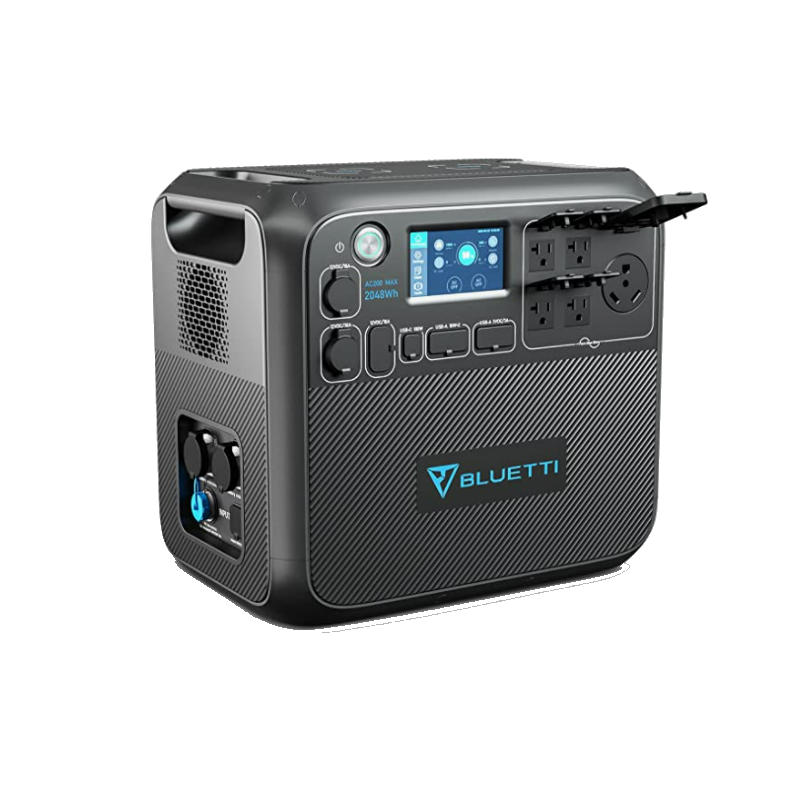
Bluetti Expandable Portable Power Station
Looking for more backup options? See our comprehensive battery backup sump pump review for home resilience.
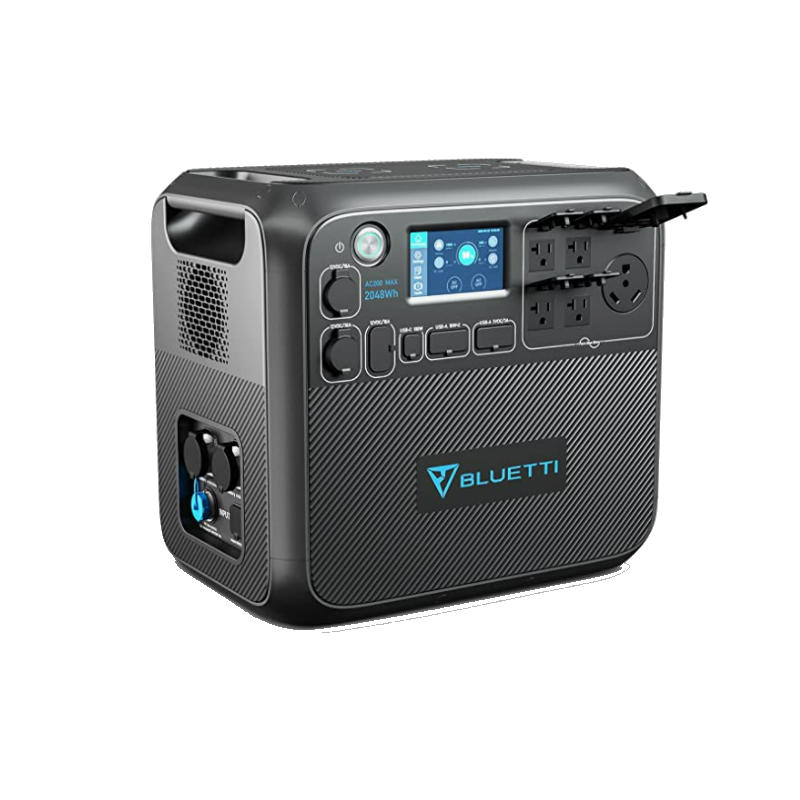
Score: 8.5/10 — A powerhouse of versatility and longevity, the Bluetti Expandable Portable Power Station is the gold standard for users who need a scalable energy hub that bridges the gap between portable power and permanent home backup. For those focusing on flood prevention as part of their strategy, we recommend our Ridgid SP-650C sump pump review.
Overview
The Bluetti Expandable Portable Power Station represents a strategic pivot in the portable power industry, offering a high-capacity LiFePO4 energy solution for home backup and off-grid use. If you're building a broader home resilience plan, our guide on AFCI vs Standard Circuit Breakers is a great companion to this power strategy. It marks the shift from "big batteries" to "expandable ecosystems." For years, consumers had to choose between a small unit that ran out of juice too quickly or a massive, immovable unit that was impossible to transport. The Bluetti Expandable Portable Power Station solves this by providing a substantial 2,048Wh base capacity that can be scaled up to a staggering 8,192Wh using optional B230 or B300 battery modules.
At its core, the AC200MAX is designed for high-demand environments. Whether you are a digital nomad living in a converted van, a contractor operating power tools on a remote job site, or a homeowner preparing for an inevitable grid failure during storm season, this unit provides the wattage necessary to run "real" appliances. Unlike smaller stations that struggle with the initial surge of a refrigerator compressor or a microwave, the 2,200W pure sine wave inverter in the AC200MAX handles high-draw loads with ease.
What truly elevates this unit above the competition is the commitment to LiFePO4 (Lithium Iron Phosphate) chemistry. While many budget-friendly stations still rely on NMC (Nickel Manganese Cobalt) batteries, Bluetti has opted for a chemistry that prioritizes safety and longevity. With a cycle life exceeding 3,500 charges to 80% capacity, the Bluetti 2000Wh LiFePO4 Portable Power Station and Bluetti Expandable Portable Power Station aren't just gadgets for a few camping trips—it is a long-term investment in energy independence that can realistically serve a household for a decade.
Key Features
Supports two additional B230 or B300 modules, allowing users to grow their capacity from 2kWh to over 8kWh as their needs evolve.
Utilizes premium Lithium Iron Phosphate cells for enhanced thermal stability and a massive 3,500+ cycle lifespan.
A 2,200W pure sine wave inverter ensures that sensitive electronics and heavy-duty appliances run safely without flickering.
Features a 900W max solar input capacity, enabling fast off-grid recovery using multiple high-efficiency panels.
Includes 16 output ports, including 100W USB-C PD, standard AC outlets, and 12V DC ports for automotive accessories.
Integrated Bluetooth and Wi-Fi connectivity allow for remote monitoring, port management, and firmware updates via the Bluetti app.
| Feature | Specification |
|---|---|
| Battery Capacity | 2,048Wh (Expandable up to 8,192Wh) |
| Battery Chemistry | LiFePO4 (Lithium Iron Phosphate) |
| AC Output (Continuous) | 2,200W Pure Sine Wave |
| AC Output (Surge) | 4,800W |
| Solar Input | 900W Max (MPPT) |
| AC Charging Input | 500W (Up to 1,400W via Turbo Boost) |
| Cycle Life | 3,500+ cycles to 80% |
| Total Outlets | 16 (4x AC, USB-C, USB-A, 12V DC, Wireless) |
| Weight | 61.9 lbs (28.1 kg) |
| Dimensions | 15.5 x 10.4 x 25.6 inches |
Pros & Cons
The Good
- Exceptional longevity thanks to LiFePO4 chemistry
- Capable of running heavy-duty 120V appliances (microwaves, heaters)
- True scalability allows for customized capacity growth
- Industry-leading solar input wattage for faster off-grid charging
- Pure sine wave output protects delicate circuitry in laptops/medical gear
- Robust build quality that withstands rugged environments
The Bad
- Substantial weight makes it difficult to transport by a single person
- Cooling fans can be loud during high-wattage discharge
- Expansion batteries represent a significant secondary cost
- App connectivity can be finicky during initial pairing
- Large footprint requires dedicated storage space
Performance: Real-World Testing
To truly understand the Bluetti Expandable Portable Power Station, we tested it across three primary scenarios: the "Emergency Home Backup," the "Off-Grid Workspace," and the "High-Load Stress Test."
The Emergency Home Backup Scenario
In a simulated power outage, we connected a full-size energy-efficient refrigerator (approx. 120W average draw) and a set of LED lamps (40W). In this configuration, the AC200MAX maintained these loads for nearly 16 hours on a single charge. When we integrated a B230 expansion battery, that runtime effectively doubled. The transition from AC wall power to battery was seamless (a critical feature for those following our Wayne ESP25 battery backup review), and the unit's ability to handle the refrigerator's periodic compressor spikes (which can hit 1,000W+) was handled without a single trip of the internal circuit breaker.
The Off-Grid Workspace Scenario
For mobile professionals, the AC200MAX acts as a silent generator. We powered a dual-monitor setup, a high-end gaming laptop (drawing 150W under load), and a Starlink satellite dish. Total draw hovered around 300W. The unit provided over 6 hours of continuous work on a 50% charge, while simultaneously charging via two Jackery SolarSaga 200W Foldable Bifacial Portable Solar Panels. The MPPT (Maximum Power Point Tracking) controller proved efficient, maintaining a steady charge even as cloud cover shifted, demonstrating that the 900W solar ceiling is not just a marketing number but a functional advantage.
The High-Load Stress Test
We pushed the 2,200W inverter to its limits by running a 1,500W space heater and a 400W coffee maker simultaneously. The unit handled the combined 1,900W load without shutting down. However, this is where the cooling system becomes most apparent. The internal fans ramp up to a high-pitched whine to dissipate the heat generated by the inverter. While loud, the temperature remained within safe operating parameters, and the voltage output remained stable, proving that the "Pure Sine Wave" claim holds up under extreme pressure.
Deep Dive: How the Expandable System Works
The "Expandable" nature of the Bluetti Expandable Portable Power Station is its most defining characteristic. Unlike standard power stations where the battery is an internal, sealed unit, the AC200MAX features dedicated expansion ports on the chassis. These ports allow the unit to communicate with external battery modules—specifically the B230 and B300 expansion modules.
When you plug in a B230 module, the AC200MAX treats it as an extension of its own internal reservoir. The internal Battery Management System (BMS) balances the load between the primary internal cells and the external module, ensuring that cells are discharged evenly. This prevents "bottlenecking" where one battery drains faster than the other. This architecture is critical because it allows the user to buy into the ecosystem at a price point they can afford and then scale up as their budget or energy needs increase.
For example, a user might start with just the AC200MAX for weekend camping. As they transition to a part-time off-grid living situation, they might add one B230. Finally, for a full home-backup strategy, they might add two B300s. The result is a massive energy bank that provides enough watt-hours to bridge the gap between a blackout and the restoration of grid power (see our Wayne ESP25 battery backup review), especially when running critical equipment like high-capacity sump pumps, all while utilizing a single, centralized inverter.
Technically, the communication between the base unit and the expansion modules happens via a proprietary high-current bus and a low-voltage data line. The base unit acts as the "brain," managing the state-of-charge (SoC) for all connected batteries. If the expansion battery is at 40% and the internal battery is at 60%, the BMS will intelligently draw power to equalize these levels, prolonging the overall health of the chemical cells. This level of sophistication is what separates professional-grade power stations from simple "battery-in-a-box" products.
Detailed Buyer's Guide: Who is the AC200MAX For?
Buying a high-capacity power station is a significant investment. To determine if the Bluetti AC200MAX is the right choice, you must evaluate your specific energy "profile."
The "Essential Backup" User
If your goal is to keep your refrigerator running and your phone charged during a 24-hour outage, the AC200MAX is overkill in its base form but perfect in its potential. You will appreciate the peace of mind that comes with 2kWh of capacity, and you will value the option to add more storage if you live in an area prone to multi-day outages. For these users, the AC200MAX offers a "future-proof" insurance policy against prolonged grid instability. If you're upgrading your home's resilience, we also recommend exploring our battery backup sump pump guide or our Ridgid SP-650C buying guide for flood management. Pairing your power strategy with a reliable electrical plan—such as understanding the best 20-amp circuit breakers for home panels—ensures total protection. For those managing home water systems during outages, we recommend our Basement Watchdog BW1033 review to keep your foundation dry.
The "Off-Grid Enthusiast"
For those living in vans or cabins, the AC200MAX is a powerhouse. The 900W solar input is the key here; it allows you to harvest maximum energy during the short winter windows. For those building full off-grid cabins, consider integrating a MrCool DIY mini-split system for climate control, or comparing options in our best mini-split guide for small rooms. If you have a 600W-800W solar array, you can essentially "live" off the AC200MAX, charging by day and powering your lights, laptops, and small appliances by night. The ability to add B230 modules means you can store enough energy to survive a week of rainy, overcast weather without ever needing to plug into a wall outlet.
The "Professional Contractor"
For electricians, plumbers, or photographers working in the field, the Bluetti AC200MAX replaces the noisy, smelly gas generator (see our Westinghouse iGen4500 review for portable power or the DuroMax Dual Fuel Portable Generator for other professional options). It can power a circular saw, a heavy-duty drill, or professional lighting rigs without the need for an extension cord from the main building. The rugged build and high surge capacity make it a reliable tool for a professional toolkit. Furthermore, the quiet operation allows for work in indoor environments where a gasoline engine would be dangerous or disruptive.
Who should avoid the AC200MAX?
If you are looking for a "beach day" battery to power a Bluetooth speaker and a cooler, the AC200MAX is far too heavy and expensive. Similarly, if you have absolutely no intention of ever expanding your capacity and only need 2kWh, you might find a non-expandable unit from a competitor that is slightly lighter or cheaper. The "expandability premium" is a cost you pay upfront for future flexibility. If portability is your primary requirement (e.g., you need to carry it by hand for more than 100 yards), look for a model in the 500Wh to 1kWh range, such as the Anker PowerHouse 757 Portable Power Station.
For those seeking a more compact yet powerful alternative, the Anker SOLIX Portable Power Station is also a strong contender.
Alternatively, consider a slightly different modular approach with the EcoFlow Delta 2 Max.Setup and First-Time Use
Setting up the AC200MAX is straightforward, but there are a few critical steps to ensure the long-term health of the battery and the safety of your connected devices.
Step 1: Initial Charge and Calibration
Out of the box, the unit typically arrives with a partial charge. It is highly recommended to charge the unit to 100% using the included AC cable before the first use. This process does more than just fill the battery; it calibrates the Battery Management System (BMS). Calibration ensures that the percentage display on the LCD screen and in the app accurately reflects the remaining energy, preventing unexpected shutdowns when the unit thinks it has 10% left but is actually at 0%.
Step 2: App Integration
To unlock the full potential of the AC200MAX, download the Bluetti app. During the initial pairing process, ensure your smartphone is on a 2.4GHz Wi-Fi network, as many smart-home devices (including the AC200MAX) struggle with 5GHz bands. Once connected, you can set customized charging speeds. For example, if you aren't in a rush, lower