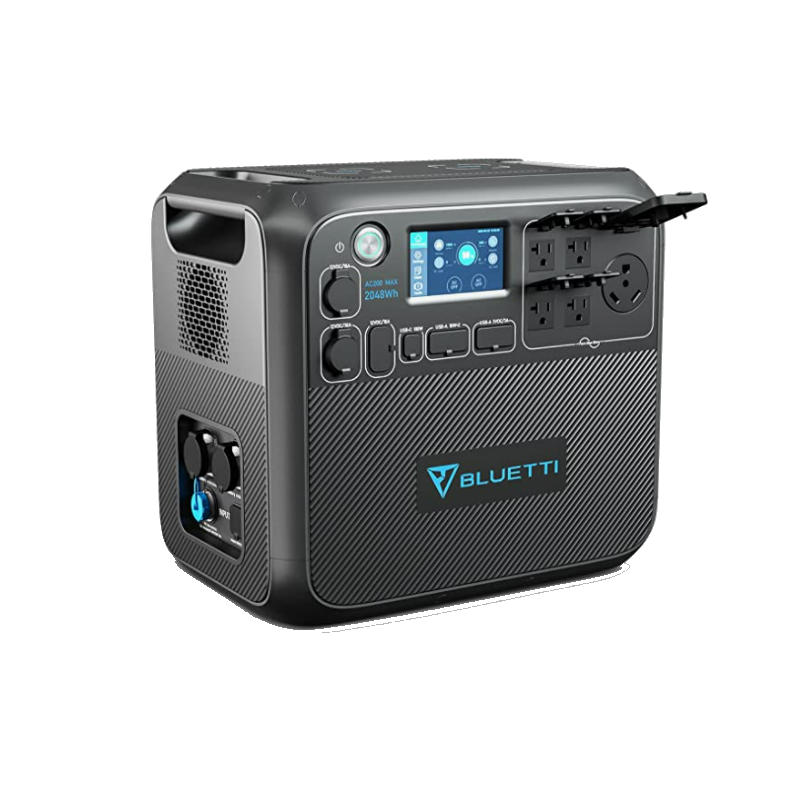
The Bluetti Expandable Portable Power Station (AC200MAX) is a high-capacity portable power station built for people who want headroom. With 2,200W continuous AC output, a 2,048Wh base battery, and support for up to two add-on modules, it suits homeowners, campers, and emergency-prep buyers who plan to run real appliances rather than just charge phones.
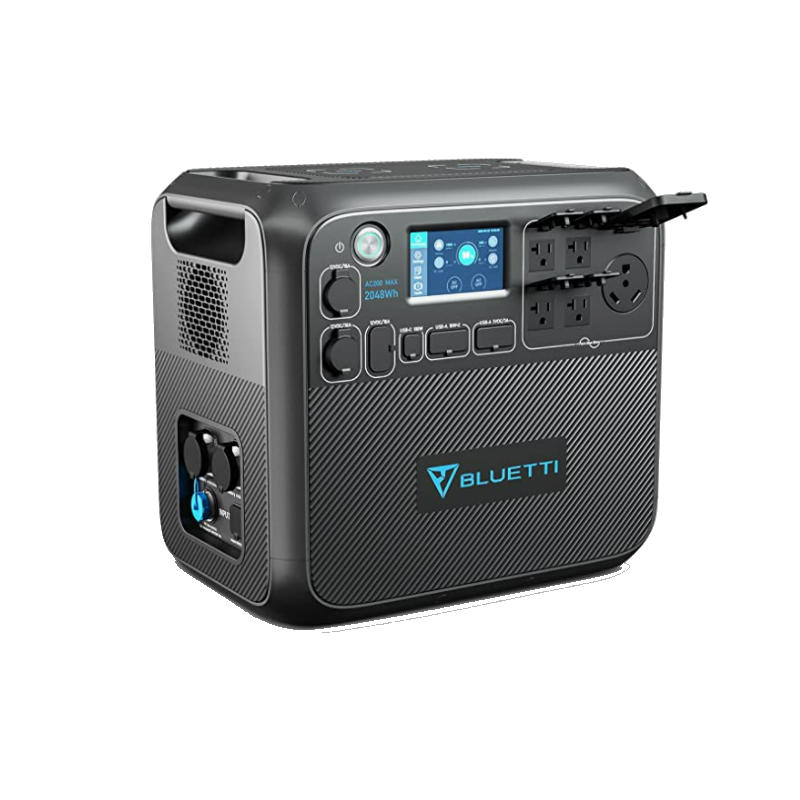
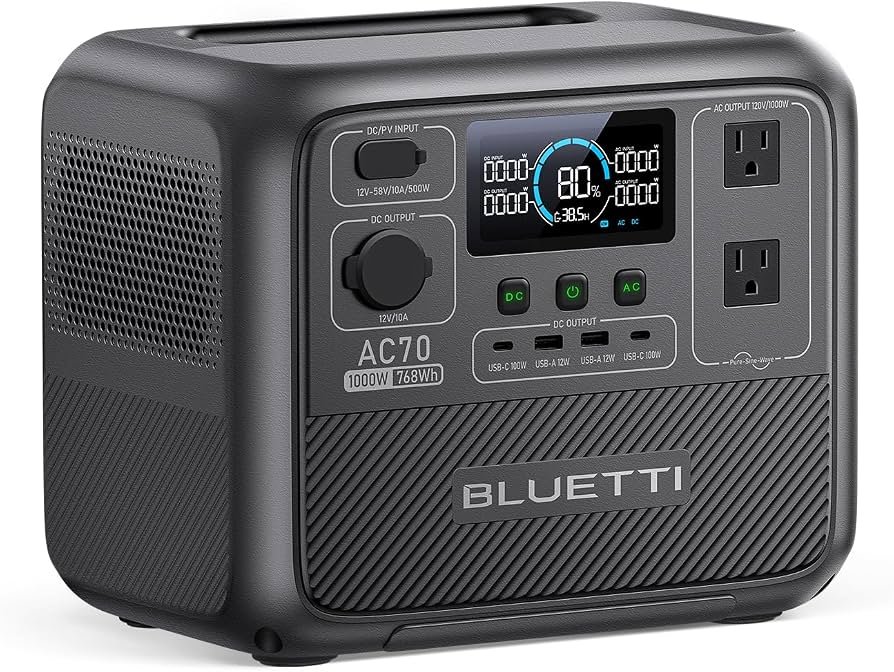
Top Pick: Bluetti Expandable Portable Power Station (AC200MAX)
Score: 9.0/10. Best overall for home backup and off-grid use: a 2,048Wh expandable battery and 2,200W of AC output make the AC200MAX a versatile workhorse that scales to your power demands.
If you've been hunting for a portable power station that can handle everything from a weekend camping trip to a multi-day home blackout, the Bluetti AC200MAX keeps showing up at the top of the conversation. It promises serious capacity, a strong continuous output, and a modular design that grows with your needs. The question is whether that combination justifies its price and bulk for your specific situation.
Bluetti Expandable Portable Power Station (AC200MAX)
The Bluetti AC200MAX is positioned as a do-it-all power station for the household and the campsite alike.
Its 2,048Wh base capacity is enough to keep a fridge, lights, and several devices running through a meaningful outage, and its 2,200W continuous AC rating means it can drive higher-draw items like microwaves, coffee makers, and many power tools without bogging down. This level of power delivery removes the anxiety of "will this actually start?" that often accompanies smaller, consumer-grade power banks.What sets this unit apart from fixed-capacity rivals is its scalability. You can connect up to two additional B230 or B300 battery modules, pushing total capacity well beyond the base figure. That makes it a sensible "buy once" choice—you can start with the standalone unit and add storage later as your needs (or budget) grow, instead of replacing the whole system when you realize you need more runtime for an extended off-grid trip.
For a slightly different configuration, consider the Bluetti 2000Wh LiFePO4 Portable Power Station.
Port variety is another strength of the AC200MAX. It includes multiple AC outlets, USB-A and USB-C ports, a 12V car socket, and wireless charging pads, so it comfortably handles a mix of laptops, small appliances, and tools at the same time. This breadth is exactly what makes it appealing for off-grid living and RV setups where you rarely power just one thing, but rather a constellation of devices with varying voltage requirements.
Who is it for? Homeowners building an emergency-preparedness kit (part of a broader emergency-preparedness strategy, such as using a battery backup sump pump to prevent flooding during outages), off-grid and van-life users, and serious campers who want appliance-grade power. It is less ideal for someone who only needs to keep a phone and tablet topped up on short trips—that buyer is paying for capacity and weight they won't use. For the power-user, however, the AC200MAX represents a critical bridge between small portable batteries and permanent home solar installations.
Pros
- Large 2,048Wh base capacity for multi-day backup
- 2,200W continuous output runs real appliances and tools
- Expandable with up to two B230/B300 modules
- Wide range of output ports for mixed device loads
- Versatile across home, off-grid, and camping use
Cons
- Heavy and bulky compared to compact power stations
- Higher upfront cost than entry-level units
- Expansion modules add significant extra expense
- Overkill for light, phone-and-tablet-only users
Pricing and bundle availability for the AC200MAX change frequently. Checking current pricing helps ensure you find the best value, especially on packages that include expansion batteries or solar input.
| Spec | Detail |
|---|---|
| Model | AC200MAX |
| Battery Capacity | 2,048Wh (Expandable) |
| Continuous AC Output | 2,200W |
| Expansion Support | Up to 2× B230 or B300 modules |
| Output Ports | AC outlets, USB-A, USB-C, 12V DC, wireless charging |
| Category | Generators & Backup Power |
Understanding the Tech: How the AC200MAX Works
To understand why the AC200MAX is a step above standard power banks—and how it differs from traditional portable power banks—one must look at the chemistry and the conversion process. This unit utilizes Lithium Iron Phosphate (LiFePO4) batteries. Unlike the standard Lithium-ion (NMC) batteries found in many laptops or small power banks, LiFePO4 is renowned for its safety and longevity. While NMC batteries might degrade after 500 to 800 cycles, LiFePO4 cells can often handle 3,000 to 6,000 cycles before hitting 80% capacity. This makes the AC200MAX a long-term investment rather than a disposable gadget.
The "magic" happens in the Pure Sine Wave Inverter. Many cheap power stations use modified sine waves, which can cause buzzing in electronics or even damage sensitive medical equipment and high-end audio gear. The AC200MAX produces a clean, stable sine wave that mimics the power coming out of your wall at home. This is critical for powering items like CPAP machines, refrigerators, and precision power tools.
The expandability is managed through a dedicated DC port that communicates with the B230 or B300 modules. When a module is attached, the internal Battery Management System (BMS) recognizes the additional voltage and capacity, updating the LCD screen to reflect the new total runtime. This modularity allows the user to treat the AC200MAX as a "brain" and the modules as "fuel tanks," providing a level of customization rarely seen in portable units.
Beyond the chemistry, the AC200MAX employs an advanced thermal management system. High-wattage output generates significant heat; without proper cooling, the unit would experience "thermal throttling," where the power output is automatically reduced to protect the internal components. The AC200MAX uses high-efficiency fans and heat sinks to maintain a stable temperature, allowing it to sustain 2,200W of output for longer durations than smaller units that overheat within minutes of hitting a heavy load.
Comprehensive Buyer's Guide: Evaluating High-Capacity Power
When shopping for a unit like the AC200MAX, buyers often get lost in the numbers. Here is how to actually calculate if this unit meets your needs. Understanding the relationship between Watt-hours and Watts is the most critical part of this process.
Capacity vs. Runtime
Capacity is measured in Watt-hours (Wh). To find out how long the AC200MAX will run your gear, use this simple formula: (Capacity × 0.85) / Device Watts = Hours of Runtime. The 0.85 accounts for the efficiency loss during DC-to-AC conversion, as no inverter is 100% efficient.
For example, if you are running a 100W mini-fridge: (2048Wh × 0.85) / 100W ≈ 17.4 hours. If you add one B230 expansion battery, that number nearly doubles. If your critical needs exceed 20 hours, the modular expansion of the AC200MAX becomes a necessity rather than a luxury. It is important to remember that "phantom loads"—small amounts of energy used by the power station itself to keep the AC outlets active—can slightly reduce these theoretical numbers.
Output Power and Surge
Continuous output (2,200W for the AC200MAX) is what the machine can handle indefinitely. However, many appliances—like pumps, refrigerators, and AC units—have a "surge" or "startup" wattage that is 3 to 7 times their running wattage. This is called inductive load. When a compressor kicks on, it needs a massive burst of energy for a fraction of a second.
The AC200MAX is designed to handle these momentary spikes, but always check your appliance's peak start-up wattage to ensure you don't trip the internal circuit breaker. If you are powering a high-draw device like a circular saw or a large space heater, you are operating near the limit of the inverter. In these cases, we recommend avoiding the use of other high-draw devices simultaneously to prevent a safety shutdown.
Charging Methods: Solar, AC, and Car
A power station is only as good as your ability to refill it. The AC200MAX offers three primary paths:
- Wall Charging: The fastest method, ideal for preparing before a trip or during a brief power restoration. This utilizes the internal AC-DC charger to push maximum current into the LiFePO4 cells.
- Solar Charging: Essential for off-grid use. The AC200MAX supports high-wattage solar input via an MPPT (Maximum Power Point Tracking) controller, allowing you to potentially achieve a "net-zero" energy loop where you consume only what you harvest from the sun.
- Car Charging: Slower, but useful for topping up the battery while driving between campsites. While not intended as the primary charging method for a 2kWh battery, it is a vital fail-safe.
Pro Tip: If you plan to use solar, invest in "rigid" panels for permanent RV mounts and "folding" panels for portable camping. The AC200MAX can handle a significant solar array, so don't be afraid to maximize your input wattage to reduce downtime.
Step-by-Step Setup and Integration
Setting up the AC200MAX is straightforward, but following a specific sequence ensures the longevity of the battery cells and the safety of your devices. Skipping these steps can lead to inaccurate battery percentage readings or unnecessary wear on the cells.
Initial Unboxing and Charging
Upon arrival, the unit will likely have a partial charge from the factory. It is highly recommended to charge the unit to 100% using a wall outlet before the first use. This "balances" the cells within the LiFePO4 pack and calibrates the Battery Management System (BMS) for more accurate percentage readings on the display. If you use the unit immediately without a full charge, you may notice the percentage "jump" unexpectedly as the BMS settles into its operational range.
Integrating Expansion Modules
If you have purchased B230 or B300 modules, connect them before powering on the main AC200MAX unit. Ensure the connectors are seated firmly and locked. Once the main unit is powered on, the display should automatically detect the expansion battery. If it doesn't, a simple restart of the main unit usually triggers the "handshake" between the two components. This communication is vital because the BMS must manage the discharge rate across both the internal and external batteries to ensure one doesn't drain faster than the other.
Optimizing for Home Backup
For the best home backup experience, place the AC200MAX in a cool, dry area with good ventilation. While LiFePO4 is stable, extreme heat can trigger a safety shutdown. If you are using it as a central hub for your router, modem, and a few lamps, use a high-quality heavy-duty power strip to extend the reach of the AC outlets without overloading a single socket. Avoid placing the unit on thick carpets, as this can block the bottom intake vents and cause the unit to run hotter than necessary.
Long-term Maintenance and Storage
A 2,000Wh+ battery is a significant investment. To ensure it lasts for a decade rather than a few years, follow these maintenance protocols. Battery health is largely determined by how you treat the cells during the "off-season."
The 20-80 Rule
While LiFePO4 batteries are more resilient than standard lithium, the "sweet spot" for battery health is keeping the charge between 20% and 80%. If you are using the unit daily, try to avoid draining it to 0% or keeping it pinned at 100% for months at a time. If you are storing it for the winter, charge it to roughly 50-60% and check the voltage every three months. Storing a battery at 0% for a long period can lead to "deep discharge," where the voltage drops so low that the BMS permanently disables the unit for safety reasons.
Cleaning and Ventilation
The AC200MAX uses internal fans to cool the inverter. Over time, dust can accumulate in the vents, especially in camping or garage environments. Use a can of compressed air every six months to clear the intake and exhaust ports. This prevents the unit from thermal throttling, which can reduce your effective AC output during high-load tasks. Ensure the fans are spinning freely; if you hear a rattling sound, it may be time to check for debris inside the vent housing.
Firmware Updates
Bluetti occasionally releases firmware updates via their app. These updates often optimize charging algorithms or improve the efficiency of the AC inverter. Regularly check the Bluetti app to ensure your AC200MAX is running the latest software for maximum safety and performance. Firmware updates can sometimes resolve "ghost" battery drain or improve the compatibility of the expansion modules.
Warning: Never attempt to open the chassis of the AC200MAX. The internal high-voltage components are dangerous and opening the case will void your warranty and potentially compromise the battery's safety seals.
Comparison: AC200MAX vs. The Competition
To truly understand where the AC200MAX sits in the market, we must compare it against the typical alternatives buyers consider. Most users choose between a compact "lifestyle" power station, a massive modular system like the AC200MAX, or a traditional gas-powered generator.
| Feature | Bluetti AC200MAX | Compact "Life-Style" Units | Gas Generators |
|---|---|---|---|
| Noise Level | Silent (Fans only) | Silent | Loud |
| Emissions | Zero | Zero | High (CO2/CO) |
| Expandability | High (Modular) | None / Low | N/A (Fuel Tank) |
| Indoor Use | Safe | Safe | Dangerous (Outdoor only) |
| Startup Time | Instant | Instant | Manual Pull/Electric Start |
| Weight | Heavy | Light | Very Heavy |
When compared to compact units like the Anker SOLIX Portable Power Station or the Jackery Explorer 2000 Plus, the AC200MAX is obviously heavier and more expensive. However, it provides a level of utility that small units cannot match. A smaller unit like the EcoFlow Delta 2 Portable Power Station is great for a laptop and a lamp; a 2,048Wh unit with 2,200W output is a tool for survival. You can run a full-sized refrigerator or a microwave on the AC200MAX, whereas a smaller unit would simply trip its breaker immediately.
Compared to gas generators like the Champion Dual-Fuel Open Frame Generator
or other high-capacity rivals like the Delta 2 Max, the AC200MAX offers a completely different value proposition. Gas generators provide more raw power for longer periods (as long as you have fuel), but they are loud, emit toxic fumes, and require ongoing engine maintenance. The AC200MAX is silent and safe for indoor use, making it the ideal choice for powering a home office, a CPAP machine in a bedroom, or a quiet campsite. The lack of fuel logistics is a massive advantage during a disaster when gas stations may be closed or lines may be miles long.Potential Pitfalls and What to Watch Out For
No piece of technology is without its drawbacks. To make an informed decision, you should be aware of the common challenges users face with the AC200MAX.
The Weight Factor
One of the biggest shocks for new buyers is the physical weight. The AC200MAX is a dense block of LiFePO4 cells and heavy-duty copper wiring. While it has handles, moving it over long distances can be taxing. If you plan to move it frequently, we strongly recommend using a foldable cart or a dolly. Once you