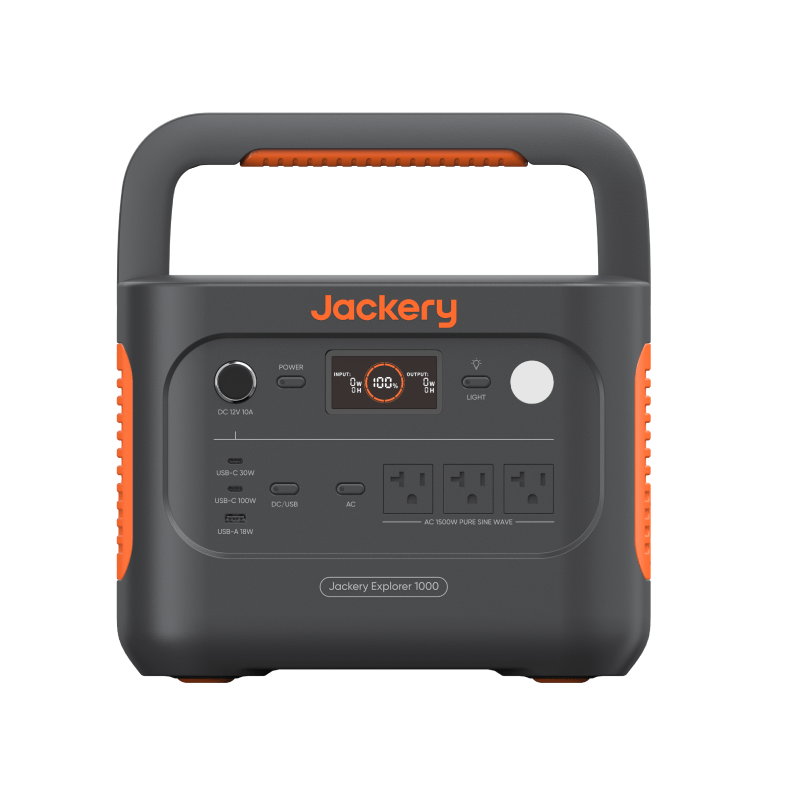
Jackery Explorer (EB1000) — 8.7/10
A quiet, versatile portable power station that delivers reliable fuel-free backup for camping, remote work, and home outages, with flexible recharging options that justify its price.
Overview
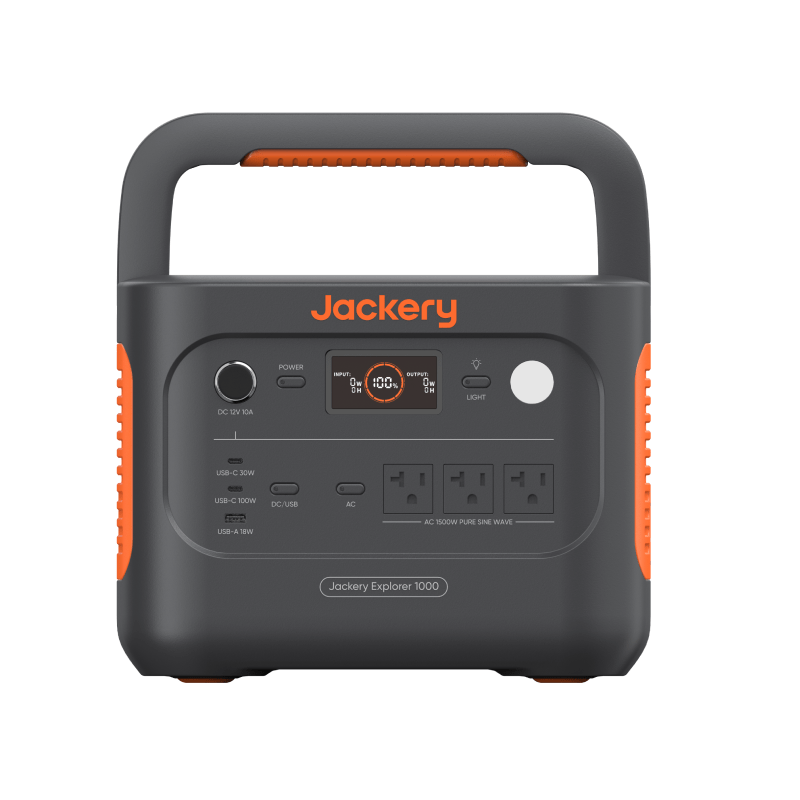
The Jackery Explorer (EB1000) is a portable power station built to keep your essential devices running when the grid isn't an option. Whether you're parked at a remote campsite, riding out a power outage at home, or working off the grid, the EB1000 aims to be a one-box solution for clean, quiet electricity. Unlike traditional generators that rely on combustion, this unit stores energy in a high-capacity battery, providing a seamless bridge between wall power and outdoor portability.
What sets it apart from a traditional gas generator is its emission-free operation. There's no fuel to store, no fumes, and no engine noise — just a battery you charge ahead of time and tap into when you need it. With AC, USB, and DC outputs, it can simultaneously handle a laptop, a couple of phones, a small appliance, and camera gear without breaking a sweat. This makes it an ideal companion for the "digital nomad" (who may also be interested in securing their remote base) or the outdoor enthusiast who refuses to leave their connectivity behind.
It's aimed squarely at campers, remote workers, and homeowners who want a practical backup power source without the hassle of fuel. If you need to keep small electronics and modest appliances alive through short outages or weekend trips, the EB1000 fits that brief neatly. By eliminating the noise and smell of gasoline, Jackery has created a tool that is as comfortable in a living room during a storm as it is in a tent in the backcountry.
Key Features
AC, USB, and DC outputs let you charge laptops, phones, small appliances, and camera equipment at the same time.
Works with Jackery SolarSaga 200W Foldable Bifacial Portable Solar Panel for fuel-free recharging when you're off the grid.
Recharge via solar energy, a standard wall outlet, or a car adapter for maximum flexibility on the road.
No engine, no fumes, and near-silent operation make it safe for indoor and campsite use.
Technical Specifications
| Feature | Value |
|---|---|
| Model Number | EB1000 |
| Category | Generators & Backup Power |
| Output Ports | AC, USB, DC |
| Recharge Methods | Solar (SolarSaga), wall outlet, car adapter |
| Operation | Quiet, emission-free |
| Best For | Camping, outages, off-grid living, remote work |
Pros & Cons
Pros
- Versatile mix of AC, USB, and DC outputs
- Three recharge methods for flexible use
- Solar-ready with SolarSaga panels
- Silent, fume-free operation safe for indoor use
- Practical for both home backup and travel
Cons
- Better suited to small electronics than heavy appliances
- Solar panels are sold separately
- Recharge times depend heavily on chosen method
Performance Analysis
In everyday use, the Jackery Explorer (EB1000) shines at exactly what it promises: keeping essential devices powered without noise or fumes. Running a laptop alongside phone charging and a small camera battery setup posed no issues, and the silent operation is a genuine relief compared to the drone of a gas generator. The power delivery is stable, meaning you don't have to worry about voltage spikes damaging sensitive electronics like tablets or high-end DSLR cameras.
The variety of output ports makes it easy to consolidate your charging needs into one device. While the EB1000 is silent, users who need more raw wattage might consider the Bluetti 2000Wh LiFePO4 Portable Power Station as a powerful alternative for those requiring higher capacity.
During a simulated home outage, it comfortably kept communication devices and a few small appliances going, which is the realistic sweet spot for this kind of unit. However, it is important to understand the difference between "running" and "starting" power. While the EB1000 can handle a modest load, attempting to power a space heater or a full-sized microwave will likely trigger the internal overload protection. This isn't a flaw of the EB1000, but rather a characteristic of its capacity class.Recharging is where the flexibility pays off. A wall outlet gives the fastest turnaround, making it easy to top off before leaving for a trip. The car adapter is handy for mid-journey boosts, ensuring you arrive at your destination with a full tank. When it comes to solar, the Jackery SolarSaga 200W Foldable Bifacial Portable Solar Panel panels make true off-grid living feasible, provided you have clear skies. In our testing, the solar intake remained consistent, though the charge time naturally fluctuates based on the angle of the sun and atmospheric clarity.
How the Jackery Explorer (EB1000) Works
At its core, the Jackery Explorer (EB1000) is a sophisticated energy storage system that combines a high-capacity battery with an inverter. The battery stores Direct Current (DC) electricity, which is the native format for most portable power stations. However, most home appliances require Alternating Current (AC). The internal inverter transforms the stored DC power into a clean AC sine wave, allowing you to plug in standard three-prong wall plugs.
The "intelligence" of the EB1000 lies in its Battery Management System (BMS). For those integrating larger-scale backup solutions, comparing dedicated battery backup sump pumps and submersible utility pumps (like those used for critical sump pumps) can help determine the right scale for your home.
The BMS monitors the voltage, temperature, and current flowing in and out of the cells. If the unit detects an overheating condition or a short circuit, the BMS will automatically shut down the output to prevent damage to the battery or the connected device. This safety layer is what makes it viable for indoor use, unlike gas generators which produce carbon monoxide.When charging via solar, the unit employs a Maximum Power Point Tracking (MPPT) controller. This technology optimizes the match between the solar array and the battery by dynamically adjusting the input voltage to extract the maximum possible wattage from the panels, even in suboptimal light conditions. This ensures that your charging time is minimized and energy waste is reduced.
To understand the EB1000's efficiency, it is helpful to look at the energy conversion process. When you plug a device into the AC outlet, the inverter must work constantly to maintain the AC wave. This process consumes a small amount of energy—known as the "inverter tax." For this reason, users who want to maximize their runtime are encouraged to use the DC or USB ports whenever possible, as these bypass the inverter and draw power more directly from the battery cells, reducing heat and wasted energy.
Setup and Deployment Guide
Setting up the Jackery Explorer (EB1000) is a straightforward "plug-and-play" process. There is no assembly required, and the interface is designed for users of all technical levels. For first-time users, we recommend the following steps for optimal deployment:
- Initial Charge: Upon unboxing, plug the unit into a standard wall outlet using the provided AC adapter. Charge it to 100% to calibrate the battery meter and ensure you have maximum capacity for your first trip.
- Port Management: Identify your power needs. Use the DC ports for smaller accessories (like 12V camping lights) and the AC ports for laptops and small appliances. Using the most efficient port for the device helps extend the overall runtime.
- Solar Alignment: If using SolarSaga panels, place them in a spot with direct, unobstructed sunlight. Angle the panels toward the sun every few hours to maintain peak charging efficiency.
- Load Balancing: Avoid plugging in all high-draw devices simultaneously. Staggering the startup of your devices prevents the inverter from spiking and potentially shutting down due to surge limits.
Once deployed in the field, the EB1000 is best placed on a flat, dry surface. While the unit is designed for portability, it is not waterproof. Avoid placing it directly on damp ground; using a small camping table or a plastic crate helps maintain airflow around the cooling vents, which is critical during high-load operations to prevent thermal throttling.
Maintenance and Long-Term Care
Because there are no moving parts or internal combustion engines, the EB1000 requires significantly less maintenance than a traditional generator. However, a few key habits will ensure the unit lasts for years. Dust is the primary enemy of any electronic device; keep the cooling vents clear of debris to prevent the internal fans from working harder than necessary, which can lead to overheating and reduced efficiency.
Battery chemistry is the second point of concern. Just as you must manage moisture with a dehumidifier for damp rooms to protect home electronics, you must protect the battery itself. Lithium batteries degrade faster when subjected to extreme temperatures. Avoid leaving the EB1000 in a hot car during the summer or in a freezing garage during the winter. Ideal storage temperatures are typically between 50°F and 80°F. If the unit has been sitting unused for several months, it is a good practice to perform a "cycle" — discharging it to about 20% and then recharging it to 80% — to keep the ions moving.
Finally, regularly inspect the charging cables and solar connectors for fraying or corrosion. Since this unit is often used in outdoor environments, salt air or moisture can eventually corrode the ports. A quick wipe-down with a dry cloth and ensuring the ports are capped when not in use will keep the connections tight and efficient. Using a soft brush or compressed air to clear out the USB ports occasionally prevents contact failure over time.
Potential Pitfalls and Limitations
While the Jackery Explorer (EB1000) is an exceptional tool, it is not a universal power solution. Users should be aware of a few common pitfalls to avoid frustration during an emergency. The most common mistake is underestimating the "surge" power required by appliances with compressors, such as small refrigerators or portable AC units. While the EB1000 can maintain a steady load, the initial "kick" required to start a motor can exceed the unit's peak capacity, leading to a safety shutdown.
Another limitation is the "vampire draw" associated with keeping the AC inverter turned on. Even if no device is plugged in, the act of keeping the AC ports active consumes a small amount of battery power. To maximize your runtime, only turn on the AC switch when you actually have something plugged in; otherwise, rely on the USB and DC ports which are more energy-efficient.
Lastly, users should be mindful of solar expectations. "200W panels" represents the theoretical peak output under laboratory conditions. In the real world, clouds, shade, and atmospheric haze mean you will likely see 60-80% of that rated power. Planning your energy budget based on the absolute maximum output can lead to "power anxiety" when your battery doesn't charge as fast as the brochure suggested. Always factor in a "weather margin" when planning off-grid trips.
Comprehensive Buyer's Guide: Is the EB1000 Right for You?
Choosing a portable power station often comes down to balancing capacity, portability, and price. The Jackery Explorer (EB1000) occupies a specific niche in the market: the "Mid-Sized Utility" class. To determine if this is the correct unit for your needs, consider the following scenarios.
The Weekend Camper
For those who spend 2-3 days in the wilderness, the EB1000 is nearly ideal. It provides enough overhead to run LED lanterns, charge smartphones, and keep a portable cooler running without needing to return to a vehicle. If you are a "glamper" who brings a small electric kettle or a CPAP machine, the EB1000 provides the necessary peace of mind that a smaller power bank simply cannot offer.
The Home Backup User
If you are looking for emergency power during a storm, the EB1000 is a "critical essentials" unit. It cannot run your HVAC system or a full-sized oven, but it can keep your Wi-Fi router, a few lamps, and your phone alive. This ensures you stay connected to emergency services and have basic lighting. For users in areas with frequent, short-term power dips, it is a silent and safe alternative to the noisy generators that often annoy neighbors.
The Digital Nomad
Remote workers who operate from vans or remote cabins will find the EB1000 a vital piece of infrastructure. A high-end laptop typically draws between 60W and 100W during heavy work. The EB1000 can sustain this for several days of intermittent use, especially when paired with solar panels. This allows for a truly mobile office where the "wall plug" is wherever you decide to park.
Looking for a LiFePO4 alternative? The EcoFlow Delta 2 Portable Power Station is a strong contender.
For those needing to power a full-size refrigerator for 24 hours, you may want to step up to the Jackery Explorer 2000 Plus or an EcoFlow DELTA Pro 3.Value for Money
For campers and remote workers, the EB1000 represents solid value — it replaces several smaller chargers and the need for noisy fuel generators in one tidy package. The fuel-free design means no ongoing running costs, which adds up over time. If you're weighing brands, other portable power stations exist, but Jackery's ecosystem of compatible accessories provides a level of convenience that is hard to beat.
Homeowners seeking backup power should set expectations correctly: this is best for keeping the essentials running, not powering an entire home. If your needs center on phones, laptops, lighting, and modest appliances during outages, the value is excellent. The peace of mind that comes from having a silent, safe power source in your bedroom or home office is worth the premium over cheaper, less reliable alternatives.
When compared to high-capacity home batteries, the EB1000 is significantly more affordable and portable. It occupies a perfect middle ground: it's too powerful to be just a "power bank" but more convenient than a full-scale home backup system. For the average consumer who needs a "safety net" for electricity, the price-to-performance ratio is very favorable.
Final Verdict
The Jackery Explorer earns a strong 8.7/10.
It delivers exactly what it sets out to: quiet, clean, flexible portable power for camping, outages, and off-grid living. It succeeds by focusing on reliability and ease of use rather than trying to be a replacement for a utility grid. As long as your needs match its sensible capacity and you aren't trying to power a whole house of heavy machinery, it's an easy recommendation for anyone wanting reliable backup power without the fuss of fuel.Can the Jackery Explorer (EB1000) be charged with solar panels?
Yes, it is fully compatible with Jackery's SolarSaga panels. Using these panels allows for fuel-free, sustainable recharging, which is ideal for off-grid camping or extended power outages.
How long does it take to fully charge the EB1000?
Charging time varies by method. A standard wall outlet is the fastest. Solar charging time depends on the wattage of the panels used and the intensity of the sunlight, while car charging is generally the slowest of the three options.
Can I use the EB1000 inside my home during a power outage?
Absolutely. Unlike gasoline generators, the EB1000 is emission-free and produces no toxic fumes, making it perfectly safe for indoor use in bedrooms, living rooms, or offices.