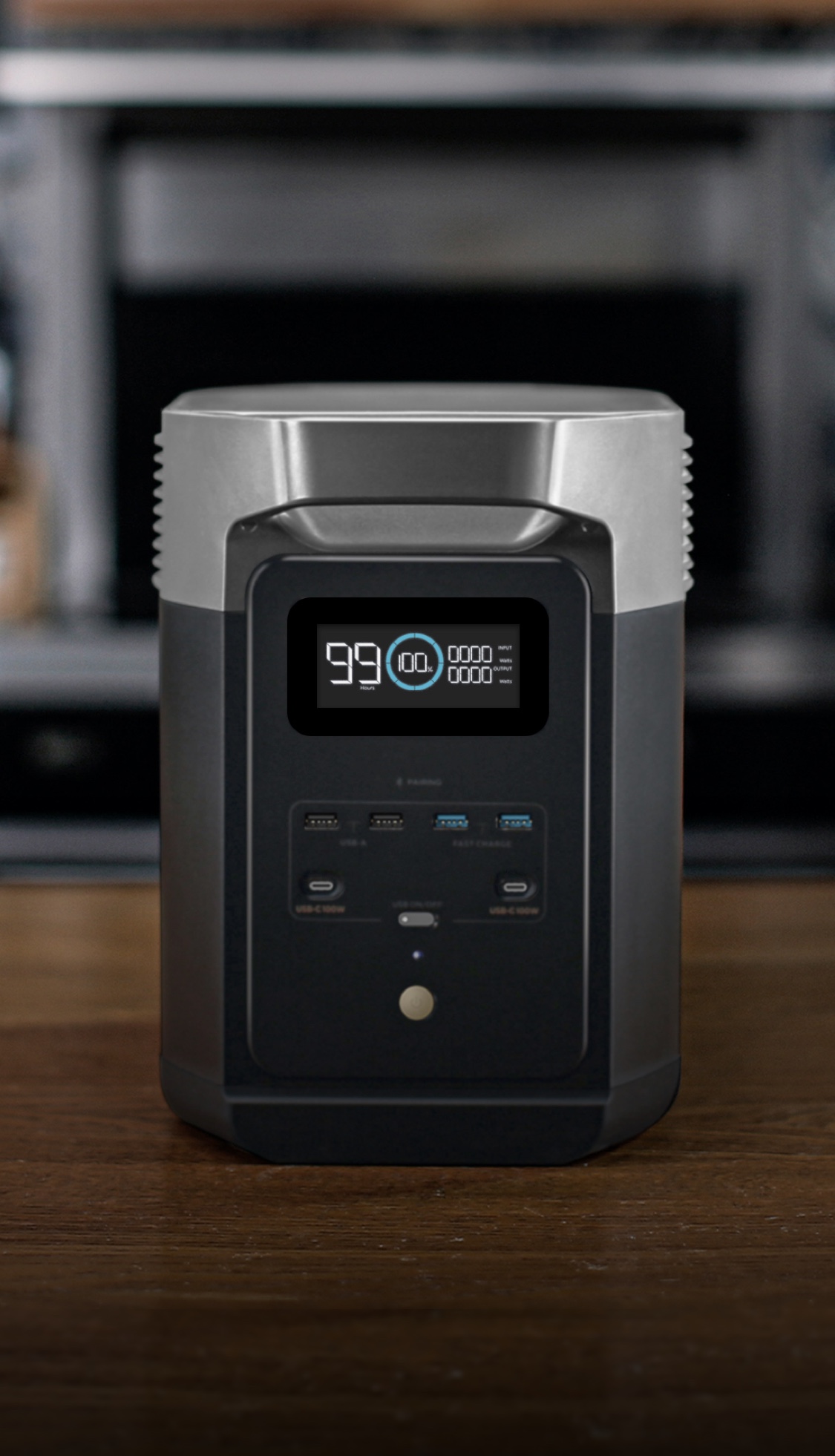
The EcoFlow DELTA 2 Portable Power Station is a high-performance portable power station featuring 1,024Wh of long-life LiFePO4 capacity and 1,800W of AC output, making it a top-tier choice for home emergency backup and off-grid power. With industry-leading recharge speeds, it is a professional-grade solution designed to bridge the gap between small power banks and massive home battery arrays.
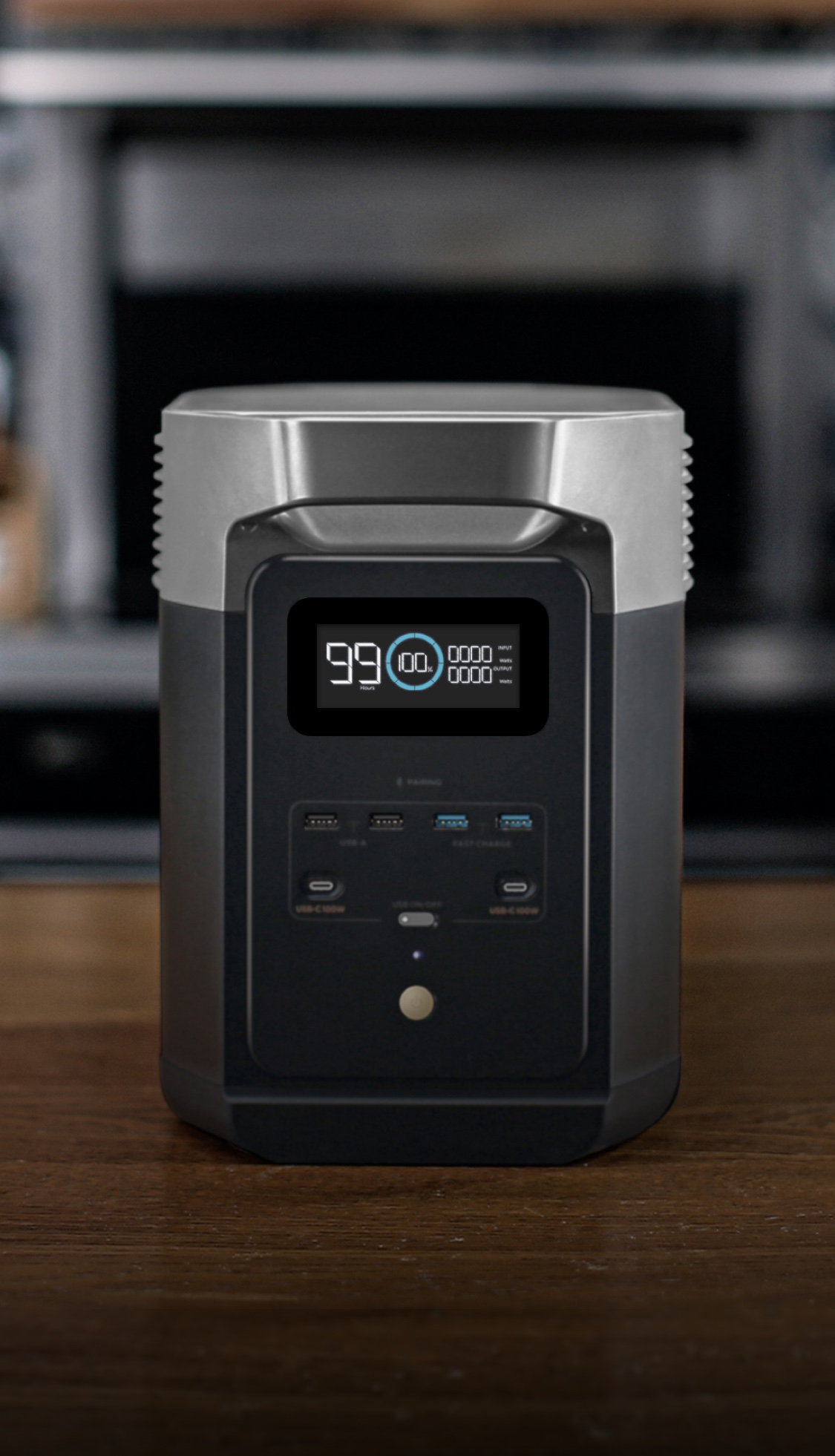
Top Pick: EcoFlow DELTA 2 Portable Power Station
Score: 9.1/10 — Best overall portable power station for homeowners who want fast charging, expandable LiFePO4 capacity, and enough output to run real appliances during an outage.
Power outages always seem to strike at the worst possible moment—which is why many homeowners also invest in specialized gear like the Wayne ESP25 battery backup sump pump to protect their basements. For those managing wet basements, combining a power station with the best submersible utility pumps or a high-performance sump pump provides a complete fail-safe. The rising popularity of off-grid weekends has made portable power a mainstream purchase rather than a niche one. The EcoFlow DELTA 2 sits squarely in the middle of this trend, promising home-appliance-grade output in a box you can carry. Much like integrating a comprehensive home security system, investing in backup power solutions—such as a battery backup sump pump—is about mitigating unforeseen risks. But with a premium price tag, the question is simple: is it worth it?
EcoFlow DELTA 2 Portable Power Station
The EcoFlow DELTA 2 (model ZMR330-US) is built around a 1,024Wh LiFePO4 battery, the chemistry now favored for portable power because it tolerates far more charge cycles than older lithium-ion packs and holds up better over years of use. That capacity is enough to keep refrigerators, CPAP machines, lights, and small power tools running through a typical outage, and the cell chemistry means the unit should still be useful many years from now.
Output is where the DELTA 2 earns its keep. It pushes 1,800W of continuous AC power across multiple outlets, with surge handling that covers the brief startup spikes of motors and compressors. With 15 total output ports — including AC sockets, USB-A, USB-C, and DC connections — you can run a household appliance while simultaneously charging phones, laptops, and accessories without juggling adapters.
Charging flexibility is the other headline feature. EcoFlow's X-Stream technology takes the unit from zero to 80% in under an hour from a wall outlet, which is remarkably fast for this class. It also accepts simultaneous input from solar panels, a wall outlet, and a car charger, so you can top up however your situation allows — a meaningful advantage for off-grid and emergency scenarios where you can't predict your power source.
This unit is best for homeowners who want reliable emergency backup, outdoor enthusiasts assembling an off-grid kit, and anyone looking to lean less on the grid. If you only need to charge phones and a laptop on occasional trips, it may be more capacity than you need.
Pros
- Long-life LiFePO4 chemistry rated for many charge cycles
- Very fast recharge: 0–80% in under an hour
- 1,800W output runs most home appliances and tools
- 15 ports cover nearly any device combination
- Accepts solar, wall, and car charging at once
Cons
- Premium price compared to smaller power stations
- 1,024Wh alone won't cover long whole-home outages without expansion
- Heavier than entry-level units due to capacity
| Specification | Detail |
|---|---|
| Model | ZMR330-US |
| Battery Capacity | 1,024Wh |
| Battery Chemistry | LiFePO4 |
| AC Output | 1,800W continuous |
| Output Ports | 15 (AC, USB-A, USB-C, DC) |
| Fast Charge | 0–80% in under 1 hour (X-Stream) |
| Input Sources | Solar + wall + car (simultaneous) |
| Category | Generators & Backup Power |
Understanding Portable Power: How the DELTA 2 Works
To understand why the EcoFlow DELTA 2 stands out, it is necessary to understand the physics of portable power. At its core, this device is a massive battery paired with a sophisticated inverter. Most household appliances require AC (Alternating Current), but batteries in units like the EcoFlow DELTA 2 store energy as DC (Direct Current). The DELTA 2's inverter converts that stored DC energy into a clean sine wave of AC power, allowing you to plug in sensitive electronics like laptops and medical devices without risk of damage.
The 1,024Wh capacity is the "fuel tank." To calculate how long it will last, you divide the capacity by the wattage of your device. For example, a 100W lamp would theoretically run for about 10 hours (1,024Wh / 100W = 10.24). However, inverters have an efficiency loss (usually around 10-15%), meaning real-world runtime is slightly lower. This is why having a buffer in capacity is essential for emergency planning.
The 1,800W output rating refers to the "flow rate." While capacity determines how long you can run something, the output rating determines what you can run. A coffee maker or a space heater requires high wattage to start and operate. Many budget power stations peak at 600W or 1,000W, which would trigger an overload protection shut-off when trying to run a microwave or a full-size fridge. The DELTA 2's 1,800W ceiling puts it in a different league, enabling it to handle the heavy-lift requirements of household appliances.
Comprehensive Buyer's Guide: Choosing Your Backup Power
When shopping for a power station, most consumers make the mistake of looking only at the price. However, the long-term cost of ownership is dictated by battery chemistry and cycle life. This is where the LiFePO4 (Lithium Iron Phosphate) chemistry in the DELTA 2 becomes a critical selling point.
Battery Chemistry: LiFePO4 vs. NMC
Traditional portable power stations often use NMC (Nickel Manganese Cobalt) batteries. While NMC is more energy-dense (meaning the unit can be smaller and lighter), it degrades faster. An NMC battery might last 500 to 800 full charge cycles before its capacity drops to 80%. LiFePO4 batteries, like those in the ZMR330-US, can often reach 3,000 cycles before hitting that same degradation point. In practical terms, this means the DELTA 2 can be charged and discharged daily for nearly 8 years, whereas an NMC unit might wear out in two.
The Importance of Charging Speed
In a real emergency, you may only have a short window of power—perhaps a few hours of electricity restored before another outage strikes. This is where "X-Stream" technology becomes a logistical advantage. Most 1kWh stations take 6 to 12 hours to charge from a wall outlet. The DELTA 2's ability to reach 80% in under an hour ensures that you are never caught with a dead battery during a volatile weather event.
Expanding Your Ecosystem
A common pitfall for buyers is purchasing a unit that is "just enough" for today, only to find it insufficient as their needs grow. The DELTA 2 is designed as a modular system. If you find that 1,024Wh isn't enough for a three-day blackout, you might consider a larger unit like the Bluetti Expandable Portable Power Station 2048Wh 2200W AC Output or the Bluetti AC200MAX or the EcoFlow Delta 2 Max or add extra battery packs to increase the capacity without needing to buy a completely new inverter system. This future-proofs your investment.
Setup and Optimization Guide
Getting the most out of your EcoFlow DELTA 2 requires more than just plugging it in. To maximize the lifespan of the unit and ensure it's ready when you need it, follow these optimization steps.
Initial Configuration
Upon unboxing, perform a full charge cycle. This calibrates the Battery Management System (BMS), ensuring the percentage display on the LCD is accurate. Connect the unit to the EcoFlow app via Wi-Fi or Bluetooth; this allows you to set custom charging speeds and monitor power draw in real-time from your smartphone.
Solar Integration
To turn your power station into a true "generator" (something that creates power rather than just storing it), you must integrate solar panels, such as the Jackery SolarSaga 200W Foldable Solar Panel
Related parts & accessories
Safe Placement and Ventilation
Power stations generate heat during both charging and discharging, especially when running high-wattage AC appliances. Do not operate the DELTA 2 inside a closed cabinet or under a blanket. Ensure there are at least 4-6 inches of clearance around the intake and exhaust fans to prevent thermal throttling, which can reduce output efficiency.
Long-Term Maintenance and Storage
Unlike a gas generator that requires oil changes and fuel stabilizers, the DELTA 2 is largely maintenance-free. However, battery health is dependent on how the unit is stored during the off-season.
The "Goldilocks" Storage Rule
For long-term storage (e.g., during summer if you only use it for winter storms), aim to keep the battery between 40% and 60% charge. This is the most stable state for the chemistry. Check the battery level every 3 months and top it up if it has naturally discharged below 40%.
Cleaning and Port Care
Since these units are often used in dusty environments (camping, garages, basements), the ports can collect debris. Use a can of compressed air to clear out the USB and AC ports every few months. Ensure the casing is wiped down with a dry cloth; avoid using liquid cleaners near the ventilation ports.
Comparison: How the DELTA 2 Fits the Market
| Feature | EcoFlow DELTA 2 (ZMR330-US) | Typical Budget Station | High-End Home Backup |
|---|---|---|---|
| Capacity | 1,024Wh | 250-500Wh | 3,000Wh+ |
| Chemistry | LiFePO4 (Long Life) | NMC (Short Life) | LiFePO4 |
| AC Output | 1,800W | 300-600W | 3,000W+ |
| Charge Time | <1 Hour to 80% | 4-8 Hours | 2-5 Hours |
| Port Count | 15 | 3-5 | 10+ |
| Best Use Case | Versatile Mid-Range | Phone/Tablet Only | Full House Critical Load |
As seen in the comparison, the DELTA 2 occupies a "sweet spot." It provides enough power to run actual appliances (unlike budget units) without the massive weight and prohibitive cost of full-home backup systems. It is the ideal "bridge" device for those who want more than a power bank but aren't ready to install a permanent home battery array, though larger systems like the EcoFlow DELTA Pro 3 are available for those needs.
For high-performance alternatives, we recommend the Anker SOLIX Portable Power Station or the Jackery Explorer 1000 for comparable reliability.
Common Pitfalls and How to Avoid Them
Even with a high-end device like the DELTA 2, users often make mistakes that lead to unexpected shutdowns or shorter battery life. Understanding these pitfalls can save you from frustration during a crisis.
Overloading the Inverter
The most common issue is attempting to start a high-surge appliance (like a large air compressor or an old-school vacuum cleaner) that exceeds the 1,800W continuous or peak rating. When this happens, the unit will enter "Overload Protection" and shut down. To avoid this, always check the wattage of your device. If you have multiple devices plugged in, the total combined wattage must stay under the limit. If you're running a fridge and a microwave simultaneously, you are likely to trip the breaker.
Ignoring the "Cold Weather" Effect
Lithium batteries, including LiFePO4, struggle in extreme cold. If the internal temperature of the battery drops significantly below freezing, the chemical reactions slow down, and the unit may refuse to charge to protect the cells. If you are using the DELTA 2 in a winter cabin or a cold garage, keep the unit inside your heated living space until it is time to use it, or use a thermal wrap. Never attempt to force-charge a frozen battery; wait for it to reach a safe operating temperature.
Phantom Power Drain
Many users leave the AC inverter switched "On" even when no devices are plugged in. The inverter itself consumes a small amount of power just to stay active. Over a week of idling, this "phantom drain" can sap a significant percentage of your battery. Always switch off the AC output when not in use to ensure your capacity is preserved for when you actually need it.
Deep Dive: Calculating Your Power Needs
To determine if 1,024Wh is actually enough for your specific needs, you need to build a "Power Budget." This is the process of listing every device you intend to run and estimating its hourly consumption. Because the DELTA 2 is often used as a survival or emergency tool, being overly optimistic about battery life can be dangerous.
The Power Budget Equation
The basic formula is: (Wattage of Device) x (Hours of Use) = Total Watt-hours (Wh).
Let's look at a typical emergency scenario for a small family over 12 hours:
- Smartphone Charging (4 phones): 15W x 2 hours = 30Wh
- LED Lamp: 10W x 6 hours = 60Wh
- Wi-Fi Router: 15W x 12 hours = 180Wh
- Small Fridge (Cycling): 60W (avg) x 12 hours = 720Wh
- Laptop: 50W x 3 hours = 150Wh
- Total Required: 1,140Wh
In this scenario, a single DELTA 2 (1,024Wh) would fall slightly short. This highlights the importance of "load shedding"—the act of turning off non-essential items. By removing the laptop or reducing the lamp usage, the DELTA 2 becomes perfectly sufficient. If your budget exceeds 1,024Wh, this is where the expandable battery options become essential.
Comparing AC vs. DC Efficiency
A pro-level tip for extending your runtime is to avoid the AC outlets whenever possible. When you plug a device into an AC outlet, the DELTA 2 has to convert DC battery power to AC power. This conversion process is not 100% efficient; some energy is lost as heat. If you have a device that can be powered via USB-C or DC (like a phone, tablet, or some portable fans), use those ports instead. By staying in DC, you can potentially extend your runtime by 10-15%.
Advanced Solar Strategy for the DELTA 2
While wall charging is fast, solar is the only way to make the DELTA 2 a truly independent power source. To maximize your solar harvest, you need to understand the relationship between voltage, amperage, and sunlight.
Optimizing Panel Placement
Solar panels are not "plug and play" in terms of efficiency. A panel lying flat on the ground will produce significantly less energy than one angled toward the sun. For the best results, use a tilting mount. In the Northern Hemisphere, panels should face South. During the winter, a steeper angle is required to capture the lower arc of the sun.
The "Cloudy Day" Reality
Many buyers assume that if they have 200W of solar panels, they will get 200W of power. In reality, "rated" wattage is based on perfect laboratory conditions. On a hazy or cloudy day, you might only get 20-50%