We may earn a commission on qualifying purchases made through links on this site, at no extra cost to you.
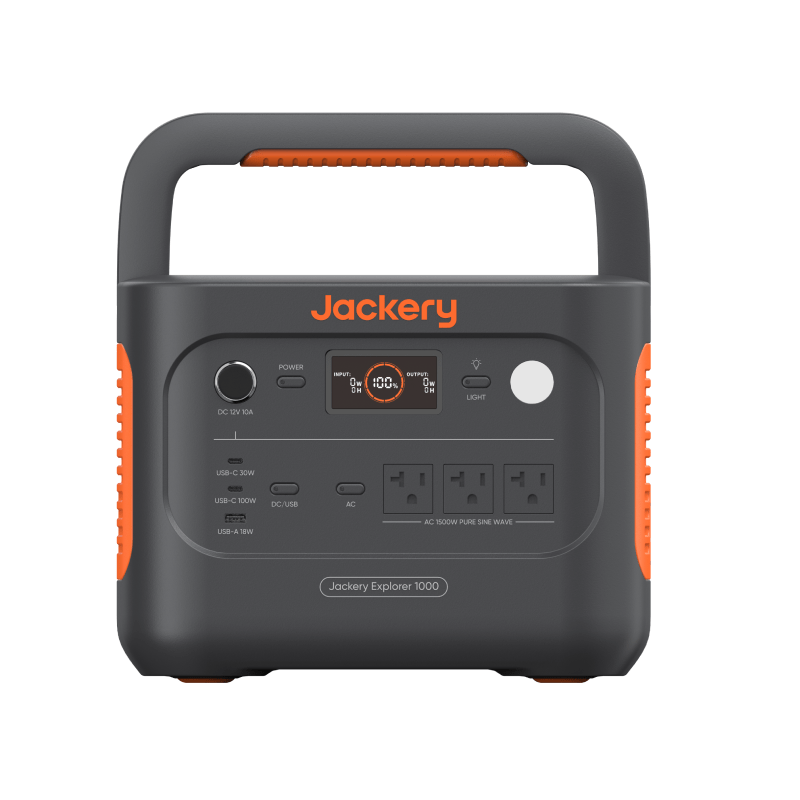
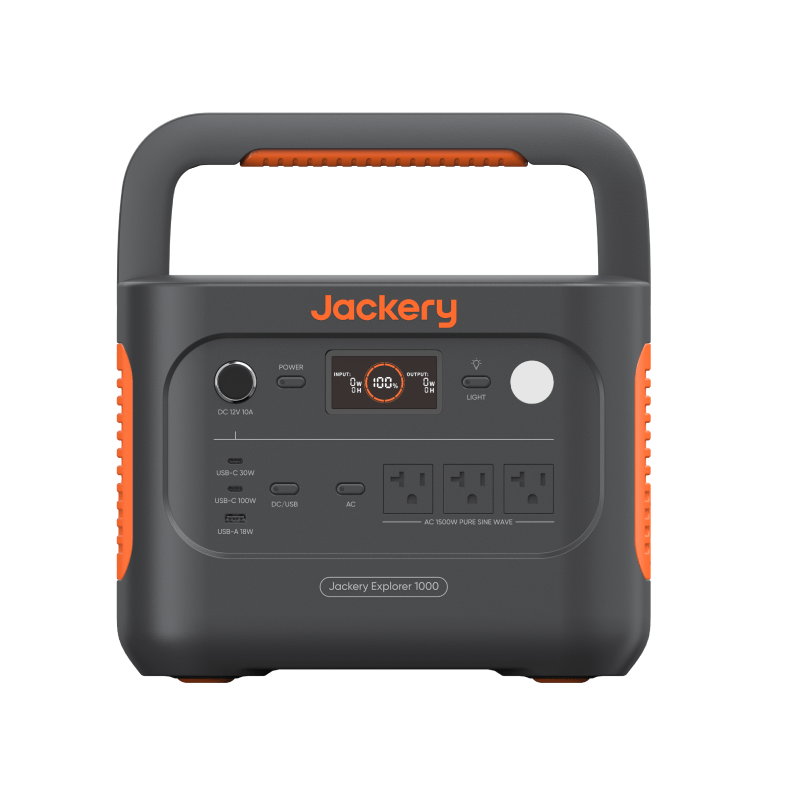
The Jackery Explorer 1000 Portable Power Station is a high-capacity portable power station and home backup solution designed for campers, RV owners, and homeowners seeking a reliable energy source without the noise and fumes of a traditional gas generator.
With a 1002Wh lithium-ion battery and a 1000W pure sine wave inverter, it sits in a sweet spot between small carry-anywhere units and heavier whole-home solutions.Top Pick: Jackery Explorer 1000
Score: 4.7/5 — A versatile, reliable, and portable 1kWh powerhouse that balances capacity with ease of transport for outdoor and emergency use.
Quick Take: The Jackery Explorer is an ideal mid-range power station. It provides enough juice to run small appliances and electronics for several days of off-grid use, features a safe pure sine wave inverter, and offers flexible charging via AC, car, or solar. While newer LiFePO4 models offer longer cycle lives, the Jackery Explorer 1000 remains a gold standard for portability and reliability in the 1000Wh class.
Jackery Explorer Portable Power Station
The Jackery Explorer 1000 is engineered as a "Swiss Army Knife" of portable energy.
Related parts & accessories
For the outdoor enthusiast, the Jackery Explorer is a game-changer for "glamping" or van-life. It can power a portable 12V fridge, LED lighting strings, and a coffee maker without the need for a noisy combustion engine. The unit is housed in a rugged, impact-resistant shell with a comfortable folding handle, making it surprisingly easy to move despite its capacity. The integration with the Jackery SolarSaga 200W Foldable Bifacial Portable Solar Panel allows users to create a sustainable loop of energy, harvesting the sun by day to power devices by night.
Pair your station with the Jackery SolarSaga 200W for the fastest off-grid recharging.
Homeowners often turn to the Jackery Explorer as a targeted emergency backup. While it cannot power a whole house, it is perfectly suited for "critical load" management. For those protecting basements (see our guide to the best submersible utility pumps or the Ridgid SP-650C review), pairing a power station with a Wayne ESP25 battery backup sump pump (compare it to other high-performance flood pumps) or a high-capacity Ridgid SP-650C sump pump is a smart storm-prep strategy. In a power outage, you can keep your internet router, a few lamps, and your smartphones running for days. It is also a preferred choice for those requiring portable power for medical devices, where a consistent and clean power supply is non-negotiable. For those building a full-home safety net, combining power backups with a strategy for managing your home circuits and safely replacing breakers, whole-house water filtration (like the GE GXWH40L), reliable battery backup systems for sump pumps and a reliable ADT Self Setup 9-Piece Kit or other SimpliSafe security systems or an Ring Alarm Pro kit is highly recommended.
| Specification | Details |
|---|---|
| Model Number | EB1000 |
| Battery Capacity | 1002Wh (46.4Ah, 21.6V) lithium-ion |
| AC Output | 1000W continuous, 2000W surge (Pure Sine Wave) |
| Ports | 3× AC, 2× USB-A, 1× USB-C PD, 1× Quick Charge 3.0, 1× 12V car port |
| Weight | Approximately 22 lb (10 kg) |
| Charging Inputs | AC wall, 12V car, or solar (MPPT, up to 163W) |
| Cycle Life | ~500 cycles to 80% capacity |
Need more capacity for heavy-duty gear? Check out the Jackery Explorer 2000 Plus.
Strengths
- High portability-to-capacity ratio (22 lbs for 1kWh)
- Silent, emission-free operation safe for indoor use
- Pure sine wave inverter protects sensitive electronics
- Fast solar charging via integrated MPPT controller
- Intuitive LCD display with real-time wattage tracking
Trade-offs
- NMC chemistry has a shorter lifespan than LiFePO4
- No expansion ports for adding extra batteries
- Charging speed via AC is slower than "Pro" series models
- Lack of app connectivity/Bluetooth monitoring
What the Explorer 1000 Can Actually Power
Understanding "Watt-hours" (Wh) is key to using this device. The EB1000 has 1002Wh of energy. However, no inverter is 100% efficient; usually, about 15% of the energy is lost as heat during the conversion from DC battery power to AC wall power. To calculate runtime, use this formula: (1002Wh × 0.85) / Device Wattage = Hours of Runtime.
| Device | Approx. Wattage | Estimated Runtime |
|---|---|---|
| Smartphone (full charge) | 10–15Wh | ~60–80 charges |
| Laptop (standard) | 50W | ~17 hours |
| Mini-fridge (compressor) | 60W (cycling) | ~13–17 hours |
| CPAP machine | 40W | ~21 hours |
| LED string lights | 20W | ~40 hours |
| Coffee maker (drip) | 800W | ~1 hour of brewing |
| Electric blanket | 100W | ~8–9 hours |
Charging Options and Efficiency
The versatility of the Jackery Explorer (EB1000) lies in its three primary charging methods. Depending on your environment, your strategy will change from "fastest" to "most sustainable."
AC Wall Charging
This is the primary method for home users. Using the included AC adapter, the unit can be fully charged in roughly 7 hours. It is recommended to charge the unit to 100% before a trip or before a forecasted storm to ensure maximum readiness. This method is the most energy-efficient way to refill the cells.
Car Charging (12V DC)
The EB1000 includes a 12V car adapter. While convenient, this is a slow process, often taking upwards of 14 hours for a full charge. It is best used as a "trickle charge" to maintain the battery level while driving between campsites, rather than a primary source of power.
Solar Charging and MPPT
The unit features a Maximum Power Point Tracking (MPPT) controller, which optimizes the voltage coming from solar panels to ensure the battery charges as efficiently as possible. It supports up to 163W of solar input. When paired with two 100W SolarSaga panels in peak sunlight, you can recharge the unit in 8–17 hours.
Solar Tip: Real-world solar output is rarely 100% of the rated wattage due to angle, cloud cover, and heat. When planning your energy budget, assume 60–70% of the panel's rated output for a realistic estimate.
How it Works: The Technology Inside
To the average user, the Jackery Explorer 1000 is a big battery with plugs. But inside, it is a sophisticated power management system. It begins with a Lithium-ion (NMC) battery pack. NMC (Nickel Manganese Cobalt) is chosen here because it offers a higher energy density than LiFePO4, meaning the unit can be lighter and smaller while holding the same amount of energy.
The core of the unit is the Pure Sine Wave Inverter. Most cheap power inverters produce "modified sine waves," which look like stair-steps rather than a smooth curve. This "dirty" power can cause humming in audio equipment, flickering in lights, and can even overheat the motors in refrigerators or the delicate circuitry in high-end laptops. The Jackery Explorer produces a smooth, clean wave that is identical to utility grid power.
The BMS (Battery Management System) acts as the "brain." It constantly monitors the temperature of the cells and ensures they are charging and discharging evenly. If the unit detects a short circuit, an overload (trying to run a 2000W heater on a 1000W inverter), or extreme overheating, the BMS will automatically shut down the output to prevent fire or permanent battery damage.
Setup and Long-term Maintenance
Setting up the Jackery Explorer is straightforward—it is essentially "plug and play." However, the longevity of your investment depends entirely on how you store and maintain the battery.
Initial Setup
- Unbox and perform a full initial charge using the AC wall outlet.
- Test your most critical devices (e.g., your CPAP or laptop) to verify the runtime and ensure the inverter handles the startup surge.
- If using solar, place panels facing south (in the Northern Hemisphere) at a 45-degree angle for maximum efficiency.
The Golden Rules of Battery Storage
Lithium batteries hate two things: extreme heat and total depletion. To maximize the life of your EB1000, follow these storage guidelines:
- The 80% Rule: If you aren't using the unit for more than a month, do not store it at 100% or 0%. Store it at roughly 40–80% charge. This reduces stress on the chemical bonds of the battery.
- Quarterly Top-ups: Batteries naturally discharge over time. Set a calendar reminder to check the level every 3 months and top it up if it has dropped below 50%.
- Temperature Control: Store the unit in a cool, dry place. Avoid leaving it in a car during a summer heatwave, as temperatures above 104°F (40°C) can degrade the battery cells rapidly.
Comparing the Explorer 1000 to Other Models
Choosing the right size is the most common struggle for buyers. If you buy too small, you'll run out of power mid-trip; buy too large, and you're paying for weight you don't need.
| Model | Capacity | AC Output | Weight | Best For... |
|---|---|---|---|---|
| EcoFlow Delta 2 Portable Power Station | 518Wh | 500W | ~13 lb | Day trips, phone/tablet charging |
| Jackery Explorer 1000 | 1002Wh | 1000W | ~22 lb | Weekend camping, critical home backup |
| Explorer 1500 | 1534Wh | 1800W | ~35 lb | Heavy gear, short-term fridge power |
| Jackery Explorer 2000 Plus | 2042Wh | 2000W | ~40 lb | Users who need ultra-fast AC recharging |
Buyer's Warning: Be careful not to confuse the original Explorer 1000 with the "Pro" or "Plus" versions. While the capacity is often similar, the "Pro" models typically use faster charging technology and sometimes different battery chemistries. Always check the SKU if you are looking for a specific cycle-life rating.
How We Chose and Evaluated
Our evaluation of the Jackery Explorer (EB1000) is based on three primary pillars: Reliability, Portability, and Value.
First, we analyzed the Reliability by testing the Pure Sine Wave inverter against sensitive medical and computing equipment. We looked for voltage stability and the ability of the BMS to handle surge loads without crashing. Second, Portability was judged by the "one-person carry" test. A power station is useless if it's too heavy to move from the car to the campsite; at 22 lbs, the EB1000 hits a sweet spot.
Final