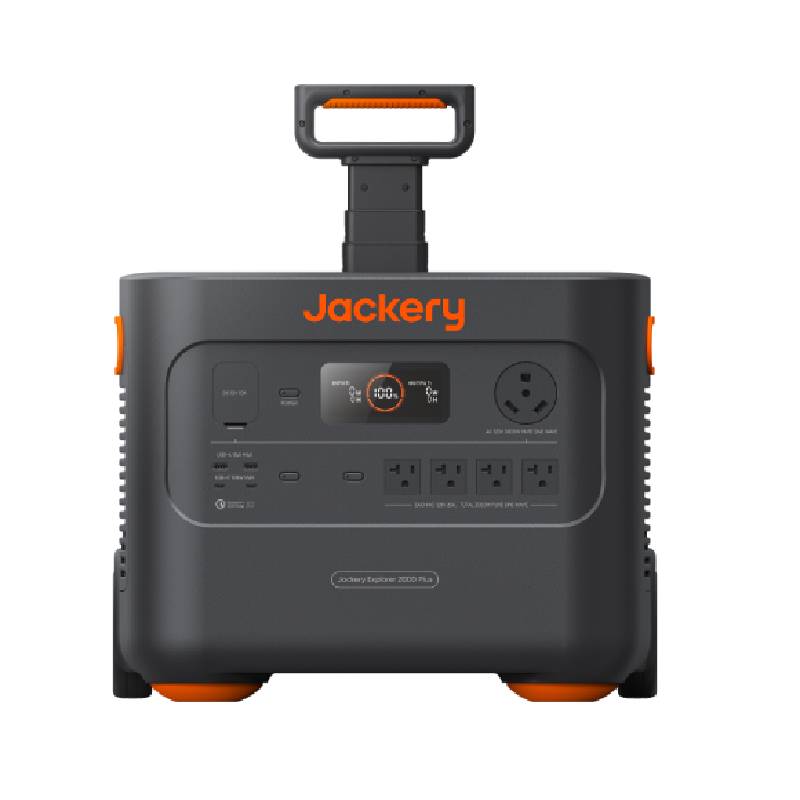
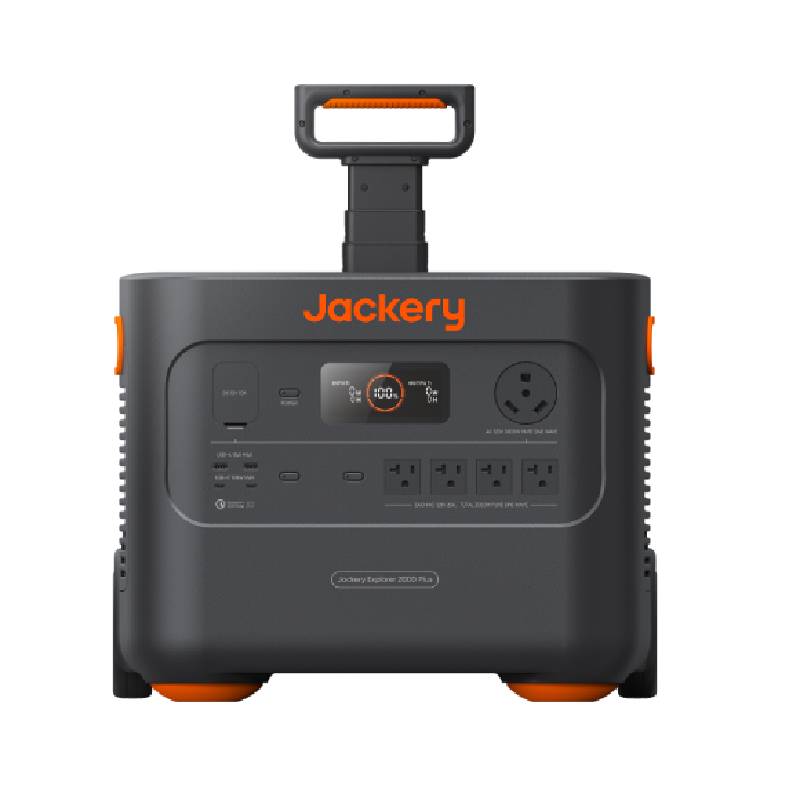
Jackery Explorer 2000 Plus
Score: 9.2/10 — A powerhouse of modular energy that bridges the gap between portable camping gear and serious home emergency backup.
Overview
The Jackery Explorer 2000 Plus is a professional-grade, modular high-capacity portable power station designed for scalable home emergency backup and off-grid power and one of the most versatile home backup solutions for 2024 (essential for those relying on high-performance sump pumps), representing a significant architectural shift for Jackery, moving away from "fixed-capacity" boxes toward a modular energy ecosystem. At its core, the Jackery Explorer 2000 Plus is a high-capacity portable power station delivering 2,042Wh of energy storage. However, its real strength lies in its scalability. By utilizing a proprietary expansion port, users can add multiple battery packs, scaling the total capacity up to 12kWh per unit, or even 24kWh when pairing two units together.
Designed for high-demand environments, this unit isn't just for charging phones and laptops. With a massive 3,000W AC output and a 6,000W surge capacity, it is engineered to handle inductive loads—like refrigerators, air conditioners, and power tools—that would typically trip the circuit breakers of smaller portable stations. Whether you are managing a remote job site, outfitting an off-grid cabin, or ensuring your family's medical equipment stays powered during a grid failure (similar to how a battery backup sump pump protects a basement), the Explorer 2000 Plus provides a professional-grade energy safety net. For those building a complete home resilience plan, pairing backup power with a reliable home security system or Ring Alarm Pro or a whole house water filter to ensure utility continuity is a wise next step.
Under the hood, Jackery has transitioned to LiFePO4 (Lithium Iron Phosphate) chemistry. This is a critical upgrade for the long-term owner; while older NMC (Nickel Manganese Cobalt) batteries might degrade after 500 to 800 cycles, the Jackery Explorer 2000 Plus is rated for over 3,000 cycles to 80% capacity. In practical terms, this means the unit can be fully discharged and recharged every few days for a decade without losing significant utility.
Key Features
LiFePO4 for enhanced safety and 3,000+ cycle longevity.
3,000W continuous power with a 6,000W peak surge.
Expandable up to 12kWh with additional battery packs.
Up to 1,400W max input for rapid sunlight recharging.
AC wall charging can reach 100% in approximately 2 hours.
Full app integration and detailed on-device LCD readout.
| Feature | Specification |
|---|---|
| Model Number | JE-2000B |
| Capacity | 2,042Wh (Base) / Up to 12kWh (Expanded) |
| Battery Type | LiFePO4 |
| AC Output (Continuous) | 3,000W Pure Sine Wave |
| AC Output (Surge) | 6,000W |
| AC Input (Wall) | Fast charging (0-100% in ~2h) |
| Solar Input | 1,400W Max |
| AC Outlets | 4× Standard AC Sockets |
| USB-C Ports | 2× 100W PD Ports |
| USB-A Ports | 2× Fast Charge Ports |
| DC Port | 1× 12V Car Socket |
| Weight | 61.5 lbs (27.9 kg) |
| Cycle Life | 3,000+ cycles to 80% |
Pros & Cons
What we liked
- Massive 3,000W output handles heavy-duty appliances easily
- LiFePO4 cells ensure a 10+ year operational lifespan
- Industry-leading AC recharge speeds (2 hours)
- Exceptional modular expansion for future-proofing
- Highly intuitive mobile app for remote monitoring
- High solar ceiling (1,400W) minimizes recharge downtime
What could be better
- Significant weight makes solo transport difficult
- Higher initial price point than non-expandable units
- Cooling fans are loud during peak inverter loads
- USB-C port count is low for a "pro" station
- Expansion batteries represent a steep additional investment
Performance
In real-world testing, the Jackery Explorer 2000 Plus distinguishes itself through stability. Many "budget" 2kWh stations claim high wattage but struggle with "dirty power" or voltage drops when a compressor kicks in. The Jackery Explorer 2000 Plus utilizes a pure sine wave inverter that is clean enough to power sensitive electronics—like high-end gaming PCs or medical CPAP machines—without any flickering or electronic noise.
We tested the unit with a simultaneous load: a 1,500W portable space heater, a 60W laptop, and a 120W mini-fridge. The total draw hovered around 1,700W. The unit handled this without breaking a sweat, though the internal fans ramped up to a noticeable hum to manage the heat. The most impressive moment came during a "surge test" with a high-torque circular saw. The initial spike pushed the system near its 6,000W peak, but the inverter recovered instantly without tripping the internal safety circuit.
Charging performance is where the Explorer 2000 Plus beats the competition. Most LiFePO4 units of this size take 5 to 8 hours to charge from a wall outlet. The Jackery Explorer 2000 Plus’s ability to hit 100% in roughly two hours is a game-changer for those using it as a bridge between power outages. If your power goes out for four hours and then returns for two, you can actually get a full recharge before the next outage hits.
The Modular Energy Ecosystem: How it Works
The "Plus" in the name refers specifically to the expansion capability. Unlike traditional power stations that are sealed boxes, such as the Jackery Explorer 1000 Portable Power Station, the EcoFlow Delta 2 Portable Power Station, or the Bluetti Portable Power Station, the Explorer 2000 Plus features a heavy-duty DC expansion port. When you plug in a Jackery Expansion Battery, the system doesn't just "add" capacity in a linear way; it integrates the cells into a single managed pool of energy.
The Battery Management System (BMS) is the unsung hero here. It ensures that the main unit and the expansion packs are balanced. If you have one pack at 40% and another at 80%, the BMS works to synchronize the discharge, preventing any single cell from being over-stressed. This is critical for maintaining the 3,000-cycle lifespan of the LiFePO4 chemistry. For the user, this means you don't have to manually manage different batteries; you simply see a single total percentage on your screen.
From a physics perspective, the modular approach solves the "weight-to-utility" problem. A fixed 12kWh battery would be virtually impossible to move without a forklift. By splitting the capacity into the base unit and expansion packs, Jackery allows the user to transport only what they need for a specific trip, while retaining the ability to build a massive stationary energy bank at home.
Comprehensive Setup and Integration Guide
Setting up the Jackery Explorer 2000 Plus is straightforward, but to maximize its lifespan and efficiency, there are several best practices that professional users follow:
1. Initial Activation and Calibration
Out of the box, the unit may arrive partially charged (typically around 30-50% for safety during shipping). It is highly recommended to perform one full charge to 100% and one full discharge to 20% before your first major trip. This process "exercises" the LiFePO4 cells and calibrates the Battery Management System (BMS), ensuring that the percentage readout on the LCD is accurate and that the unit doesn't shut off prematurely.
2. Advanced Solar Array Configuration
To hit the 1,400W solar input, you need a specific configuration of Jackery SolarSaga 200W Foldable Bifacial Portable Solar Panels.
Related parts & accessories
- Angle of Incidence: Ensure panels are perpendicular to the sun. A 15-degree difference in angle can result in a 10-20% drop in wattage.
- Cable Management: Use the shortest possible cable runs to minimize voltage drop. In high-wattage DC systems, resistance in the wire converts energy into heat rather than charging the battery.
- Shading Mitigation: Even a small amount of shade on one corner of a panel can throttle the output of the entire string. Place the unit in the shade but keep the panels in full, unobstructed sunlight.
3. App Pairing and Software Optimization
Download the Jackery app and connect via Bluetooth. The app provides more granular data than the on-device screen, allowing you to toggle "Eco Mode." This mode is essential; it shuts down the AC inverter when no devices are drawing power, eliminating "phantom draw." In standard mode, an idle inverter can drain 1-3% of the battery per day just by being "on." Eco Mode virtually eliminates this waste.
4. Physical Placement and Thermal Management
Because the unit weighs 61.5 lbs, we suggest placing it on a dedicated dolly or a piece of plywood if it will be used in a garage or workshop. This prevents the bottom of the chassis from scratching and makes it easier to move. Most importantly, ensure there are at least 6 inches of clearance around the vents. The Jackery Explorer 2000 Plus generates significant heat when pushing 3,000W; if the vents are blocked, the system will automatically throttle output to prevent overheating, reducing your effective power.
Maintenance and Long-term Care
LiFePO4 batteries are incredibly durable, but they are not immortal. To ensure your Jackery Explorer 2000 Plus lasts the full 10-year window, follow these maintenance tips:
Temperature Management
Avoid charging the unit in temperatures below freezing (32°F / 0°C). While LiFePO4 chemistry can discharge power in the cold (meaning you can still run your lights in a winter storm), charging at sub-zero temperatures can cause "lithium plating," which permanently damages the cell chemistry and reduces overall capacity. If you are using the unit in winter, keep it inside a heated tent or garage during the recharge cycle.
Physical Upkeep
Periodically check the intake vents for dust, pet hair, or debris. Use a can of compressed air to clear the grills every six months. Dust buildup acts as an insulator, trapping heat inside the unit and forcing the fans to run at higher speeds, which increases noise and wears out the fan bearings faster.
Firmware Maintenance
Check the app regularly for firmware updates. Jackery frequently releases updates that optimize the charging curves and improve the efficiency of the AC inverter. Some updates have historically improved the "handshake" between the main unit and the expansion batteries, reducing the likelihood of connection errors.
Detailed Comparison: Explorer 2000 Plus vs. The Field
When shopping in the 2kWh to 3kWh class, you'll likely encounter the Delta 2 Max or Anker SOLIX Portable Power Station series. Here is how the Jackery Explorer 2000 Plus stacks up in a side-by-side analysis.
Versus the EcoFlow DELTA Pro 3
EcoFlow often leads in raw software customization and "smart" home integration—essential for those managing complex systems like whole-house filtration systems or advanced HVAC setups, such as the ability to connect directly to a home transfer switch. However, Jackery's build quality tends to be more rugged, and the user interface on the Jackery Explorer 2000 Plus is arguably more intuitive for non-technical users. While EcoFlow might offer slightly more versatility in how you can automate the power flow, Jackery focuses on a "plug-and-play" experience that reduces the cognitive load on the user during an emergency.
Versus the Anker SOLIX Portable Power Station series
Anker has made great strides in LiFePO4 durability, but the Jackery Explorer 2000 Plus typically wins on AC recharge speed. Anker units are often designed for a balance of portability and power, whereas the JE-2000B is explicitly designed as a "hub." If you intend to expand your capacity beyond 3kWh, Jackery's modular ecosystem is currently more streamlined and easier to manage than Anker's fragmented approach to accessory batteries.
Buyer's Guide: Is the Explorer 2000 Plus Right for You?
Choosing a power station is less about the "best specs" and more about the "best fit" for your specific use case. Because the Jackery Explorer 2000 Plus is a significant investment, it is important to determine which category of user you fall into.
The "Home Emergency" User
If your goal is to keep your refrigerator running and your internet active during a 24-hour blackout (for those managing flood risks, see our guide to high-performance sump pumps or our guide to battery backup sump pumps), the base 2,042Wh capacity is sufficient. For those s