We may earn a commission if you purchase through links on this page, at no extra cost to you.
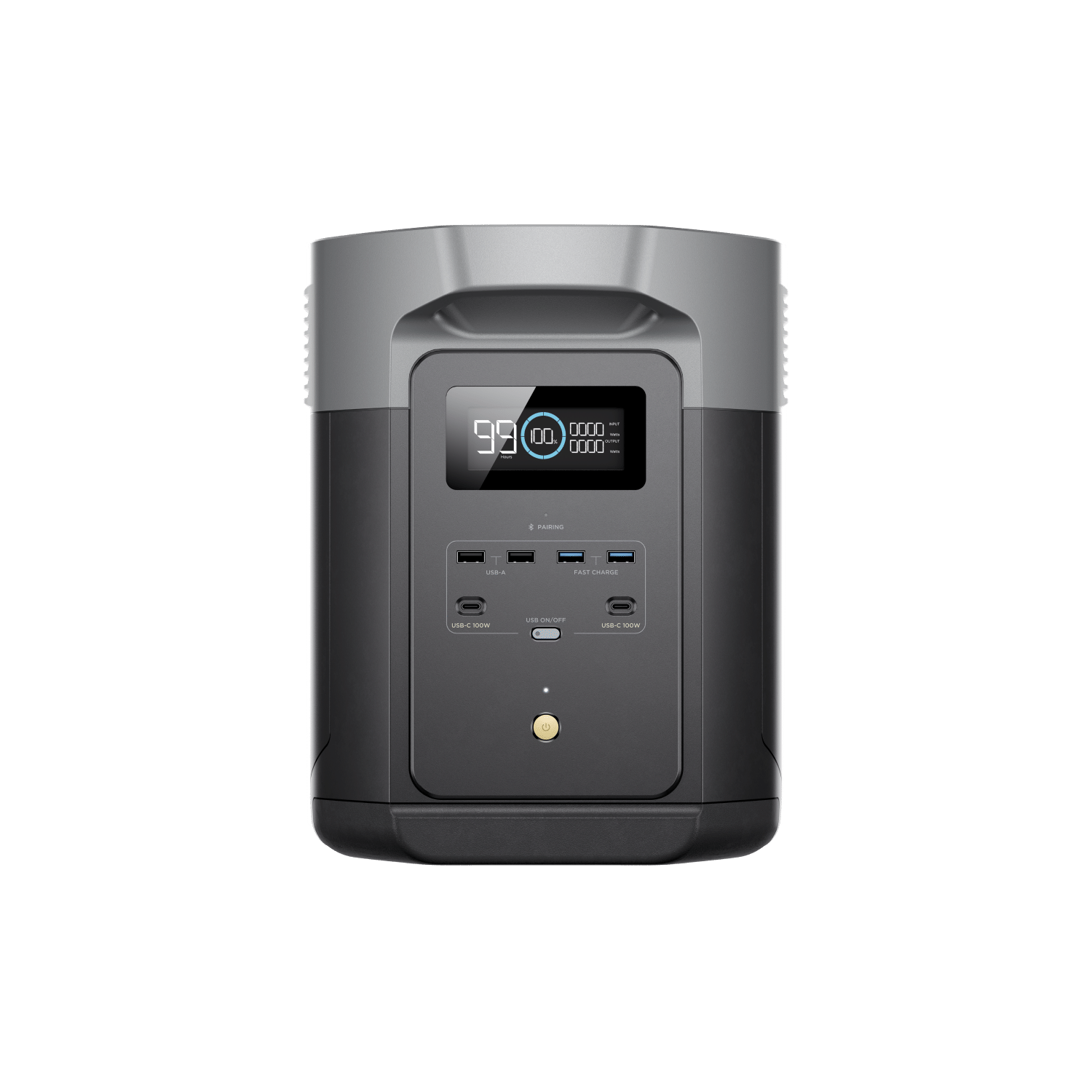
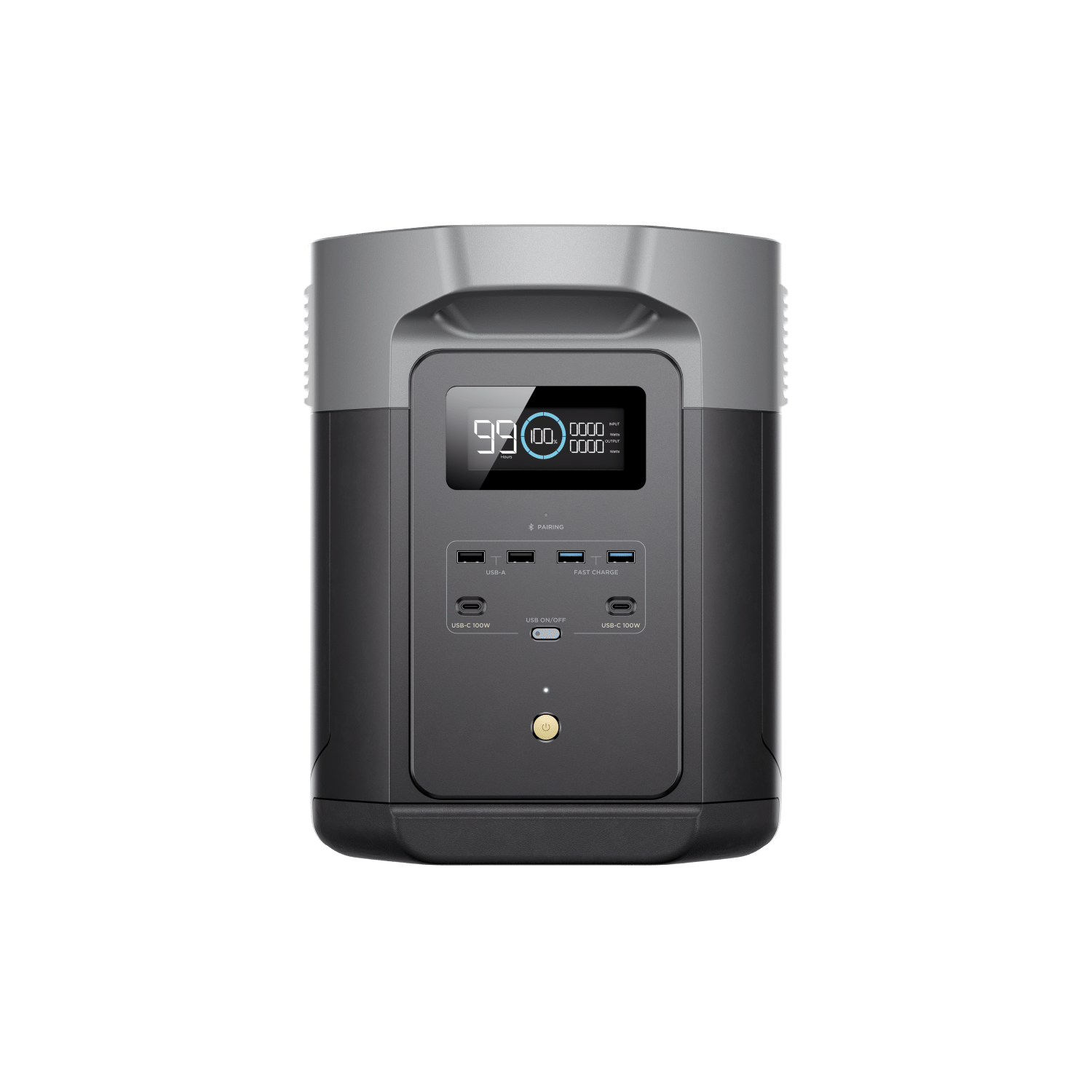
When the power goes out or you're miles from the nearest outlet, having a dependable power station is the difference between staying connected and going dark. This EcoFlow Delta 2 Max buying guide explores whether this high-capacity battery is the right fit for your home backup or off-grid needs, analyzing its capacity, charging speeds, and real-world performance compared to other leading portable power stations.
Top Pick: EcoFlow Delta 2 Max
Score: 9.2/10. A high-capacity, fast-charging power station that comfortably covers home backup, off-grid trips, and remote work in a single unit. If you want one battery that handles fridges, laptops, and power tools without fuss, this is the one to beat.
The EcoFlow Delta 2 Max is a premium energy solution designed for those who cannot afford downtime. Whether you are mitigating the risk of a power outage at home or running a remote workstation in the wilderness, its massive capacity and multi-modal charging make it a versatile powerhouse for modern tech needs.
EcoFlow Delta 2 Max
The Delta 2 Max (model DELTA2MAX) is a high-capacity portable power station designed to keep essential devices and appliances running during outages, off-grid adventures, or long stretches of work away from traditional power. Its large battery and broad output options make it a genuine middle-ground unit: bigger than a weekend camping battery, but still portable enough that you don't need a permanent install. By balancing weight with wattage, it provides a reliable safety net for homeowners and a powerhouse for professionals.
What sets it apart is versatility. With multiple AC outlets plus USB-A, USB-C, and DC ports, you can simultaneously power a refrigerator, charge a laptop, top up a camera, and run a small power tool. This versatility is critical in emergency scenarios where you may need to power a CPAP machine and a lamp while keeping your phone charged for emergency calls. The internal inverter ensures that the power delivered is stable, preventing surges that could damage sensitive electronics.
Recharging is where the Delta 2 Max shines for impatient users. It accepts fast AC wall charging, solar input, and a car adapter, so you can choose the fastest available source. The flexibility means a unit that's nearly drained in the evening can be ready again the next morning from a wall outlet, or trickle back up from panels while you're off-grid. This eliminates the "charging anxiety" often associated with older, slower portable power stations that take 12+ hours to hit full capacity.
This unit suits three groups especially well: homeowners who want emergency backup that's simple to deploy, outdoor enthusiasts who need reliable portable electricity for multi-day trips, and remote workers who can't afford to lose a workstation to a dead battery. If your needs span more than one of these, the Delta 2 Max is an easy fit, providing a scalable energy solution that grows with your requirements.
Pros
- Large battery capacity for fridges, tools, and electronics
- Fast AC charging gets you back up quickly
- Three recharge paths: wall, solar, and car
- Wide port selection runs several devices at once
- Portable enough for trips, capable enough for home backup
Cons
- Heavier than compact weekend-only power banks
- Solar panels are a separate purchase for off-grid recharging
- Overkill if you only need to charge phones and tablets
| Spec | Detail |
|---|---|
| Model Number | DELTA2MAX |
| Category | Generators & Backup Power |
| Battery Type | High-capacity lithium |
| Output Ports | Multiple AC outlets, USB-A, USB-C, DC |
| Recharge Methods | AC wall outlet, solar panel, car adapter |
| Best Use Case | Home backup, off-grid use, remote work |
We may earn a commission if you purchase through links on this page, at no extra cost to you.
Comprehensive Guide: How Portable Power Stations Work
To understand why the Delta 2 Max is a superior choice, it is important to understand the technology inside. Unlike traditional battery backup solutions, which may be specialized for single appliances, a portable power station is essentially a massive, sophisticated battery with a built-in inverter.
For those looking at other high-capacity options, the Anker PowerHouse 757 Portable Power Station is another strong contender, alongside the Anker SOLIX Portable Power Station in the market. The battery cells store energy as Direct Current (DC). However, most home appliances—like your microwave or coffee maker—require Alternating Current (AC). The inverter is the component that converts the DC energy from the battery into the AC energy used by your wall plugs. The Delta 2 Max uses a high-efficiency inverter that minimizes energy loss during this conversion, meaning you get more "run time" out of every percentage of battery life.
Another key component is the BMS (Battery Management System). This is the "brain" of the unit. The BMS monitors the temperature, voltage, and current of every cell to prevent overheating and overcharging. In a high-capacity unit like the DELTA2MAX, the BMS is crucial for longevity; it ensures that the lithium cells degrade slowly over thousands of cycles, providing years of reliable service.
For users transitioning from lead-acid batteries or gas generators, the shift to a lithium-based system means no fumes, no fuel stabilization, and virtually zero maintenance. The power delivery is "clean," meaning it doesn't have the voltage fluctuations that can fry a modern smartphone charger or a high-end gaming laptop. This stability is achieved through pure sine wave technology, which mimics the power coming from a utility wall outlet exactly.
Pro Tip: To maximize the lifespan of your Delta 2 Max, avoid leaving it stored at 0% or 100% for months at a time. For long-term storage, keeping the battery around 50-80% is generally recommended by technicians to preserve cell health.
Calculating Your Power Needs
One of the biggest mistakes buyers make is underestimating how much power they actually need. To avoid this, you need to look at Watt-hours (Wh) and Watts (W). Watts are the instantaneous power a device draws (like a lightbulb using 10W), while Watt-hours are the total energy capacity (how long that bulb can stay lit).
For example, if you have a portable fridge that draws 50W and you want to run it for 10 hours, you need at least 500Wh of capacity. However, because inverters aren't 100% efficient (some energy is lost as heat), you should always add a 20% buffer. The Delta 2 Max provides a massive ceiling, allowing you to run high-draw appliances that would trip the breakers on smaller units.
When planning your setup, create a "power budget." List every device you intend to use, find its wattage on the product label, and estimate the hours of use. If you are preparing for a 3-day outage, multiply the daily total by three. If the result is close to the total capacity of the DELTA2MAX—perhaps while powering a sump pump during a storm—you should consider integrating solar panels to replenish the energy during the day, effectively creating an infinite loop of power as long as the sun is visible.
| Use Case | Suitability | Why |
|---|---|---|
| Home emergency backup | Excellent | Runs essentials like a fridge through outages |
| Off-grid camping / RV | Excellent | Solar-rechargeable for multi-day independence |
| Remote work | Excellent | Keeps laptops and monitors live anywhere |
| Job site power | Strong | Multiple AC outlets handle tools |
| Phone-only charging | Overkill | A small power bank would suffice |
Setup and Integration Strategies
Setting up the EcoFlow Delta 2 Max is straightforward, but there are a few strategies to get the most out of the hardware. Out of the box, the unit is plug-and-play. You simply charge it to full via the AC wall outlet and you are ready to go.
For those integrating it into a home backup plan—perhaps alongside a Wayne ESP25 battery backup sump pump for basement protection—often used with submersible utility pumps—we recommend designating a "power hub" area. Keep the unit charged and stored in a cool, dry place. Identify which appliances are "critical" (e.g., refrigerator, modem, or components of a home security system) and "non-critical" (e.g., toaster, gaming console). In the event of a blackout, only plug in critical items to stretch the battery life across the duration of the outage.
For solar integration, place your panels in a spot with direct south-facing exposure (in the Northern Hemisphere) to maximize the photons hitting the cells. Use the Delta 2 Max's solar input ports to trickle-charge the unit throughout the day. This creates a sustainable loop: the sun charges the battery, and the battery powers your gear, allowing for indefinite off-grid living if your power budget is managed correctly.
Integration also involves the EcoFlow app. By connecting your DELTA2MAX to Wi-Fi or Bluetooth, you can monitor exactly how many watts are leaving the battery and how many are entering from the solar panels. This real-time data allows you to make adjustments on the fly—for instance, turning off a non-essential lamp if you see the battery dropping faster than the solar panels can recharge it.
Maintenance and Longevity
Maintaining a high-end power station like the DELTA2MAX requires very little effort, but a few habits can add years to its life. First, keep the vents clear. High-capacity inverters generate heat, and the internal fans need a clear path to push that air out. Never cover the unit with a blanket or place it in a tight, unventilated cabinet while it is running a heavy load.
Second, monitor the charge cycles. While modern lithium batteries are incredibly durable, they do eventually wear out. Using the accompanying app allows you to track the health of your unit and adjust charging speeds. If you don't need a full charge immediately, slowing the charging speed can reduce heat stress on the cells.
Warning: Never attempt to open the chassis of the Delta 2 Max. The high-voltage lithium cells and inverter components can be dangerous if handled without professional training and equipment.
Regularly dusting the exterior and wiping down the ports ensures that connections remain tight and efficient. If the unit is used in a dusty environment (like a construction site or a sandy beach), use compressed air to clear the ports before plugging in devices. This prevents debris from creating electrical resistance or causing short circuits.
Common Pitfalls to Avoid
Many users experience frustration not because the product fails, but because of a misunderstanding of electrical limits. The most common pitfall is the "surge" load. Many appliances, especially those with compressors (like old refrigerators or AC units), require a massive burst of power to start up—often 3x to 5x the running wattage. If you try to start a heavy-duty motor and the unit shuts off, it's likely due to an overload protection trigger. Always check the "starting wattage" of your devices, not just the "running wattage."
Another mistake is ignoring the temperature. Lithium batteries are sensitive to extreme cold and heat. While the Delta 2 Max is rugged, attempting to charge it in sub-freezing temperatures can permanently damage the cells or prevent the unit from accepting a charge. Conversely, leaving it in a hot car in mid-July can trigger a thermal shutdown. To keep the unit healthy, operate it within the recommended temperature range found in the manual.
Finally, some users over-rely on a single charging method. For those using it for emergency backup, relying solely on a wall outlet is risky if the grid is unstable. We recommend a hybrid approach: keep it topped off via AC, but have a solar array ready to deploy. This ensures that if a blackout lasts for weeks instead of hours, you aren't left with a giant, expensive paperweight once the initial charge is gone.
Deep Dive: Power Station Comparison Logic
When choosing between different tiers of power stations, the Delta 2 Max sits in the "Prosumer" category. To understand where it fits, consider the three primary levels of portable power: Entry-Level, Mid-Range, and Industrial.
Entry-Level: These are typically small power banks or tiny stations (under 500Wh). They are great for phones, tablets, and perhaps a small LED light. They are lightweight and fit in a backpack, but they cannot run a coffee maker or a full-sized fridge. If you only need to keep your phone alive during a flight, a Delta 2 Max is far too large and expensive.
Mid-Range (The Delta 2 Max Tier): This is where you'll find units like the Bluetti Expandable Portable Power Station 2048Wh, which competes directly on capacity—similar to the Bluetti Portable Power Station. This tier focuses on "Life Support" and "Work Continuity." These units typically range from 1kWh to 3kWh (such as the EcoFlow Delta 2 Portable Power Station). They are designed to run critical appliances for several hours or a day. The Delta 2 Max is engineered for this specific need: it provides enough overhead to be useful for a home, but is still portable enough to be moved from the living room to the garage or into a vehicle without needing a forklift.
Industrial/Whole-Home: While some users jump straight to wired systems, others prefer expandable kits like the EcoFlow DELTA Pro 3 or the Jackery Explorer 2000 Plus. These are massive installations (10kWh+) that often require professional electrical installation into your home's breaker panel. While they can power an entire house for days, they lose all portability. The Delta 2 Max offers a compromise: it gives you the "security" of industrial power with the "freedom" of a portable device.
Optimizing Solar Input for the DELTA2MAX
One of the most powerful features of the Delta 2 Max is its ability to integrate with solar energy. However, simply plugging in a panel isn't always enough to get peak efficiency. To truly maximize your off-grid capabilities, you need to understand the relationship between panel wattage and charge time.
If you use a panel like the Jackery SolarSaga 200W Foldable Bifacial Portable Solar Panel in perfect sunlight, you might get 120-140W of actual input after losses. To charge a large battery like the Delta 2 Max from 0% to 100% using only one small panel could take days. To avoid this, we suggest "stacking" panels. By using multiple panels in series or parallel (depending on the voltage limits of the unit), you can push the input closer to the unit's