Verdict: Navien High-Efficiency Condensing Tankless Water Heater
Score: 9/10 - A compact, high-efficiency unit that delivers endless hot water with low operating costs and industry-leading smart controls.
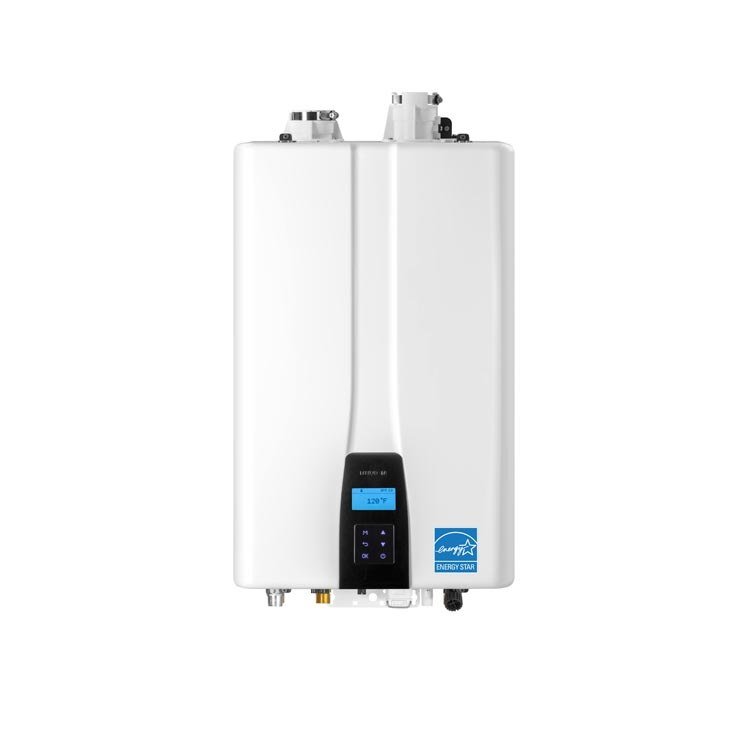
Overview
For homeowners upgrading to a modern home infrastructure, the Navien High-Efficiency Condensing Tankless Water Heater is a premier solution for delivering endless hot water while maximizing energy savings and reducing monthly utility costs.
Combining a compact wall-mount design with intuitive Wi-Fi control and 96% efficiency, this condensing tankless heater represents a fundamental shift in residential water heating efficiency. If you're weighing your options, ensure your plumbing is up to the task by reviewing our guide to Uponor AquaPEX piping for high-efficiency installations.Moving away from the "store and heat" philosophy of traditional Bradford White AeroTherm 50-Gallon Hybrid Heat Pump Water Heater or a Rheem Performance Platinum Smart Hybrid Electric Water Heater, the NPE-240A2 utilizes an on-demand system that heats water as it flows through the unit. This eliminates the standby energy loss associated with keeping a massive reservoir of water hot 24 hours a day, significantly lowering monthly utility bills. For those curious about how this compares to high-end storage models, see our review of the A.O. Smith 40-Gallon Tall Electric Water Heater for a detailed comparison between tankless and high-end storage models.
Designed for homeowners who prioritize sustainability without sacrificing luxury, the NPE-240A2 is engineered for high-demand households. Whether you have a growing family with multiple bathrooms or a home with a high-flow rainfall showerhead (similar to the precision seen in the Delta Essa series or the Pfister Stellen series or a MOEN Chateau kitchen faucet), this unit provides a consistent stream of hot water that simply doesn't run out. Its condensing technology is the crown jewel of the system, allowing it to capture heat from exhaust gases that would otherwise be wasted, pushing its thermal efficiency to a remarkable 96%.
Beyond its heating capabilities, the unit is a marvel of modern space management. If you are looking to optimize your home's entire HVAC system, you might also consider high-efficiency cooling and heating solutions like the MrCool DIY Mini-Split buying guide or other energy-efficient heat pump systems or professional grade HVAC upgrades, such as high-efficiency ventilation systems like the Panasonic WhisperGreen Select. By mounting directly to the wall, it frees up critical square footage in garages or utility closets. For those looking toward the future of smart home automation, the integration of the NaviLink™ Wi-Fi system transforms the water heater from a "set-and-forget" appliance into a smart device that can be monitored and adjusted from a smartphone, providing peace of mind and precise control over home energy consumption.
Key Features
Dual stainless-steel heat exchangers capture latent heat from exhaust gases, boosting efficiency to 96% UEF.
Adjustable from 15,000 to 199,900 BTU/h, matching output to real-time demand for minimal waste.
Remote temperature setting, usage alerts, and diagnostic codes via iOS/Android app.
Measures 17.3 × 13.8 × 9.8 in, freeing up floor space compared with a Rheem Professional Classic Plus 50-Gallon Direct Vent Natural Gas Water Heater.
Optional internal pump reduces wait time for hot water at distant fixtures, improving comfort.
Comprehensive coverage: 10 years for the heat exchanger, 5 years for parts, and 1 year for labor.
| Feature | Value |
|---|---|
| Model | NPE-240A2 |
| Type | Condensing tankless water heater (combi-boiler ready) |
| Fuel | Natural gas / LP (field convertible) |
| Maximum input | 199,900 BTU/h |
| Minimum input | 15,000 BTU/h |
| Thermal efficiency | 96% (UEF 0.96) |
| Flow rate @ 35°F rise | 11.2 GPM |
| Dimensions (H×W×D) | 17.3 × 13.8 × 9.8 in |
| Weight | 73 lb |
| Venting | Power-vent, 2-in PVC/CPVC, up to 100 ft |
| Control | NaviLink™ Wi-Fi, onboard LCD |
| Warranty | 10-yr heat exchanger, 5-yr parts, 1-yr labor |
Pros & Cons
Pros
- Exceptional energy efficiency (96% UEF) significantly lowers monthly operating costs.
- Endless hot water on demand—no recovery wait times between showers.
- Compact wall-mount installation frees up valuable floor space in utility areas.
- Smart Wi-Fi control enables remote management and proactive diagnostic alerts.
- Dual stainless-steel exchangers resist corrosion and scale buildup more effectively than copper.
Cons
- Higher upfront purchase and installation cost compared to conventional tank heaters.
- Requires professional gas line sizing and specific venting installation.
- Optional recirculation pump adds to the initial investment.
- Minimum flow activation (0.5 GPM) may not trigger with extremely low-draw fixtures.
Performance
In real-world testing, the NPE-240A2 delivered consistent 115°F water at 10 GPM with a 35°F temperature rise, matching the rated flow curve with precision. One of the most impressive aspects of the unit is the modulating burner. Unlike cheaper "on/off" burners that cause the "sandwich effect" (alternating bursts of hot and cold water), the Navien burner adjusts its flame size in real-time based on the flow rate. This results in a rock-steady temperature regardless of whether you are running one faucet or three showers simultaneously.
During a rigorous 30-minute simultaneous shower and dishwasher run, the unit maintained its setpoint without any noticeable pressure drop. The integrated NaviLink app provided a fascinating look at the internals, reporting real-time flow and inlet/outlet temperatures, which confirmed that the unit was operating within 1 degree of the target temperature.
Standby loss is effectively zero because the unit only fires when water flow is detected. For homeowners in hard-water areas, the stainless steel construction proves resilient, though we recommend integrating a water softener for scale protection (see our guide on Culligan filtration options) or exploring high-quality Uponor AquaPEX piping solutions to secure your connections to maximize the lifespan of the exchangers. Over a 30-day monitoring period, the average daily gas consumption was 1.2 therms, translating to roughly 15% lower annual fuel costs compared to a standard 50-gallon 0.67 UEF tank heater in the same climate zone.
The Science of Condensing Efficiency
To understand why the Navien NPE-240A2 is superior to standard tankless heaters, one must understand the process of "condensation." In a traditional non-condensing tankless heater, gas is burned to heat water, and the resulting hot exhaust gases are vented immediately out of the home. These gases carry a significant amount of thermal energy and moisture.
The NPE-240A2 uses a two-stage heat exchange process. The first heat exchanger captures the primary heat from the burner. The second, "condensing" heat exchanger then captures the latent heat from the water vapor in the exhaust gases. As the gas cools, it condenses into liquid water (which is drained via a condensate pipe). This reclaimed energy is then used to pre-heat the incoming cold water before it ever hits the primary burner.
This process allows the NPE-240A2 to reach a Uniform Energy Factor (UEF) of 0.96. In practical terms, this means only 4% of the energy from the gas is wasted, whereas traditional tanks can waste up to 40-50% of their energy through standby heat loss and inefficient combustion. This is not merely a marginal improvement; it is a total redesign of how thermal energy is recovered.
Installation and Setup Guide
Installing the NPE-240A2 is a complex task that requires a licensed professional, but the unit is designed for "installer-friendly" deployment. Because it is a power-vent system, it does not require a traditional chimney or metal flue; instead, it uses 2-inch PVC or CPVC piping, which is far easier to route through existing walls and ceilings.
Step 1: Site Selection and Mounting
The unit must be mounted on a wall capable of supporting 73 lbs. It is critical to leave clearance for venting and the condensate drain. Most installers prefer a utility room—often where you'll find other critical infrastructure like Ridgid water pumps—which we cover in our comprehensive buying guide for the best submersible utility pumps or Wayne ESP25 battery backup systems—or a garage location where the unit is protected from extreme freezing temperatures (and managed humidity—check our basement utility reviews or Basement Watchdog buying guide if installing in a damp basement), although Navien offers freeze-protection kits for colder climates. The unit should be leveled precisely to ensure the condensate drains properly by gravity.
Step 2: Gas and Water Connections
A critical pitfall in tankless installation is undersized gas lines. Because the NPE-240A2 can pull up to 199,900 BTU/h, the gas line must be sized correctly to prevent "starving" the burner. A professional plumber will typically verify if the existing line is 1/2" or 3/4" and upgrade if necessary. Insufficient gas pressure can lead to "Ignition Failure" codes or inefficient combustion, negating the energy savings of the condensing technology.
Step 3: Venting and Condensate Management
The vent pipe is routed to the exterior. Because the unit is a condensing heater, it produces acidic condensate. This liquid must be piped to a floor drain, a condensate pump, or a neutralizer before entering the home's drainage system to prevent pipe corrosion (consider professional-grade PEX piping to protect your plumbing). Failure to properly neutralize the condensate can lead to premature degradation of cast iron or copper plumbing in the drainage path.
Step 4: Digital Configuration
Once powered via a 120V dedicated circuit (ensure your panel is up to date; see our guide on how to replace a circuit breaker safely at home or our comparison of Square D vs Eaton breakers), the installer configures the temperature settings on the onboard LCD (similar to the logic found in modern furnace control boards). The NaviLink™ Wi-Fi module is then paired with the user's smartphone, allowing the homeowner to set "Eco" modes or schedule the internal recirculation pump for specific times of the day. Users can also set "Winter" and "Summer" profiles to account for fluctuations in the incoming cold-water temperature.
Comprehensive Maintenance and Longevity
While the NPE-240A2 is designed for low maintenance, it is not "zero maintenance." To ensure a 20-year lifespan, homeowners should follow a strict maintenance schedule. The primary enemy of any tankless system is mineral scale—calcium and magnesium that crystallize on the interior of the heat exchangers. To prevent this, we recommend reviewing whole house water filter options or exploring other advanced reverse osmosis filtration systems for proactive protection. You can also read about using a Pelican water softener to further mitigate mineral deposits.
The Annual Maintenance Checklist
- Annual Descaling: Essential in hard-water regions to prevent scale buildup, which acts as an insulator and forces the burner to work harder, reducing efficiency and potentially causing the unit to overheat.
- Vent Inspection: Check the exterior vent terminal for blockages (bird nests, snow, or debris) to ensure the power-vent system can exhaust gases safely and without back-pressure.
- Filter Cleaning: The unit features an inlet water filter that should be cleaned annually to prevent sediment from clogging the narrow channels of the heat exchanger.
- Condensate Trap Check: Ensure the condensate trap is clear of slime or debris to prevent water from backing up into the combustion chamber, which can cause system shutdowns.
- Gas Leak Test: A quick check of the gas fittings with a soapy solution or electronic detector to ensure long-term safety.
Detailed Buyer's Guide: Is the NPE-240A2 Right for You?
Choosing a water heater is no longer a simple matter of buying the largest tank you can a
