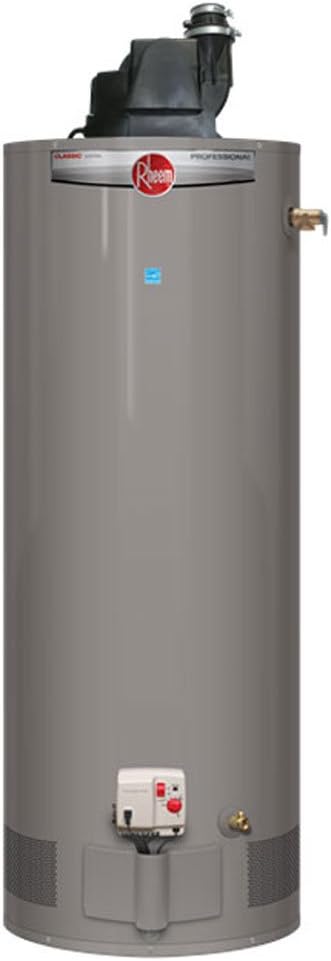
If you need a reliable 50-gallon water heater for a tight utility closet or interior installation, the Rheem Professional Classic Plus 50-Gallon Direct Vent Natural Gas Water Heater (PROG50-38N RH67 PV) is an ideal code-compliant solution. Engineered for constrained spaces, it utilizes a sealed combustion system that draws air directly from outside to ensure safety and efficiency. This buying guide evaluates its specs, installation requirements, and long-term value to help you decide if it's the right fit for your home.
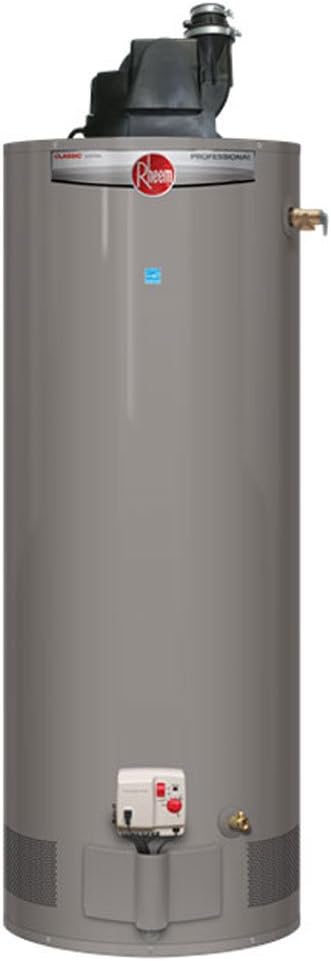
Top Pick: Rheem Professional Classic Plus 50-Gallon Direct Vent
Score: 8.6/10 — A dependable 50-gallon direct vent natural gas unit that solves confined-space installation problems while keeping standby losses low. Best for homes that lack a traditional chimney or atmospheric venting path.
Rheem Professional Classic Plus 50-Gallon Direct Vent
The Rheem Professional Classic Plus 50-Gallon Direct Vent Natural Gas Water Heater (model PROG50-38N RH67 PV) is a 50-gallon natural gas water heater designed around a direct vent system. Instead of pulling air from the room it sits in, it draws combustion air from outside the home. That single design choice makes it a strong candidate for installations in interior rooms, finished basements, or confined closets where atmospheric venting simply isn't safe or practical. This eliminates the risk of backdrafting and ensures that the flame has a consistent oxygen supply regardless of the air quality or volume in the utility room.
At the heart of the unit is a 38,000 BTU natural gas burner. For a 50-gallon tank, that's a moderate input rate that balances recovery speed against gas consumption. A household of three to four people running a typical mix of showers, laundry, and dishwashing should find the tank capacity and recovery adequate for daily demand without frequently running cold. While it isn't a "high-recovery" beast, it provides a steady stream of hot water that meets the needs of most suburban American households.
Rheem wraps the tank in a polyurethane foam insulation jacket to reduce standby heat loss. This matters because a water heater spends most of its life simply keeping stored water hot between uses. Better insulation means the burner cycles less often, which translates to lower operating costs over the long run. The direct vent design also keeps indoor air quality cleaner since combustion byproducts are sealed away from living spaces, which is a critical safety advantage in modern, airtight homes.
This model is best suited for homeowners who need a code-compliant solution for an interior or sealed installation and prefer the proven simplicity of a tank-style gas heater over a tankless system. It represents a "middle ground" for those who want the reliability of a storage tank but are constrained by their home's architecture.
If your utility space is an enclosed closet without a dedicated air intake, this is often the only safe gas-fired option available outside of expensive power-venting conversions.
Pros
- Direct vent design works in confined or interior spaces
- Draws combustion air from outside, protecting indoor air quality
- Polyurethane foam insulation reduces standby heat loss
- 50-gallon capacity suits most 3–4 person households
- Proven, serviceable tank-style design
Cons
- 38,000 BTU recovery is moderate, not high-output
- Direct vent installs typically cost more than atmospheric vent
- Tank footprint and standby losses are higher than tankless options
- Natural gas only — not for propane or all-electric homes
| Specification | Detail |
|---|---|
| Model | PROG50-38N RH67 PV |
| Tank Capacity | 50 Gallons |
| Fuel Type | Natural Gas |
| Burner Input | 38,000 BTU |
| Venting | Direct Vent (Outside combustion air) |
| Insulation | Polyurethane Foam Jacket |
| Application | Residential |
Deep Dive: How Direct Vent Technology Works
To understand why the Rheem PROG50-38N RH67 PV is unique, you have to understand the difference between atmospheric venting and direct venting. A standard atmospheric gas water heater relies on the air inside your home to fuel the burner. It pulls air from the room, burns the gas, and sends the exhaust up a chimney or vent. In a small, sealed closet, this creates a dangerous vacuum. If the room runs out of oxygen, the exhaust gases (including carbon monoxide) can be sucked back into the house—a phenomenon known as backdrafting.
The direct vent system used in the Professional Classic Plus solves this by using a dual-pipe system (or a concentric pipe). One path pulls fresh, oxygen-rich air directly from the outdoors into the combustion chamber. The other path pushes the waste gases back outside. Because the combustion process is entirely isolated from the indoor air, the unit can be installed in "confined spaces" where an atmospheric heater would be a code violation and a safety hazard.
This isolation also improves efficiency. In the winter, an atmospheric heater pulls cold air from the basement or garage into the house, forcing your HVAC system to work harder. The direct vent system avoids this air exchange, keeping your interior climate more stable while ensuring the burner always has the optimal oxygen-to-fuel ratio for a clean burn. Furthermore, this "sealed" nature prevents the infiltration of outdoor humidity or dust into the utility area, potentially extending the life of the burner assembly by keeping it cleaner than units that draw from drafty garages.
From a thermodynamic perspective, direct venting allows the water heater to operate in a controlled environment. When a burner pulls air from a room, the temperature of that air fluctuates. Cold air is denser and contains more oxygen, whereas warm air is less dense. By pulling from a dedicated external source, the system maintains a more consistent air-to-fuel ratio, which maximizes the 38,000 BTU output and ensures the flame remains stable regardless of whether it is July or January.
Comprehensive Buyer's Guide: Choosing the Right Gas Water Heater
Selecting a water heater is often a "set it and forget it" purchase (see our A.O. Smith EES-40 water heater review for a detailed comparison with electric units), but the wrong choice can lead to thousands of dollars in renovation costs or inefficient energy bills. Here are the primary factors you must consider when deciding if the Rheem Professional Classic Plus is the right fit for your home.
1. Ventilation Constraints and Local Codes
The most critical question is: Where is the heater going? If you have a traditional chimney and an open basement, a standard atmospheric vent heater is the cheapest and simplest option. However, if you are installing in a finished basement, a small utility closet, or a room with no windows or vents, you must choose between a Direct Vent (like the PROG50-38N) or a power vent system like the A.O. Smith 50-Gallon Power Vent Natural Gas Water Heater. Direct venting is generally preferred for those who want a sealed system that doesn't rely on indoor air quality.
Local building codes often mandate specific venting for "confined spaces." A confined space is typically defined as any room or closet where the volume of air is insufficient to support the combustion of the appliance without risking backdrafting. In these scenarios, installing an atmospheric vent is not just impractical—it is illegal. The Rheem Professional Classic Plus allows you to keep your water heater in a centralized interior location without having to tear out walls to install a massive air-return vent.
2. Household Demand and Capacity
A 50-gallon tank is the "sweet spot" for most medium-sized families. Here is a general breakdown of how to gauge your needs:
- 2-3 People: 40 gallons (such as the A.O. Smith 40-Gallon Tall Electric Water Heater) is usually sufficient for basic needs.
- 3-5 People: 50 gallons (like this Rheem model) provides a comfortable buffer for simultaneous showers and laundry.
- 6+ People: You may need 80 gallons or a tankless system to avoid the "cold shower" scenario.
Consider your peak usage times. If everyone in the house showers between 7:00 AM and 8:00 AM, a 50-gallon tank provides a significant amount of stored energy, but the recovery rate becomes the bottleneck. If you have a high-flow rainfall showerhead that uses 2.5 gallons per minute, you can deplete a significant portion of the tank in just 20 minutes.
The PROG50-38N is designed for steady, reliable use rather than extreme, high-volume bursts.
3. Recovery Rate vs. Storage
Capacity is how much hot water you have now; recovery rate is how fast the heater can heat the next batch. With a 38,000 BTU burner, the Rheem Professional Classic Plus has a moderate recovery rate. This means that while you start with 50 gallons of hot water, the time it takes to bring that water back up to 120°F once depleted is a key performance metric.
If you have a high-flow luxury showerhead or a massive soaking tub, you will deplete the 50 gallons faster than the burner can replenish them. In those cases, a high-recovery burner or a Navien High-Efficiency Condensing Tankless Water Heater is a better investment. However, for most standard residential fixtures, the 38,000 BTU input is perfectly balanced, providing enough heat to sustain a family without wasting gas during the heating process.
4. Insulation and Energy Efficiency
Standby heat loss occurs when the water in the tank cools down while sitting idle. Low-end heaters use thin fiberglass blankets, which can sag over time and leave gaps. The Rheem Professional Classic Plus uses a polyurethane foam insulation jacket. This is a superior insulator that keeps the water hot longer, meaning the burner doesn't have to kick in as often.
This "jacket" effect is particularly important in homes with colder basements. Without high-grade insulation, the tank effectively acts as a radiator, heating the cold basement air while losing your expensive hot water. Over a 10-year lifespan, the polyurethane foam can result in significant gas savings and reduce the wear and tear on the burner by decreasing the frequency of heating cycles.
Installation and Setup Requirements
Installing the Rheem PROG50-38N RH67 PV is more complex than a standard "swap-out" because of the direct vent piping. You cannot simply slide this into an old atmospheric vent hole. Because it requires an airtight seal to pull air from the outside, the installation must be precise to avoid efficiency losses or safety hazards.
Venting Setup and Geometry
The unit requires a dedicated vent run to the exterior. This typically involves drilling a hole through the exterior wall. Depending on the specific venting kit used, you will either have two separate pipes (intake and exhaust) or one large concentric pipe. The concentric design is often preferred as it requires only one hole through the wall, with the inner pipe exhausting gas and the outer pipe pulling in fresh air.
It is vital that the exhaust is terminated far enough away from windows, air intake vents for the HVAC system, or doors to prevent exhaust gases from re-entering the home. Furthermore, the vent must be pitched correctly; if the exhaust pipe slopes back toward the heater, condensation (which is acidic) can pool in the unit, leading to premature corrosion of the vent collar.
Gas and Water Connections
Standard natural gas lines are used. Because this is a professional-grade unit, ensure your gas line is sized correctly to handle the 38,000 BTU input. Undersized piping can lead to "flame flutter" or inconsistent heating. For water connections, the use of flexible connectors is highly recommended (see our SharkBite 1/2-Inch Coupling buying guide for leak-proof fitting tips). These allow for slight adjustments during leveling and reduce the amount of stress placed on the tank's nipples during the tightening process.
Ensure the unit is perfectly level using a spirit level. An unlevel tank can lead to several issues: it may cause the tank to shift slightly during the heating/cooling expansion cycles, and more importantly, it can lead to premature corrosion and uneven sediment buildup at the bottom. Sediment naturally settles at the lowest point; if the tank is tilted, that sediment concentrates in one area, potentially creating a "hot spot" that can weaken the tank wall.
Clearance and Safety Parameters
While the direct vent allows for confined spaces, you still need "service clearance." You should leave at least 12 to 18 inches of space around the unit to allow a technician to access the burner, the thermostat, and the drain valve. Never box in a water heater so tightly that the control valves cannot be reached in an emergency. Additionally, ensure there are no combustible materials (like wooden shelving or stored cardboard) directly touching the outer jacket of the heater, as this can create a fire hazard over time.
Long-Term Maintenance for Tank Heaters
A gas water heater can last 10 to 15 years if maintained, or it can fail in 5 years if neglected. The biggest enemy of the Rheem Professional Classic Plus is sediment, which consists of calcium and magnesium minerals that precipitate out of the water as it heats up.
The Annual Flush: Removing "The Mud"
Once a year, you should perform a "drain and flush." Sediment settles at the bottom of the tank, creating a layer of "mud" that the burner must heat through. This creates a physical barrier between the flame and the water, which reduces efficiency and can cause the tank to make "popping" or "rumbling" noises—a process known as "kettling."
By opening the drain valve at the bottom and attaching a garden hose, you can flush out these minerals. If you have very hard water, you may need to "back-flush" the tank by gently pushing water back into the bottom to stir up the sediment before draining it all out. Failure to do this can lead to the bottom of the tank overheating and eventually rusting through.
Anode Rod Inspection and Replacement
Inside the tank is a sacrificial anode rod. This rod is typically made of magnesium or aluminum and is designed to rust so that the steel tank doesn't. Through a process called electrolysis, the corrosion attacks the rod instead of the tank walls. Once the rod is completely dissolved, the tank itself begins to corrode from the inside out.
Every 3-5 years, a professional plumber should check the anode rod. If the rod is more than 50% depleted, it should be replaced. Replacing a $50 rod is significantly cheaper than replacing a $1,000 water heater and dealing with the subsequent water damage from a burst tank.
Thermostat Calibration for Longevity
For a balance of energy efficiency and safety, set your thermostat to 120°F (49°C). Setting it higher increases the risk of scalding, especially for children and the elderly, and it dramatically accelerates mineral buildup. High temperatures cause calcium to precipitate faster, filling your tank with sediment more quickly.
Conversely, setting it lower than 120°F can potentially allow *Legionella* bacteria to grow in the water. Maintaining a steady 120°F is the industry-standard "safe zone" that protects both the user and the hardware.
Comparison: Direct Vent vs. Power Vent vs. Atmospheric
It is easy to confuse these three terms, but the difference impacts your installation cost, your electric bill, and your home's safety. Here is the definitive breakdown to help you decide if the PROG50-38N is the right category for you.
| Feature | Atmospheric Vent | Direct Vent (Rheem PROG50) | Power Vent |
|---|---|---|---|
| Air Source | Indoor Air | Outdoor Air | Indoor Air |