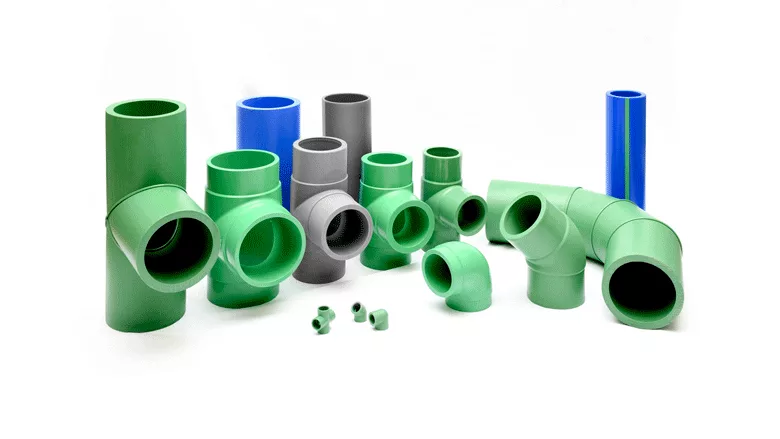
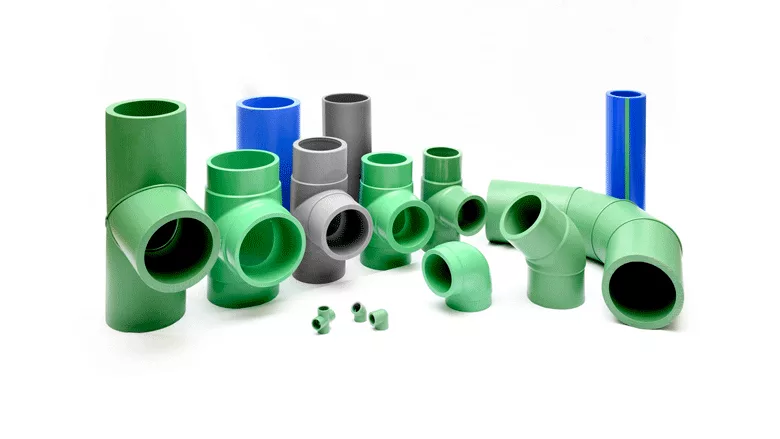
ASTM-Standard Pipes and Fittings for Plumbing (F876)
Score: 8.4/10 — A dependable, standards-focused choice for plumbing projects where code compliance, dimensional consistency, and pressure-rated performance matter most.
Looking for a complete solution? Check out the Watts 3/4 inch Lead-Free Brass FPT Coupling for a look at high-performance couplings.
Overview
When upgrading residential water lines or starting a new commercial build, choosing code-compliant materials is critical. For homeowners and contractors needing professional-grade infrastructure (similar to how homeowners must choose between AFCI vs Standard Circuit Breakers (see our safe replacement guide) for electrical safety), ASTM-Standard Pipes and Fittings for Plumbing (F876) provide a dependable, code-compliant solution for high-pressure water distribution and long-term system reliability.
Related parts & accessories
These components provide a professional-grade solution for residential and commercial installations, offering pressure-rated components that strictly adhere to recognized ASTM requirements for safety and code compliance.
Rather than being a decorative or convenience-focused home technology product, this is a practical infrastructure product: the kind of pipe and fitting system contractors, remodelers, and capable DIYers choose when reliability and code compliance are the priority.The main appeal of ASTM-Standard Pipes and Fittings for Plumbing (F876) is standardization, especially when compared to international standards like BS EN. Plumbing components that follow ASTM specifications are easier to plan around because they are built to defined expectations for material integrity, dimensional accuracy, and pressure performance. That makes them especially useful for water supply runs, renovation work, and installations where inspectors, contractors, or homeowners want confidence that the components meet an established benchmark.
This product is best suited to buyers who already know the required pipe size, fitting type, local code requirements, and installation method for their project. It is less ideal for anyone looking for an all-in-one plumbing kit with every tool, adapter, and installation accessory included. As with any plumbing system, final suitability depends on the application, local code, water temperature, pressure conditions, and the exact markings on the supplied pipe and fittings.
Key features
Manufactured around ASTM F876 expectations, supporting consistent performance and predictable installation planning for compatible plumbing applications.
Built for projects where standards compliance, approved materials, and inspection readiness are important purchasing factors.
Consistent sizing helps reduce fitting issues, misalignment, and installation delays when paired with compatible components.
Intended for plumbing systems that require reliable pressure performance, subject to the rating and markings of the selected size and configuration.
Appropriate for a range of building projects, from home renovations to larger plumbing installations, when matched to the correct application.
Useful for professionals and experienced homeowners who need standardized pipe and fitting components rather than proprietary specialty parts.
| Feature | Value |
|---|---|
| Product Name | ASTM-Standard Pipes and Fittings for Plumbing (F876) |
| Model Number | F876 |
| Category | Pipes & Fittings |
| Primary Standard Reference | ASTM F876 |
| Intended Use | Plumbing installations requiring standardized pipe and fitting components |
| Typical Applications | Residential and commercial plumbing projects, subject to local code and product markings |
| Buyer Type | Contractors, remodelers, DIY enthusiasts, and homeowners with defined plumbing requirements |
| Performance Focus | Pressure reliability, material integrity, and dimensional accuracy |
| Installation Requirements | Compatible tools, fittings, connection method, and code-approved installation practices |
| Best Fit | Projects where ASTM-standard compliance and predictable component compatibility are priorities |
Pros & cons
Pros
- Standards-based design supports code-conscious plumbing work.
- Good fit for both residential and commercial installations.
- Dimensional consistency helps with predictable fitting and layout.
- Pressure-rated performance makes it suitable for demanding plumbing runs.
- Professional-grade components without unnecessary "kit" fluff.
Cons
- Requires buyer to verify size and rating before purchase.
- Not an all-in-one kit; requires separate tools and connectors.
- Performance depends heavily on precise installation technique.
- Not a universal substitute for all gas or specialized drainage codes.
Performance
In real-world use, the strongest performance advantage of ASTM-Standard Pipes and Fittings for Plumbing (F876) is predictability. Plumbing work is less forgiving than many home improvement tasks: small differences in diameter, wall consistency, fitting compatibility, or material quality can lead to leaks, failed inspections, or expensive rework. A standards-based product helps reduce those risks by giving installers a known baseline.
For water supply projects, the Apollo Half-Inch White PEX-B Flexible Water Pipe Tubing Coil is a highly compatible choice for those requiring flexible runs. Similarly, other ASTM-Standard Pipes and Fittings for Plumbing (F876) should appeal to buyers who want dependable pressure handling and consistent material quality.
The product’s value is not in a single standout feature but in the way it supports a complete plumbing system when paired with Uponor AquaPEX White PEX-A Tubing (detailed in our full review of Uponor AquaPEX piping), approved connection methods, and correct installation practices.
Ease of installation will depend on the connection system and tools selected for the project. Contractors should find the standardized format straightforward, while DIY users should take extra care with cutting, support spacing, bend radius, connection depth, and pressure testing. When installed correctly, the product’s standards-based design should help deliver the kind of stable, long-term plumbing performance expected in modern residential and commercial systems.
Comprehensive Engineering Deep Dive: How it Works
To understand why the ASTM F876 designation matters, one must understand the physics of fluid transport in a residential or commercial environment. Plumbing systems are subject to constant stresses: thermal expansion and contraction, water hammer (pressure surges), and chemical erosion from minerals in the water supply. The ASTM F876 standard ensures that the material composition of the pipes and fittings is engineered to withstand these specific environmental stressors.
The manufacturing process for ASTM-Standard Pipes and Fittings for Plumbing (F876) involves strict control over the polymer or metal blend used (such as those found in PEX-C piping). By adhering to a standardized specification, the manufacturer ensures that the wall thickness is uniform across the length of the pipe. This uniformity is critical because a "thin spot" in a pipe acts as a failure point under high pressure. For those upgrading fixtures at the end of these lines, our Delta Essa 14453LF-SS buying guide (see also our guide on choosing bathroom sink faucets) (or the Pfister Stellen series for budget-conscious builds) offers insight into modern bath installations, such as the MOEN Chateau 7430 review. When a fitting is joined to the pipe, the dimensional accuracy ensures a tight, seamless interface, which is the primary defense against slow-seeping leaks that can destroy subflooring and drywall over time.
Furthermore, the thermal properties of F876-compliant materials are calibrated. As noted in our Pelican PC600 water softener review (crucial for understanding how piping handles high-temp output (explore our Fleck 5600SXT review for more on water conditioning)), materials that are not standards-compliant may soften or warp, leading to joint failure. The F876 specification provides a predictable thermal expansion coefficient, allowing plumbers to build "expansion loops" or use specific support spacing to prevent the pipes from buckling or pulling out of their fittings as they heat and cool. (For other essential HVAC maintenance, see our review of the Filtrete AC furnace filter).
Fluid dynamics also play a role. The internal surface smoothness of ASTM-standardized piping is maintained to reduce turbulence. Excessive turbulence not only increases the energy required to pump water through the system but can also lead to "pitting" or erosion over decades of use. By maintaining a precise internal diameter and a smooth bore, ASTM-Standard Pipes and Fittings for Plumbing (F876) ensure that water flow remains laminar and predictable, which helps in calculating the correct pipe sizing for multi-fixture homes to prevent pressure drops when multiple taps are open simultaneously.
Detailed Buyer's Guide
Choosing the right plumbing components is not about picking the "best" brand, but about picking the correct specification for the specific job. When shopping for ASTM-Standard Pipes and Fittings for Plumbing (F876), consider the following critical factors:
1. Application Analysis
Determine if you are working on a potable water line, a drainage system, or a specialized venting project. While F876 components are versatile, they are primarily designed for water distribution. If you are working on a high-pressure gas line, you must verify that the specific model of F876 pipe is rated for gas, as different ASTM standards govern different media. Using a water-rated pipe for a gas application is a critical safety violation.
2. Sizing and Schedule
Ensure you are matching the nominal pipe size (NPS) to your existing infrastructure. Using a pipe that is slightly too small or too large will require transition fittings, which introduce more potential failure points into the system. Check the "schedule" or wall thickness; a thicker wall (higher schedule) generally offers a higher pressure rating but may be more difficult to bend or fit into tight spaces. Understanding the difference between the inner diameter (ID) and outer diameter (OD) is essential when selecting fittings to ensure a vacuum-tight seal.
3. Local Code Requirements
Plumbing is one of the most heavily regulated aspects of home construction. Before purchasing ASTM-Standard Pipes and Fittings for Plumbing (F876), check your local municipal building codes. Some jurisdictions may require specific materials for underground burials (such as UV-stabilized or reinforced pipes) that go beyond the basic F876 standard. Using a code-compliant product makes the final inspection process significantly smoother and prevents the costly requirement of ripping out installed lines to replace them with a mandated material.
4. Tool Compatibility
Since these are standardized components, they require standardized tools. Depending on the material, you will need professional-grade pipe cutters, and potentially a Milwaukee M12 ProPEX Expansion Tool Kit (essential for high-integrity PEX expansions) for specific joining methods, (to ensure a square cut), deburring tools (to prevent turbulence and leaks), and the specific joining tools (such as heat guns, solvent cements, or crimping tools) that match the F876 fitting type. Using a generic saw or an incorrect crimper can compromise the integrity of the ASTM seal, effectively nullifying the benefits of the standardized material.
5. Material Compatibility and Galvanic Corrosion
When integrating ASTM-Standard Pipes and Fittings for Plumbing (F876) into an older system, be mindful of material transitions. Mixing different metals (e.g., copper and galvanized steel) without a dielectric union can lead to galvanic corrosion, where the metals react chemically, leading to rapid degradation and leaks. Ensure that any transition from F876 standard components to other materials is handled via approved adapters, such as the Watts 3/4 inch Lead-Free Brass FPT Coupling , and insulators.
Installation and Setup Process
Proper installation is the difference between a 50-year plumbing system and a flooded basement. The following is the recommended workflow for installing ASTM-Standard Pipes and Fittings for Plumbing (F876).
Step 1: Planning and Layout
Map out the run of the pipe, marking where every 90-degree elbow, T-junction, and valve will be located. Use a level to ensure proper slope for drainage lines or a direct path for supply lines to minimize friction loss. Account for the "insertion depth" of the fittings—the length of the pipe that actually sits inside the fitting. Failing to account for this often leads to pipes being cut too short, resulting in shallow connections that are prone to failure under pressure.
Step 2: Precision Cutting
Using a dedicated pipe cutter, make a clean, perpendicular cut. A slanted cut creates a gap in the joint, which is the most common cause of leaks in standardized plumbing. After cutting, use a deburring tool or sandpaper to remove the "burrs" from the inside and outside of the pipe end. Internal burrs can catch debris and cause clogs, while external burrs can prevent the pipe from seating fully into the fitting.
Step 3: Dry Fitting
Before applying any adhesives or permanent crimps, perform a "dry fit." Assemble the entire run of ASTM-Standard Pipes and Fittings for Plumbing (F876) without joining them. This allows you to verify that the measurements are correct and that the pipes sit fully within the fittings. This step is crucial for identifying any layout errors before they become permanent and expensive to fix.
Step 4: Final Joining
Depending on the specific F876 material, apply the approved joining method. If using solvent welding, apply the primer and cement evenly and rotate the pipe as you push it into the fitting to ensure full coverage. If using mechanical f