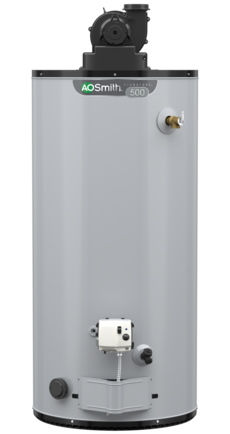
In this A.O. Smith 50-Gallon Power Vent Natural Gas Water Heater buying guide, we explore this high-capacity solution featuring a power vent system that allows for flexible, horizontal installation via PVC piping. It is the ideal choice for homeowners who lack a traditional vertical chimney but require the reliable recovery and volume of a professional-grade gas water heater.
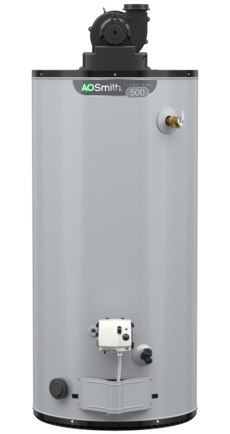
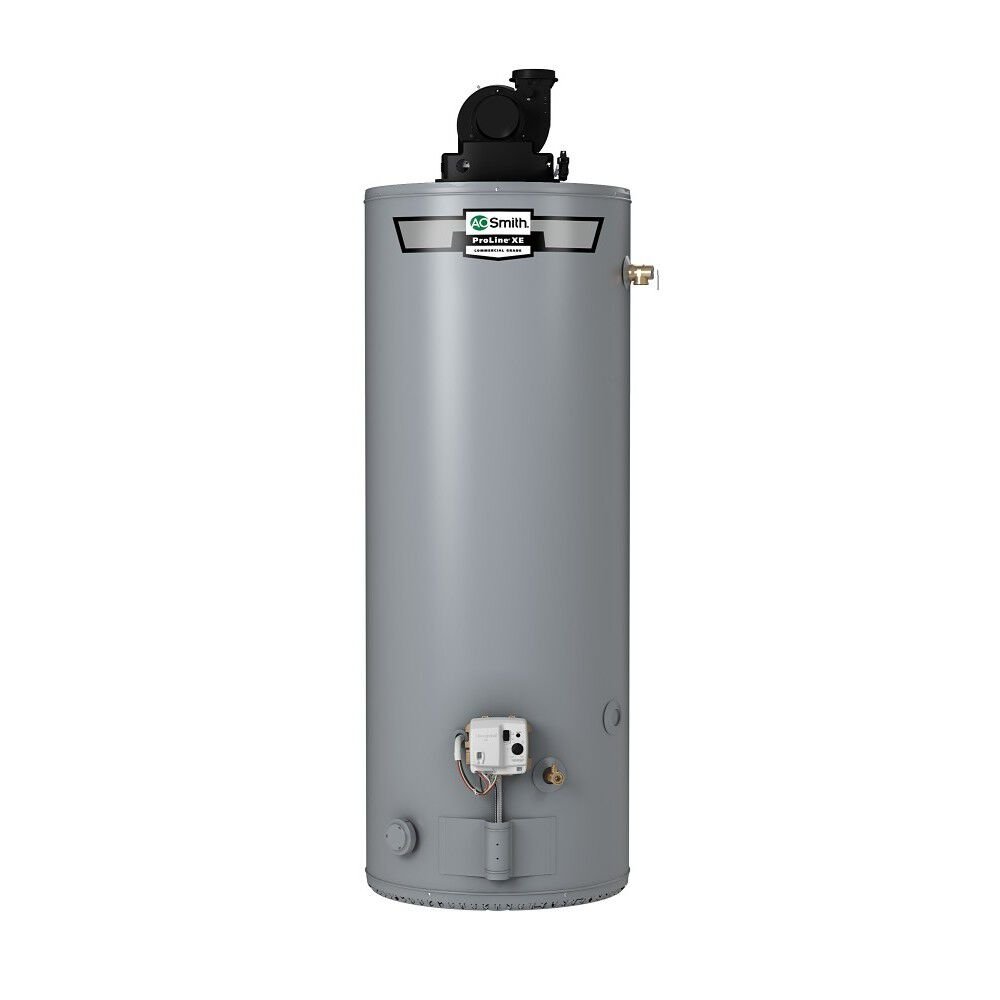
Top Pick: A.O. Smith 50-Gallon Power Vent Natural Gas Water Heater (GPVH-50)
Score: 9.0/10. A flexible, reliable choice for homes that need horizontal power venting, offering strong 50-gallon capacity and durable construction for medium-to-large households.
A.O. Smith 50-Gallon Power Vent Natural Gas Water Heater (GPVH-50)
Replacing a water heater is often a reactive purchase—something handled only after the cold showers start. However, when selecting a replacement, the physical constraints of your home dictate your options. For many homeowners, the lack of a dedicated vertical chimney or a B-vent makes traditional atmospheric gas heaters impossible to install (though the A.O. Smith 40-Gallon Electric Water Heater review or a high-efficiency Rheem ProTerra 50-Gallon Hybrid Electric Water Heater
Related parts & accessories
Check the current availability of the A.O. Smith 50-Gallon Power Vent Natural Gas Water Heater for your home installation.
The defining feature of the GPVH-50 is its integrated power vent system. While standard heaters rely on the natural buoyancy of hot air to rise and exit the home, the GPVH-50 utilizes an electric blower. This blower mechanically forces combustion byproducts through a series of PVC pipes that can be routed horizontally through a wall to the outside. This capability transforms the "usable" space of a home, allowing the unit to be installed in finished basements (where you might also need a Ridgid SP-650C sump pump (see our guide on the best submersible utility pumps) or a Wayne ESP25 battery backup for total basement protection), interior closets, or utility rooms where overhead clearance for a chimney is nonexistent.
Performance-wise, the unit is powered by a 40,000 BTU burner. This provides a robust recovery rate, meaning the tank can reheat its 50-gallon volume efficiently enough to handle the peak demands of a family of three to five. Whether it is a sequence of morning showers followed by a load of laundry, the GPVH-50 is engineered to minimize the "cold water gap" that often plagues smaller or less powerful units. The electronic ignition system further modernizes the experience by removing the standing pilot light, which not only improves safety but slightly reduces constant gas consumption.
To combat the inevitable issue of tank corrosion, A.O. Smith has employed a glass-lined steel tank paired with a magnesium anode rod. In the world of water heaters, the anode rod is the "sacrificial lamb"—it is designed to corrode so that the tank wall doesn't. Combined with the glass lining, this system significantly extends the operational lifespan of the unit, provided the homeowner adheres to a basic maintenance schedule. For those who prioritize installation flexibility and reliable recovery, the GPVH-50 represents a professional-grade solution for residential needs. Those who already have a vertical chimney may prefer the Rheem Professional Classic Plus 50-Gallon Direct Vent Natural Gas Water Heater for a more traditional setup.
Pros
- Flexible PVC power venting allows horizontal installation
- 50-gallon capacity is ideal for medium to large households
- Glass-lined tank and magnesium anode rod maximize longevity
- Electronic ignition eliminates the need for a standing pilot
- Perfect for low-clearance areas like closets and basements
Cons
- Requires a dedicated electrical outlet for the blower motor
- No hot water production during a total power outage
- Blower adds a mechanical failure point compared to atmospheric vents
- Higher initial purchase price than non-powered units
| Specification | Detail |
|---|---|
| Model Number | GPVH-50 |
| Tank Capacity | 50 Gallons |
| Fuel Type | Natural Gas |
| Burner Output | 40,000 BTU |
| Venting Method | Power Vent (PVC Horizontal) |
| Ignition Type | Electronic |
| Tank Protection | Glass-lined + Magnesium Anode Rod |
| Recommended Household | 3–5 People |
Understanding Power Venting: How It Works
To appreciate the value of the GPVH-50, one must understand the difference between atmospheric venting and power venting. In a standard atmospheric vent heater, the hot gases produced by the burner are naturally lighter than the surrounding air. They rise vertically through a metal flue (a chimney) and exit through the roof. This requires the heater to be positioned directly beneath a vertical path to the outside.
Power venting, as seen in the GPVH-50, removes this restriction. An electric fan (the "power vent") is integrated into the unit. When the burner ignites, the fan activates, creating a pressure differential that pulls the combustion gases out of the combustion chamber and pushes them through PVC piping. Because the fan provides the motive force, the pipes can run horizontally across a ceiling or through a wall. This is why the GPVH-50 is the go-to choice for modern home renovations where the original chimney has been removed or where the water heater is being moved to a more convenient, but non-vertical, location.
The use of PVC piping is another significant advantage. Traditional B-vents are made of heavy metal and can be prone to rusting if not installed perfectly. PVC is lightweight, corrosion-resistant, and much easier for technicians to route through tight joists and wall cavities. However, this convenience comes with a trade-off: the unit is dependent on the electrical grid. If your home loses power, the blower stops, and for safety reasons, the electronic ignition will prevent the gas burner from lighting, leaving you without hot water until power is restored.
Furthermore, the power vent system includes a series of safety sensors. If the blower motor fails or if there is an obstruction in the PVC exhaust line, the system will detect a lack of airflow and immediately shut down the gas valve. This prevents the dangerous accumulation of carbon monoxide within the living space, providing a layer of safety that is more actively managed than in old-fashioned atmospheric systems.
Comprehensive Buyer's Guide: Is 50 Gallons Right for You?
Choosing the right tank size is a balance between your daily hot water demand and the recovery rate of the burner. A 50-gallon tank, like the one found in the GPVH-50, is generally considered the "sweet spot" for American households. But "medium to large" can be subjective. Here is how to determine if this capacity fits your lifestyle.
The "3-Person" Home
For a household of three, 50 gallons is typically more than sufficient, though smaller options like the A.O. Smith 40-Gallon Tall Electric Water Heater may also work. You can likely run two showers and a dishwasher in quick succession without noticing a drop in temperature. In this scenario, the GPVH-50 provides a comfortable buffer.
The "5-Person" Home
For five people, the 50-gallon tank is the minimum recommended size. During peak morning hours, you may experience a "temperature dip" if three people shower back-to-back. However, the 40,000 BTU burner works to replenish the heat quickly.
Beyond capacity, buyers should consider Recovery Rate. Recovery is the amount of time it takes for the heater to bring cold incoming water up to the set temperature after the tank has been depleted. A 40,000 BTU burner is powerful, but not instantaneous. If you have a high-flow rainfall showerhead or a massive soaking tub, you will consume gallons of hot water faster than the burner can reheat them. If your home features a 100-gallon master bath tub, you might find a 50-gallon tank limiting, regardless of the venting style.
Finally, consider the Environmental Fit. If you are installing the unit in a small closet, the GPVH-50 is an excellent choice because it eliminates the need for bulky metal ducting. If you are installing in a wide-open garage (where local codes allow), you might consider a cheaper atmospheric vent model. But for the vast majority of indoor utility rooms, the power vent's ability to exit through a side wall is its most valuable asset.
Installation and Setup Requirements
Installing the GPVH-50 is not a "plug-and-play" operation; it is a complex project involving gas, water, and electrical components. While some experienced DIYers may attempt it, professional installation is strongly recommended to ensure the unit meets National Fuel Gas Code (NFGC) standards (similar to the precision required when installing a SharkBite coupling in tight spaces).
The Electrical Requirement
As noted multiple times, the power vent requires electricity. You cannot simply run an extension cord from across the room. Local codes typically require a dedicated 120V grounded outlet located within a specific distance of the unit. This ensures the blower motor has a stable power source to safely evacuate carbon monoxide from the home.
Venting Geometry
While PVC is flexible, it is not without rules. There are limits to the "equivalent length" of the pipe. If the run from the heater to the exterior wall is too long or has too many 90-degree elbows, the blower may struggle to push the exhaust out, potentially triggering a safety shutdown. A professional installer will calculate the "total equivalent length" to ensure the blower is sized correctly for the distance.
Gas Connections and Conversion
The GPVH-50 is designed for Natural Gas. If your home uses Propane (LP), you will need a conversion kit and a technician to adjust the orifices and the regulator. Failing to do this will result in inefficient heating and potential safety hazards. Additionally, ensure your gas line is properly sized to handle the 40,000 BTU input; an undersized line can lead to "flame fluttering" and inefficient recovery times.
Water Line and Drainage
Since the GPVH-50 uses a power vent, it may produce condensation during the combustion process. This means a condensate drain or a pan may be required depending on your local building codes. Proper installation includes a Temperature and Pressure (T&P) relief valve, which must be piped to a safe location—usually the floor or a dedicated drain—to prevent scalding or water damage in the event of a pressure spike.
Long-Term Maintenance: Protecting Your Investment
A water heater is often ignored until it leaks. However, the GPVH-50 can last significantly longer if you perform three basic maintenance tasks annually.
1. Flushing the Tank
Over time, minerals (calcium and magnesium) precipitate out of the water and settle at the bottom of the tank as "sediment." This sediment creates a layer of insulation between the burner and the water, forcing the heater to work harder and potentially overheating the bottom of the tank. This leads to "popping" sounds during heating and reduced efficiency. Flushing the tank once a year removes this buildup and restores the thermal transfer efficiency. For those dealing with high mineral content in their water, installing a GE GXWH40L whole house water filter can significantly reduce sediment accumulation in your tank.
2. Anode Rod Inspection
The magnesium anode rod is the most critical component for longevity. It attracts corrosive elements in the water, sacrificing itself to keep the steel tank from rusting. Depending on your water quality (hard vs. soft water), an anode rod may need replacement every 3 to 5 years. If you wait until the tank leaks, it is too late—the tank cannot be repaired; it must be replaced. Periodically unscrewing the rod to check for "pitting" or thinning is the only way to ensure the tank is protected.
3. Vent and Blower Inspection
Check the exterior PVC exit point annually. Ensure that insects, bird nests, or snow haven't blocked the vent. A blocked vent will cause the GPVH-50 to shut down immediately via its internal safety sensors to prevent carbon monoxide buildup inside the home. Additionally, check the blower motor for excessive dust or debris that could impede the fan's performance or increase the noise level.
Potential Pitfalls and Troubleshooting
While the GPVH-50 is a highly reliable machine, there are specific "pain points" users should be aware of to avoid frustration during ownership.
The "No Power" Dilemma
The biggest pitfall is the dependency on electricity. In areas prone to frequent winter storms and power outages, the inability to get hot water during a blackout is a significant drawback. Unlike an atmospheric heater, the GPVH-50 cannot run its safety system or vent its exhaust without power. If this is a deal-breaker, you may need to invest in a backup generator or a hybrid heating system.
Blower Noise and Vibration
Because there is a mechanical fan, the GPVH-50 is louder than an atmospheric heater. You will hear a humming sound whenever the burner is active. While this is generally quiet enough to be ignored in a basement, if the heater is installed against a bedroom wall, the vibration may be noticeable. Using rubber isolation pads during installation can help dampen the sound transmission through the floor.
Condensation Management
Because the exhaust gases are cooled quickly by the PVC piping, condensation can occur. If the unit is not installed on a proper drain pan or if the condensate is not managed, it can lead to moisture accumulation around the base of the unit. This is not a leak from the tank, but rather a result of the physics of power venting. Ensure the area is well-ventilated or that a pan is used to protect the subfloor.
Comparison Analysis: Power Vent vs. Atmospheric
When deciding if the GPVH-50 is the right choice, it helps to see how it stacks up against the traditional alternative in a side-by-side comparison.