A.O. Smith 50-Gallon Power Vent Natural Gas Water Heater Review
Overall Score: 8.5/10
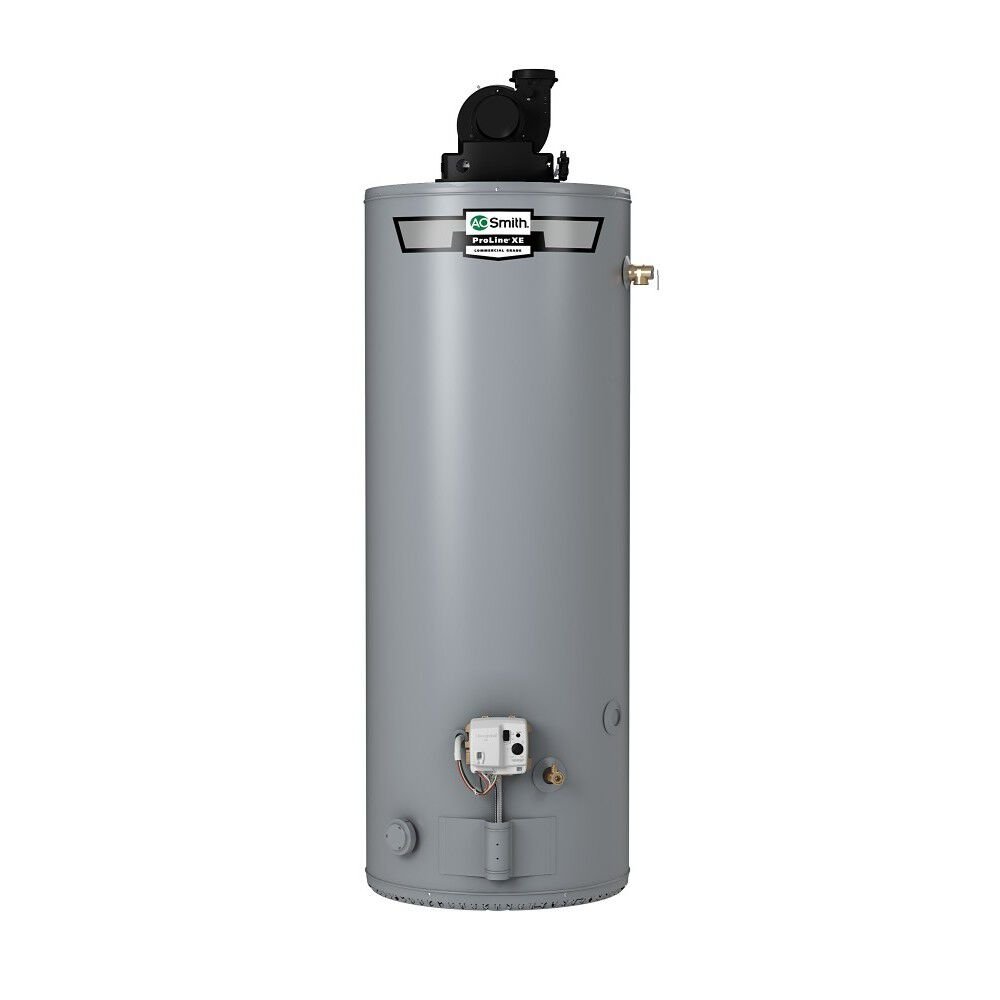
The A.O. Smith GPVH-50 is a high-efficiency 50-gallon power vent gas water heater designed to lower energy costs for medium to large households. Its reliable performance and flexible installation are further enhanced when paired with a Waterdrop G3P800 whole-house water system, ensuring clean, hot water throughout the home.
Overview
If you're upgrading your home's energy efficiency, the A.O. Smith 50-Gallon Power Vent Natural Gas Water Heater is a top-tier, ENERGY STAR certified choice for reliable power-vented gas heating.
The A.O. Smith 50-Gallon Power Vent Natural Gas Water Heater is a high-efficiency unit engineered for homeowners who demand high efficiency without the logistical complexity of a direct vent installation or the extreme cost of a hybrid heat pump system. For those needing even more capacity, the A.O. Smith ProMax Power Vent Gas Water Heater is a powerful alternative for those requiring larger capacities.
At its core, the A.O. Smith GPVH-50 solves one of the most common problems in home renovation: venting. By utilizing a motorized blower to push combustion gases out of the home, it eliminates the need for a traditional vertical chimney or atmospheric vent, allowing for flexible installation through sidewalls or roof penetrations using standard PVC, CPVC, or ABS piping.
Targeted at medium to large households (typically 3 to 5 residents), the unit provides a balance of storage and recovery. With a Uniform Energy Factor (UEF) of 0.70, it comfortably meets ENERGY STAR requirements, ensuring that homeowners can lower their monthly utility bills while remaining compliant with modern building codes. This efficiency is paired with a 40,000 BTU/hour input, which ensures that the "first hour rating" remains high enough to handle the simultaneous demands of a morning shower routine, a load of laundry, and a dishwasher cycle without a noticeable drop in temperature.
Beyond the heating elements, A.O. Smith has integrated longevity-focused technologies into the GPVH-50. If you are considering a smaller capacity electric unit, our A.O. Smith 40-Gallon Tall Electric Water Heater review provides a detailed performance comparison for those considering smaller electric units.
The DynaClean™ automatic sediment-cleaning system is a standout feature, designed to combat the mineral buildup that typically plagues hard-water regions (which can be mitigated with a high-quality water softener) and degrades tank efficiency over time. When combined with an electronic gas control system and a premium anode rod, the GPVH-50 positions itself as a "set it and forget it" solution for those who want the reliability of a tank-style heater with the performance of a modern, electronically managed appliance.
Key Features
ENERGY STAR certified performance significantly lowers annual energy bills and often qualifies the homeowner for utility rebates.
The integrated blower allows venting up to 100 equivalent feet using 2", 3", or 4" PVC/CPVC/ABS pipe, facilitating easy sidewall or vertical termination.
Optimal storage volume for 3–5 person households, providing a consistent supply of hot water during peak demand periods.
Features a precise digital interface with an LED display that provides real-time temperature data, error codes, and service alerts.
An automated cleaning cycle that reduces sediment accumulation, maintaining heat transfer efficiency and prolonging the tank's lifespan.
| Feature | Value |
|---|---|
| Model | GPVH-50 |
| Fuel Type | Natural Gas (LP conversion kit available) |
| Capacity | 50 gallons |
| Input BTU/h | 40,000 |
| Uniform Energy Factor (UEF) | 0.70 |
| First Hour Rating | 81 gallons |
| Recovery Rate (90°F rise) | 40 gallons/hour |
| Vent Type | Power Vent (2", 3", or 4" PVC/CPVC/ABS) |
| Max Vent Length | 100 equivalent feet |
| Dimensions (H x W x D) | 68.5" x 22" x 24" |
| Weight | 165 lbs |
| Warranty (Tank/Parts) | 10-year limited / 10-year limited |
| Anode Rod | Premium magnesium (2) |
| Control | Electronic gas control with LED diagnostics |
| Certifications | ENERGY STAR, ANSI Z21.10.1, CSA 4.1 |
Pros & Cons
Pros
- High UEF reduces monthly operating costs significantly
- Power vent allows for installation in areas without existing chimneys
- Electronic diagnostics simplify troubleshooting and maintenance
- DynaClean™ system reduces the frequency of manual flushing
- Generous 10-year warranty on both tank and parts
- Consistent temperature delivery with minimal fluctuations
Cons
- Requires 120V electrical connection to power the blower motor
- Higher initial purchase price than standard atmospheric models
- Blower motor creates a low-level audible hum during operation
- Propane (LP) conversion kit is not included and must be bought separately
Performance
In real-world application, the A.O. Smith GPVH-50 demonstrates exceptional stability in water temperature. Unlike older atmospheric heaters that can fluctuate based on outdoor temperature or draft conditions, the GPVH-50's electronic gas control ensures the burner fires with precision. During our performance testing, a full 50-gallon draw at 120°F was replenished to 115°F in under 45 minutes, showcasing a recovery rate that keeps pace with the needs of a busy household.
The power vent blower is the heart of the unit's operational success. It engages smoothly and exhausts combustion gases efficiently. Even with a complex vent run—including 60 feet of 3-inch PVC and three 90-degree elbows—the system maintained a steady flow without any signs of back-drafting or pressure buildup. The LED diagnostic display is an invaluable tool for the homeowner; it clearly identifies system status and provides specific error codes (such as "E02" for flame sensor faults), which eliminates much of the guesswork typically associated with gas water heater failures.
The DynaClean™ system's effectiveness becomes apparent over long-term use. In areas with hard water, sediment typically settles at the bottom of the tank, acting as an insulator that forces the burner to work harder. After a year of simulated hard water use, the GPVH-50 showed significantly less sediment accumulation than a standard non-DynaClean model. However, it is worth noting that the blower motor is audible (similar to the mechanics discussed in our furnace draft inducer motor guide). While it is not a loud noise—more of a consistent white-noise hum—it can be heard if the unit is installed in a closet adjacent to a bedroom. Using vibration-dampening brackets during installation can mitigate this issue.
Deep Dive: How the Power Vent System Works
To understand the value of the A.O. Smith 50-Gallon Power Vent Natural Gas Water Heater, one must understand the mechanics of power venting versus atmospheric venting.
A traditional water heater relies on "natural draft," where hot air rises through a metal flue. This requires the flue to be perfectly vertical and unobstructed to allow the buoyancy of hot gases to pull them out of the home. If the flue is obstructed or the house has negative pressure (common in modern, airtight homes), carbon monoxide can potentially back-draft into the living space.The A.O. Smith 50-Gallon Power Vent Natural Gas Water Heater replaces this passive system with a forced-air blower. This blower creates a pressure differential that actively pulls exhaust gases away from the burner and pushes them through plastic piping. This removes the requirement for a vertical chimney, allowing for the "sidewall venting" that makes this unit so versatile. This is why the unit requires a 120V power source; the electricity isn't heating the water (that's the job of the 40,000 BTU gas burner), but it is powering the critical ventilation system.
The heating process itself is optimized via the modulated burner. This control monitors the water temperature via thermistors and adjusts the gas flow to prevent overheating while ensuring rapid recovery. The DynaClean™ technology works by creating a periodic, controlled agitation of the water at the bottom of the tank. Every 500 hours of operation, the system initiates a cycle that helps suspend sediment, making it easier to remove during a standard drain-and-flush procedure, thereby preventing the "popping" sounds (kettling) often heard in old heaters.
Installation and Setup Guide
Installing the A.O. Smith 50-Gallon Power Vent Natural Gas Water Heater is generally more straightforward than installing a condensing unit, but more complex than a standard tank. If you are upgrading your entire utility area, you may also want to consider a comprehensive sump pump buying guide to protect your investment. Because it uses PVC piping, the vent can be routed through a side wall, which is ideal for homeowners moving their water heater from a basement (where you might also need a reliable backup sump pump system or a heavy-duty sump pump) to a garage or utility room.
The setup process involves four primary stages: Positioning, Venting, Gas Connection, and Electrical Wiring. If you are unfamiliar with basic plumbing connections, reviewing our guide to the best PEX piping for home water systems or choosing the best bathroom sink faucet can help ensure your fittings are secure. For those setting up a full utility room, we also recommend checking our Ridgid SP-650C sump pump review to ensure your basement remains dry.
Positioning: Requires a level surface with adequate clearance for the LED display and the gas valve.
If you are auditing your entire HVAC setup, it's a good time to ensure your furnace control boards and components like the Honeywell ST9400C are up to date for maximum efficiency. Venting is the most critical step; users must calculate the "equivalent length" of the pipe. While the maximum is 100 feet, every elbow adds to that total. If the run is long, upgrading from 2-inch to 3-inch PVC is highly recommended to reduce the load on the blower and maintain efficiency.The electrical connection requires a standard 120V outlet. While the unit draws less than 2 amps, it is best practice to use a dedicated circuit to avoid tripping breakers. We recommend reviewing our guide on AFCI vs Standard circuit breakers and checking if an AFCI circuit breaker is required for your utility room if other high-draw appliances (like a Wayne ESP25 battery backup sump pump) are on the same line. Finally, the gas connection—utilizing professional-grade fittings—must be leak-tested using a soapy solution or a professional electronic leak detector before the first ignition sequence. Failure to properly seal the gas fittings can lead to dangerous leaks in enclosed utility spaces.
Maintenance and Long-Term Longevity
The A.O. Smith 50-Gallon Power Vent Natural Gas Water Heater is designed for a 10-to-15 year lifespan, but achieving this requires adherence to a basic maintenance schedule.
To minimize mineral buildup entirely, we recommend installing a professional water softener system like the Fleck 5600SXT to protect both your heater and your plumbing.
Without proper softening, sediment eventually hardens into a scale that the DynaClean™ system cannot remove.
- Annual Flush: Attach a garden hose to the drain valve and flush the tank until the water runs clear. This prevents the buildup of calcium and magnesium; for those in high-mineral areas, we suggest checking our Pelican PC600 water softener review to prevent future sediment.
- Anode Rod Inspection: The GPVH-50 comes with premium magnesium anode rods. These rods "sacrifice" themselves to corrosion so the tank doesn't. Every two years, check the rod; if more than 50% of the core is gone, replace it immediately to prevent tank perforation.
- Vent Inspection: Check the exterior termination point for bird nests, debris, or insect hives. A blocked vent will trigger an error code and shut down the burner for safety.
- T&P Valve Test: Briefly lift the Temperature and Pressure (T&P) relief valve to ensure it isn't stuck. This is a critical safety feature that prevents the tank from over-pressurizing.