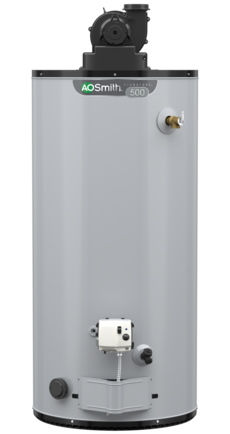
A.O. Smith 50-Gallon Power Vent Natural Gas Water Heater (GPVH-50)
Score: 8.5/10 — A dependable, code-friendly power vent water heater that brings flexible PVC venting and solid recovery to medium and large households where traditional vertical venting isn't an option.
Overview
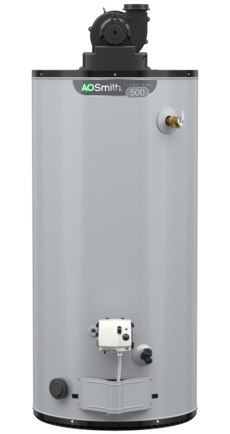
The A.O. Smith 50-Gallon Power Vent Natural Gas Water Heater is a 50-gallon natural gas water heater built around a power vent system, which uses an integrated blower to push exhaust gases out through PVC piping to an exterior wall. That design choice is the heart of this unit's appeal: it frees you from the requirement of a vertical chimney or B-vent, making it a natural fit for basements, closets, and utility rooms with limited overhead clearance.
With a 40,000 BTU burner driving recovery and a 50-gallon tank capacity, this model is aimed at medium to large households — think families of three to five who run back-to-back showers, dishwashers, and laundry. It's positioned as an efficient, modern replacement for an aging atmospheric-vent heater (see our A.O. Smith EES-40 electric water heater review for a detailed look at a 40-gallon electric alternative), or as a new installation where the venting flexibility solves a real layout problem.
Homeowners and installers alike will appreciate the electronic ignition, which does away with the perpetually-burning standing pilot light, and the corrosion-resistant tank construction designed to extend service life. It's a practical, no-nonsense choice rather than a flashy high-efficiency condensing unit. It solves the primary architectural hurdle of many home renovations: getting the exhaust out of the house without rebuilding the roofline or cutting through multiple floors of joists.
Key Features
An integrated blower exhausts combustion gases through PVC pipe to an exterior wall, eliminating the need for a vertical chimney or B-vent.
Delivers reliable hot water recovery to keep up with the demands of medium to large households.
Ample stored capacity for back-to-back showers and simultaneous fixture use in a busy home.
A glass-lined interior and magnesium anode rod work together to resist corrosion and extend tank life.
Lights the burner on demand and eliminates the standing pilot light, reducing wasted gas.
Suited to basements, closets, and utility rooms with limited overhead clearance.
| Feature | Value |
|---|---|
| Model | GPVH-50 |
| Tank Capacity | 50 gallons |
| Fuel Type | Natural gas |
| Burner Output | 40,000 BTU |
| Venting | Power vent (PVC to exterior wall) |
| Ignition | Electronic (no standing pilot) |
| Tank Construction | Glass-lined with magnesium anode rod |
| Application | Residential — medium to large households |
| Typical Locations | Basement, closet, utility room |
Pros & Cons
Pros
- Flexible PVC venting to an exterior wall solves tricky installs
- 50-gallon capacity handles medium to large households
- Electronic ignition eliminates standing pilot waste
- Glass-lined tank and anode rod for corrosion resistance
- Works in spaces with limited overhead clearance
Cons
- Power vent blower requires a nearby electrical outlet
- 40,000 BTU recovery is solid but not high-output
- Not a condensing high-efficiency unit
- Blower adds a mechanical component that can need servicing
How the Power Vent System Works
Unlike a standard "atmospheric" water heater, which relies on the natural buoyancy of hot air to rise up a vertical flue (the "chimney effect"), the A.O. Smith GPVH-50 utilizes a mechanical blower. This blower creates a pressure differential that actively pulls combustion gases away from the burner and pushes them through a dedicated PVC vent pipe.
This mechanical assistance allows the venting to travel horizontally. In a traditional setup, if your water heater is in a basement, the vent must travel straight up through the house to the roof. With the GPVH-50, the blower allows the exhaust to be routed through the ceiling joists and directly out a side wall. This is a critical advantage for homeowners with finished ceilings or those who have relocated their utility room (which often involves updating basement sump pumps and drainage) to a part of the house where a vertical stack is physically impossible.
The process is automated: when the thermostat signals that the water has cooled, the electronic ignition sparks the burner, and the blower immediately engages to ensure safe exhaust removal. To protect your unit and pipes from mineral buildup, pairing it with a GE GXWH40L whole house water filter guide (essential for preventing sediment buildup in your tank) is highly recommended. Once the target temperature is reached, both the burner and the blower shut off, ensuring no gas is wasted and no energy is spent moving air when not needed. This active removal of gases also reduces the risk of backdrafting, provided the installation is performed according to manufacturer specifications.
Performance
In day-to-day use, the GPVH-50's combination of a 50-gallon tank and 40,000 BTU burner strikes a sensible balance. The stored capacity is generous enough to cover a morning rush of showers, and the recovery rate keeps a household supplied without lengthy waits between heavy draws. For a typical family of three to five, it rarely feels stretched.
The power vent system is where this unit earns its keep. The blower-assisted exhaust through PVC means you can route venting horizontally to a convenient exterior wall, which is a genuine lifesaver in finished basements and tight closets where a vertical flue simply isn't feasible. If you need higher recovery for a larger household, If you need higher recovery for a larger household, the A.O. Smith ProMax Power Vent Gas Water Heater steps up the output for higher demand. Expect some audible blower noise during burner cycles — modest, but present, and worth noting if the heater sits near living space.
Electronic ignition lights cleanly and reliably, and the absence of a standing pilot means no constant trickle of gas between heating cycles. The glass-lined tank and magnesium anode rod are proven longevity features; periodic anode inspection and tank flushing will help this unit reach the upper end of its service life.
Installation and Setup Requirements
Installing the GPVH-50 is a different process than installing a standard tank. Because it uses a blower, there are three primary requirements that must be met before the unit can be commissioned:
Electrical Access: Unlike atmospheric heaters, the GPVH-50 requires a 120V AC power source. You must have a grounded electrical outlet within reach of the unit's power cord. If your utility closet previously held a pilot-light heater, you may need an electrician to run a new circuit.
PVC Venting: The unit is designed for PVC pipe. The installer must follow specific slope requirements to ensure that any condensation that forms in the vent line drains back into the unit's drain system rather than pooling in the pipe or leaking into the walls. Using the wrong diameter of pipe or creating too many 90-degree elbows can restrict airflow and trigger safety codes in the electronic ignition system.
Clearance and Airflow: While the power vent allows for tighter overhead spaces, the unit still requires specific combustion air clearances. Depending on the size of the room, you may need to install louvers or air vents in the closet door to ensure the burner has enough oxygen to operate safely. Without adequate air, the burner may produce soot or fail to ignite properly.
Pro Tip: Always verify your local building codes regarding PVC venting. Some jurisdictions have specific requirements for the termination point on the exterior wall to ensure exhaust doesn't enter windows or air intake vents.
Maintenance Guide for Longevity
To get the most out of the A.O. Smith GPVH-50, a proactive maintenance schedule is essential. Because this is a tank-style heater, it is susceptible to sediment buildup over time, which can insulate the bottom of the tank and force the burner to work harder, potentially leading to tank failure over many years.
Flushing the Tank
It is recommended to drain and flush the tank at least once a year. This removes mineral scale (calcium and magnesium) that settles at the bottom. To do this, shut off the gas and water supply, attach a hose to the drain valve, and flush until the water runs clear. This prevents "popping" noises during heating and maintains thermal efficiency.
Anode Rod Inspection
The magnesium anode rod is a "sacrificial" component. It is designed to corrode so that the tank walls don't. Depending on the mineral content of your local water, this rod can deplete in 3 to 5 years. If the rod is completely dissolved, the tank will begin to rust from the inside out. Checking the rod every two years allows you to replace it before the tank is compromised.
Related parts & accessories
Blower and Vent Inspection
Check the exterior vent termination for blockages (such as bird nests or snow buildup). Ensure the blower is operating quietly; a sudden change in the sound of the blower or a "cycling" error code usually indicates a venting restriction or a failing blower motor, both of which should be addressed immediately to prevent carbon monoxide buildup.
Comparison: Power Vent vs. Tankless vs. Atmospheric
When choosing the GPVH-50, it is helpful to understand where it sits in the broader ecosystem of water heating technology. Most homeowners are deciding between three primary paths: the traditional atmospheric tank, the power vent tank (like this model), and the modern tankless system.
Atmospheric Tanks: These are the most affordable and mechanically simple. However, they require a vertical chimney. If your home lacks a dedicated flue or if you are moving the heater to a room without one, an atmospheric tank is simply not an option. They also typically use standing pilots, which waste a small amount of gas 24/7.
Power Vent Tanks (GPVH-50): This is the "bridge" solution. You get the reliability and high-volume storage of a tank, but the installation flexibility of a mechanical system. By using PVC and a blower, you can place the unit almost anywhere in the home. While they require electricity, the trade-off is a significantly easier installation process in modern or renovated homes.
Tankless Systems: Tankless heaters offer the highest energy efficiency and an "endless" supply of hot water. However, they often have a lower flow rate (GPM) and a much higher upfront cost. For a family that needs multiple showers running simultaneously, a 50-gallon tank like the GPVH-50 often provides a more consistent experience without the "cold water sandwich" effect sometimes seen in budget tankless units.
Value for Money
The GPVH-50 sits in the practical middle of the market: it's not the cheapest atmospheric-vent tank, nor a premium condensing high-efficiency model, but it earns its price through venting flexibility and dependable capacity. If your installation constraints rule out a chimney or vertical B-vent, the power vent design alone can justify the choice by avoiding costly venting workarounds.
It's best suited to homeowners replacing an older heater in a basement, closet, or utility room, or anyone whose layout demands horizontal venting. Buyers chasing maximum efficiency or the lowest possible upfront cost may look elsewhere — for example,
A condensing tankless unit like the Navien High-Efficiency Condensing Tankless Water Heater
, but for code-friendly, reliable hot water in a constrained space, the value proposition is strong. If you're weighing alternatives, compare it with the Rheem Professional Classic Plus 50-Gallon Direct Vent Natural Gas Water Heater or the Bradford White AeroTherm 50-Gallon Hybrid Heat Pump Water Heater for a different approach to efficiency.Buying Logic: If you have a pre-existing, functional chimney, a standard atmospheric heater is cheaper. If you are building new or renovating a basement without a flue, the GPVH-50 is often the most cost-effective way to get a high-capacity gas heater into the home.
Common Pitfalls and Troubleshooting
While the GPVH-50 is a robust machine, users should be aware of a few common issues associated with power-vent technology:
- The "No Power" Cycle: Because the blower is essential for safety, the unit will not ignite if the blower is not detected as operational. If the unit fails to start after a power outage, check your circuit breaker first.
- Condensation Drip: If the PVC vent is not sloped correctly toward the unit, water can pool in the pipes. This can lead to "gurgling" sounds or, in extreme cases, leaks in the ceiling. Ensure a slight downward pitch toward the heater.
- Noise Sensitivity: Some users find the "whoosh" of the blower startling if the unit is installed directly adjacent to a bedroom. If noise is a concern, consider adding sound-dampening insulation to the utility closet walls.
- Sooting Issues: If the blower motor is struggling or the vent is partially blocked, you may see signs of soot around the burner area. This is a critical safety warning and requires immediate professional service. For those upgrading their basement utility area, our sump pump buying guide provides a good overview of related drainage needs.
Final Verdict
The A.O. Smith GPVH-50 Residential Power Vent 50-Gallon Natural Gas Water Heater earns a solid 8.5/10. It pairs flexible PVC venting with dependable 50-gallon capacity and corrosion-resistant construction, making it an easy recommendation for medium to large households facing venting limitations. It's not a high-efficiency showpiece, but as a practical, code-friendly workhorse it delivers exactly what it promises.
What is a power vent water heater, and why does it matter?
A power vent heater uses a built-in blower to push exhaust gases through PVC pipe to an exterior wall, rather than relying on a vertical chimney. This lets the GPVH-50 be installed in basements, closets, and utility rooms where traditional vertical venting isn't practical.
How many people can the GPVH-50 serve?
With its 50-gallon tank and 40,000 BTU burner, the GPVH-50 is designed for medium to large households — typically three to five people. It is capable of handling multiple simultaneous draws, such as a shower and a dishwasher running at the same time.
Does the GPVH-50 require electricity to work?
Yes. Unlike traditional atmospheric gas heaters, the power vent system requires a 120V electrical connection to power the blower motor and the electronic ignition system. Without power, the unit cannot exhaust gases and will not ignite for safety reasons.