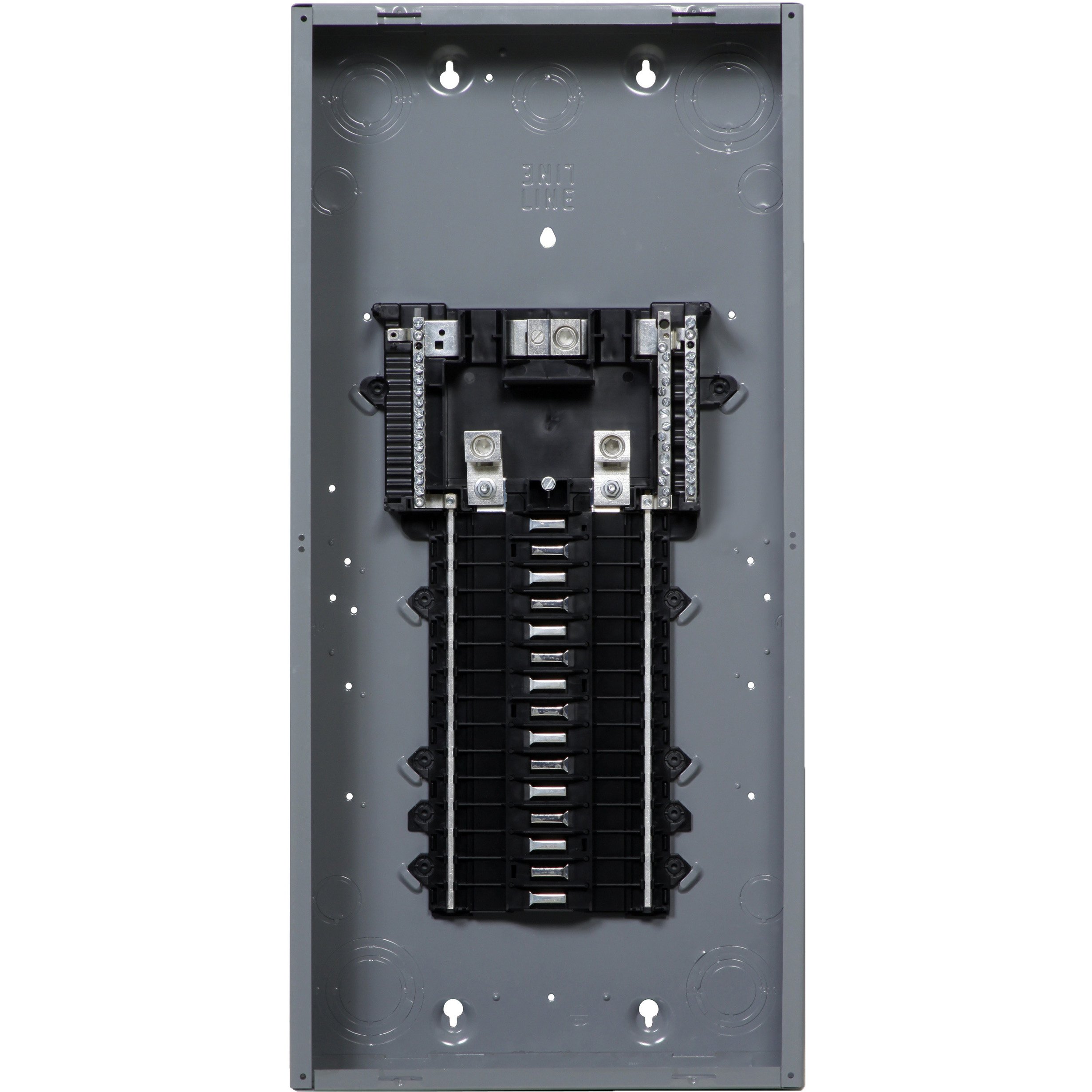
Square D 200-Amp 30-Space Indoor Main Lug Load Center with Plug-On Neutral (QO130L200PG)
Score: 9.2/10 — A rock-solid, contractor-grade main load center that delivers generous capacity, premium build quality, and plug-on neutral compatibility, making it one of the best all-around residential panels on the market today.
Overview
The Square D QO130L200PG 200-Amp Load Center is widely considered one of the best residential panels for modern homes, representing the gold standard in electrical distribution, offering a high-capacity 200A solution with premium copper bus bars and streamlined installation.
Related parts & accessories
Related parts & accessories
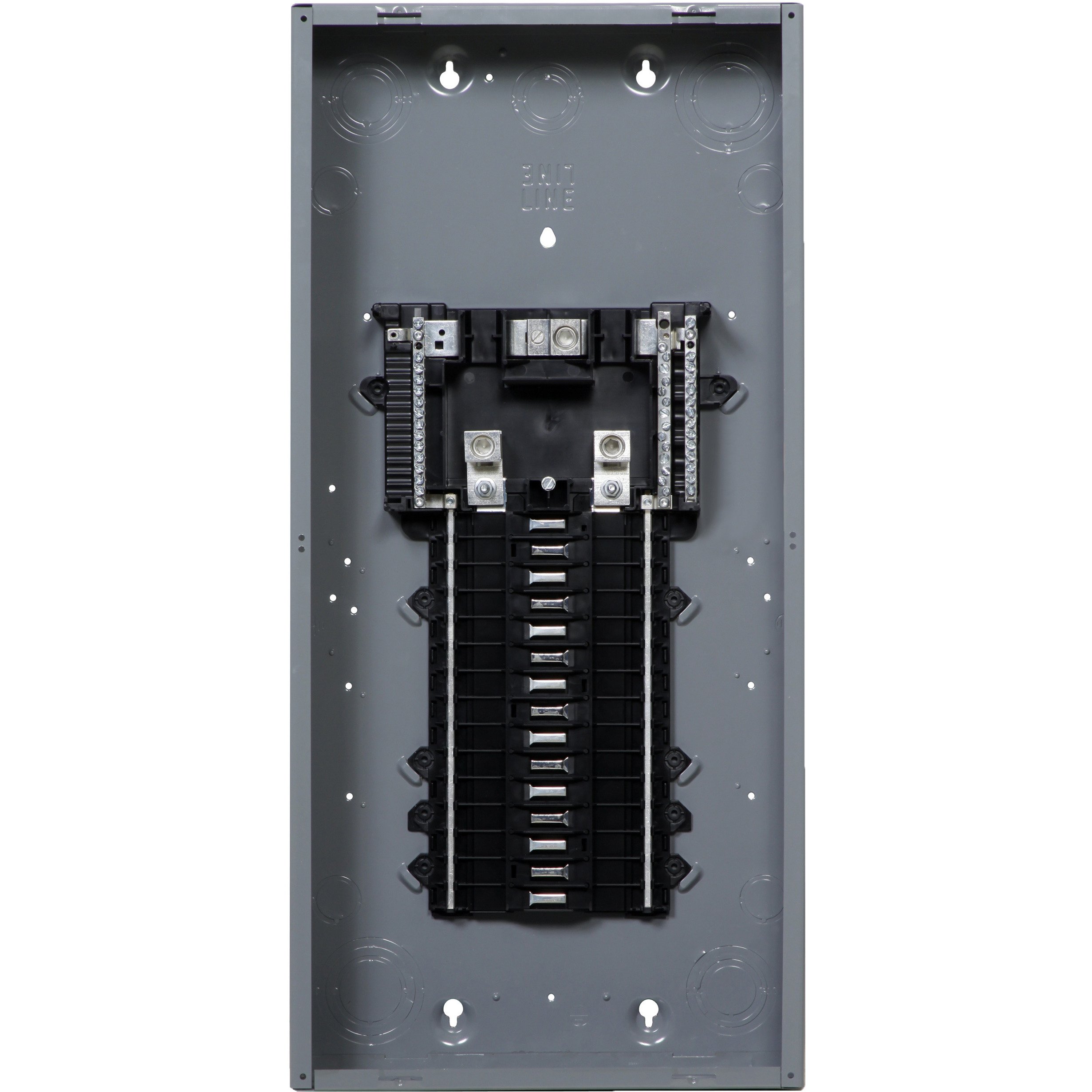
Unlike standard panels, the QO130L200PG is a Main Lug configuration. This means it does not contain its own main breaker; instead, it is designed to be fed from a separate main disconnect or used as a high-capacity sub-panel. This versatility is critical for modern electrical layouts where the main service entrance may be located outdoors or in a garage, while the distribution panel remains centrally located inside the home for easier access to circuit breakers (learn how to replace a circuit breaker safely if you're performing maintenance).
Targeted primarily at licensed electricians and advanced homeowners, this unit prioritizes "installability" and long-term durability. The integration of Plug-On Neutral technology is a game-changer for modern Arc Fault Circuit Interrupters (AFCI) and Ground Fault Circuit Interrupters (GFCI)—which you can read more about in our AFCI vs Standard guide, eliminating the need for cumbersome pigtail wiring and reducing the clutter inside the cabinet. For anyone looking to future-proof their home with 30 dedicated spaces and 200 amps of capacity, this is the industry-standard choice. (If you're weighing brands, see our Square D vs Eaton comparison).
Key Features
Eliminates the need for neutral wire pigtails, allowing for faster installation and a cleaner, safer internal layout.
Provides ample power for heavy-duty HVAC systems, electric vehicle chargers, and high-draw equipment like the Ridgid SP-650C sump pump (which often requires the best 20-amp circuit breakers for stability) or an A.O. Smith electric water heater and other modern kitchen appliances, or a high-end induction cooktop.
Generous expansion capacity ensures you won't need to add a second panel when adding new rooms or smart home tech, such as an ADT self-setup security kit or a Ring Alarm Pro security system or a SimpliSafe security kit.
Designed exclusively for QO breakers, known for their superior fit and "VISI-trip" indicator for instant fault identification.
| Feature | Specification |
|---|---|
| Model Number | QO130L200PG |
| Amperage Rating | 200 Amps |
| Number of Spaces | 30 |
| Number of Circuits | 30 |
| Mounting Type | Indoor / Surface Mount |
| Configuration | Main Lug |
| Neutral Connection | Plug-On Neutral |
| Breaker Compatibility | Square D QO Series |
Pros & Cons
Pros
- Exceptional Build Quality: Heavy-gauge steel construction prevents flexing and ensures a tight fit for breakers.
- Efficient Wiring: Plug-on neutral drastically reduces installation time and wiring errors.
- Clear Diagnostics: When paired with QO breakers, the VISI-trip indicators make troubleshooting effortless.
- High Capacity: 200 amps is sufficient for almost any standard residential application.
Cons
- Higher Initial Cost: QO components are generally more expensive than Homeline or generic alternatives.
- Main Lug Only: Requires a separate main disconnect, which may be an additional cost for some setups.
- Weight: The robust build makes it significantly heavier than budget panels.
Performance and Real-World Impressions
In real-world applications, this load center excels in the areas that matter most: thermal management and mechanical stability. During peak loads—such as when a high-efficiency HVAC system (refer to our MrCool DIY mini-split buying guide or explore other mini-split options for load requirements), electric dryer, and oven are running simultaneously—the panel maintains a stable temperature. The heavy-duty busbars are engineered to resist overheating, a common failure point in cheaper, thinner-gauge panels.
The "Plug-On Neutral" system is where the performance gain is most visible. In older panels, the neutral bar becomes a chaotic nest of white wires, especially when installing AFCI breakers. With this load center, the breaker simply snaps onto the neutral bar. This not only speeds up the installation but significantly reduces the risk of a loose connection, which is a primary cause of electrical arcing and nuisance tripping in residential settings.
From a maintenance perspective, the layout is intuitive. The internal spacing allows for a clean "comb" of wires, making it easy for an electrician to trace circuits years after the initial install. The fit of Square D QO series breakers is precise; there is no "wobble" or loose seating, which ensures a consistent electrical connection over decades of service.
Related parts & accessories
Value for Money
When evaluating the QO130L200PG, it is important to distinguish between "cost" and "value." On a pure cost basis, this is one of the more expensive options in the 200-amp category. You can find generic panels for a fraction of the price. However, the value lies in the reduction of labor costs and the increase in long-term reliability.
For a professional contractor, the time saved by using Plug-On Neutral and the ease of mounting the QO chassis translates directly into lower labor hours. For the homeowner, the value is found in the safety margins. The QO series is widely regarded as having superior trip mechanisms compared to entry-level panels (see our guide on the best 20-amp circuit breakers for a look at high-performance options) (compare with our Square D vs Eaton comparison) or read our comprehensive guide on AFCI vs Standard Circuit Breakers to determine the right protection for your home panels), providing a higher level of protection for expensive home electronics and appliances.
The Square D 200-Amp 30-Space Load Center is a "buy once, cry once" investment. While the upfront price is higher, the likelihood of needing to replace the panel due to busbar corrosion or mechanical failure is significantly lower than with budget alternatives. It is an ideal fit for high-value properties and homes intended for long-term ownership.
Final Verdict
The Square D 200-Amp 30-Space Indoor Main Lug Load Center is an outstanding piece of electrical infrastructure. It doesn't try to be the cheapest option on the shelf; instead, it aims to be the most reliable and easiest to install. By combining the legendary durability of the QO line with the modern convenience of Plug-On Neutral, Square D has created a panel that satisfies both the installer and the end-user.
With a final score of 9.2/10, it is highly recommended for any residential project where safety and scalability are the primary concerns. If you have the budget for the QO ecosystem, there is very little reason to look elsewhere.
Technical Deep Dive & Buyer's Guide
How a Main Lug Load Center Works
To understand the QO130L200PG, one must understand the difference between a "Main Breaker" panel and a "Main Lug" panel. A Main Breaker panel acts as the primary "kill switch" for the entire house. A Main Lug panel, like the QO130L200PG, lacks this internal switch. Instead, it has lugs—heavy-duty connectors—where the main power cables from the meter or a separate disconnect are bolted directly to the busbars.
This configuration is essential for sub-panels. For example, if you have a main service panel in your garage, you can run a heavy feeder line to the QO130L200PG inside your living area. The QO130L200PG then distributes that power to the 30 individual circuits of the home. It allows for a decentralized electrical strategy, which is often required by local building codes in larger homes.
The Importance of the QO Ecosystem
The QO series is distinct from Square D's "Homeline" series. While Homeline is excellent for budget-conscious builds (see our Square D vs Eaton comparison to see how these brands stack up), the QO line is the professional grade. The primary difference is the build quality of the breakers and the busbar engagement. QO breakers feature a unique "Visi-Trip" indicator—a small red flag that appears when a breaker has tripped. In a dark basement (where you might also be monitoring a Basement Watchdog BW1033 sump pump or a Wayne ESP25 battery backup pump, a GE dehumidifier, or a universal furnace fan timer) or a crowded utility closet, this saves a technician from having to manually test every breaker to find the one that failed.
Beyond the visual indicators, the physical tolerances of the QO series are tighter. The clamping force applied to the busbar is more consistent, reducing the likelihood of "hot spots" caused by poor electrical contact. This is why many industrial and commercial settings exclusively use QO or other high-performance options like the Blue Sea Systems 5025 or the Siemens Q115 over residential-grade alternatives.
Comprehensive Installation Process
Installing the QO130L200PG requires a methodical approach to ensure safety and compliance with the National Electrical Code (NEC). The process typically begins with the mounting of the chassis. Because the panel is constructed from heavy-gauge steel, it is crucial to mount it to a sturdy substrate—typically 1/2-inch plywood backing—to prevent the panel from shifting or bowing under the weight of the cables.
Once mounted, the wiring phase begins. For a Main Lug panel, the feeder conductors are brought into the enclosure through a designated knockout. These conductors must be stripped precisely and inserted into the lugs. The torque specifications for these lugs are not suggestions; they are critical safety requirements. Using a calibrated torque wrench ensures that the connection is tight enough to prevent arcing but not so tight that it damages the lug threads or the conductor itself.
The Plug-On Neutral feature simplifies the circuit wiring. Instead of routing a neutral wire from the breaker to a separate neutral busbar via a pigtail, the neutral connection is made directly at the breaker. This creates a "cleaner" cabinet. When wiring the remaining 30 circuits, electricians typically organize the cables in a "comb" or "waterfall" pattern, which ensures that no single wire is under excessive tension and allows for easy visual inspection of all connections.
Common Pitfalls in Installation
Even with a high-end panel like the QO130L200PG, errors can occur. The most common mistake is the improper torquing of the main lugs. Because this panel handles 200 amps, any loose connection at the lug can lead to extreme heat buildup, potentially melting the insulation and causing a fire. Always use a calibrated torque wrench to meet the manufacturer's specific inch-pound requirements.
Another pitfall is the mixing of breaker brands. While some "classified" breakers may physically fit, using anything other than Square D QO series components in this panel voids the UL listing and can lead to poor electrical contact. The precision of the Plug-On Neutral system—which is essential for