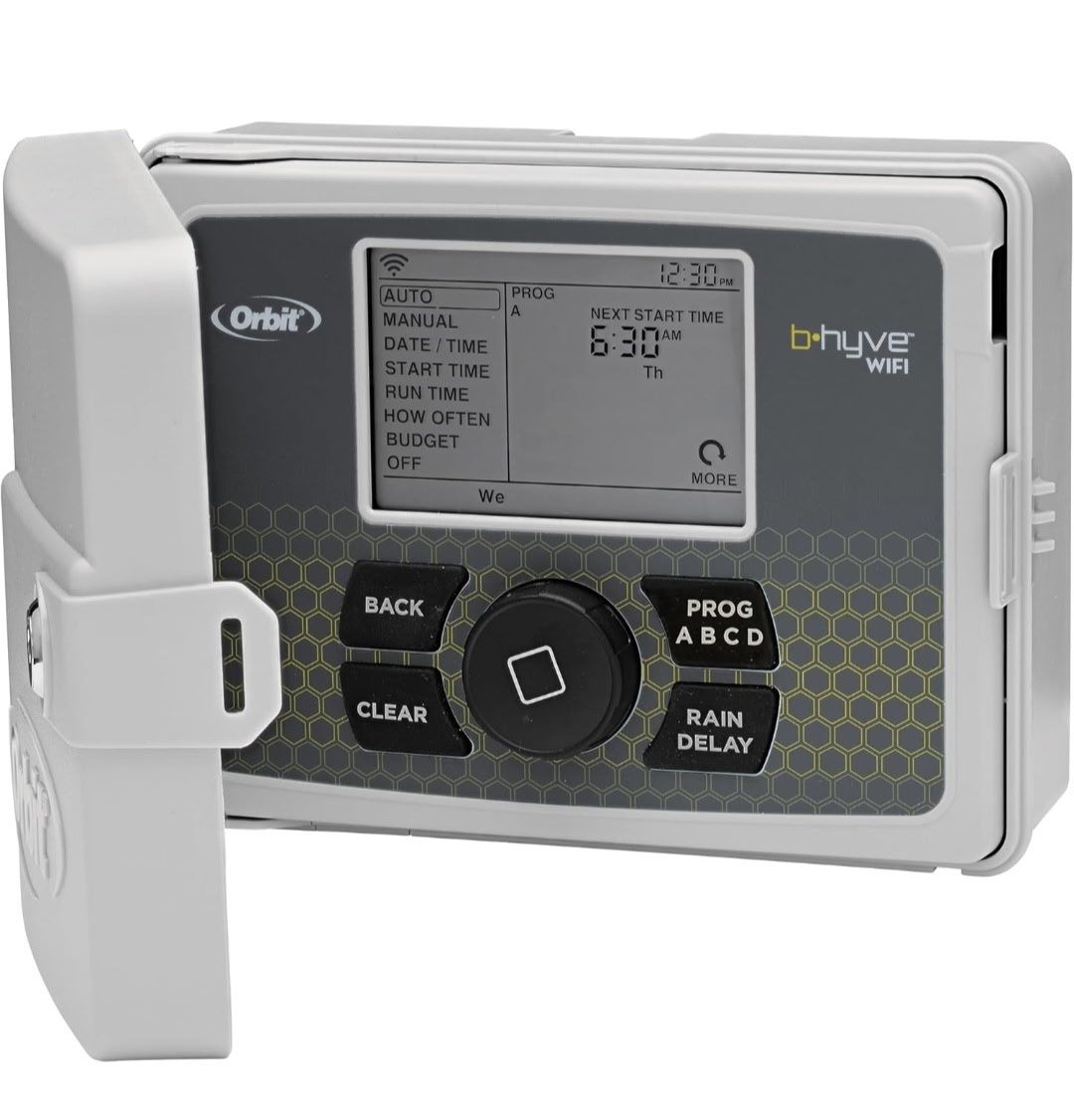
Upgrading to a smart irrigation system transforms repetitive outdoor chores into an automated, weather-aware maintenance plan. For homeowners seeking to reduce water waste, the Orbit B-hyve Wi-Fi Smart Sprinkler Controller is a top-rated choice for managing residential lawns with precision and ease.
For those focusing on broader home water management, our comprehensive guide to the Ridgid SP-650C sump pump or exploring high-quality whole-house water filtration can help maintain overall system health. This guide explores why the B-hyve is a top choice for those seeking app-based control, flexible scheduling, and precision water management without the expense of a professional installation.
Best Overall Pick: Orbit B-hyve Wi-Fi Smart Sprinkler Controller
Score: 9.0/10. A strong smart irrigation controller for homes with up to six zones, combining app control, weather-aware scheduling, and flexible indoor/outdoor installation.
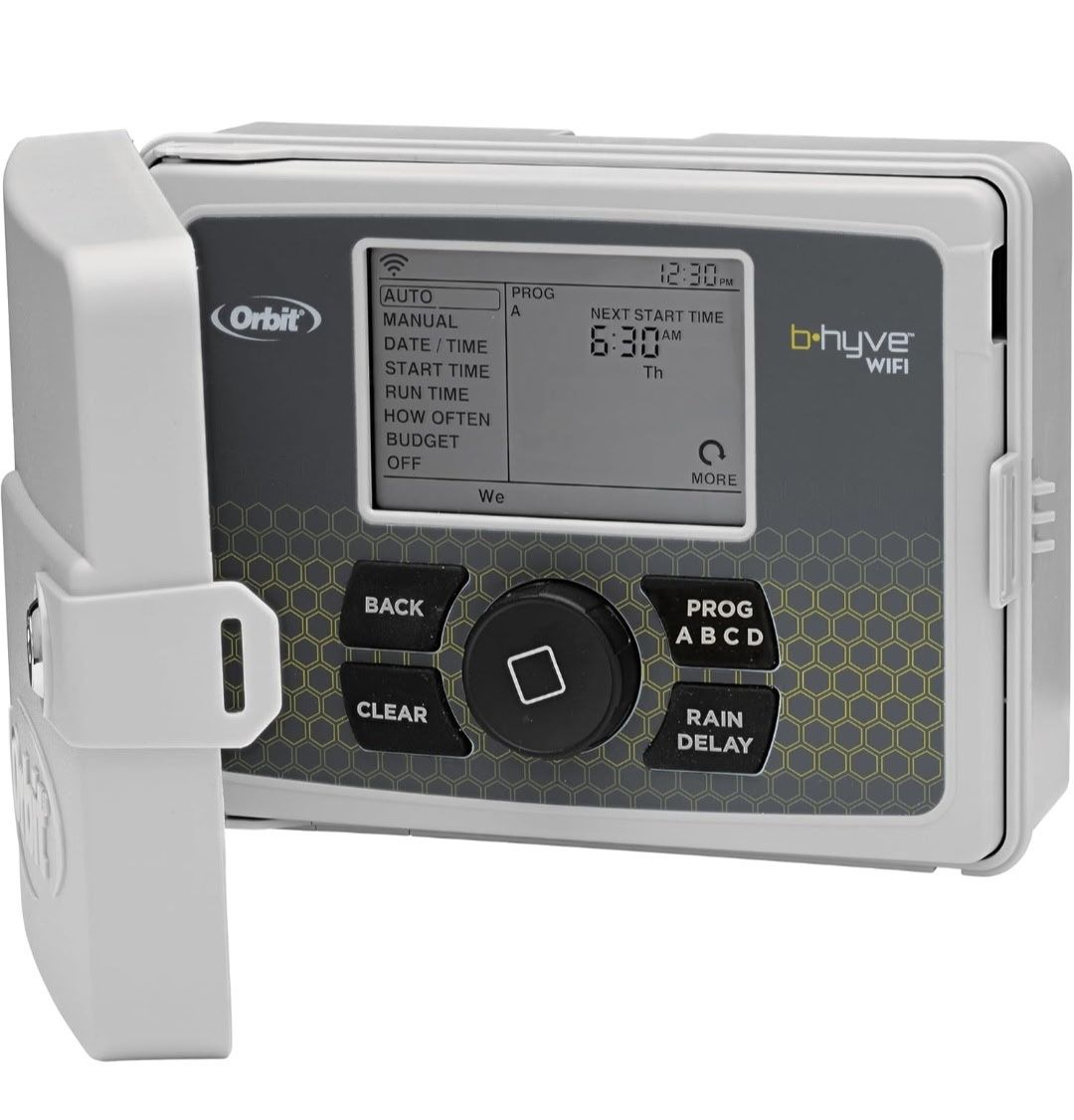
Orbit B-hyve Wi-Fi Smart Sprinkler Controller 6-Zone Indoor/Outdoor
The Orbit B-hyve Wi-Fi Smart Sprinkler Controller is designed for homeowners who want to modernize an existing irrigation system without overcomplicating the setup. If you're updating other home systems, you might also find our guide to the best furnace control boards useful for indoor climate automation.
Its key appeal is the synergy between traditional hardware controls and sophisticated app-based management. While many smart home devices remove physical interfaces entirely, the Orbit B-hyve Wi-Fi Smart Sprinkler Controller maintains a backlit display and intuitive dial, allowing any family member to trigger a manual zone without needing a smartphone.As a 6-zone controller, this model is a practical match for the majority of residential lawns, garden patches, and foundation beds. Each zone can be scheduled independently, which is critical for landscape diversity. For instance, a north-facing shaded garden requires significantly less water than a south-facing lawn exposed to midday sun. By partitioning these into separate zones, you avoid the common mistake of overwatering your perennials just to keep your grass green.
The standout feature is the "Smart Watering" capability. When connected to the B-hyve app, the controller accesses local weather data to adjust schedules in real-time. If the forecast predicts a heavy storm, the system can automatically skip a scheduled cycle, preventing runoff and saving money on water bills. If you are dealing with existing drainage issues, you may want to explore our Basement Watchdog (BW1033) review or compare the Wayne ESP25 battery backup for heavy flooding to ensure your home's foundation remains dry. This level of automation transforms the device from a simple timer into a proactive water management tool.
Furthermore, the indoor/outdoor rating provides installation flexibility that is often missing in budget smart controllers. Whether your system is housed in a garage, a waterproof exterior enclosure, or a utility closet, the Orbit B-hyve is built to handle those environments. This makes it an ideal drop-in replacement for aging "dumb" timers that are already mounted in convenient but exposed locations.
Pros
- Supports up to six independent watering zones
- Wi-Fi connectivity enables remote control through the B-hyve app
- Weather-aware scheduling reduces unnecessary water waste
- Flexible indoor/outdoor installation options
- Physical dial and display for quick manual overrides
- Straightforward replacement path for traditional timers
Cons
- Limited to 6 zones; not suitable for larger estates
- Requires stable Wi-Fi signal at the point of installation
- Initial wiring requires careful labeling of existing valves
- Weather intelligence requires periodic tuning for specific soil types
Get the Orbit B-hyve Wi-Fi Smart Sprinkler Controller to start saving water with weather-aware automation.
| Spec | Orbit B-hyve Wi-Fi Smart Sprinkler Controller |
|---|---|
| Model Number | 57946 |
| Product Type | Wi-Fi Smart Sprinkler Controller |
| Zone Capacity | Up to 6 Zones |
| Installation | Indoor/Outdoor |
| Smart Control | B-hyve App (iOS/Android) |
| Intelligence | Weather-based scheduling & rain-skip |
| Ideal Use Case | Small to medium residential landscapes |
How Smart Irrigation Works
Traditional sprinkler timers operate on a "set it and forget it" logic. You tell the timer to run Zone 1 for ten minutes every Monday, and it will do so regardless of whether it is raining, snowing, or during a drought. This leads to massive water waste and can actually harm plants by causing root rot through over-saturation.
Upgrade your yard with the Orbit B-hyve Wi-Fi Smart Sprinkler Controller to shift your irrigation logic from time-based to condition-based.
By utilizing a Wi-Fi connection, the controller communicates with weather services to determine the "evapotranspiration" rate—essentially how much water is leaving the soil based on temperature, humidity, and wind. If the air is humid and cool, the controller knows the soil is retaining moisture longer and may reduce the watering duration.The system operates on a loop of data collection and execution. First, the app asks the user for the soil type (sandy, loamy, or clay) and the plant type (grass, shrubs, or flowers). This creates a baseline "water budget." Second, the controller monitors the local forecast. Third, it executes the valve triggers only when necessary. This precision not only saves water but ensures that plants receive the exact amount of hydration required for their specific biological needs. For those managing entire home water quality, comparing the Waterdrop (G3P800) water system review with a Culligan (WH-HD200-C) water filter provides a great starting point.
Furthermore, modern smart controllers often integrate with local weather stations or cloud-based historical data. This allows the B-hyve to understand not just if it is raining now, but if it rained enough yesterday to sustain the soil for today. This "cumulative moisture" logic prevents the system from watering just because the forecast is clear, acknowledging that a heavy downpour the previous evening provides enough saturation for several days.
Installation and Setup Guide
Installing the Orbit B-hyve Wi-Fi Smart Sprinkler Controller is designed to be a DIY-friendly process, but it requires attention to detail. The process is split into three primary phases: physical mounting, electrical wiring, and digital configuration.
1. Physical Mounting
Since the Orbit B-hyve Wi-Fi Smart Sprinkler Controller is rated for indoor and outdoor use, you have flexibility. If mounting outdoors, ensure the unit is placed under an eave or inside a weather-resistant box to protect the electronics from direct sunlight and heavy rain. For those managing damp basements where these controllers are often mounted, using a Ridgid SP-650C sump pump helps manage water ingress, while our IPX4 ventilation buying guide offers tips on humidity control for utility areas. Use the provided mounting screws to secure the backplate to the wall. Ensure there is enough clearance around the unit to allow for easy access to the dial and the wiring compartment.
When selecting a location, consider the proximity to your Wi-Fi router. This is similar to planning electrical and signal runs for a MrCool DIY mini-split system. A thick brick wall or a metal electrical box can act as a signal shield. If your router is far away, you may want to mount the controller in a spot where the signal is strongest, even if it means extending your valve wires slightly. Proper mounting prevents moisture ingress and ensures that the physical interface remains accessible for manual overrides during power outages or Wi-Fi failures.
2. Electrical Wiring
The wiring process is the most critical step. While this is low-voltage, ensuring your home's electrical panel is up to code is vital; see our guide on how to replace a circuit breaker safely at home or compare AFCI vs Standard Circuit Breakers to ensure your panel is safely configured for broader electrical safety. You will see a series of terminals labeled 1 through 6, and a terminal labeled "C" for Common. The "Common" wire is the return path for the electrical circuit; it must be connected correctly for any zone to function. Each zone wire from your valve manifold then plugs into its corresponding numbered slot. Tighten the screws firmly to ensure a secure connection, as loose wires can cause "phantom" zone triggers or intermittent failures.
If you are upgrading from a 12-zone timer to this 6-zone model, you will need to decide which six zones are most critical. You cannot "combine" zones into one terminal; doing so could cause an electrical overload or trigger multiple valves simultaneously, which can drop your water pressure and lead to poor sprinkler head performance. If you have more than six valves, it is highly recommended to purchase a higher-capacity Orbit B-hyve instead.
3. Digital Configuration
Once powered on, download the B-hyve app. The controller will enter pairing mode, allowing your smartphone to find it via Wi-Fi. You will be prompted to enter your home Wi-Fi credentials. Once connected, the app will guide you through the "Zone Setup." This is where you define what is in each zone. Labeling them (e.g., "Front Lawn," "Back Garden") makes remote management much easier.
During the app setup, you will be asked to define your "Soil Type." This is not a formality; the software uses this data to calculate how quickly water drains. Clay soil holds water longer, while sandy soil drains almost instantly. Choosing the correct profile prevents the system from under-watering sandy areas or over-watering clay-heavy gardens. Once the parameters are set, you can choose between a "Custom Schedule" or "Smart Watering" mode, where the app takes over the decision-making process based on local weather data.
Maintenance and Long-Term Care
While the Orbit B-hyve automates the scheduling, it does not automate the physical maintenance of your irrigation system. To get the most out of your smart controller, a seasonal maintenance routine is recommended.
Spring Startup
Before beginning your seasonal routine, ensure your overall water quality is optimal; maintaining a clean main line—perhaps by using a Culligan (WH-HD200-C) water filter or a similar whole-house water system—helps protect your irrigation valves from sediment buildup. Every spring, perform a "wet test" of every zone. Manually trigger each zone via the B-hyve app and walk the yard to check for clogged nozzles, broken heads, or leaks in the piping. Adjust the sprinkler heads to ensure they are hitting the plants and not the sidewalk. This ensures that the "smart" schedule is actually delivering water to the right places.
Check the wiring terminals for any signs of corrosion or loose connections that may have occurred during the winter freeze-thaw cycle. A quick inspection of the physical unit for spider webs or insect nests in the outdoor enclosure can prevent electrical shorts or overheating of the internal components.
Summer Tuning
During peak heat, monitor your soil moisture manually. While the weather-based intelligence is accurate, micro-climates (like a very shaded corner of the yard) might need manual adjustments. Use the app to slightly increase the duration for zones that seem to be scorching despite the automated schedule.
Summer is also the time to audit your water usage. Review the history logs in the B-hyve app to see how many gallons you are saving compared to a standard timer. If you notice a zone is using significantly more water than expected without a corresponding change in weather, it could indicate a leak in the underground piping—which might require Uponor AquaPEX (F1040500) piping for repair or a Wayne (ESP25) sump pump to clear the area—or a broken sprinkler head that is wasting water.
Winterization
In climates where the ground freezes, you must blow out your lines with compressed air or drain the system. Once the system is winterized, use the B-hyve app to set a "Winter Mode" or simply disable all schedules. This prevents the controller from attempting to open valves that are empty or frozen, which could potentially damage the solenoids.
For those in extremely cold regions, consider unplugging the controller if it's in an unheated garage (similar to how you'd manage backup power for a