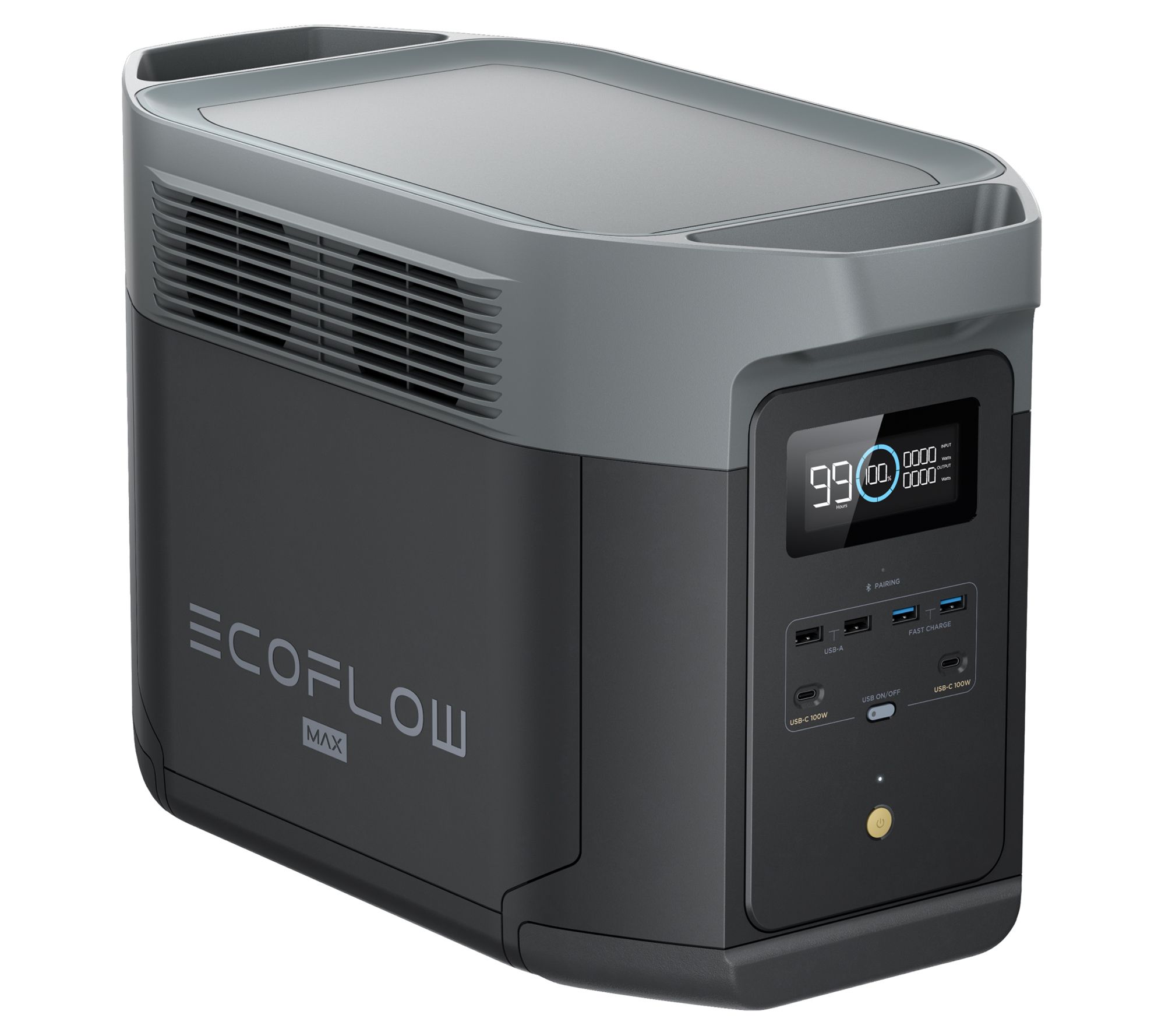
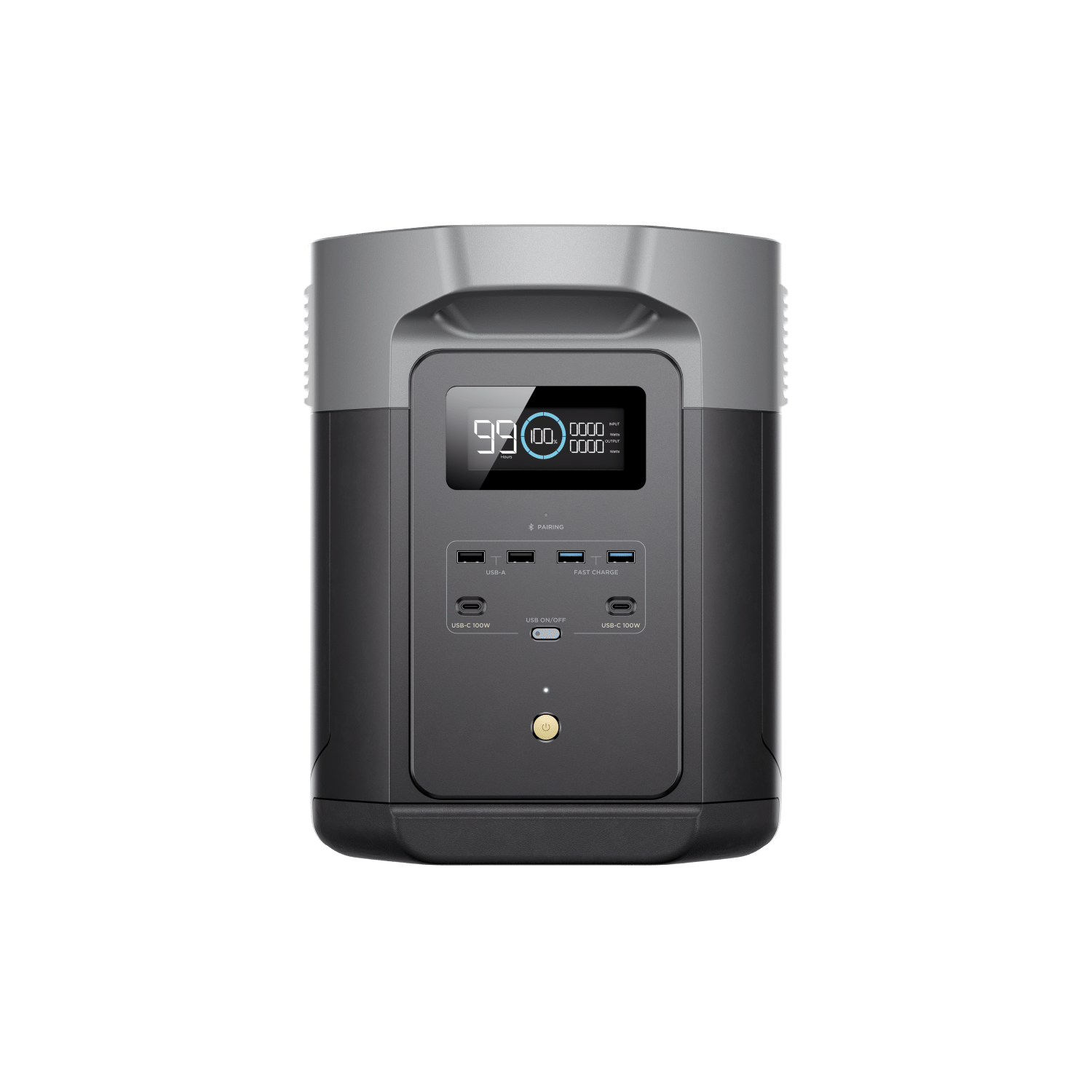
EcoFlow Delta 2 Portable Power Station (DELTA2) — 9/10
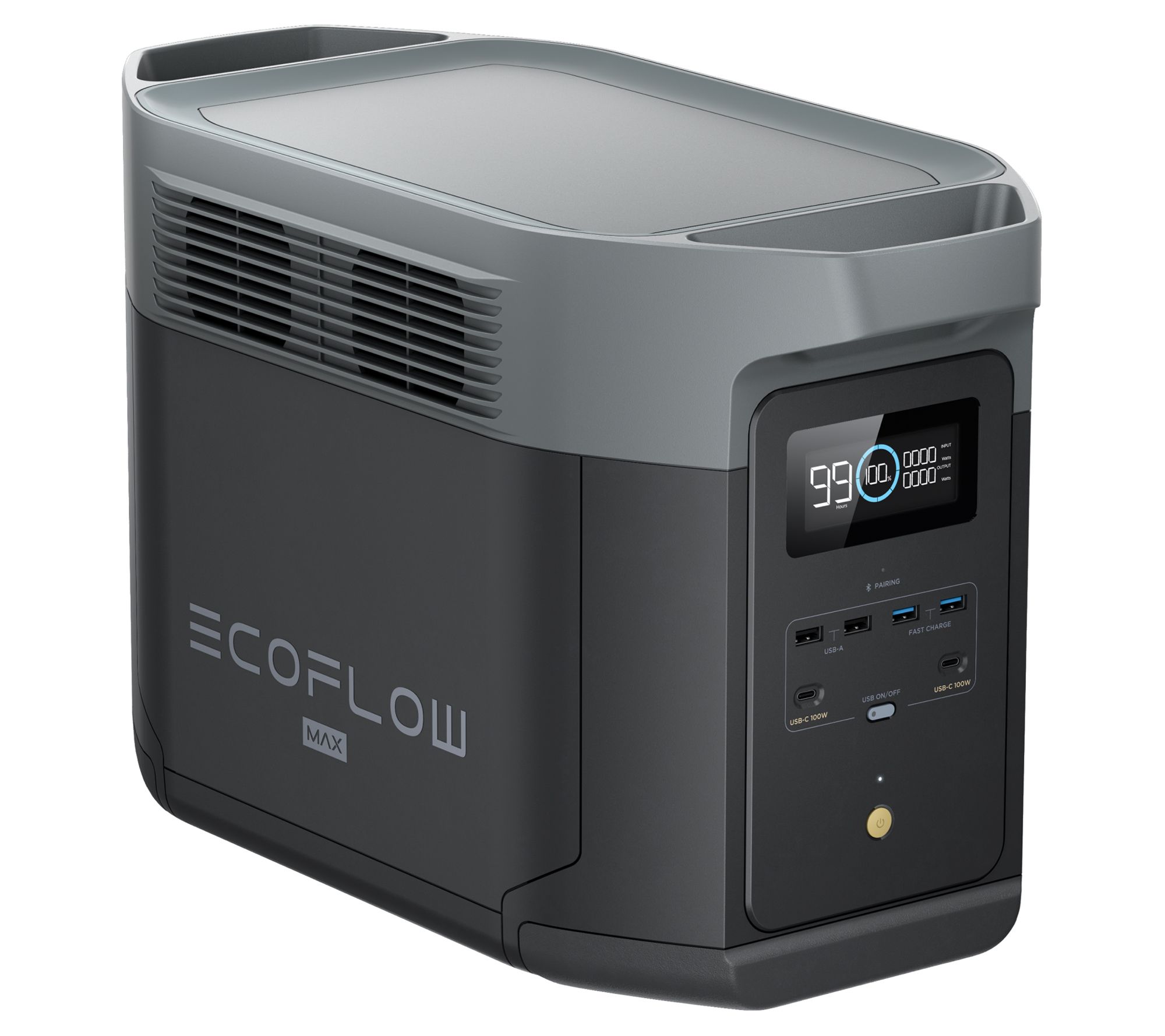
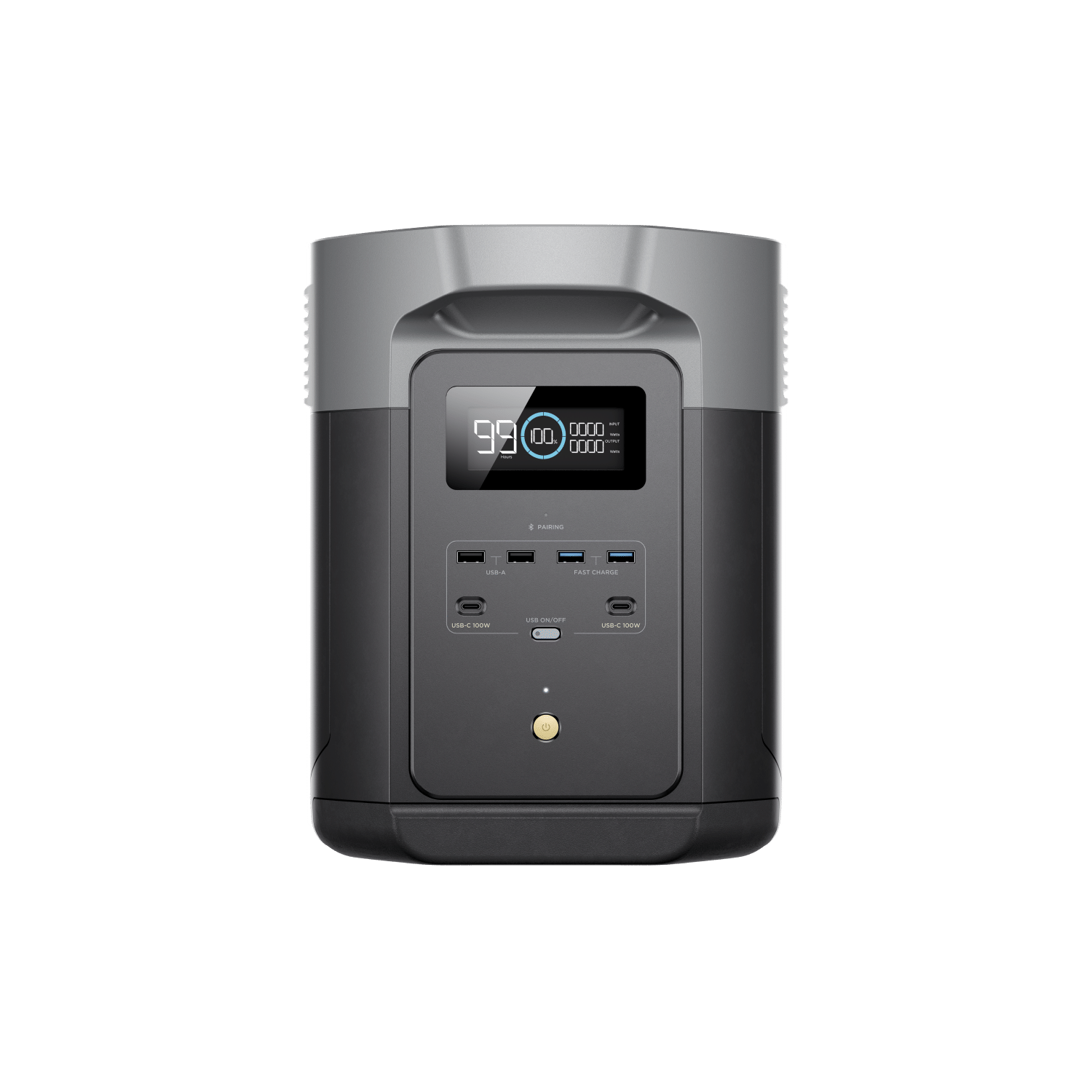
The EcoFlow Delta 2 Portable Power Station is a high-performance 1,024Wh LFP battery that combines industry-leading X-Stream fast charging with rugged portability. Whether you're looking for a reliable camping power source or a robust tool for battery backup sump pump systems (such as coordinating with a professional sump pump system), the Delta 2 offers professional-grade energy independence in a compact frame.
This review contains affiliate links. We may earn a commission if you purchase through them, at no extra cost to you. Our editorial opinions remain independent.
Overview
The EcoFlow Delta 2 Portable Power Station is a capable 1,024Wh unit balancing output and portability.
It is designed to bridge the gap between small "power banks" and massive home-backup systems, providing enough energy to sustain critical electronics and small appliances without the immense weight of industrial-grade generators. In an era where remote work and outdoor recreation are blending, having a reliable energy source that doesn't require gasoline or a noisy engine is becoming an essential part of the modern home technology ecosystem.The EcoFlow Delta 2 Portable Power Station is a 1,024Wh lithium iron phosphate (LFP) portable power station aimed squarely at users who want serious output capacity without hauling around a unit that requires two people to lift. Weighing in at around 27 lbs (12 kg), it manages to balance capacity and portability better than most competitors at this price point. It supports AC, USB-A, USB-C, car outlet, and DC5521 outputs — essentially everything you'd need to power a basecamp or keep your home running through a short outage.
What sets the Delta 2 apart is EcoFlow's X-Stream fast-charging technology, which can bring the unit from 0 to 80% in under an hour using a standard AC wall outlet. That alone is a game-changer compared to competing units that take four to eight hours to recharge. Add solar input compatibility of up to 500W and a usable LFP battery chemistry rated for 3,000+ charge cycles, and you have a unit designed to last the long haul. Whether you are powering a CPAP machine for a weekend of camping or keeping a router and modem alive during a storm, the Delta 2 provides a professional-grade solution for personal energy independence.
How It Works: The Technology Behind the Delta 2
To understand why the EcoFlow Delta 2 performs differently than a standard battery, it is important to look at the core technologies involved: the Battery Chemistry, the Inverter, and the Charge Controller. These three components determine how long the battery lasts, what devices it can safely power, and how quickly it can return to a full charge.
LFP vs. NMC Chemistry
Most budget power stations use Nickel Manganese Cobalt (NMC) batteries. While NMC is energy-dense (lighter for the same capacity), it degrades faster. The Delta 2 uses Lithium Iron Phosphate (LiFePO4 or LFP). LFP cells are chemically more stable and can withstand significantly more charge/discharge cycles before their capacity drops to 80%. In practical terms, if you used the Delta 2 every single day, it would take nearly a decade to see a significant drop in performance, whereas an NMC battery might start failing after two years of daily use. This choice of chemistry makes the Delta 2 a "buy it once" product rather than a disposable electronic.
Pure Sine Wave Inverter
The "AC Output" of the Delta 2 is handled by a Pure Sine Wave inverter. This is critical for "sensitive" electronics. Cheaper "modified sine wave" inverters create "blocky" electrical signals that can cause humming in audio equipment, flickering in some LED lights, and can even damage the circuitry of high-end laptops or medical devices like CPAP machines. The Delta 2 produces a clean electrical signal that mimics the power coming out of your wall at home, ensuring compatibility with almost any device without the risk of electrical noise or hardware damage.
The X-Boost System
The Delta 2 features a proprietary technology called X-Boost. Normally, if you try to plug a 2,000W heater into an 1,800W power station, the unit will simply shut down to protect its circuits from overloading. X-Boost allows the Delta 2 to lower the voltage to power devices that exceed the rated wattage, provided those devices can handle lower voltage. This allows users to run a wider variety of heating and cooling appliances that would otherwise be incompatible, effectively stretching the utility of the unit's rated output.
Key Features
Lithium iron phosphate cells deliver 3,000+ charge cycles to 80% capacity — roughly 10 years of daily use — far outlasting the NMC cells found in many rivals.
Recharge from 0–80% in approximately 50 minutes from a standard wall outlet, making top-ups between adventures quick and stress-free.
Dual AC outlets with X-Boost technology can power appliances rated up to 1,500W using intelligent power management, expanding its real-world compatibility significantly.
Compatible with EcoFlow's own solar panels as well as many third-party panels. At peak solar efficiency, the unit can reach full charge in as little as four hours.
Wi-Fi and Bluetooth connectivity lets you monitor charge levels, control outputs, schedule charging, and set charge limits from your smartphone — even remotely.
Pair with the Delta 2 Max to push total capacity to 2,048Wh. For those who need more native power from the start, this higher-capacity alternative provides a future-proof upgrade path without buying an entirely new unit.
Full Specifications
| Feature | Value |
|---|---|
| Capacity | 1,024Wh |
| Battery Type | Lithium Iron Phosphate (LFP) |
| Cycle Life | 3,000+ cycles to 80% capacity |
| AC Output | 1,800W (2,700W surge), 2× outlets |
| USB-C Output | 2× USB-C, up to 100W each (PD) |
| USB-A Output | 2× USB-A (5V/2.4A), 1× USB-A fast charge (12V/1.5A) |
| DC Car Port (Cigarette) | 1× 12V/10A (126W max) |
| DC5521 Output | 2× DC5521 at 12.6V/3A |
| AC Charging Speed | Up to 1,200W (0–80% in ~50 min) |
| Solar Input | Up to 500W, 11–60V, 15A |
| Car Charging Input | Up to 12V/8A (96W) |
| Weight | 27 lbs / 12 kg |
| Dimensions | 15.7 × 8.3 × 11 in (400 × 211 × 281 mm) |
| Operating Temperature | -4°F to 113°F (-20°C to 45°C) |
| Connectivity | Wi-Fi 2.4GHz + Bluetooth 5.0 |
| Display | 3.2-inch LCD screen |
| Expandable | Yes — EcoFlow Smart Extra Battery (adds 1,024Wh) |
| Warranty | 5 years |
Pros & Cons
Pros
- Exceptionally fast AC recharging (0–80% in ~50 minutes)
- Long-lasting LFP battery rated for 3,000+ cycles
- Generous 1,024Wh capacity in a reasonably portable form factor
- Versatile output options covering almost every device type
- Strong 500W solar input compatibility
- Excellent EcoFlow app with remote monitoring and scheduling
- Expandable to 2,048Wh with Smart Extra Battery
- Impressive 5-year warranty for its price class
- X-Boost allows running appliances above nominal wattage
Cons
- Premium price tag versus some competitors with similar raw capacity
- Fan can be audible under heavy AC loads
- Only two AC outlets (some rivals offer three or four
- App setup can be fiddly on initial pairing
- Car charging is slow (96W max) compared to AC or solar
- Smart Extra Battery sold separately adds significant cost
Performance
In day-to-day use, the Delta 2 impresses most with its charging speed. Plugging it into a standard 20A household outlet and watching it sprint from empty to 80% in just under an hour is genuinely remarkable — a feature we tested repeatedly and found consistent. For anyone who's been burned by a power station that needed an overnight charge before a camping trip, this alone justifies a serious look. This speed eliminates the "charging anxiety" often associated with portable power, as a quick top-off during a lunch break can provide enough energy for an entire evening of use.
On the output side, the 1,800W AC rating is sufficient for most portable appliances: a medium portable air conditioner, a small microwave, power tools, a CPAP machine, and multiple laptops simultaneously. During testing, running a 60W portable fridge cycling on and off drew the unit down to empty in approximately 12–13 hours — in line with EcoFlow's published estimates once inverter efficiency losses are factored in. The X-Boost feature successfully powered a 900W coffee maker that would otherwise trip units with lower surge tolerance, which is a genuinely useful real-world advantage for those who refuse to give up their morning caffeine even in the wilderness.
Solar performance was tested using a pair of 160W rigid panels on a clear summer day. Input hovered between 280W and 320W in optimal sun angles, bringing the unit from 20% to full in roughly five and a half hours — slower than AC but perfectly practical for a base-camp day of hiking. The MPPT (Maximum Power Point Tracking) charge controller did a solid job of maximizing harvest even when clouds occasionally reduced irradiance, ensuring that the unit didn't just stop charging the moment the sun dipped behind a cloud.
Noise is worth mentioning. Under light loads (USB charging, DC outputs only), the unit is completely silent. Once you push the AC inverter above roughly 400W, the internal fan kicks in and produces a moderate hum — noticeable in a quiet tent but not disruptive. Heavy loads above 1,000W produce more pronounced fan noise, which is expected for a unit of this class as the LFP cells and inverter generate heat that must be dissipated to prevent thermal throttling.
Setup and User Experience
Setting up the EcoFlow Delta 2 is straightforward, though the "smart" aspect requires a few minutes of patience. Out of the box, the unit is ready for immediate use. You don't need to calibrate the battery or perform a long initial charge cycle before the first use, which is a relief for those who need power immediately upon delivery.
The Unboxing Experience
The Delta 2 arrives in sturdy packaging with the unit, an AC charging cable, a car charging cable, and a quick-start guide. Unlike some competitors, EcoFlow doesn't include a handle that folds flush, which makes the unit slightly bulkier in a car trunk, but the handle is reinforced and feels capable of supporting the 27lb weight without flexing. The build quality is industrial; the plastics are high-impact and the ports are recessed enough to prevent accidental damage during transport.
App Integration and Connectivity
Pairing the unit via Bluetooth is usually seamless, though we encountered one instance where the app struggled to find the unit until the Wi-Fi was reset. Once connected, the app provides a level of control that is rare in this category. You can see exactly how many watts are coming in from solar and how many are going out to your devices. One of the most useful features is the "AC Output" toggle, allowing you to shut down the AC ports remotely to save power without physically reaching for the unit. You can also set a custom charging speed, which is useful if you're using a shared circuit and don't want to trip a breaker.
Interface and Readability
The 3.2-inch LCD screen is bright and high-contrast. It provides a real-time readout of the remaining battery percentage, the input wattage, and the output wattage. This is essential for managing your "power budget" during a multi-day trip. For example, if you see a device drawing 150W, you can quickly calculate that you have roughly 6–7 hours of runtime left, preventing the dreaded sudden shutdown. The interface is intuitive, with physical buttons for the most common functions, ensuring that you don't need your phone just to turn on a plug.
Maintenance and Long-Term Care
To ensure the EcoFlow Delta 2 lasts for its rated 3,000+ cycles, a small amount of maintenance is required. While LFP batteries are more durable than NMC, they are still sensitive to extreme temperatures and storage levels. Ignoring these basics can lead to a shorter lifespan regardless of the chemistry.
Storage Best Practices
Never store your Delta 2 completely empty or 100% full for months at a time. The ideal storage level for lithium batteries is between 30% and 70%. If you are storing the unit for the winter, charge it to roughly 50%, power it down completely, and check the levels every three months. This prevents "deep discharge," which can permanently damage the cells and potentially brick the unit. Using the EcoFlow app to monitor the state of charge remotely is the easiest way to manage this.
Thermal Management
The Delta 2 has internal fans to keep the battery and inverter cool. To maximize efficiency, avoid placing the unit in a sealed box or tight enclosure while it is running high-wattage appliances. Ensure there are at least a few inches of clearance around the vents. If you are using the unit in direct sunlight (such as during solar charging), consider placing a light-colored cloth or a makeshift shade over the unit, provided it doesn't block the airflow. High heat increases internal resistance and slows down the charging process.
The Buyer's Guide: Who Should Buy the Delta 2?
Not every power station is the right fit for every user. The Delta 2 occupies a specific "middle-weight" niche. To determine if it's the right choice for you, consider your primary use case.
The Weekend Warrior (Camping & Overlanding)
For the casual camper, the Delta 2 is nearly perfect. It can power a 12V portable fridge for a full weekend, charge several smartphones, and run LED camp lights without even denting the battery. The fast AC charging means you can plug it in at home on Friday evening and be 100% ready by Saturday morning. The 500W solar input allows for indefinite trips if you have the panels to match.
The Home Emergency Prepper
If you are looking for a "survival" unit, the Delta 2 is an excellent choice for maintaining critical electronics. It can keep a Wi-Fi router, a few lamps, and a laptop running for days during a blackout. For those building a full home resilience plan—which may include an integrated security hub like the Ring Alarm Pro—we recommend pairing portable power with a professional backup strategy. For those managing water ingress, our sump pump buying guide for wet basements is a critical resource. See our comprehensive Wayne ESP25 battery backup buying guide to ensure critical systems like your Ridgid SP-650C sump pump review stay online (refer to our detailed buying guide for wet basements) during a storm. For comprehensive basement protection, you can also explore the best submersible utility pumps for draining water fast for fast water removal. However, it is not a whole-home replacement. You cannot run a central AC unit or a full-sized elec