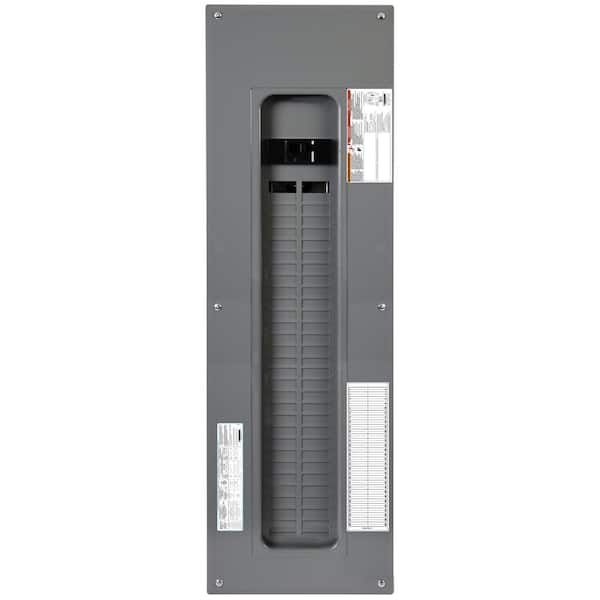
Square D Homeline 200-Amp 60-Space 60-Circuit Indoor Main Load Center
8.8/10: A dependable, expansion-friendly 200-amp load center that is well suited to larger residential upgrades, remodels, and future circuit growth.
This review contains affiliate links; we may earn a commission on qualifying purchases.
Overview
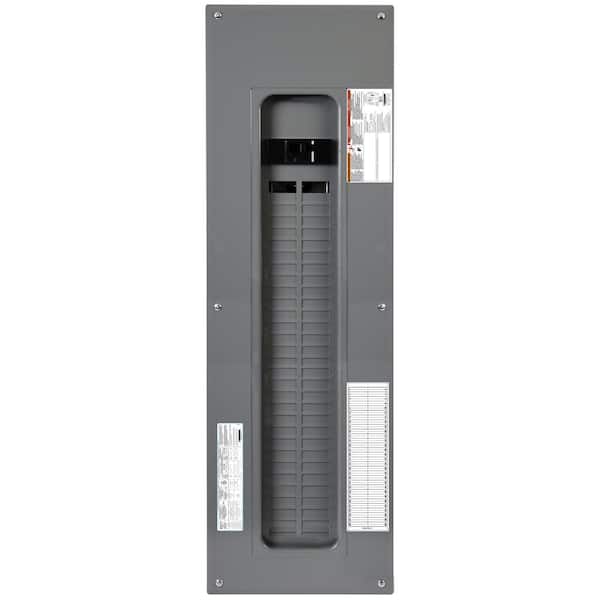
The Square D Homeline 200-Amp 60-Space 60-Circuit Indoor Main Load Center (HOM3060L200PG) is a professional-grade distribution panel designed for high-capacity residential power.
Related parts & accessories
Related parts & accessories
This 200-amp load center is specifically designed for substantial residential electrical upgrades, home remodels, and future-proofing power needs in larger homes.
In an era where the average home is integrating more high-draw electronics, advanced security systems, and electric vehicle infrastructure, the "standard" electrical panel is often the first bottleneck. With a 200-amp rating and a generous 60-space, 60-circuit layout, this unit is aimed at homeowners who need more breaker capacity than a smaller panel can comfortably provide without resorting to cluttered tandem breakers.
This load center is best suited for new construction, major renovations, service upgrades, home additions, workshops, EV charger planning, HVAC upgrades, or homes with a growing number of dedicated circuits. Its compatibility with AFCI protection via the Square D Homeline Single-Pole Plug-On Neutral AFCI Circuit Breaker 15-Amp also makes future expansion relatively straightforward for qualified installers, as the Homeline ecosystem is one of the most widely available residential breaker platforms in North America (compare our Square D vs Eaton circuit breakers comparison to see which brand fits your needs best).
Installation Note: Load centers are code-governed electrical equipment. The Square D Homeline 200-Amp 60-Space 60-Circuit Indoor Main Load Center should be selected, installed, and inspected according to local electrical code requirements by a licensed electrician or qualified professional. Handling 200-amp service involves lethal voltages and requires strict adherence to the National Electrical Code (NEC) and local utility standards.
Key Features
Provides the service capacity commonly used for modern residential electrical systems and larger home upgrades.
Offers generous room for dedicated circuits, future additions, and organized breaker placement.
Designed for interior installations such as utility rooms, garages, basements (where you might also install a high-capacity dehumidifier, Wayne ESP25 battery backup sump pump or a Ridgid SP-650C sump pump—see our Basement Watchdog BW1033 review for more options), or dedicated electrical spaces. If you are planning a basement utility area, consider our Ridgid SP-650C sump pump guide for drainage needs.
Works with compatible Square D Homeline circuit breakers, simplifying replacements and future additions.
A strong fit for homes planning additional HVAC equipment (such as a MrCool DIY mini-split installation), high-draw appliances, smart home circuits, or EV charging.
The Homeline family is widely used in residential panels, making it familiar to most contractors.
| Feature | Value |
|---|---|
| Product Name | Square D Homeline 200-Amp 60-Space 60-Circuit Indoor Main Load Center (HOM3060L200PG) |
| Model Number | HOM3060L200PG |
| Category | Circuit Breakers & Fuses |
| Panel Type | Indoor main load center |
| Rated Amperage | 200 Amps |
| Spaces / Circuits | 60 Spaces / 60 Circuits |
| Breaker Family | Square D Homeline |
| Installation Location | Indoor residential |
| Best For | Large homes, service upgrades, and planned expansion |
Pros & Cons
Pros
- High 200-amp rating is appropriate for modern whole-home electrical systems.
- Massive 60-space layout eliminates the need for complex tandem breakers.
- Ideal for EV charger planning and high-load appliance additions.
- Compatible with Square D Homeline Single-Pole Plug-On Neutral AFCI Circuit Breaker 15-Amp.
- Strong, durable indoor enclosure suitable for garages or basements.
- Reduces "breaker crowding," making troubleshooting and labeling easier.
Cons
- Overkill for small apartments or modest cottages.
- Requires mandatory professional installation; not a DIY project.
- Indoor-only rating means it cannot be used for exterior utility mounts.
- Final cost is heavily dependent on professional labor and permit fees.
- Must strictly use Homeline-compatible breakers; not interchangeable with Square D QO.
Performance and Engineering
In real-world residential use, the primary performance metric for a load center isn't "speed" or "efficiency" in the traditional sense, but rather reliability, heat management, and capacity. The Square D Homeline 200-Amp 60-Space 60-Circuit Indoor Main Load Center (HOM3060L200PG) excels in all three areas by providing a spacious internal environment.
A 200-amp panel with a large number of spaces gives an electrician significant flexibility to lay out circuits cleanly. When breakers are packed too tightly in a small 20-space or 30-space panel, heat can build up more rapidly, which in some cases can lead to nuisance tripping of sensitive AFCI (Arc-Fault Circuit Interrupter) breakers. By spreading the load across a 60-space chassis, the HOM3060L200PG allows for better thermal distribution and a much cleaner physical installation.
Modern homes are increasingly power-hungry. Between induction cooktops, modern AFCI protection, Ridgid SP-650C sump pump, and Level 2 EV chargers (which typically require 50-60 amps on their own), the "available slots" in a panel disappear quickly. The performance advantage here is "future-proofing." Instead of having to install a sub-panel in the garage three years from now, the HOM3060L200PG provides the runway needed to grow the home's electrical footprint without further structural modification to the main service.
The Homeline breaker ecosystem is also a practical advantage, especially for those who want to understand how to replace a circuit breaker safely at home in the future. Electricians are generally familiar with Square D residential panels. The snap-in installation of the breakers is secure, and the busbar construction is robust, ensuring a low-resistance connection that minimizes voltage drop and prevents overheating at the point of contact.
How it Works: The Mechanics of Distribution
To understand the value of the HOM3060L200PG, it is helpful to understand the role of a main load center. This unit acts as the "brain" of your home's electrical system. Electricity enters from the utility company through the service entrance cables, passes through a main 200-amp disconnect (the main breaker), and is then distributed via a busbar system to individual branch circuits.
The Main Breaker: The 200-amp main breaker serves as the primary safety switch for the entire house. If the total load of the home exceeds 200 amps, or if there is a catastrophic short circuit at the service entrance, this breaker trips to protect the home from fire and the utility grid from surges.
The Busbars: Inside the enclosure, two heavy-duty copper or aluminum busbars carry the power. The 60-space design means there are 60 physical slots where breakers can be clipped in. Each slot connects to these busbars, pulling power from the main source and sending it out to a specific area of the home (e.g., the kitchen, the master bedroom, or the HVAC unit).
Circuit Protection: The "circuits" are the individual breakers (if you're curious about the process, see our guide on how to replace a circuit breaker safely at home). If a toaster shorts out or a hair dryer pulls too much current, the individual breaker for that room trips, cutting power only to that specific area while the rest of the house remains illuminated. The 60-circuit capacity of the HOM3060L200PG means you can have 60 separate zones of protection, allowing for high granularity in how you manage your home's power.
Detailed Buyer's Guide: Is 60 Spaces Necessary?
Selecting the right size load center involves calculating current load and anticipating future growth. Many homeowners assume that a 30-space panel is sufficient because they only have 20 active circuits. However, this ignores the trend toward "dedicated circuits." In older electrical standards, a single 15-amp breaker might have served half of a house's bedrooms. Modern NEC codes require far more segmentation, especially with the introduction of AFCI vs Standard Circuit Breakers (see our detailed Eaton BRCAF115 review or check out the Eaton Single-Pole Combination AFCI Circuit Breaker 15-Amp) and GFCI requirements for almost every room in the home.
The "Dead Space" Advantage
Having "dead space" (unused slots) in your panel is not a waste; it is a strategic asset. When a panel is full, adding a new circuit requires the use of tandem breakers (two circuits in one slot). While these are code-compliant, they can lead to a crowded wiring gutter, making it difficult for electricians to route new wires. The HOM3060L200PG provides a massive amount of "gutter space," allowing for easier cable management and reducing the risk of wire insulation abrasion during installation.
Evaluating Amperage: 100A vs 200A
If your home currently has a 100-amp service, upgrading to the Square D Homeline 200-Amp 60-Space 60-Circuit Indoor Main Load Center (HOM3060L200PG) is a significant value-add. A 100-amp service can struggle if you are running a central air conditioner, an electric oven, and a clothes dryer simultaneously. By moving to 200 amps, you effectively double the amount of power available to the home, which is almost a prerequisite for installing a Level 2 EV charger (typically 40-60 amps) without risking a total home blackout.
Material Quality and Longevity
The enclosure of the HOM3060L200PG is constructed from galvanized steel, which provides essential corrosion resistance for indoor environments. The interior layout is designed to prevent "cable bunching," a common cause of overheating in smaller panels. The busbar connections are engineered for high clamping force, which ensures that over decades of thermal expansion and contraction, the breakers remain firmly seated and conductive.
Value for Money
Choosing a load center is a long-term decision—usually a 25-to-40-year investment. You should not choose based on price alone, but on predicted load. When evaluating the value of the Square D Homeline 200-Amp 60-Space 60-Circuit Indoor Main Load Center (HOM3060L200PG), it is important to distinguish between the "unit cost" and the "installation cost."
The unit cost of the HOM3060L200PG is competitive for its size. However, the bulk of the expense in a panel upgrade is labor. An electrician will charge roughly the same amount to install a 20-space panel as they would a 60-space panel because the labor involved—pulling the main service, grounding, and migrating circuits—remains the same. Therefore, spending a bit more on the larger chassis now prevents the massive expense of installing a sub-panel later, which would require additional wiring, a new enclosure, and another round of permits.
Who Should Buy the HOM3060L200PG?
- The "Forever Home" Owner: If you plan to live in your home for decades and are investing in long-term infrastructure and ensuring code compliance with AFCI vs standard circuit breakers and intend to add solar panels, a geothermal heat pump, or a large workshop, the 60-space capacity is a logical choice.
- EV Adopters: Electric vehicle charging is a massive load. A dedicated 50A or 60A circuit is required. Having a panel with 60 spaces ensures that adding a charger doesn't mean removing a circuit from somewhere else.
- High-End Remodelers: When converting a basement into a living suite or adding a second story, the number of required AFCI breakers skyrockets due to modern building codes. This panel accommodates those requirements easily.
- Contractors in New Construction: Providing a 60-space panel in a new build adds significant resale value and flexibility for the future homeowner.
When to Choose a Smaller Panel: If you are managing a small condo, a tiny home, or a simple rental property with no plans for expansion, a 200-amp panel with only 20 or 30 spaces may be sufficient. However, the price difference between a 30-space and a 60-space panel is often negligible compared to the cost of the electrician's labor. If your budget allows, the "overhead" of a larger panel is almost always a better investment.
Setup and Installation Process
While we reiterate that this is a professional-only installation, understanding the process helps a homeowner manage the project and verify that the work is being done correctly. The process for installing the Square D Homeline 200-Amp 60-Space 60-Circuit Indoor Main Load Center (HOM3060L200PG) generally follows these critical phases:
1. Load Calculation
Before the HOM3060L200PG is installed, a licensed electrician performs a load calculation. This involves totaling the square footage of the home and the anticipated wattage of all major appliances to ensure 200 amps is the correct service size. They will look at "fixed loads" (like the HVAC and water heater) and "general loads" (lighting and outlets) to determine if the service entrance cables can handle the increased capacity.
2. Permitting and Coordination
The electrician coordinates with the local utility company to schedule a