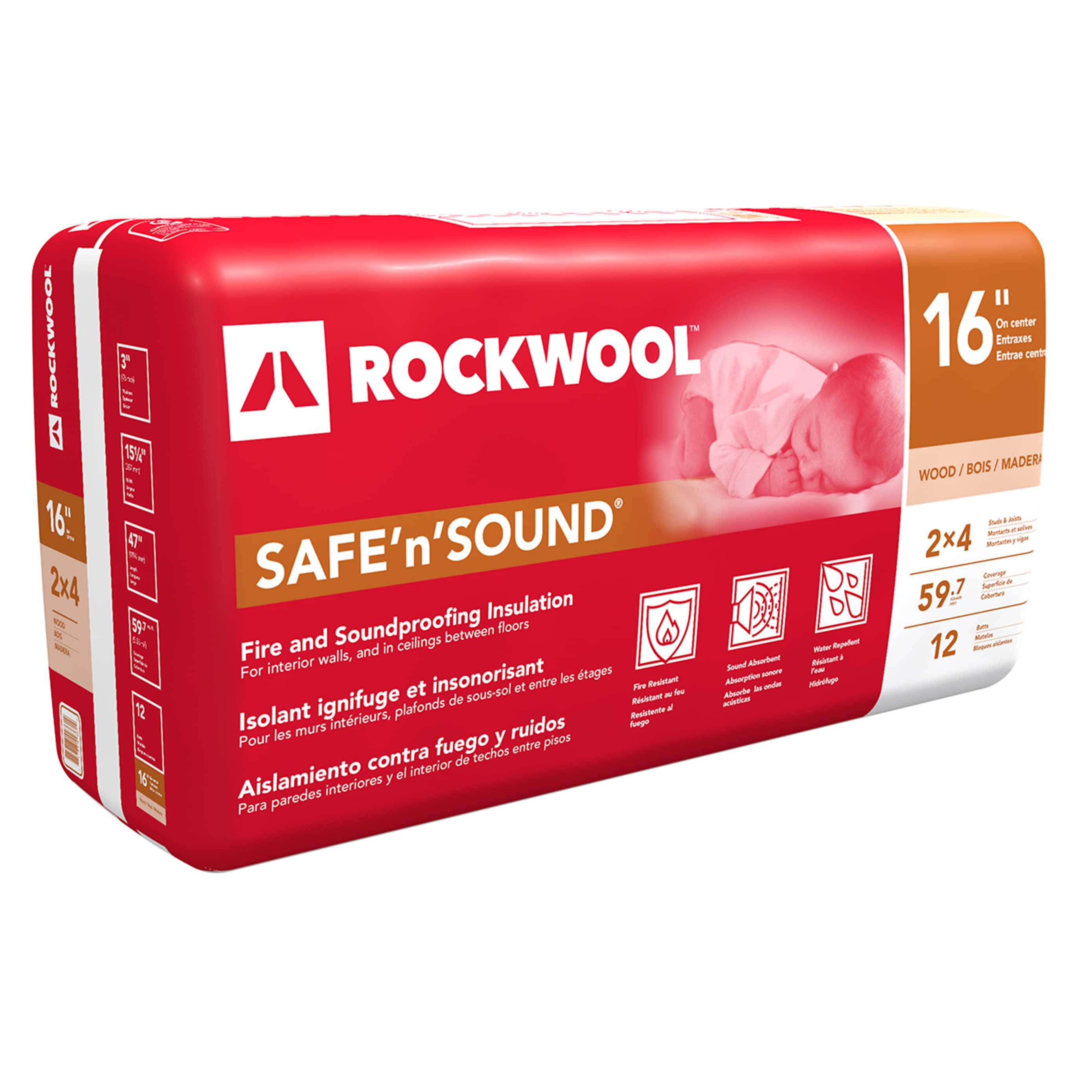
If you are researching the best materials for soundproofing interior walls in a home theater, bedroom, or high-end home office, Rockwool Safe 'n' Sound Acoustic Insulation is the industry-leading choice for high-performance noise reduction. Whether you are building a dedicated media room or simply upgrading a nursery, selecting the right materials is critical for long-term peace and quiet. As a high-density stone wool acoustic insulation, it is specifically engineered to block airborne noise and structure-borne vibrations. Engineered specifically for interior sound control, this Rockwool Safe 'n' Sound Acoustic Insulation is the professional choice for homeowners prioritizing maximum noise reduction, fire resistance, and long-term durability (see our Rockwool Safe 'n' Sound performance review). For those building high-end media rooms, pairing sound-damping walls with a Panasonic WhisperGreen Select FV-08VKS3 ventilation system (or exploring other high-performance ventilation options) (see our detailed performance review) is key to maintaining a silent environment (see our Panasonic WhisperGreen Select guide for quiet ventilation). To further improve air quality in these enclosed spaces, consider upgrading to a high-efficiency furnace air filter to maintain air quality in enclosed media rooms.
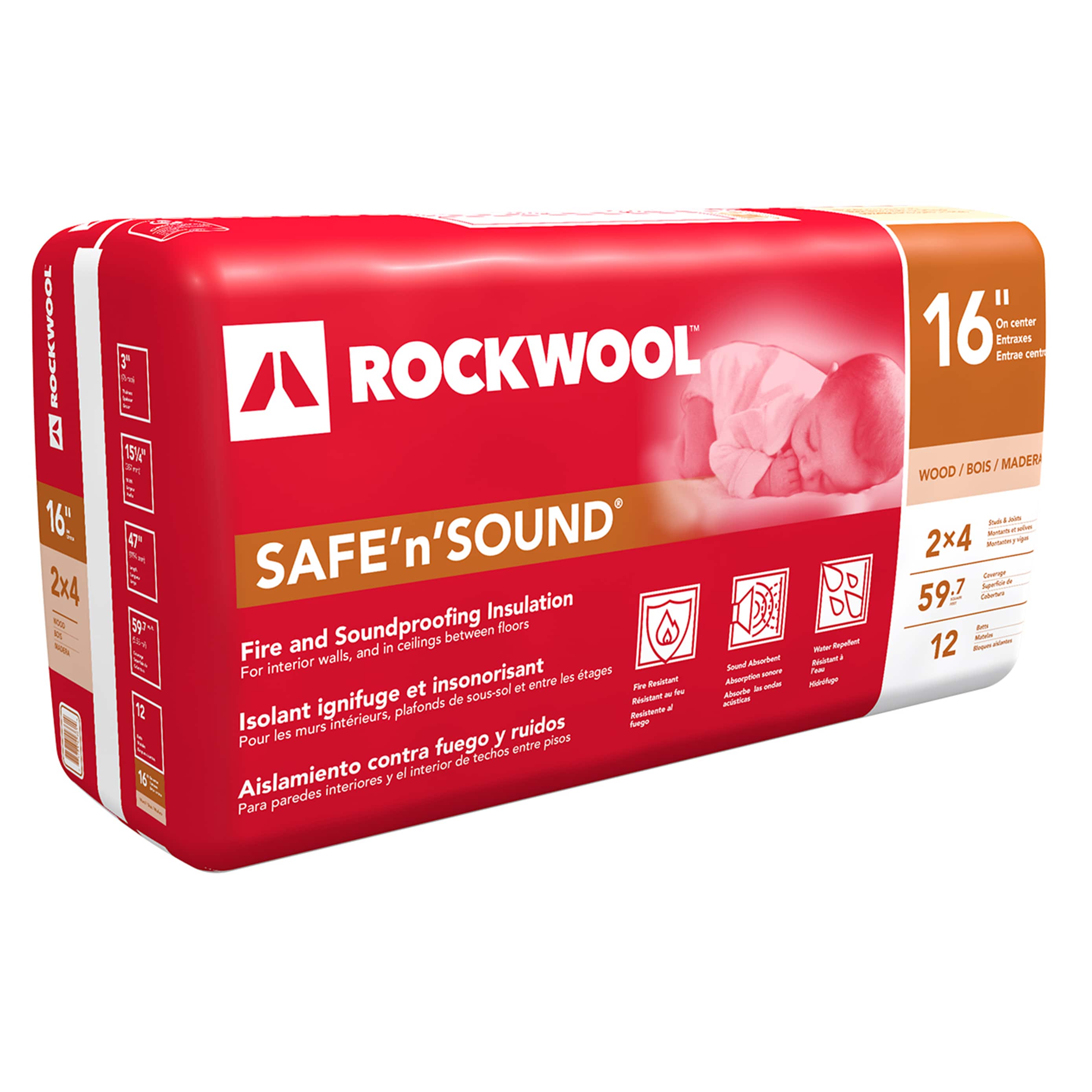
Best Overall Acoustic Insulation: Rockwool Safe 'n' Sound Acoustic Insulation
Score: 9.2/10. A professional-grade choice for interior walls and ceilings, Rockwool Safe 'n' Sound combines dense stone wool construction with fire, moisture, and mold resistance, making it the gold standard for media rooms and home offices.
Rockwool Safe 'n' Sound Acoustic Insulation
Rockwool Safe 'n' Sound Acoustic Insulation is a professional-grade stone wool batt designed specifically for interior noise control.
If you are looking for a detailed performance breakdown, check out our Rockwool Safe 'n' Sound review to see how it performs in real-world testing. Unlike general-purpose fiberglass insulation that focuses mainly on temperature management (R-value), this product is engineered for wall and ceiling cavities where reducing sound transmission between rooms is the primary objective. By utilizing the unique properties of stone wool, it transforms a hollow wall cavity from a "drum" that amplifies sound into a dampened barrier that absorbs energy.The key appeal of this system is its dense, sound-absorbing structure.
This system is specifically engineered to maximize sound absorption by disrupting airborne noise waves.
When installed in standard wood-frame cavities, Rockwool Safe 'n' Sound can help improve wall assembly performance with an STC (Sound Transmission Class) rating improvement of up to 45, making it a practical upgrade for home theaters, bedrooms, and home offices.
Beyond acoustics, the material provides significant safety and durability advantages. Because it is made from volcanic rock (basalt), stone wool is naturally resistant to fire, moisture, and mold. This makes it an ideal fit for long-term interior use, particularly in finished basements. To ensure these spaces remain dry and quiet (see our guide on managing wet basements with the right sump pump), we recommend reviewing our Ridgid SP-650C sump pump buying guide. For total water management, consider pairing your insulation with a Basement Watchdog BW1033 system or exploring our Basement Watchdog buying guide for additional flood protection. For homeowners who want a quieter room without adding bulky, unsightly surface-mounted acoustic foam panels, installing these batts inside open wall or ceiling cavities is a cleaner, integrated, and more permanent solution.
This product is best suited for projects where the framing is exposed—such as during major renovations, basement finishing, new construction, or room conversions—especially if you are installing a MrCool DIY mini-split system (or comparing top mini-split brands for small rooms) for climate control. It is important to note that because this is an internal wall product, installation usually requires opening the wall or ceiling cavity. Buyers should plan their project timeline around drywall removal, labor, and additional soundproofing details such as acoustic sealant to maximize the performance of the insulation. (If you are finishing a basement, ensure your moisture management is handled first with a reliable sump pump system).
Pros
- Purpose-built for reducing sound transmission through interior walls and ceilings
- Strong fit for home theaters, bedrooms, offices, and other quiet-room projects
- Stone wool construction resists fire, moisture, and mold
- Can improve STC performance up to 45 in standard wood-frame cavities
- Installs inside framing for a clean, hidden acoustic upgrade
Cons
- Best installed when wall or ceiling cavities are open
- Not a complete soundproofing solution by itself if gaps or doors leak noise
- May require significant drywall removal in finished rooms
- Performance depends on the full wall assembly, not just the batt
Disclosure: This buying guide is supported by affiliate links. When you purchase through these links, we may earn a commission at no extra cost to you.
| Specification | Rockwool Safe 'n' Sound Acoustic Insulation |
|---|---|
| Model number | ROCKWOOL-SNS-3016 |
| Category | Acoustic & Insulation Systems |
| Material type | Stone wool batt insulation |
| Primary use | Interior walls and ceilings for sound reduction |
| Best applications | Home theaters, bedrooms, home offices, shared walls, finished basements |
| Sound performance | Up to 45 STC improvement in standard wood-frame cavities |
| Resistance features | Fire, moisture, and mold resistant |
Understanding the Science: How Stone Wool Works for Sound
To understand why Rockwool Safe 'n' Sound is preferred over traditional fiberglass, one must look at the physics of sound transmission. Sound travels in two primary ways through walls: airborne noise (voices, music, TV) and structure-borne noise (footsteps, slamming doors, vibrating pipes). Standard fiberglass insulation is lightweight and airy; while it is great for stopping heat transfer, it often lacks the density required to effectively stop low-frequency sound waves.
The Rockwool Safe 'n' Sound Acoustic Insulation utilizes high-density stone wool to disrupt sound waves (see our detailed performance review). If you are tackling noise in a utility room (where you might be upgrading your furnace control boards for better efficiency) or attic, pairing this with a quiet ventilation system like the Panasonic WhisperGreen, can help maintain a clean, silent environment.
The Rockwool Safe 'n' Sound Acoustic Insulation is manufactured by melting basalt rock at extremely high temperatures and spinning it into fibers. These fibers create a dense, interwoven matrix. When sound waves enter a wall cavity filled with stone wool, the density of the material causes the sound waves to encounter more resistance. The energy of the sound wave is converted into a small amount of heat through friction as it vibrates the stone fibers, effectively "soaking up" the noise before it can hit the opposite side of the wall. This mechanical damping is why Rockwool Safe 'n' Sound Acoustic Insulation is preferred for high-traffic shared walls.
Pro Tip: For maximum sound reduction, combine stone wool with "decoupling" techniques, such as using resilient channels or sound-dampening drywall (like QuietRock). This prevents the wall studs from acting as a bridge that carries vibrations directly from one room to another.
Furthermore, the "Safe 'n' Sound" line is specifically tuned for the dimensions of standard residential framing. Because the batts are designed to fit snugly between studs without being overly compressed, they maintain their structural integrity and acoustic properties. Over-compressing insulation can actually reduce its effectiveness by removing the air pockets that help trap sound.
Unlike acoustic foam, which is used to treat the "echo" inside a room, stone wool treats the "leakage" between rooms. If you have a room that sounds "boomy" or "hollow," you need acoustic panels. However, if you can hear your neighbor's television through the wall, you need an internal cavity solution like Rockwool. The high density of basalt fibers makes it far more effective at absorbing the mid-to-low frequency ranges that typically penetrate thin drywall.
The Comprehensive Buyer's Guide to Acoustic Insulation
When choosing insulation for sound control, homeowners often confuse "soundproofing" with "sound absorbing." Soundproofing (blocking) is about adding mass to stop sound from entering or leaving a room. Sound absorbing (damping) is about reducing the echo and reverberation inside a room or within a wall cavity. Rockwool Safe 'n' Sound is a damping product that fills the void to prevent the "echo chamber" effect within walls.
Evaluating Material Types
There are three primary materials used in residential acoustic treatments: Fiberglass, Mineral Wool (Stone Wool), and Cellulose. Fiberglass is the most common and cheapest, but it is less dense and can sag over time. Cellulose is made from recycled paper and is blown in; while dense, it can be prone to settling, leaving gaps at the top of the wall where sound can leak through.
For homeowners prioritizing a balance of density and fire safety, Rockwool Safe 'n' Sound Acoustic Insulation is widely considered the gold standard for residential sound damping because of its consistent density and structural stability.
The primary differentiator is "density." In the world of acoustics, density equals performance. By providing a more rigid and packed fiber structure, stone wool creates a more formidable barrier for sound waves. Additionally, stone wool does not lose its shape. While fiberglass can slump over a decade, leaving a gap at the top of the wall (an "acoustic leak"), stone wool maintains its friction fit against the plates and studs.
Calculating Your Needs
To determine how much material you need, calculate the total square footage of the walls and ceilings you intend to insulate. Measure the height and width of each wall section and multiply them. However, remember that acoustic insulation is sold by the "batt" or bale. Always buy 10% more than your exact measurement to account for cuts, waste, and filling in small gaps around plumbing pipes and electrical boxes (while upgrading your electrical safety, see our guide on choosing between AFCI and standard circuit breakers and follow our guide on replacing circuit breakers safely or explore the best 20-amp circuit breakers if you are accessing your home electrical panel).
Warning: Do not use interior acoustic batts in exterior walls intended for high thermal R-value requirements without checking local building codes. Safe 'n' Sound is optimized for sound, not for the highest possible thermal resistance (R-value) required in extreme climates.
Analyzing STC Ratings
The Sound Transmission Class (STC) is a numerical value that indicates how well a building partition attenuates airborne sound. A higher STC means better sound blocking. A standard 4-inch stud wall with just drywall typically has a low STC. By adding Rockwool Safe 'n' Sound, you are filling the air gap that otherwise allows sound to bounce.
It is crucial to understand that the STC rating listed for a product often refers to the material's contribution to a system, not the absolute silence it provides. To achieve a high STC, you need a complete system: insulation in the cavity, high-density drywall on the surface, and airtight seals around the edges. Rockwool provides the critical "filling" that prevents the wall from acting like a speaker box.
Step-by-Step Installation Guide
Installing Rockwool Safe 'n' Sound is a straightforward process, but precision is required to ensure there are no "acoustic leaks." Sound is like water; it will find the smallest hole and pour through it.
1. Preparation and Safety
Before handling stone wool, equip yourself with the proper Personal Protective Equipment (PPE). While stone wool is safer than some older materials, the fibers can be irritating to the skin and lungs. Wear a N95 dust mask, safety goggles, and long sleeves. Ensure the work area is well-ventilated. Have your cutting tools ready: a sharp serrated knife or a dedicated insulation knife is essential for clean cuts.
2. Measuring the Cavity
Measure the distance between your studs (usually 16 inches or 24 inches on center). Rockwool batts are designed to be a "friction fit," meaning they should be slightly wider than the cavity so they stay in place without needing staples or adhesives. If the batt is too loose, it will slump; if it is too tight, you will compress the fibers and lose sound-dampening efficiency. Always measure the actual gap, as studs can sometimes be slightly bowed.
3. Cutting the Batts
Use a sharp serrated knife. Cut the batts to the exact height of the wall cavity. When cutting around electrical outlets or plumbing pipes (such as Uponor AquaPEX piping), cut the material precisely around the object rather than crushing the insulation behind the electrical box. This ensures that the sound-absorbing material is present right up to the edge of the gap. Avoid "over-stuffing" the box, which can put pressure on electrical wires.