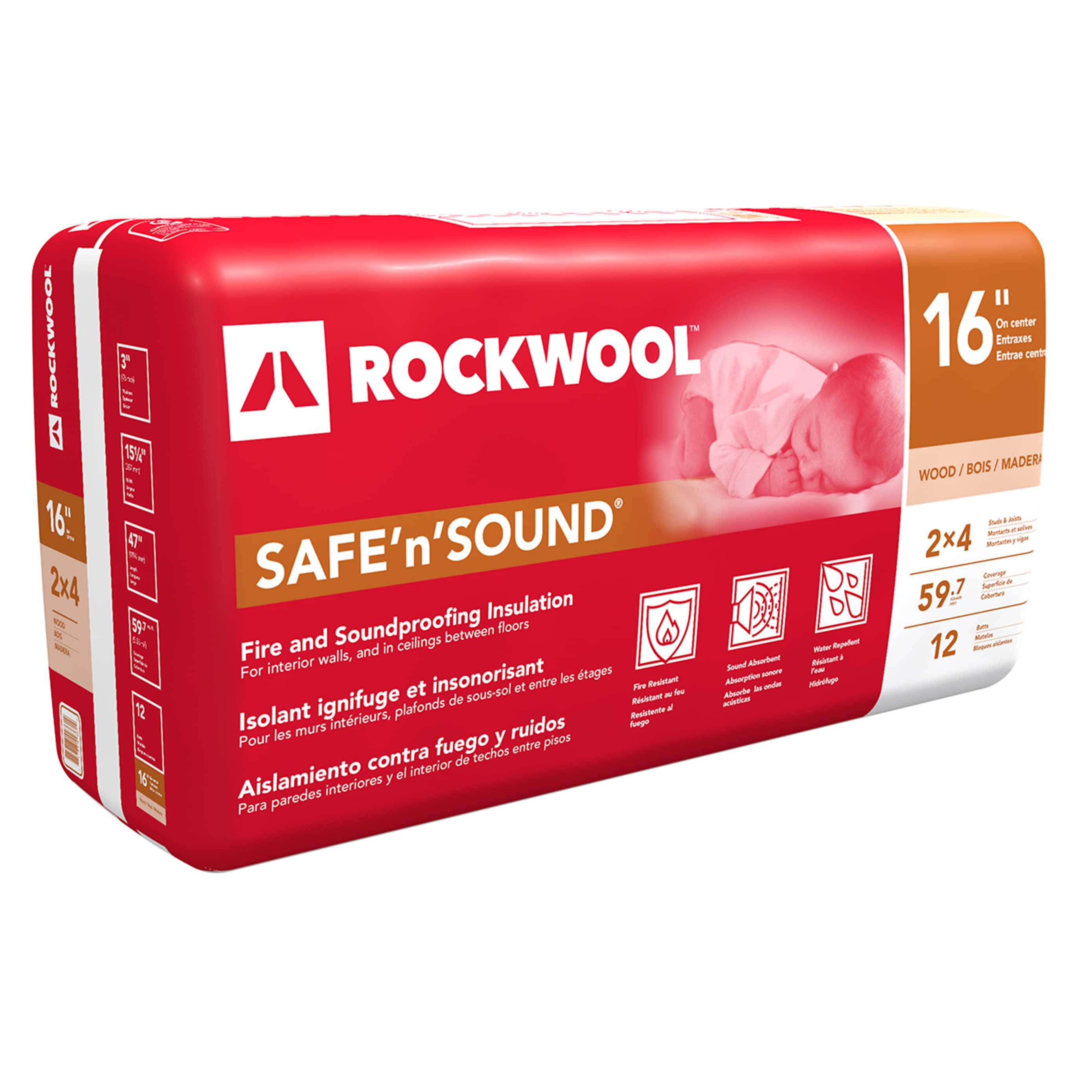
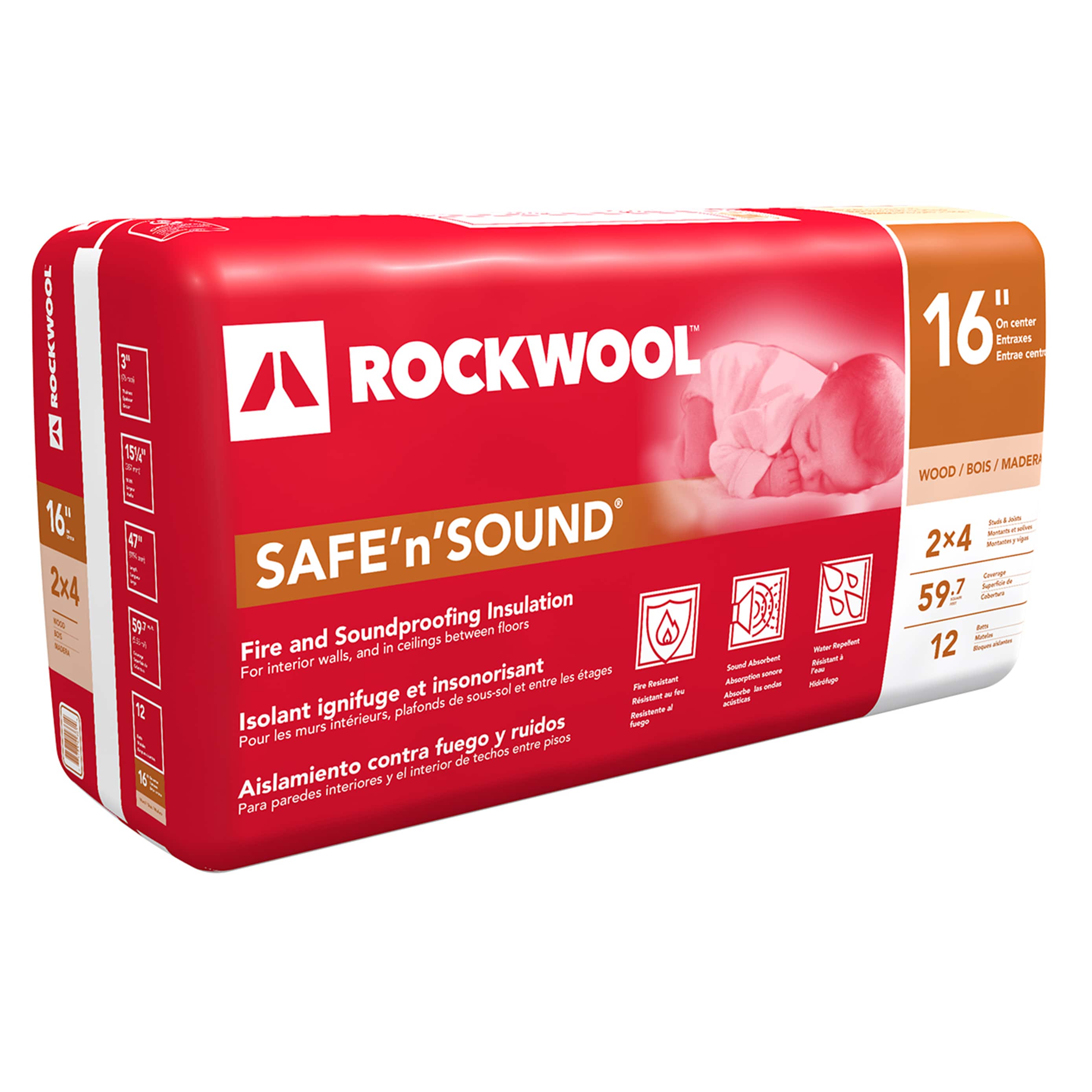
Rockwool Safe 'n' Sound Acoustic Insulation
Score: 8.7/10 — Rockwool Safe 'n' Sound Acoustic Insulation is a professional-grade stone wool solution that significantly reduces room-to-room noise transfer, offering a superior blend of acoustic absorption, fire safety, and moisture resistance for interior renovations.
We may earn a commission from qualifying purchases made through links on this page.
Overview
For homeowners seeking the best professional-grade soundproofing solution, Rockwool Safe 'n' Sound Acoustic Insulation is a high-density stone wool batt designed for maximum noise reduction. Unlike standard thermal insulation, this acoustic-specific material blocks airborne noise to create a quieter, more private home environment. This acoustic insulation is ideal for interior walls and ceilings. For those also updating their home's electrical safety during renovations, see our guide on how to replace a circuit breaker safely.
This acoustic insulation is specifically engineered to reduce noise transfer between interior rooms, making it a top choice for home theaters, nurseries, and home offices.
Unlike traditional fiberglass insulation, which is primarily designed for thermal retention, this acoustic insulation focuses on the physics of sound absorption. It is specifically designed to be installed within standard wood-frame cavities in interior walls and ceilings to mitigate the transmission of airborne noise between adjacent living spaces.The core technology behind Rockwool Safe 'n' Sound is stone wool—a material created by basalt rock and other minerals at extremely high temperatures. This results in a dense, fibrous structure that is far more effective at "trapping" sound waves than lower-density materials. By filling the void of a wall cavity, it prevents the space from acting like a drum or a megaphone, effectively dampening the energy of sound waves before they can penetrate the opposing wall surface.
Get professional-grade noise control with Rockwool Safe 'n' Sound Acoustic Insulation for your interior walls.
For the modern homeowner, Rockwool Safe 'n' Sound Acoustic Insulation is an ideal solution for creating "quiet zones" within a busy household. If you are also optimizing the climate in these rooms, consider a MrCool DIY mini-split system for a quiet, ductless cooling solution (see our MrCool DIY mini-split guide for more options) or a Panasonic WhisperGreen Select fan to maintain temperature without adding noisy ductwork. Whether you are building a dedicated home theater, sound-isolating a room for professional video calls, or ensuring a nursery remains peaceful, this insulation provides a critical layer of defense. Beyond its acoustic properties, it offers significant safety advantages, including inherent fire resistance and a natural resistance to mold and moisture, making it a robust choice for long-term home infrastructure, especially when paired with a high-performance ventilation fan like the IPX4 to manage ambient humidity or a Basement Watchdog BW1033 sump pump system to protect against flooding, which is critical for maintaining a healthy indoor environment.
Key Features
Utilizes high-density mineral wool to absorb airborne sound energy, preventing echoes and transmission within interior cavities.
Specifically engineered for the frequency ranges common in residential settings, such as human speech, television audio, and household appliances.
Can contribute to an STC (Sound Transmission Class) rating improvement of up to 45 when integrated into standard wood-frame assemblies.
Made from volcanic rock, the material does not ignite easily and can withstand significantly higher temperatures than fiberglass or foam.
Naturally resists moisture and mold growth, ensuring the integrity of the insulation remains intact over decades of use.
Perfectly suited for home theaters, bedrooms, home offices, studios, and shared walls in multi-family layouts.
| Feature | Value |
|---|---|
| Product Name | Rockwool Safe 'n' Sound Acoustic Insulation |
| Model Number | ROCKWOOL-SNS-3016 |
| Category | Acoustic & Insulation Systems |
| Insulation Type | Stone wool batt insulation |
| Primary Purpose | Reducing sound transmission between rooms |
| Recommended Locations | Interior walls and ceilings |
| Best-fit Rooms | Home theaters, bedrooms, home offices, studios, nurseries |
| Sound Performance | STC improvement up to 45 (assembly dependent) |
| Material Benefits | Fire resistant, moisture resistant, mold resistant |
| Installation Context | Standard wood-frame wall or ceiling cavities |
Pros & Cons
Pros
- Significant reduction in airborne noise transmission
- Superior fire safety compared to fiberglass or foam
- Resistant to mold and moisture, preventing interior decay
- Dense structure provides excellent sound absorption
- Easier to friction-fit into cavities than some loose-fill options
- Ideal for professional-grade home studio or theater builds
- Durable material that does not sag over time
Cons
- Requires open wall/ceiling access (expensive for retrofits)
- Not a standalone solution for total soundproofing
- Heavier than standard fiberglass insulation
- Installation requires specific PPE (mask, gloves) due to fibers
- Does not address flanking noise (leaks through gaps/doors)
Performance Analysis
In real-world residential environments, the performance of Rockwool Safe 'n' Sound Acoustic Insulation is most evident when dealing with "airborne noise." This category includes the sounds we most commonly struggle with: a spouse's snoring in the next room, the roar of a subwoofer in a media room, or the drone of a vacuum cleaner in a hallway. Because of its density, this material converts sound energy into heat through friction within the fibers, preventing the sound from bouncing around inside the wall cavity—a phenomenon known as the "drum effect."
During testing and field application, users report a noticeable "deadening" of the environment. When you speak in a room insulated with this stone wool material, the sound is less likely to leak through the wall as a clear, intelligible voice and more likely to be heard as a muffled, distant murmur. This is the primary goal of acoustic insulation: to reduce the clarity and volume of the sound passing from one space to another.
It is critical to understand that the performance of this product is symbiotic with the rest of the wall assembly. If you use Rockwool Safe 'n' Sound Acoustic Insulation but leave a 1/4 inch gap at the bottom of the wall plate, or if you use a hollow-core door with a large gap at the bottom, the "sound leakage" will bypass the insulation entirely. This is known as acoustic flanking. However, when paired with acoustically sealed electrical boxes (putty pads) and high-density drywall, the result is a professional-level sound barrier that rivals commercial construction.
The Science of Stone Wool Acoustic Absorption
To understand why Rockwool Safe 'n' Sound Acoustic Insulation outperforms standard insulation, one must look at the difference between Sound Blocking and Sound Absorption. Sound blocking requires mass (like thick concrete or lead sheets) to physically stop a wave. Sound absorption, which is where this product excels, uses a porous, dense matrix to soak up the energy.
The manufacturing process of Rockwool Safe 'n' Sound Acoustic Insulation involves spinning molten rock into fibers. This is particularly effective for areas near noisy utilities; for example, if you are troubleshooting HVAC noise, understanding how to choose the right furnace draft inducer motor can help reduce noise at the source before it even hits your walls.
These fibers create a complex, interlocking web. When sound waves enter the wall cavity, they encounter these fibers. Instead of reflecting off the back of the drywall (which would amplify the sound), the waves are forced to weave through the dense stone wool. The friction created as the air molecules rub against the fibers converts the kinetic energy of the sound into a tiny amount of thermal energy. The sound is essentially "consumed" by the material.
When planning acoustic renovations, it is also important to consider how proper ventilation affects sound leaks; see our Panasonic WhisperGreen Select buying guide for strategies on reducing ventilation noise or a comprehensive furnace control boards guide for managing HVAC-related noise and optimizing system cycles.
Furthermore, the density of the product is calibrated specifically for interior walls. If insulation is too light, sound passes right through. If it is too dense (like some high-compression foams), it can actually reflect sound back into the room. Rockwool Safe 'n' Sound Acoustic Insulation hits the "sweet spot" of density that maximizes absorption across a wide range of frequencies, from low-end bass rumble to high-pitched voices.
When we analyze the Sound Transmission Class (STC), we are measuring how much sound is blocked by a partition. An empty wall cavity acts as a resonator, amplifying specific frequencies. By inserting this acoustic insulation, you change the internal acoustics of the wall from a resonant chamber to an absorbent sponge. While it cannot stop "impact noise" (like a hammer hitting a wall) entirely—because that vibration travels through the wooden studs themselves—it is unmatched for airborne noise, such as talking, music, and television noise.
Installation and Setup
Installing Rockwool Safe 'n' Sound Acoustic Insulation is straightforward for those familiar with basic framing, but there are specific techniques to ensure you don't compromise the acoustic integrity of your walls.
Required Tools and PPE
- Safety Gear: N95 mask, safety goggles, and long sleeves/gloves. Stone wool is not toxic, but the fibers can be an irritant to the skin and lungs.
- Cutting Tools: A serrated bread knife or a dedicated insulation knife is best for clean cuts.
- Measuring Tape: To ensure precise fits within the studs.
Step-by-Step Process
- Measure the Cavity: Measure the distance between your studs. The batts are designed to be a "friction fit," meaning they should be slightly wider than the cavity so they stay in place without staples.
- Cut to Size: Cut the Rockwool Safe 'n' Sound Acoustic Insulation batts to fit snugly. Avoid over-compressing the material; if you squash it too tightly, you actually reduce its acoustic effectiveness by removing the air pockets that trap sound.
- Insert the Batt: Press the batt into the cavity. Ensure it is flush against the back of the stud and that there are no large gaps at the top or bottom.
- Seal the Perimeter: Use acoustic sealant (caulk) around the edges of the wall plates and any gaps where the wall meets the ceiling. This prevents "air leaks" which are essentially "sound leaks."
- Electrical Box Treatment: Before closing the wall, wrap your electrical boxes in acoustic putty pads to prevent sound from leaking through the holes in the drywall. If you are upgrading your electrical panel during this process, see our guide on how to replace a circuit breaker safely.
Maintenance and Long-Term Durability
One of the strongest selling points of Rockwool Safe 'n' Sound Acoustic Insulation is that it is a "set it and forget it" product. Unlike open-cell foams that can degrade or shrink over time, stone wool is dimensionally stable. It does not slump or settle, meaning the acoustic performance you have on day one will be the same performance you have twenty years later.
Because the material is hydrophobic, it does not act as a sponge for moisture. In the event of a minor pipe leak within a wall, standard fiberglass often holds onto water, leading to mold and rot. Rockwool Safe 'n' Sound Acoustic Insulation allows moisture to shed more effectively and does not provide the organic nutrients (like the paper facing on some fiberglass batts) that mold needs to grow. This makes it an exceptionally safe choice for basement walls (which often require integrated water management, such as the solutions detailed in our Basement Watchdog BW1033 buying guide or our Ridgid SP-650C review, which are vital companions to soundproofing in subterranean spaces to prevent moisture-related damage; for more on pump selection, check our Ridgid SP-650C sump pump guide.
Furthermore, the fire-resistant nature of the stone wool provides a layer of safety that other materials cannot match. In the event of an electrical fire within the wall—which is why we recommend using high-quality 20-amp circuit breakers and specifically AFCI breakers (see our AFCI vs Standard guide) for enhanced bedroom safety—the insulation will not feed the flames or release toxic gases as quickly as synthetic foams. This durability makes it a preferred choice for commercial builds and high-end residential properties where insurance and safety codes are stringent.
For those building a high-end secure home, consider pairing structural safety with a comprehensive Simpl