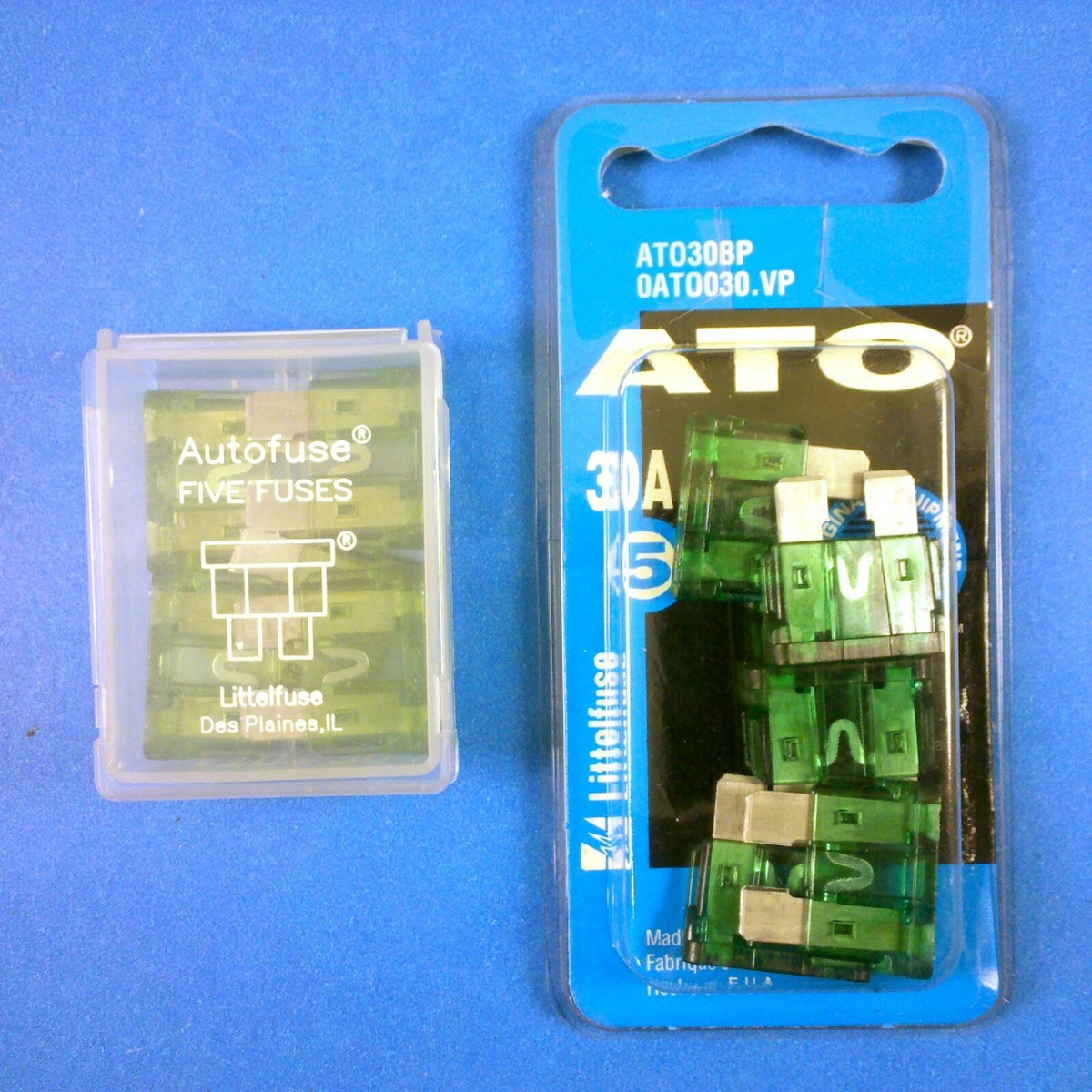
When choosing the right circuit protection, having the correct fuse on hand can be the difference between a five-minute fix and a day-long project. The Littelfuse ATO 5-30 Amp Blade Fuse Assortment Pack (model 00940400Z)—which we analyze in detail in our Littelfuse (00940400Z) review is a must-have for any vehicle owner, providing a comprehensive range of essential circuit protection for automotive, marine, and 12-volt DC applications, ensuring you aren't left stranded by a simple blown fuse. For those managing sump pump battery backup systems, these fuses are essential for maintaining critical home power.
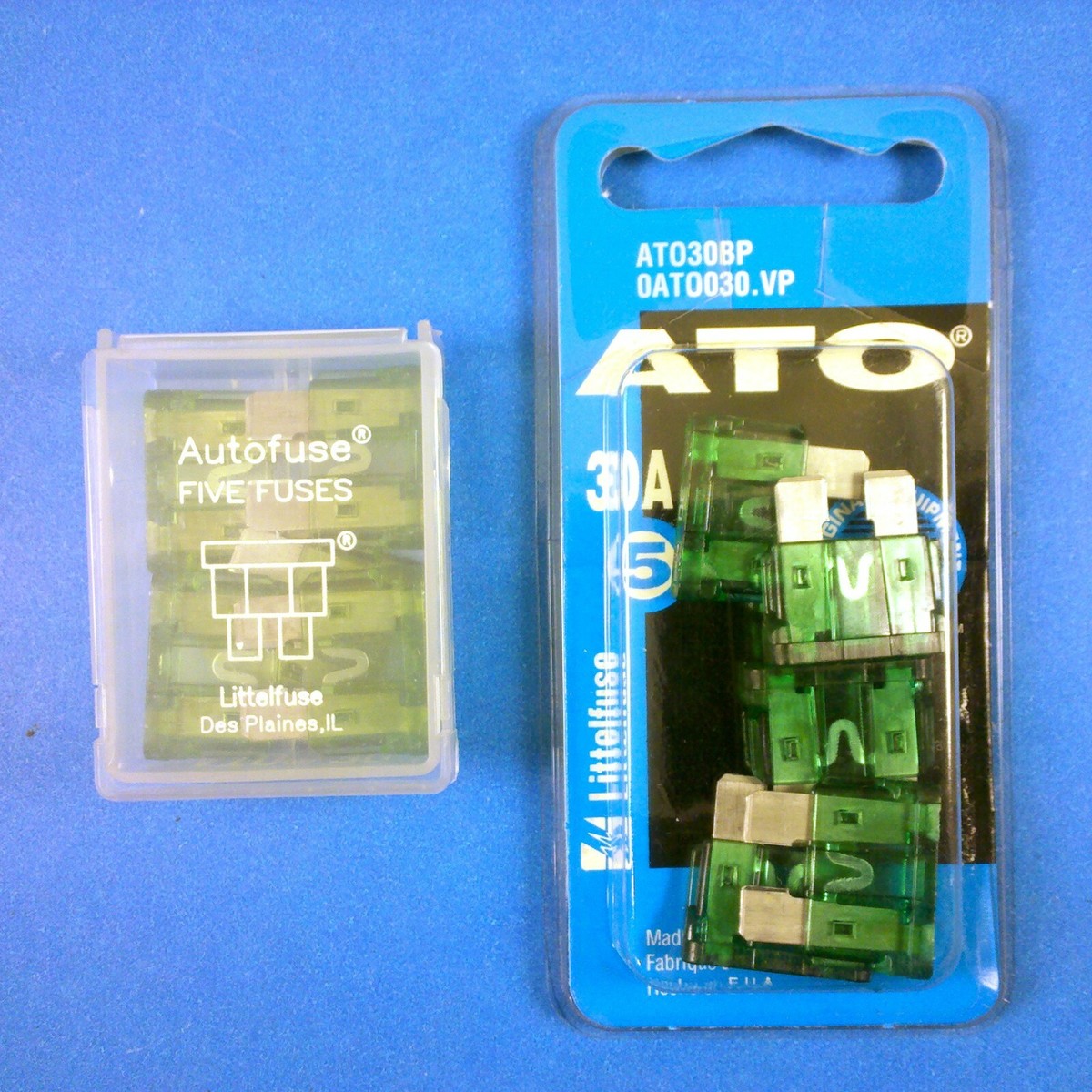
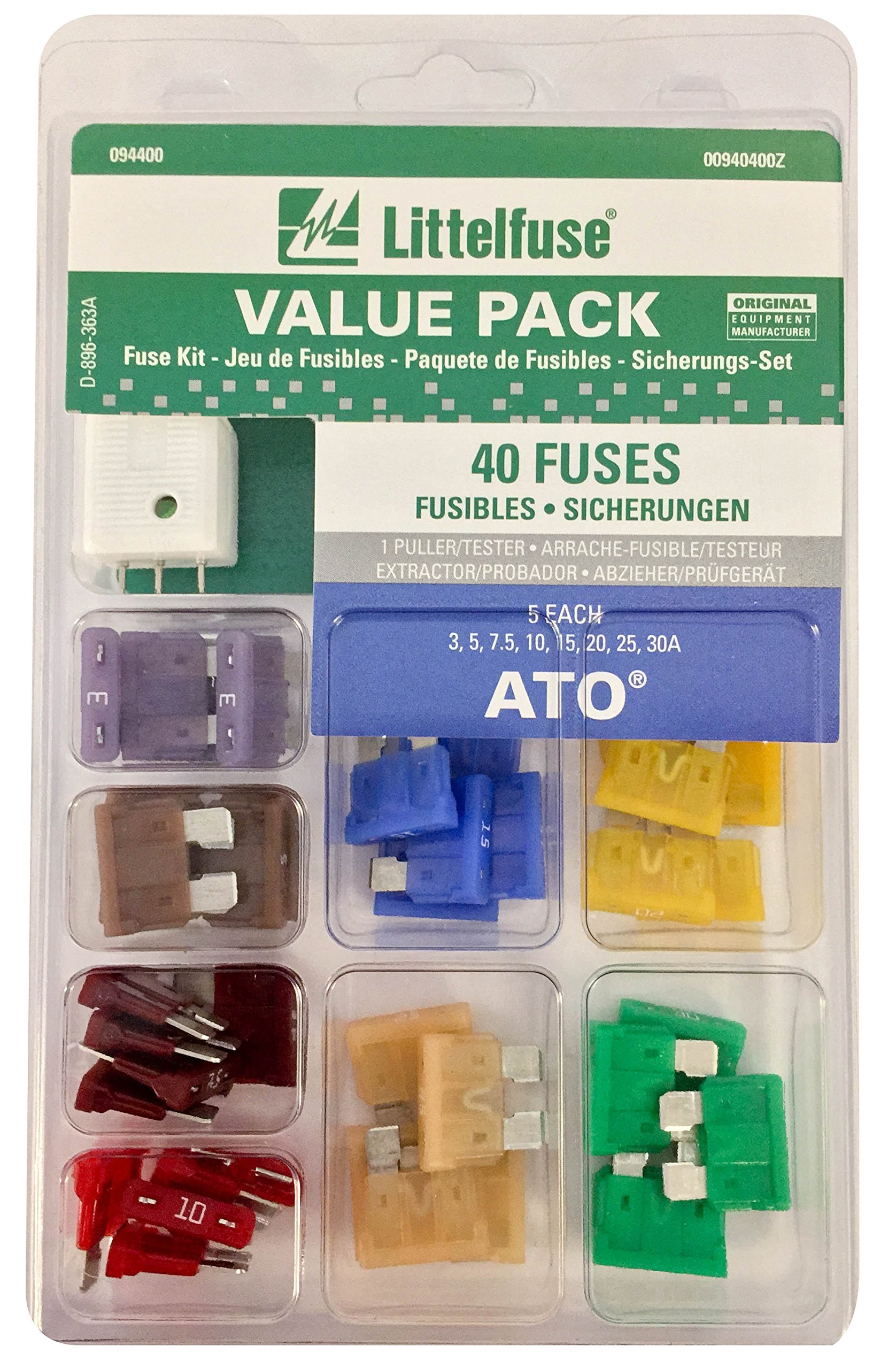
Best Overall: Littelfuse ATO 5-30 Amp Blade Fuse Assortment Pack
A reliable, versatile ATO blade fuse assortment for garages, vehicles, marine gear, and 12-volt electrical systems where multiple common amperage ratings are useful to keep on hand.
Littelfuse ATO 5-30 Amp Blade Fuse Assortment Pack
The Littelfuse ATO 5-30 Amp Blade Fuse Assortment Pack is designed for anyone who regularly deals with automotive-style electrical protection.
Instead of buying individual fuses one rating at a time, this assortment gives you a practical spread of common amperages from 5 to 30 amps. That makes it especially useful for home garages, workshops, vehicle emergency kits, and general 12-volt troubleshooting. By consolidating the most frequent replacements into a single pack, Littelfuse removes the guesswork and the need for multiple trips to the hardware store.Littelfuse is a global leader in circuit protection, and when it comes to safety components, brand reputation matters. A fuse is not merely a convenience item; it is a critical safety device designed to be the "weakest link" in an electrical circuit. Its primary purpose is to open the circuit (blow) when current exceeds a specific rated level, preventing the wiring from overheating and potentially starting a fire. For home AC circuits, understanding AFCI vs standard circuit breakers is helpful; for example, using an Eaton Single-Pole Combination AFCI Circuit Breaker (15-Amp) provides similar high-level protection against arc faults. Using a high-quality, correctly rated replacement like those found in the 00940400Z kit (comparable to using the Blue Sea Systems Marine Thermal Circuit Breaker for DC Applications (see our full review) for heavy-duty DC lines) helps ensure that your vehicle's wiring and expensive electronic accessories remain protected from catastrophic overcurrent events.
This pack is specifically tailored for users who require standard ATO-style blade fuses. ATO fuses are the ubiquitous standard for many older vehicles, trailers, marine equipment, and custom 12-volt auxiliary systems. However, it is vital to verify compatibility before installation. You can typically confirm the required fuse type by checking the fuse panel cover, the owner's manual, or by physically removing the blown fuse and comparing its dimensions to the ATO standard. The physical blade style and the amperage rating must match the original equipment specifications exactly to maintain safety standards. For those working on home panels, refer to our guide on how to replace a circuit breaker safely.
The most significant advantage of this assortment is operational readiness. For DIY mechanics maintaining a fleet of older vehicles (or homeowners managing sump pump systems and reviewing Ridgid SP-650C sump pump performance (or check our Ridgid SP-650C buying guide) and emergency power systems (see our Basement Watchdog guide) or enthusiasts adding new accessories—for those adding custom circuits, the Blue Sea Systems 6-Circuit ST Blade Fuse Block with Cover (see our full review of the Blue Sea Systems 5025) is an ideal pairing for this fuse assortment
Related parts & accessories
| Specification | Detail |
|---|---|
| Model Number | 00940400Z |
| Fuse Type | ATO (Standard Blade) |
| Amperage Range | 5A to 30A |
| Application | 12V DC Automotive, Marine, Industrial |
| Manufacturer | Littelfuse |
Pros
- Comprehensive 5 to 30 amp range covering most common 12V needs
- Ideal for emergency vehicle kits and home workshop organization
- Manufactured by Littelfuse, ensuring strict adherence to safety standards
- Cost-effective alternative to buying individual fuse packs
- Standard ATO format fits a wide variety of compatible fuse blocks
Cons
- Strictly for ATO-style sockets; incompatible with Mini or Micro fuses
- Does not diagnose the cause of the electrical failure
- Does not include extremely low or high amperage extremes (e.g., 1A or 40A)
- Requires users to manually verify circuit ratings to avoid hazards
Deep Dive: How ATO Blade Fuses Work
To understand why the Littelfuse ATO 5-30 Amp Blade Fuse Assortment Pack is essential, one must understand the mechanics of the blade fuse. At its core, a fuse consists of a small piece of conductive metal (usually a zinc-based alloy) designed to melt when a specific amount of current passes through it. This process is called "sacrificial protection." When a short circuit occurs—such as a frayed wire touching the chassis of a car—the current spikes instantly. The fuse element melts, breaking the electrical path and stopping the flow of electricity before the wires themselves melt or ignite.
The "ATO" designation refers to the physical form factor. These are often called "Regular" or "Standard" blade fuses. They feature two flat metal prongs (blades) that slide into spring-tensioned terminals in a fuse block. This design was a massive improvement over the older glass tube fuses, as it allows for a more secure connection, easier identification of blown fuses via visual inspection of the center element, and a much higher resistance to vibration—which is critical in automotive and marine environments.
Amperage ratings are the most critical part of the fuse's specification. For those upgrading residential panels (see our Square D vs Eaton comparison), understanding how AFCI vs standard circuit breakers differ in protecting home circuits is similarly vital to understanding the logic behind automotive fuse ratings.
A 5-amp fuse will blow at a much lower current threshold than a 30-amp fuse. The rating is chosen by engineers based on the gauge of the wire used in that specific circuit. If a circuit is wired with 18-gauge wire, it cannot handle 30 amps of current without overheating. Therefore, a 5 or 10 amp fuse is used to ensure the fuse blows before the wire reaches its melting point. This is why the variety in the Littelfuse assortment is so valuable; different components (from a simple LED light to a high-power fuel pump) have vastly different current requirements.
Furthermore, the speed of the "blow" is calibrated. Slow-blow fuses allow for momentary spikes (like a motor starting up), whereas fast-blow fuses, like those typical in ATO assortments, react almost instantly to overcurrent. This precision is why using a trusted brand like Littelfuse is non-negotiable; an off-brand fuse may have "creep," where it allows slightly too much current over a long period, causing the wire insulation to degrade and eventually fail without ever actually blowing the fuse.
Buyer's Guide: Choosing the Right Fuse for Your System
When purchasing a fuse kit like the Littelfuse ATO 5-30 Amp Blade Fuse Assortment Pack, you aren't just buying plastic and metal; you are buying insurance for your electrical system. Here is a detailed breakdown of what you need to consider when selecting and using these components.
1. Identifying Your Fuse Type
The most common mistake DIYers make is confusing "Blade" styles. While the ATO is the standard, there are several other sizes. If you attempt to use the wrong size, you risk either a loose connection that creates heat or damaging the fuse panel.
- ATO (Standard): The larger size found in the 00940400Z kit. Common in older cars and marine panels.
- Mini: A smaller version of the blade fuse common in most vehicles from the late 90s to today.
- Micro2/Micro3: Even smaller, high-density fuses used in modern European and luxury vehicles.
- Low Profile: A hybrid that has the blade width of a mini but the height of a micro.
If you try to force an ATO fuse into a Mini socket, it simply won't fit. Conversely, a Mini fuse will be too loose in an ATO socket, creating an "arc" (electrical sparking) that can melt the fuse holder and cause a fire.
2. Understanding Amperage Color Coding
To make identification faster, the industry uses a standardized color code for fuse bodies. While you should always check the number printed on the top of the fuse, the colors generally follow this pattern:
- 5 Amp: Tan/Khaki
- 7.5 Amp: Brown
- 10 Amp: Red
- 15 Amp: Blue
- 20 Amp: Yellow
- 25 Amp: Clear/White
- 30 Amp: Green
The Littelfuse assortment adheres to these standards, allowing you to quickly grab the correct rating from your toolkit during a roadside emergency.
3. When to Use an Assortment vs. Individual Packs
If you are replacing a single fuse in a car that you rarely touch, a 5-pack of a specific amperage is sufficient. However, the Littelfuse 00940400Z is the superior choice for:
- Project Cars: When installing new accessories, you often trial different fuse ratings to find the stable equilibrium of the circuit.
- Marine Environments: Boats often have complex 12V arrays for bilge pumps (similar to how high-performance submersible utility pumps like the Ridgid SP-650C operate) and navigation lights (see our Blue Sea Systems Marine Thermal Circuit Breaker for DC Applications for heavy-duty DC protection), all requiring different ratings.
- Fleet Maintenance: If you manage multiple trailers or vehicles, a single multi-pack is more space-efficient than ten different boxes.
Installation and Maintenance Guide
Replacing a fuse seems simple, but doing it incorrectly can lead to further electrical damage. Follow these professional steps for a safe replacement.
Step-by-Step Replacement Process
While replacing a fuse is simpler than residential work, you can learn more about electrical safety in our comprehensive guide on how to replace a circuit breaker safely at home.
- Power Down: Always turn off the ignition and disconnect the battery if you are working on the main power distribution block. This prevents accidental shorts while you are probing the fuse box.
- Locate the Fuse: Reference your vehicle's manual or the diagram on the fuse box cover. Identify the specific circuit that has failed (e.g., "CIGAR LIGHTER" or "FUEL PUMP").
- Extract the Blown Fuse: Use a plastic fuse puller (usually found in the box) to gently pull the fuse straight up. Do not pry it with a screwdriver, as you may crack the plastic housing of the fuse box.
- Visual Inspection: Look at the metal element inside the translucent plastic. If the metal bridge is broken or there is a dark burn mark, the fuse is blown.
- Select the Correct Replacement: Select the fuse from the Littelfuse pack that exactly matches the amperage of the old fuse. If the old fuse was 15A (Blue), replace it with a 15A (Blue).
- Insert and Test: Firmly press the new fuse into the slot. Turn on the power and test the accessory.
Maintaining Your Electrical System
Fuses don't "wear out" in the traditional sense, but the connections holding them can. Over time, vibration in a vehicle can cause the metal terminals in the fuse box to loosen. If you notice a fuse that feels loose or shows signs of heat discoloration on the plastic, the terminal may be failing. In such cases, cleaning the contact points with electronic contact cleaner can help restore a tight connection.
For those handling home electrical panels, be sure to read our guide on how to replace a circuit breaker safely at home before starting.
Comparison: Littelfuse vs. Generic Alternatives
In the world of electrical components, there is a wide gap between "industrial grade" and "generic." Here is how the Littelfuse ATO 5-30 Amp Blade Fuse Assortment Pack compares to unbranded assortments often found in bulk bins. For the most reliable protection, we recommend the Littelfuse ATO 5-30 Amp Blade Fuse Assortment Pack.
| Feature | Littelfuse (00940400Z) | Generic / Unbranded |
|---|---|---|
| Tolerances | Strictly calibrated to blow at rated current | Variable; may blow too early or too late |
| Material Quality | High-temp plastics and corrosion-resistant alloys | Lower grade plastics; prone to oxidation |
| Fitment | Precision engineered for standard ATO sockets | May be slightly oversized or undersized |
| Safety Certification | UL/CSA compliant standards | Often lacks formal certification |
The danger of a generic fuse is "over-tolerance." A generic 15A fuse might actually be capable of carrying 22A before it blows. While this might seem