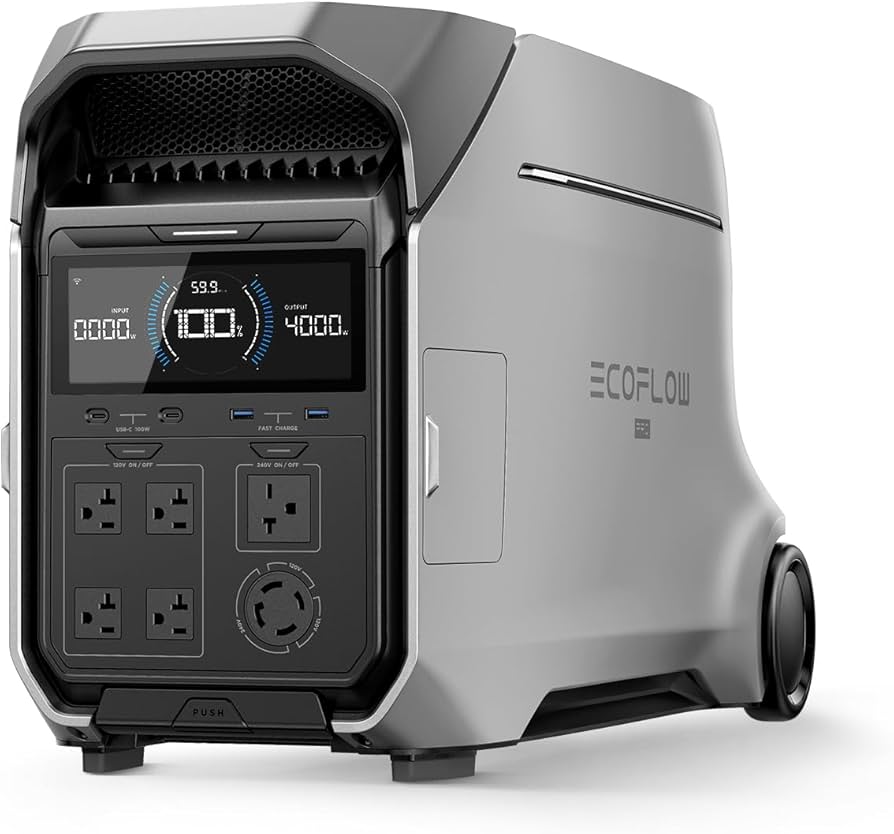
EcoFlow DELTA Pro 3
Score: 9.2/10
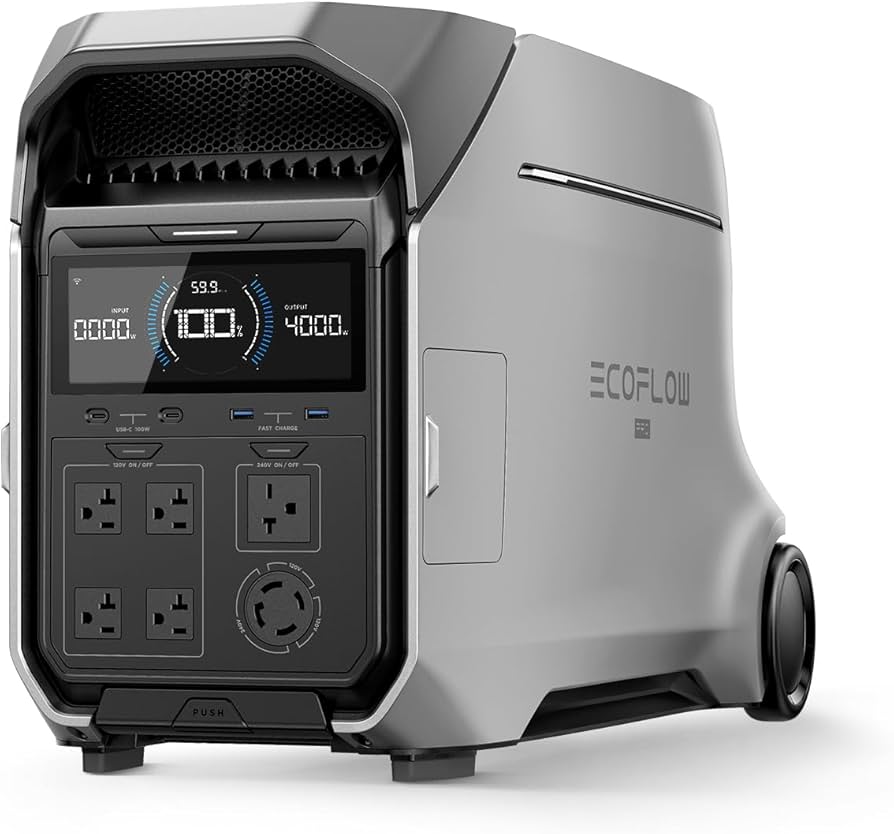
The EcoFlow DELTA Pro 3 is a professional-grade, high-capacity home backup power station designed to bridge the gap between portable batteries and permanent residential energy systems. With industry-leading AC output and rapid charging, it is a top-tier solution for emergency home power and off-grid energy security.
Overview
Our comprehensive EcoFlow DELTA Pro 3 review confirms that this 4kWh portable power station is a professional-grade home backup solution.
Looking for professional-grade energy security? Check the latest price for the EcoFlow DELTA Pro 3.
As a high-capacity energy storage system for emergency power, it bridges the gap between portable batteries and permanent residential energy systems for homeowners seeking reliable emergency power. For those managing basement risks, our Wayne ESP25 battery backup sump pump review and detailed buying guide are critical companion resources. With 4000W AC output and durable LFP chemistry, it is an ideal choice for homeowners seeking emergency power and off-grid capability without the cost of a wired solar installation.Looking for a professional-grade backup? Check the latest price for the EcoFlow DELTA Pro 3.
Out of the box, the DELTA Pro 3 feels like a serious piece of hardware rather than a camping accessory. It weighs roughly 51.5kg (113 lbs), and EcoFlow has wisely included extending luggage-style handles and wheels — without them, this unit would be a two-person lift. The chassis is plastic but feels dense, and the front panel groups outlets logically: AC on the right, DC and USB on the left, with a clear color LCD in the center showing input, output, and remaining runtime.
Setup friction is minimal. Plug it in, flip the AC switch, and it's ready. The EcoFlow app pairs over Bluetooth first, then hands off to Wi-Fi, and from there you get firmware updates, charging speed control, and access to advanced features like X-Boost and EPS (Emergency Power Supply) mode. It is designed for those who need high-wattage reliability whether they are powering a remote job site or keeping a refrigerator running during a multi-day grid failure. If you need something more compact for smaller loads, consider the EcoFlow Delta 2 Portable Power Station or the EcoFlow Delta 2 Max. For those specifically looking to protect their basement from floods during these same power outages, our Wayne ESP25 battery backup sump pump review (along with our comprehensive guide to battery backup sump pumps and a comparison of the best submersible utility pumps) offers a complementary look at critical emergency power.
Key Features
4000W continuous output allows you to run heavy-duty appliances like air conditioners and power tools without tripping the inverter.
Utilizes Lithium Iron Phosphate (LiFePO4) cells, offering 4,000 cycles to 80% capacity for over a decade of daily use.
Capable of reaching 80% charge in roughly 50 minutes from a standard AC outlet, minimizing downtime.
Dual MPPT inputs supporting up to 2600W of solar input, making it a viable off-grid daily driver. For those optimizing their energy-heavy appliances, our MrCool DIY Mini-Split buying guide explores high-efficiency climate control.
Can be scaled up to 48kWh by adding extra batteries and units, evolving from a portable station to a home battery bank.
Emergency Power Supply mode with <20ms switchover to keep critical electronics running during outages.
| Feature | Value |
|---|---|
| Battery Capacity | 4096Wh (LFP / LiFePO4) |
| AC Output | 4000W continuous, 8000W surge (X-Boost) |
| AC Input | Up to 3600W |
| Solar Input | 2600W (two MPPT inputs) |
| EV Charging Input | Up to 3000W via Level 2 EV station |
| Cycle Life | 4000 cycles to 80% capacity |
| Outlets | 5x AC, 2x USB-C (100W), 2x USB-A, 12V car, DC5521 |
| Expandability | Up to 48kWh with extra batteries / units |
| Weight | 51.5 kg (113 lbs) |
| UPS Switchover | <20ms (EPS mode) |
Pros & Cons
What we liked
- 4000W output handles virtually any household appliance
- LFP cells rated for 4000 cycles (10+ years)
- Extremely fast AC recharging (~90 minutes)
- Dual MPPT solar inputs for high-efficiency charging
- Quieter operation than previous generations
- Modular ecosystem allows for massive expansion
- Polished, intuitive app control
Trade-offs
- Very heavy (51.5kg), limiting true portability
- High initial cost, especially with expansion packs
- Fan noise is audible at peak charge/discharge
- Full home backup requires the EcoFlow Smart Home Panel 2 (ensure you follow a safe electrical installation process)
- X-Boost incompatible with sensitive electronics
Performance
The 4000W continuous AC output is the headline number, and it's genuine. For those looking to power high-efficiency climate systems, combining this with a Bosch Mini-Split heat pump can maximize energy efficiency during outages. During our testing, we ran a 1500W space heater alongside a microwave and a high-end desktop PC simultaneously. The unit handled the load with no voltage drops or safety shutdowns. The X-Boost feature is a clever addition, allowing the unit to exceed 4000W for resistive loads (like kettles or heaters) by intelligently lowering voltage. While this prevents the system from shutting down, it is strictly for "dumb" appliances; attempting to use X-Boost on a sensitive laser printer or gaming PC could cause instability.
Charging performance is where the EcoFlow DELTA Pro 3 distinguishes itself from the competition. Using X-Stream technology, it can refill the 4kWh pack from a wall outlet in approximately 90 minutes. While the fans do ramp up to manage heat during this process, they are significantly more refined and less "whiny" than the first-generation Delta Pro. For those with access to a Level 2 EV charging station, the unit can pull up to 3000W, making it an incredibly fast way to top off before a trip.
Solar performance is equally impressive. With 2600W of solar input distributed across two MPPTs, we found that a modest 2kW array can realistically recharge a fully drained unit in a single sunny day. This transforms the device from an "emergency backup" into a "daily energy source," allowing off-grid users to maintain a zero-cost energy footprint for basic electronics and refrigeration. For those building a full off-grid setup, pairing power with a professional whole-house filtration system ensures both energy and water independence.
Deep Dive: How It Works
To understand why the DELTA Pro 3 is priced and built the way it is, one must look at the internal architecture. Unlike cheaper "power banks" that use Lithium-ion (NMC) chemistry, the DELTA Pro 3 uses Lithium Iron Phosphate (LiFePO4). LFP is chemically more stable, less prone to thermal runaway, and capable of thousands more charge cycles. Where an NMC battery might degrade after 500-800 cycles, the LFP cells here are rated for 4,000 cycles. This means if you cycled the battery every single day, it would take over 10 years to drop to 80% of its original capacity.
The inverter system is a pure sine wave design, which is critical for "clean" power. For those managing complex home electrical panels, our guide to AFCI breakers and tips on how to replace a circuit breaker safely explain how to protect sensitive circuits from faults (see our guide to the best 20-amp circuit breakers). For more on managing high-risk areas, our guide to sump pumps for wet basements explains how to maintain critical infrastructure during power events. Many cheap generators produce a "modified sine wave" that can cause humming in audio equipment or failure in sensitive medical devices (like CPAP machines) and computers. The DELTA Pro 3 provides power that is as clean, if not cleaner, than the power coming from your wall outlet. This is achieved through high-frequency switching and sophisticated filtering stages that eliminate the harmonics typically found in lower-end inverters.
The "Expandable Ecosystem" works via a proprietary high-current DC bus. When you plug in an extra battery, the DELTA Pro 3 doesn't just "charge" the other battery; it treats the combined cells as a single larger pool of energy. This prevents the efficiency loss that usually occurs when transferring power from one battery to another through an inverter. By keeping the energy in DC form until the moment it hits the AC outlet, the system maintains maximum efficiency, which is critical when dealing with massive capacities like 48kWh.
Furthermore, the Battery Management System (BMS) is the "brain" of the unit. It monitors the voltage and temperature of every individual cell. If one cell begins to overheat or drifts in voltage, the BMS will throttle the charging or discharging rate to prevent damage. This level of oversight is what allows the unit to support such high wattage without risking catastrophic failure, though it does mean that the fans may kick in more aggressively than on a smaller, low-wattage power station.
Value for Money
At first glance, the DELTA Pro 3 is a luxury purchase. However, the value becomes apparent when compared to traditional gas generators or permanent wall-mounted batteries. Unlike gas generators, there are no fuel costs, no oil changes, no exhaust fumes, and zero noise pollution during the "wait" phase. Compared to a Tesla Powerwall, the DELTA Pro 3 offers the advantage of portability—you can take your backup power to a job site or a campsite.
The amortized cost is also surprisingly competitive. If you are building a layered defense for your home, combining this with a battery backup sump pump ensures your most critical infrastructure is protected, similar to how a high-capacity utility pump manages sudden water ingress. Because of the 4,000-cycle LFP rating, the cost per kilowatt-hour over the life of the product is lower than many smaller, cheaper units that need to be replaced every three years. For homeowners in areas with frequent brownouts or those living in "off-grid" cabins, the investment pays for itself in peace of mind and energy independence.
Setup and Maintenance
Initial Setup
Setting up the DELTA Pro 3 is straightforward, but there are a few critical steps to ensure long-term health. First, unbox the unit carefully; remove all shipping foam and ensure the wheels are locked if moving the unit on a slope to prevent it from rolling. Because of its weight, we recommend having a second person help move it into its permanent location.
Once positioned, perform an initial charge. While the unit typically arrives partially charged, it is highly recommended to charge it to 100% using a standard AC outlet. This "primes" the Battery Management System (BMS) and calibrates the capacity readings, ensuring the percentage shown on the screen is accurate.
Next, integrate with the EcoFlow app. Download the app and connect via Bluetooth. Once the hand-off to Wi-Fi is complete, navigate to the settings menu. Here you can find the "X-Boost" toggle and the "AC Charging Speed" settings. We suggest setting this to "Medium" or "Slow" for daily use to reduce heat and stress on the cells, only switching to "Fast" when you have a tight window before an event.
Long-Term Maintenance
LFP batteries are remarkably low-maintenance, but they are not "no-maintenance." To ensure the cells stay healthy, the most important rule is to avoid leaving the battery at 0% for extended periods. Deep discharges combined with long storage times can lead to cell imbalance and permanent capacity loss. If you are storing the unit for the winter or an extended period of non-use, charge it to roughly 50-80% and check the levels every three months.
Temperature management is also key. While the unit has an internal heating system for cold weather, operating it in extreme heat (above 113°F/45°C) will trigger thermal throttling, which reduces the AC output to protect the internal components. Always place the unit in a well-ventilated area with at least 6 inches of clearance around the fans.
Finally, keep an eye on the vents. The unit uses high-flow fans to keep the inverter and battery cells cool. Over time, dust and pet hair can accumulate in the intake and exhaust grills. Every few months, use a can of compressed air to clear these vents. Proper maintenance of all home systems—including your whole house water filtration and furnace control boards—prevents unexpected failures when you need them most. This prevents the fans from ramping up unnecessarily due to overheating and ensures the system maintains its peak efficiency.
Detailed Buyer's Guide: Who Should Buy This?
The Homeowner (Outage Protection)
If you live in a region prone to storms or grid instability, the DELTA Pro 3 is a "plug-and-play" insurance policy. It can keep a full-sized refrigerator, a compact washer, a Wi-Fi router, and a few LED lamps running for 24-48 hours without needing a recharge. For those who want a seamless transition, using the EcoFlow Smart Home Panel 2 (which integrates your power source with your home's electrical grid) allows the unit to act as a transfer switch, automatically powering your critical circuits—including