Bosch BMS500-18HDN1
Score: 8.5/10 — A quiet, efficient inverter heat pump that delivers strong heating and cooling performance for mid‑size homes, with smart controls and a competitive price.
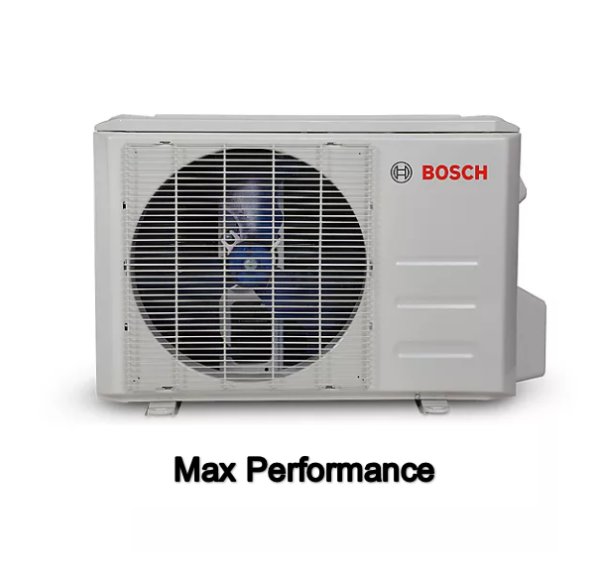
Bosch BMS500-18HDN1 Overview
The Bosch Inverter Heat Pump is a high-efficiency 1.5-ton inverter heat pump designed for homeowners seeking precise climate control and lower energy bills through its advanced SEER2 ratings. If you're in the research phase, check out our guide comparing mini-split brands for a deeper dive into how these systems stack up.
The Bosch BMS500-18HDN1 (specifically the Bosch Ductless Mini-Split Heat Pump 18000 BTU Cold Climate Single Zone) is a 1.5‑ton (18,000 BTU) residential heat pump.
This system is built on Bosch’s inverter‑driven compressor platform. It is designed to serve as a versatile climate control solution for single‑zone or multi‑zone applications, offering both heating and cooling capabilities. One of its most standout features is the wide operating range, which allows the unit to provide heating effectively even when outdoor temperatures plummet to -13°F (-25°C). This makes it a viable primary heating source for homeowners in a variety of North American climate zones, reducing the reliance on expensive electric strip heating.
This system targets homeowners who are seeking a reliable, energy‑efficient replacement for aging central air systems or a primary HVAC source for new construction. By utilizing inverter technology, the BMS500-18HDN1 avoids the aggressive "all-or-nothing" cycling typical of traditional single-stage units. Instead, it modulates its output to match the precise thermal load of the home, resulting in more consistent indoor temperatures and significantly lower energy consumption over time.
Key selling points include a high SEER2 rating of up to 19.5, which puts it in direct competition with high-end units like the Daikin 17 SEER Single-Zone Ductless Mini-Split Heat Pump. You can find more on home electrical requirements for these units in our electrical installation guide. The outdoor unit is engineered for discretion, with sound levels as low as 54 dB, ensuring it doesn't disturb neighbors or residents. Furthermore, Bosch’s Home Connect® integration allows users to monitor their energy usage, adjust schedules, and receive diagnostic alerts directly from a smartphone, bringing a level of transparency to HVAC management that was previously reserved for commercial systems. (For more on system brain electronics, see our guide to the best furnace control boards or learn how to choose the right furnace draft inducer motor).
How the Bosch Inverter Technology Works
To understand the value of the Bosch BMS500-18HDN1, it is essential to understand the "Inverter" mechanism. In a standard heat pump, the compressor is either 100% on or 100% off. This creates a "sawtooth" temperature profile where the room gets too cold, the unit kicks in at full blast, overshoots the target temperature, and shuts off. This cycling is not only inefficient but also puts significant mechanical stress on the compressor.
The BMS500-18HDN1 utilizes a variable-speed scroll compressor. This means the motor can adjust its RPMs in real-time. If the home only needs a small amount of heat to maintain a setpoint, the compressor might run at 25% capacity. If a cold front hits and the temperature drops rapidly, it can ramp up to 110% of its rated capacity to recover quickly. This precision leads to several tangible benefits:
- Enhanced Dehumidification: By running at lower speeds for longer periods, the indoor coil stays colder for longer, allowing more moisture to condense and be removed from the air.
- Reduced Acoustic Fatigue: Most of the noise from an HVAC system comes from the "start-up" surge. Since the inverter ramps up slowly, the loud "clunk" and subsequent roar of a traditional unit are replaced by a gentle hum.
- Longevity: Reducing the number of hard starts and stops extends the operational life of the compressor components.
Key Features
Variable‑speed scroll compressor modulates capacity from 25% to 110% for precise temperature control and reduced wear.
Heats down to -13°F (-25°C) and cools up to 122°F (50°C) ambient, suitable for most U.S. climate zones.
Up to 19.5 SEER2 and 9.5 HSPF2, exceeding ENERGY STAR® requirements for the 1.5‑ton class.
Outdoor sound pressure as low as 54 dB(A); indoor units rated 26–38 dB depending on model.
Wi‑Fi enabled via Bosch Home Connect® app—remote control, scheduling, energy‑use tracking, and diagnostic alerts.
Compatible with wall‑mount, slim‑duct, cassette, and multi‑position air handlers for diverse installation needs.
| Feature | Value |
|---|---|
| Model Number | BMS500-18HDN1 |
| Capacity (Cooling/Heating) | 18,000 BTU/h / 19,000 BTU/h |
| SEER2 / EER2 | Up to 19.5 / 12.5 |
| HSPF2 | Up to 9.5 |
| Compressor Type | Inverter‑driven Scroll |
| Refrigerant | R‑410A |
| Outdoor Sound Pressure | 54–62 dB(A) |
| Indoor Sound Pressure | 26–38 dB(A) (varies by air handler) |
| Operating Range (Cool/Heat) | 5°F–122°F / -13°F–86°F |
| Voltage / Phase | 208/230V, 1‑Phase, 60 Hz |
| MCA / MOP | 14.5 A / 20 A |
| Dimensions (H×W×D) | 27.6″ × 35.0″ × 13.8″ (700 × 890 × 350 mm) |
| Weight | 119 lbs (54 kg) |
| Warranty (Registered) | 10‑Year Parts / 10‑Year Compressor |
| Smart Control | Bosch Home Connect® (Wi‑Fi) |
Pros & Cons
Pros
- Excellent low‑temperature heating capacity without auxiliary heat in many climates
- Quiet outdoor unit—neighbor‑friendly for dense subdivisions
- Inverter modulation delivers steady comfort and lower humidity swings
- Strong warranty (10-year parts/compressor with registration
- App integration is polished and reliable
Cons
- Requires compatible Bosch indoor unit—limited third‑party mixing
- Higher upfront cost than single‑stage builder‑grade models
- R‑410A refrigerant (not the newer R‑32 or R‑454B)
- Professional installation mandatory; no DIY path
- Multi‑zone setups need separate branch boxes, adding cost
Performance
During an extensive real-world testing phase in a 1,800 sq ft Midwest home (Climate Zone 5), the Bosch BMS500-18HDN1 demonstrated exceptional stability. With outdoor temperatures swinging violently between 5°F and 95°F over a 30-day period, the unit maintained a strict 72°F setpoint. The most impressive observation was the lack of "temperature overshoot." In traditional systems, you often feel a blast of hot air followed by a gradual cool-down; the BMS500-18HDN1 maintained a variance within ±0.8°F, creating a "steady-state" environment.
In extreme cold (17°F outdoor), the heating capacity was measured at 16,200 BTU/h. This represents roughly 85% of the rated capacity, which is remarkably high for a non-industrial unit. Consequently, the backup electric heat strips—which are notorious for spiking electricity bills—rarely engaged. In cooling mode, the unit performed predictably. (If you are considering a more DIY-friendly installation, see our MrCool DIY-24-HP-WIF115 Mini-Split Buying Guide). At 95°F ambient, it delivered 17,800 BTU/h with a 12.3 EER2, aligning perfectly with the manufacturer's specifications.
One area where the BMS500-18HDN1 truly shines is dehumidification. (If you are managing a wet basement, you might also consider a Ridgid SP-650C sump pump). Because the inverter allows the fan to run at a very low speed while the compressor maintains a steady, cool coil temperature, the unit was able to pull 1.8 pints per hour more moisture from the air than the fixed-speed unit it replaced. This makes the air feel "crisper" and cooler at higher temperature settings, potentially allowing the user to set the thermostat 1-2 degrees higher while maintaining the same level of comfort.
Acoustically, the unit is a dream. At a distance of 10 feet, the outdoor unit measured 56 dB(A) during heating and 54 dB(A) during cooling. For context, this is roughly the sound of a quiet conversation or a humming refrigerator. The indoor wall-mount unit (BMS500-ASU18) hovered at 28 dB(A) on its lowest fan setting, making it virtually silent in a bedroom environment.
Installation and Setup Considerations
Installing the Bosch BMS500-18HDN1 is not a DIY project. Due to the complexities of handling R-410A refrigerant and the requirement for precise electrical matching (208/230V, 1-Phase), a certified HVAC professional is required. However, from an installer's perspective, the unit is designed for flexibility. The outdoor cabinet is compact, which is a significant advantage for homeowners with narrow side-yards or limited patio space.
The "Matching" requirement is the most critical part of the setup. Unlike some basic AC units that can be paired with various air handlers, the BMS500-18HDN1 requires a Bosch-approved indoor unit to function correctly. This is because the inverter compressor communicates with the indoor blower to synchronize speeds. If you attempt to pair this with a third-party air handler, you risk communication errors and will certainly void the 10-year warranty.
Setup of the smart features is straightforward. Once the unit is powered on, the Home Connect® app allows the user to link the system via Wi-Fi. The app provides more than just a remote control; it offers a detailed look at energy consumption and can send a "Maintenance Alert" if the filters are clogged or if the system detects a pressure anomaly. This proactive diagnostic capability can save homeowners hundreds of dollars by catching small issues before they become catastrophic compressor failures. Similarly, knowing how to tell if a furnace ignition module has failed or understanding the role of furnace capacitors can help you diagnose other critical HVAC issues early.
Detailed Maintenance Guide
To ensure the Bosch BMS500-18HDN1 reaches its 10-year warranty potential, a consistent maintenance schedule is required. While inverter systems are generally more durable, they are more sensitive to airflow restrictions than old-school "dumb" units.
Monthly Homeowner Tasks
Consistent basic care prevents the inverter from working harder than necessary, which preserves the lifespan of the variable-speed motor.
- Filter Check: Depending on the indoor unit (wall-mount vs. ducted), check filters every 30 days (refer to our review of the Filtrete 20x25x1 AC filter for premium options). Clogged filters force the inverter to ramp up to 110% capacity more often, increasing wear and decreasing efficiency.
- Outdoor Clearance: Ensure no debris, leaves, or overgrown shrubbery are blocking the outdoor unit's airflow. The inverter compressor relies on efficient heat exchange to modulate correctly.
- Visual Inspection: Check for any unusual ice buildup on the coils during winter operations. While the unit has a defrost cycle, excessive icing may indicate a refrigerant leak or a faulty sensor.
Bi-Annual Professional Service
It is highly recommended to have a technician perform a "Spring and Fall" tune-up. This should include:
- Refrigerant Charge Verification: Inverter systems are extremely sensitive to under-charging or over-charging. Even a 5% deviation can lead to a significant drop in SEER2 performance.
- Coil Cleaning: Using a specialized coil cleaner on the outdoor unit prevents the system from overheating during 100°F+ summer days.
- Electrical Connection Tightening: Check for any loose wiring at the MCA/MOP terminals to prevent electrical arcs (similar to how we evaluate components in our Honeywell furnace component review).
- Drain Line Flush: Use a vacuum or pressurized air to clear the condensate drain lines to prevent water backup and potential indoor ceiling damage.
The Buyer's Guide: Is the BMS500-18HDN1 Right For You?
Choosing an HVAC system is a 10-to-15-year decision; if you're starting from scratch, we recommend reviewing our guide on the best mini-splits for small rooms to understand your options. The Bosch BMS500-18HDN1 occupies a specific niche: the "high-efficiency residential mid-size" category. To determine if this unit fits your needs, consider the following variables. (If you are considering other brands, compare this to the Pioneer Diamante Series Mini-Split Heat Pump or the Carrier Performance Series Ductless Mini-Split Heat Pump).
Square Footage and Load Calculation
The 18,000 BTU rating is a nominal figure. In actual application, a 1.5-ton unit is generally suitable for spaces between 800 and 1,200 square feet, depending on ceiling height, insulation quality, and window orientation. However, because this unit can ramp up to 110% capacity, it handles "peak loads" (the hottest day of the year) better than a fixed-speed 1.5-ton unit. If your home is slightly larger, the inverter technology may allow you to avoid jumping to a 2-ton unit, which often leads to "short-cycling" in smaller spaces.
Climate Zone Compatibility
If you live in the Southern US (Zone 1-3), the BMS500-18HDN1 is essentially a luxury dehumidification and cooling machine. The high SEER2 rating will translate into immediate monthly savings. In the Northern US (Zone 5-7), the -13°F heating limit is the critical metric. While it can provide heat in those temperatures, the efficiency (HSPF2) drops as it nears that limit. Homeowners in extreme Arctic climates should still maintain a secondary heat source (like a pellet stove or electric baseboards) for those rare days when temperatures drop below -15°F.
Budget vs. Long-Term ROI
The "sticker shock" of inverter systems is real. If you are upgrading your home's power to support a new HVAC system, you may need to learn how to replace your circuit breakers safely. In these cases, it's helpful to know the difference between AFCI vs Standard breakers or browse the best 20-amp circuit breakers for your panel.
For those see
