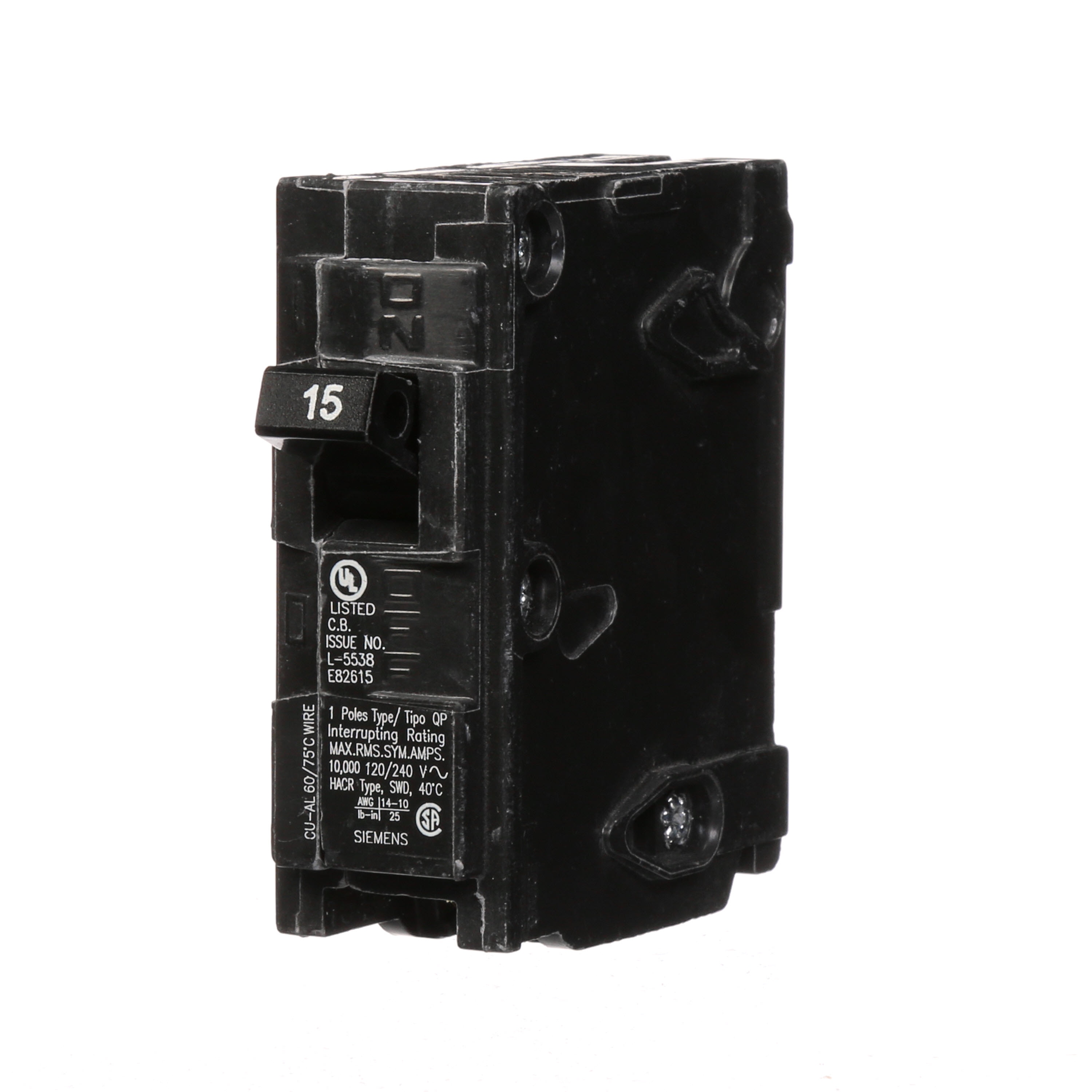
The Siemens Single-Pole Plug-In Circuit Breaker 15 Amp (Q115) is a cornerstone of residential electrical safety, providing reliable 15-amp protection for 120V circuits. Ideal for Siemens and Murray panels, this plug-in breaker features a red trip indicator for fast diagnostics. This comprehensive Siemens Q115 buying guide (complementing our detailed Siemens Q115 performance review) explores compatibility, installation safety, and why the Q115 is the preferred choice for standard branch circuit maintenance, especially when calculating loads for heavy appliances like those in our induction cooktop review.
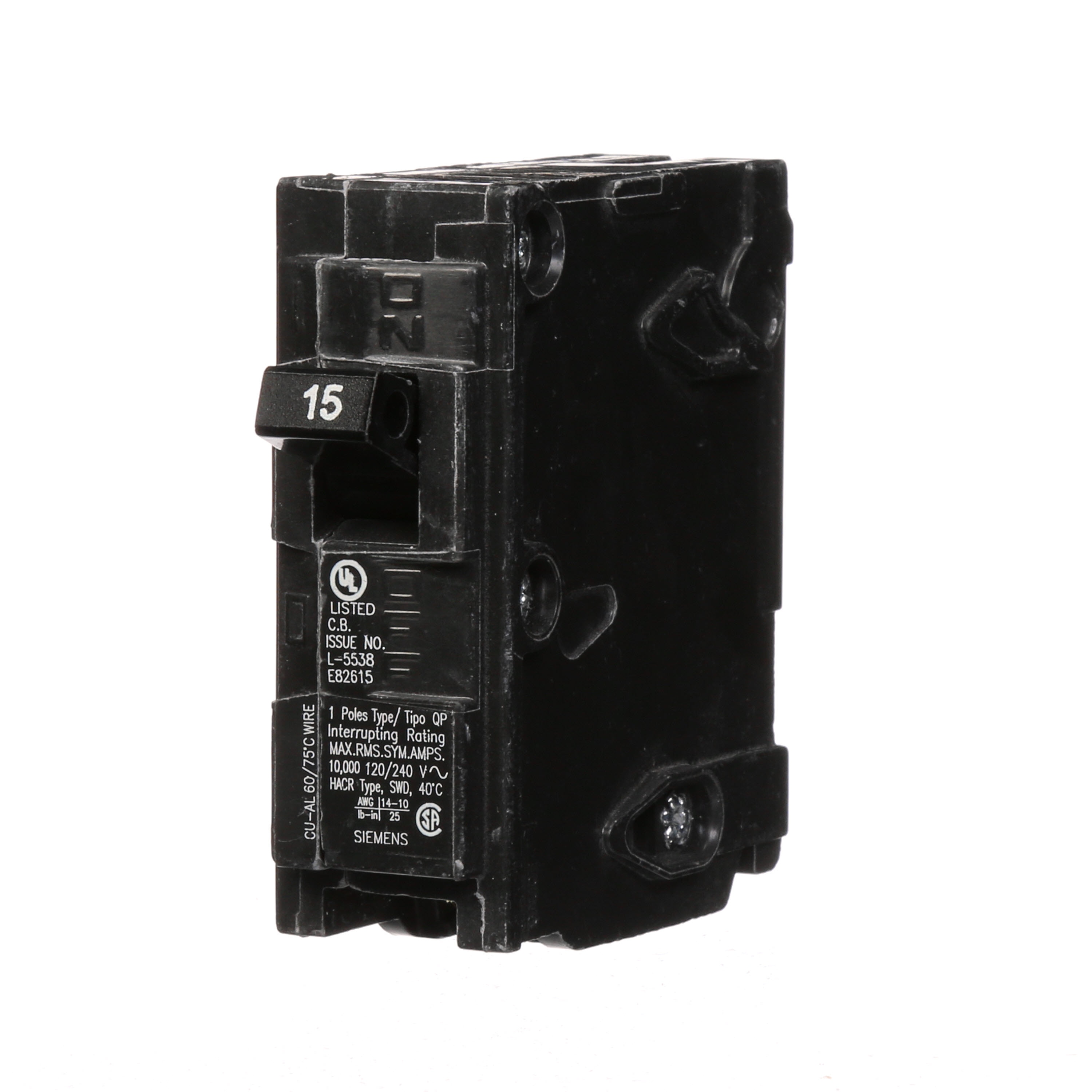
Best Overall: Siemens Single-Pole Plug-In Circuit Breaker 15 Amp
Score: 9.1/10. A strong choice for standard 15 amp single-pole circuits in compatible Siemens, Murray, and properly labeled related panels, with a helpful trip indicator for easier troubleshooting.
Siemens Single-Pole Plug-In Circuit Breaker 15 Amp
The Siemens Single-Pole Plug-In Circuit Breaker 15 Amp (Q115) is a 15 amp, single-pole, plug-in circuit breaker intended for compatible residential electrical panels.
It is designed to protect a standard 120-volt branch circuit from overloads and short circuits, making it a common replacement part for lighting circuits, bedroom circuits (often including Panasonic WhisperGreen Select ventilation fans), general-use receptacles, and other properly sized 15 amp circuits. By interrupting the flow of electricity when a fault is detected, it prevents wiring from overheating, which is the primary mechanism for preventing electrical fires in the home. If you're performing a replacement, check our guide on how to replace a circuit breaker safely at home.Its biggest advantage is straightforward compatibility with Siemens load centers, along with Murray and certain other compatible panel lines where the panel labeling permits this breaker type. That compatibility point is important: breakers should not be chosen by physical fit alone. The panel’s labeling and electrical code requirements should determine whether the Q115 is acceptable for your installation. If you are considering a full panel upgrade, see our guide on Square D vs Eaton circuit breakers to compare the top brands. Using a breaker that "fits" but is not listed as compatible on the panel's directory can lead to poor electrical contact, arcing, and potential failure of the protective trip mechanism.
While the Q115 is built for AC residential power, those managing specialized DC systems might consider tools like the Blue Sea Systems Marine Thermal Circuit Breaker for DC Applications (see our Blue Sea Systems review) for marine applications. The Q115 also includes a red trip indicator flag, which helps homeowners and electricians identify when the breaker has tripped. This is especially useful in crowded panels where the handle position of a tripped breaker might only be slightly offset, making it difficult to spot at a glance. This feature simplifies diagnostics for nuisance trips or confirming whether a circuit interruption came from the breaker rather than a downstream GFCI device, a switched outlet, or a loose connection elsewhere on the circuit.
This breaker is best for maintenance, like-for-like replacement, or panel work where a standard 15 amp Siemens-compatible single-pole breaker is specified. It is important to note that this is a standard thermal-magnetic breaker. It is not a substitute for AFCI (Arc Fault Circuit Interrupter), GFCI (Ground Fault Circuit Interrupter), dual-function, tandem, two-pole, or higher-amperage breakers where those are required by the circuit location (such as bathrooms or kitchens) or current National Electrical Code (NEC) requirements.
| Specification | Siemens Q115 |
|---|---|
| Model number | Q115 |
| Breaker type | Single-pole plug-in circuit breaker |
| Amperage | 15 amps |
| Typical circuit voltage | 120 volts |
| Primary use | Overload and short-circuit protection |
| Compatible panel families | Siemens, Murray, and specified others |
| Trip indication | Red trip indicator flag |
| Category | Circuit breakers & fuses |
Pros
- Reliable choice for standard 15 amp Siemens-compatible branch circuits
- Plug-in design allows for straightforward replacement by qualified personnel
- Red trip indicator significantly reduces troubleshooting time
- Broad compatibility with Siemens and Murray panel lines
- Industry-standard build quality for long-term residential use
Cons
- Not universal; strictly limited to compatible panels
- Lacks advanced AFCI or GFCI protection for specialized zones
- Incompatible with 20 amp circuits or larger gauge wiring
- Not a space-saving tandem or heavy-duty two-pole breaker
- Installation requires strict adherence to electrical safety codes
This guide is written to help compare fit, function, and compatibility. Purchase options may be added separately, and we may earn a commission from qualifying purchases.
The Mechanics of Circuit Protection: How the Q115 Works
To understand why the Siemens Q115 is a critical component of your home's safety, it is helpful to understand the two primary ways it protects your electrical system: thermal protection and magnetic protection. Most residential breakers, including the Q115, are "thermal-magnetic" breakers. This dual-action design ensures that the breaker responds to different types of electrical failures with appropriate speed and sensitivity.
Thermal Protection (Handling Overloads)
Thermal protection is designed to combat "overloads." An overload occurs when too many devices are drawing power from a single circuit, exceeding the rated capacity of the wiring. Inside the Q115, there is a bimetallic strip—a piece of metal made of two different metals bonded together. As current flows through this strip, it generates heat. Under normal 15-amp loads, the strip stays relatively cool. However, if you plug too many devices into one circuit—such as running a space heater, a high-wattage coffee maker, and a vacuum cleaner (similar to the power draws discussed in our GE Profile induction cooktop review or MrCool DIY-24-HP-WIF115 mini-split buying guide) on the same 15 amp line—the strip heats up significantly.
Because the two metals in the bimetallic strip expand at different rates, the strip begins to curve as it heats up. When the temperature reaches a critical point (corresponding to the 15-amp limit), the strip bends far enough to trigger the mechanical trip lever. This snaps the breaker handle to the "off" or "tripped" position, instantly cutting power. This prevents the copper wires inside your walls from overheating, which would otherwise melt the plastic insulation and potentially ignite the surrounding wooden studs or insulation, leading to a structure fire.
Magnetic Protection (Handling Short Circuits)
While the thermal mechanism handles gradual overloads, the magnetic mechanism handles sudden, violent spikes in current. This is known as a "short circuit," which occurs when a "hot" wire touches a "neutral" wire or a grounded metal object. This creates a path of least resistance, causing the current to spike to hundreds or thousands of amps in a fraction of a second.
The Q115 contains an electromagnetic coil. When a massive surge of current hits this coil, it generates an incredibly strong magnetic field that instantly pulls the trip lever. Unlike the thermal process, which takes seconds to heat up, the magnetic trip happens in milliseconds. This rapid response is what prevents catastrophic sparks, "arc flashes," and electrical explosions during a severe fault. Without this magnetic trip, the wire would vaporize almost instantly, causing severe damage to the panel and potentially causing an immediate fire.
The Red Indicator Flag: Visual Diagnostics
The red indicator flag on the Q115 is a mechanical extension of this internal process. When the internal spring is released during a trip, it pushes the flag into view. In a large residential panel, a tripped breaker handle may only be slightly offset from the "ON" position, making it difficult to identify which circuit has failed—especially in low-light conditions or in a crowded panel. The bright red flag provides a clear visual signal that the circuit has been interrupted for safety reasons, rather than being switched off manually. This allows the homeowner to quickly identify the problem area and begin troubleshooting the connected devices.
Comprehensive Buyer's Guide: Choosing the Right Breaker
Selecting a circuit breaker is not as simple as matching the number on the handle. Using the wrong breaker can create an "arcing" condition where the breaker doesn't seat properly in the busbar, leading to heat buildup, voltage drops, and potential fire. Here are the key factors you must consider when deciding if the Siemens Q115 is the right choice for your home.
1. Panel Compatibility (The Most Critical Step)
The most common mistake homeowners make is assuming that any "plug-in" breaker will work in any "plug-in" panel. Electrical panels are designed with specific "busbar" configurations. The busbar is the thick metal rail that carries power from the main lugs to the individual breakers. The Siemens Q115 is designed to clamp onto a specific width and thickness of busbar common to the Siemens 200-Amp 30-Space 40-Circuit Indoor Main Breaker Load Center and Murray panels.
If you force a breaker into a panel it wasn't designed for, you may damage the busbar or create a loose connection. Before attempting any work, review our guide on how to replace a circuit breaker safely at home. A loose connection creates high electrical resistance, which generates heat. Over time, this can melt the plastic casing of the breaker, oxidize the metal contacts, or even warp the busbar. This creates a dangerous cycle: the loose connection causes heat, which causes more oxidation, which increases resistance and heat further. Always check the directory card on the inside of your panel door or the panel's stamped certification label; it will list the approved breaker types for that specific enclosure. If your panel is a Square D 200-Amp 30-Space 30-Circuit Indoor Main Load Center or Eaton Single-Pole Combination AFCI Circuit Breaker system or uses Eaton brand breakers, the Q115 will not be the correct choice, even if it appears to "fit" the slot.
2. Amperage Rating (15 Amp vs. 20 Amp)
The "15" in Q115 stands for 15 amps. This rating must match the gauge of the wire installed in the walls for that specific circuit. In standard residential wiring, there is a strict relationship between wire size and breaker size:
- 14-gauge wire is rated for 15 amps.
- 12-gauge wire is rated for 20 amps (refer to our guide on the best 20-amp circuit breakers for home electrical panels if upgrading).
Installing a 20 amp breaker on a circuit wired with 14-gauge wire is a severe safety violation and a primary cause of residential electrical fires. The 20 amp breaker will allow more current to flow than the thin 14-gauge wire can safely handle. The wire will become hot enough to melt its insulation and ignite surrounding materials before the breaker ever reaches its trip point. Conversely, installing a 15 amp breaker (like the Q115) on a 20 amp circuit is generally safe from a fire perspective, as the breaker will trip long before the wire is endangered. However, this may lead to "nuisance trips" if the circuit was intentionally designed to handle a heavier load (like a kitchen appliance circuit).
3. Single-Pole vs. Double-Pole
The Q115 is a single-pole breaker. This means it connects to one "leg" of your electrical service and provides 120 volts. This is the standard for almost all lighting, general-purpose outlets, and small appliances. If you are replacing a breaker for a heavy-duty appliance like a water heater, electric dryer, or central air conditioner, you likely need a double-pole breaker. Double-pole breakers take up two slots in the panel and connect to both legs of the service to provide 240 volts. The Q115 is not suitable for these high-voltage applications and attempting to use it for 240V equipment will result in a non-functional appliance or a dangerous electrical fault.
4. Standard vs. Specialty Protection (AFCI/GFCI)
The Siemens Q115 is a "standard" thermal-magnetic breaker (see our AFCI vs Standard Circuit Breakers comparison to see which you need). It protects the wires and the panel from overloads and shorts. However, modern electrical codes (NEC) often require additional layers of protection for specific areas of the home:
- GFCI (Ground Fault Circuit Interrupter): Required in "wet" areas like bathrooms, kitchens, garages, and outdoor outlets. For example, the Siemens 20-Amp Single-Pole Self-Testing GFCI Circuit Breaker is often used for these zones. They protect people from electric shock by detecting tiny "leaks" of current to the ground and tripping in milliseconds—long before a human heart would be affected.
- AFCI (Arc Fault Circuit Interrupter): Required in bedrooms and most living areas, such as those using a Square D Homeline Single-Pole Plug-On Neutral AFCI Circuit Breaker 15-Amp. They protect against fires caused by "arcing"—which happens when a wire is damaged (e.g., a nail driven through a wall) or a power cord for a device like an Arlo Pro 4 security camera is frayed, creating a high-heat spark that can ignite furniture or wallpaper.
If your old breaker was a standard 15 amp model and you are performing a simple replacement, the Q115 is the correct part. However, if you are updating a panel to meet current code or adding a new circuit in a kitchen or bedroom, you may need an Eaton Single-Pole Combination AFCI Circuit Breaker 15-Amp (detailed in our comprehensive Eaton BRCAF115 review) or GFCI breaker instead of the standard Q115.
Installation and Safety Protocol
Preparation and Safety Equipment
Before touching any part of the electrical panel, safety must be the absolute priority. It is a common misconception that turning off the "main" breaker makes the panel safe. While the main breaker shuts off power to the individual branch circuits, the "main lugs" (where the heavy power cables enter the house from the utility company) remain live. Touching these lugs can be fatal.
Qualified installers always utilize a non-contact voltage tester, as detailed in our guide on how to replace a circuit breaker safely at home. This is especially critical when working near high-moisture areas—similar to the safety precautions detailed in our Wayne ESP25 review. This ensures they verify that the circuit they are working on is truly "dead" before touching wires—a level of caution we emphasize throughout our electrical safety guides, including our home security setup guide for overall system safety. Proper Personal Protective Equipment (PPE), including in