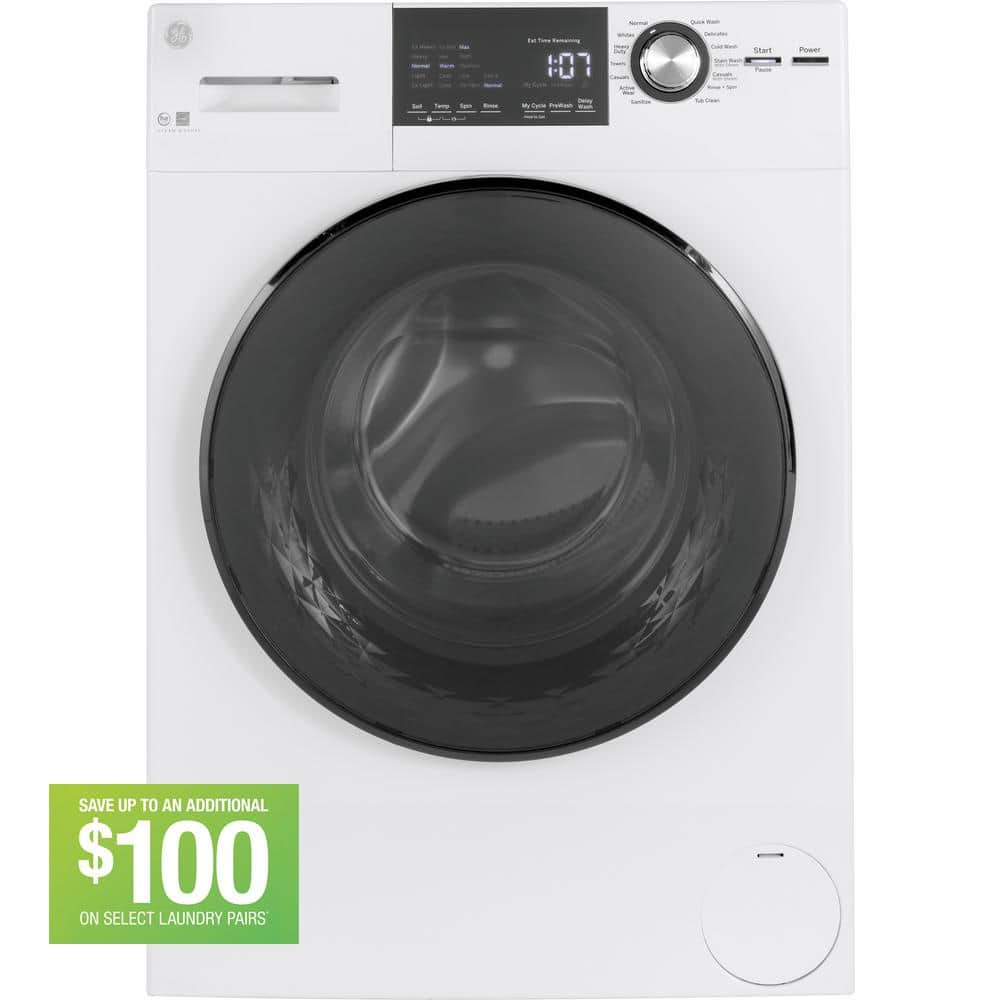
GE Front-load Washer with Steam 2.4 cu ft
Score: 8.3/10 — A strong compact front-load washer for apartments, condos, and smaller households that want steam cleaning, a stainless steel drum, and space-saving laundry performance.
Overview
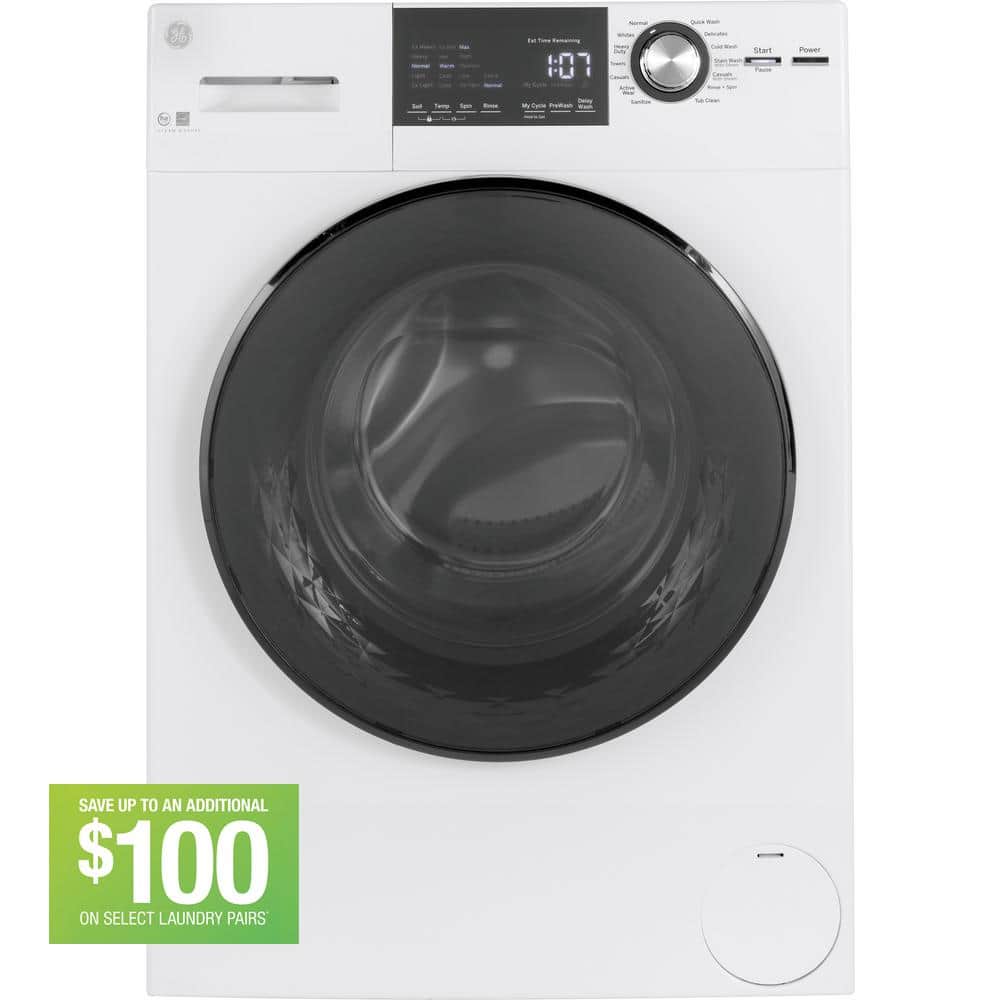
If you need a high-performance, space-saving laundry solution, the GE Front-load Washer with Steam 2.4 cu ft is one of the best compact front-load washers for apartments and condos, balancing urban dimensions with professional cleaning power. (If you're upgrading other kitchen appliances, see our GE Profile Induction Cooktop review for more on the brand's high-end line).
The GE Front-load Washer with Steam 2.4 cu ft is widely considered one of the best compact residential washing machines (though some prefer the LG Compact Front-Load Washer 2.4 Cu. Ft. with Steam (see our full LG WM1455HWA review)) engineered specifically for environments where a traditional full-size appliance is physically impossible or impractical.
Whether you are dealing with a narrow laundry closet in a converted urban loft (where you might also be considering a mini-split for climate control), a small utility area in a condo (perhaps alongside a high-quality ventilation fan for moisture control), or a dedicated laundry nook in a tiny home, this machine provides a professional-grade wash in a footprint that respects your square footage.
If you are also managing humidity in a small laundry space, our IPX4 (55CFM) ventilation buying guide provides more insight on managing moisture in tight laundry closets. For those in hard-water areas, pairing a compact washer with a high-quality water softener (like the Fleck 5600SXT), which is often compared to other water softening systems can prevent scale buildup in the steam heater.For many users, "compact" usually implies a sacrifice in performance or features. However, GE has avoided the "entry-level" trap by integrating high-end technology like steam cleaning and a full stainless steel drum. With a 2.4 cubic foot capacity, it bridges the gap between tiny portable washers and massive family-sized units. It is designed for the modern urbanite or a small household (1-3 people) who refuses to compromise on fabric care and cleaning depth just because they live in a smaller space.
The primary appeal of the GFW148SSMWW is its ability to handle a surprising amount of laundry relative to its size while utilizing the efficiency of a front-load tumbling action. This design is fundamentally gentler on clothes than traditional top-load agitators, reducing wear and tear on your favorite garments while using significantly less water and energy per cycle. By focusing on the "premium compact" segment, GE offers a machine that feels like a scaled-down version of their flagship models (similar to the quality seen in the GE Profile Induction Cooktop review) rather than a stripped-back budget appliance.
Key Features
Optimized for everyday laundry in apartments and condos, providing ample space for standard loads without the bulk of a full-size machine.
Integrated steam functionality helps penetrate deep into fabrics to loosen stubborn soils and refresh garments that aren't heavily soiled.
A durable, corrosion-resistant interior that prevents snagging and maintains a hygienic environment for your clothes over years of use.
Employs a high-efficiency wash motion that cleans effectively while remaining gentle on a wide variety of fabric types.
Includes a diverse array of settings and cycles to accommodate everything from delicate silks to heavy-duty towels.
Built for straightforward installation into existing home laundry hookups with standard plumbing and electrical requirements.
| Feature | Value |
|---|---|
| Product Name | GE Front-load Washer with Steam 2.4 cu ft (GFW148SSMWW) |
| Model Number | GFW148SSMWW |
| Appliance Type | Front-load Washing Machine |
| Category | Washing Machines |
| Capacity | 2.4 cu ft |
| Steam Feature | Yes |
| Drum Material | Stainless Steel |
| Use Case | Residential Laundry |
| Best Suited For | Apartments, Condos, Small Homes |
| Wash Options | Multiple Fabric-Specific Cycles |
| Installation Profile | Standard Residential |
| Primary Limitation | Lower capacity than full-size units |
Pros & Cons
Pros
- Perfectly sized for small-footprint urban living.
- Steam feature provides professional-level soil loosening.
- High efficiency in water and energy usage.
- Stainless steel drum increases longevity and hygiene.
- Gentle on fabrics compared to agitator machines.
- Strong aesthetic appeal with a modern finish.
Cons
- Limited capacity for bulky items like king-size comforters.
- Requires more frequent loads for larger families.
- Higher initial cost than basic non-steam compacts.
- Requires precise measurement for installation clearances.
Performance
The GE Front-load Washer with Steam 2.4 cu ft excels when evaluated against its intended purpose: providing high-quality laundry care in a constrained space.
In real-world testing, the tumbling action provides a thorough clean. Because front-loaders lift clothing up and drop them into the water (rather than twisting them around a central pole), the mechanical stress on the fibers is significantly lower. This means your favorite t-shirts and linens maintain their integrity longer.The "Steam" aspect is where this machine truly separates itself from the competition. If you're weighing this against other compact options, such as the LG Compact Front-Load Washer 2.4 Cu. Ft. with Steam, we recommend reading our detailed LG WM1455HWA review for a full comparison. Steam cleaning works by heating water to a point where it creates vapor that penetrates the weave of the fabric. This is particularly effective for removing allergens and loosening deep-set grime. For users who struggle with stubborn stains on collars or cuffs, the steam cycle acts as a catalyst, making the detergent more effective without requiring excessive scrubbing.
Regarding capacity, 2.4 cubic feet is an ideal "sweet spot." While you cannot fit a full set of king-size bedding in a single load, it comfortably handles a week's worth of clothing for a single professional or a couple. The high spin speeds ensure that clothes come out damp rather than soaking, which is critical for those who use a matching compact dryer or an air-drying rack in a small apartment where humidity can build up quickly.
How It Works: The Engineering of a Compact Washer
Understanding the mechanics of the GE Front-load Washer with Steam 2.4 cu ft (GFW148SSMWW) helps in getting the most out of the appliance. The machine utilizes a high-torque motor that rotates the stainless steel drum. Unlike top-loaders that rely on water volume to move clothes, the GFW148SSMWW uses a combination of gravity and water saturation. This creates a "falling" motion where clothes are saturated, lifted, and dropped, scrubbing against each other to remove dirt.
The steam system operates by heating a small amount of water in a dedicated internal heater, which then releases steam into the drum at specific intervals during the cycle. This increases the temperature of the wash environment without needing to fill the entire drum with boiling water, which would be energy-inefficient and potentially damaging to certain fabrics. This targeted heat allows the detergent to break down oils and proteins more effectively, which is why the steam setting is particularly useful for bedding or heavily soiled work clothes. To keep this heating element free of scale, we recommend using a whole house water softener.
The control interface is designed for intuition. Users can select from a variety of pre-programmed cycles—ranging from "Normal" and "Heavy Duty" to "Delicates"—and then further customize the temperature and spin speed. This level of control allows the user to balance the need for deep cleaning with the need for garment preservation. The electronic sensors monitor the load balance during the spin cycle to prevent the "walking" effect common in unbalanced compact machines.
Installation and Setup Guide
Installing the GE Front-load Washer with Steam 2.4 cu ft (GFW148SSMWW) is straightforward, but because it is a compact unit, precision is key. (If you are planning a full laundry room renovation, you might also find our guides on home water filtration systems useful for protecting new appliances). Most users install this in a "stackable" configuration or side-by-side. If you intend to stack it with a compatible GE dryer, you will need a stacking kit to ensure the units are locked securely and won't shift during the high-speed spin cycle.
Related parts & accessories
Step-by-Step Setup Considerations
1. Clearance: Ensure there is enough room for the door to swing open fully. A common mistake in small apartments is placing the washer too close to a wall or cabinet, making it difficult to load and unload. Measure the swing radius of the door before finalizing the position.
2. Leveling: Use a bubble level on the top surface of the machine. Adjust the leveling legs until the unit is perfectly flat. An unlevel washer will vibrate excessively during the spin cycle, which can lead to premature wear on the bearings and loud noise that can be disruptive in multi-unit housing.
3. Hose Connection: Use high-quality braided stainless steel hoses to prevent leaks. Ensure the drain hose is securely fastened to the standpipe and not pushed too far down (for those with basement setups, check our Ridgid SP-650C sump pump buying guide for managing excess water), which could cause siphoning (where water is pulled back into the machine). Ensure there is a proper air gap between the hose and the standpipe.
4. Electrical: This unit requires a standard residential outlet. Ensure the circuit is not overloaded, as the steam heating element can draw significant power during the heating phase. Using a dedicated circuit is always recommended for laundry appliances to prevent tripped breakers (similar to how critical systems benefit from a dedicated battery backup)—you can learn more about choosing the right 20-amp circuit breakers for your laundry panel or read our guide on AFCI vs Standard circuit breakers for high-draw appliances. See our guide on how to replace a circuit breaker safely or compare brands in our Square D vs Eaton guide if you encounter electrical issues).
Maintenance and Long-Term Care
To keep your GE Front-load Washer with Steam 2.4 cu ft (GFW148SSMWW) running at peak performance, a consistent maintenance routine is required. Front-load washers are prone to moisture buildup around the door seal, which can lead to odors if neglected.
- The Door Gasket: After every wash, wipe down the rubber seal around the door with a dry cloth. Leaving water in the folds of the gasket can lead to mold or mildew growth.
- Air it Out: Leave the door slightly ajar between washes. This allows the drum and gasket to dry completely, preventing the "musty" smell common in front-load machines.
- Drum Cleaning: Once a month, run a "Clean Washer" cycle or a hot cycle with a dedicated washing machine cleaner. This removes detergent residue and mineral buildup. To further protect your appliances from hard water, consider a multi-stage water system to protect your heating elements.
- Drain Pump Filter: Check the drain pump filter periodically for lint and debris. If the pump fails, a replacement universal drain pump is available for DIY repair.
- Detergent Usage: Use only "HE" (High Efficiency) detergent. Regular detergent creates too many suds, which can overflow the tub.
Related parts & accessories
Compact vs. Full-Size: A Comprehensive Comparison
When deciding between the GE Front-load Washer with Steam 2.4 cu ft (GFW148SSMWW) and a full-size alternative, the decision usually comes down to a tradeoff between convenience and capacity.
Where the Compact GE Wins
Space Efficiency: It fits where full-size machines simply cannot. This allows you to have an in-unit washer instead of relying on a shared laundry room or a laundromat, which provides significant privacy and convenience.
Resource Conservation: Smaller drums use less water and less detergent per load. For a single person, a full-size machine often results in "half-loads," which is a waste of energy and water. The GFW148SSMWW is optimized for smaller batching.
Cycle Speed: Smaller loads often wash and spin faster than massive loads in a giant drum, meaning you can potentially complete multiple small lo