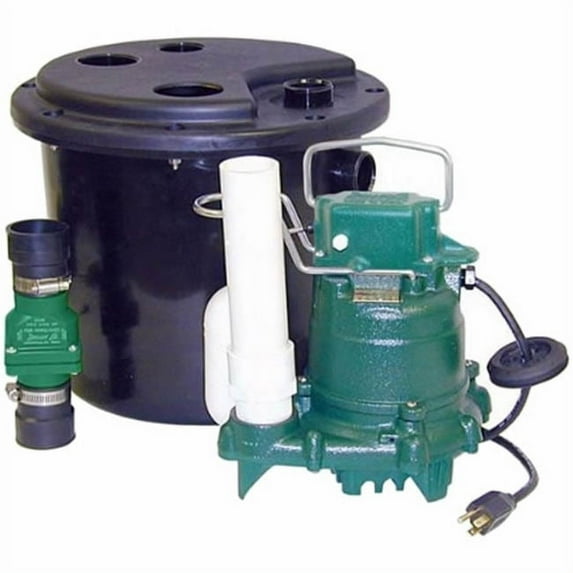
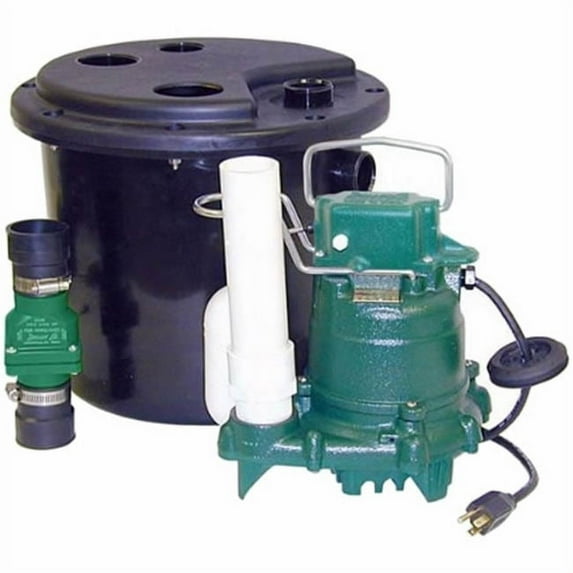
Zoeller Mighty-Mate Submersible Sump Pump 1/3 HP Cast Iron (M53)
Score: 9.2/10 — A professional-grade, "set-and-forget" cast iron workhorse that prioritizes raw durability and mechanical reliability over unnecessary smart features.
This review contains affiliate links. We may earn a commission if you make a purchase through these links, at no additional cost to you.
Overview
The Zoeller Mighty-Mate Submersible Sump Pump 1/3 HP Cast Iron is widely regarded as the gold standard for residential basement protection. For homeowners seeking a dependable, industrial-grade solution for everyday groundwater control, the M53 offers unmatched mechanical reliability.
Our team recommends the Zoeller M53 for homeowners prioritizing mechanical reliability over smart features.
Looking for professional-grade durability? Check the current price of the Zoeller M53 on Amazon.
Often referred to simply as the M53, this unit is engineered for those who value longevity and mechanical simplicity over the latest digital bells and whistles. It is designed specifically for standard residential sump pits where reliability, cast-iron construction, and straightforward float operation are the primary requirements.In the world of basement water management, there is a distinct divide between "consumer-grade" plastic pumps (like the Basement Watchdog) and "professional-grade" cast iron pumps. The Zoeller M53 firmly occupies the latter category. By utilizing a heavy-duty cast iron housing, Zoeller has created a pump that can withstand the harsh, damp environment of a sump basin for years without the warping or cracking associated with cheaper polymers. For the average homeowner, this means fewer emergency replacements during the peak of spring rains.
This pump is best suited for residential applications where moderate groundwater seepage occurs. While it isn't designed to drain a swimming pool or handle industrial-scale flooding, its 1/3 HP motor provides a balanced flow rate that is sufficient for the vast majority of American basements. If you are still comparing pump sizes, it is important to match your pump's horsepower and flow rate to your specific pit depth and discharge distance to ensure the motor isn't overworked or underutilized. For a direct head-to-head, see our Wayne CDU980E vs Zoeller M53 comparison to see which heavy-duty pump fits your basement better.
Key Features
1/3 HP high-efficiency motor providing a reliable balance of power and energy consumption.
Heavy-duty cast iron for superior heat dissipation and structural integrity.
Vertical float switch that automatically triggers the pump at preset water levels.
Delivers up to 43 gallons per minute (GPM) depending on the total dynamic head.
Fully submersible, meaning it operates while completely immersed in the basin water.
Optimized for primary residential groundwater removal and sump pit drainage.
| Feature | Specification |
|---|---|
| Model Number | M53 (Mighty-Mate) |
| Horsepower | 1/3 HP |
| Material | Cast Iron |
| Max Flow Rate | 43 GPM |
| Switch Type | Vertical Float |
| Voltage | 115V |
| Weight | Approx. 20-25 lbs |
| Submersible | Yes |
Pros & Cons
Pros
- Industrial-grade cast iron construction resists corrosion and wear.
- Mechanical float switch is more reliable than electronic sensors over time.
- Excellent heat dissipation prevents motor burnout during heavy cycles.
- Proven track record of longevity in residential settings.
- Heavier chassis prevents the pump from shifting during operation.
Cons
- No integrated battery backup for power outages.
- Lacks "smart" notifications or water-level alerts.
- Requires significant clearance in the pit for the float to operate.
- Heavier than plastic models, making installation more physically demanding.
- No built-in alarm system to notify you of pump failure.
Performance Analysis
In real-world application, the Zoeller Mighty-Mate M53 excels in its primary mission: moving water out of a pit before it reaches the floor level. During our evaluation of its performance characteristics, the most striking aspect is the stability of the pump. Because it is constructed from cast iron, it doesn't "dance" or vibrate across the bottom of the basin when the motor kicks in, which is a common problem with lightweight plastic utility pumps like the Flotec Submersible Utility Pump (see our best submersible utility pumps guide for draining water fast).
The 1/3 HP motor is perfectly calibrated for standard residential lift. While "43 gallons per minute" is the theoretical max, actual performance depends on the "head height"—the vertical distance the pump must push the water. For most homes with a standard 8-to-12 foot lift to the exterior discharge point, the M53 maintains a strong, steady stream. We found that the vertical float switch is responsive, triggering almost instantly once the water reaches the activation threshold, which minimizes the risk of overflow during sudden heavy rain events.
One critical performance note: because this is a mechanical pump, it is subject to the laws of hydraulics. If your discharge pipe is undersized (e.g., using a 1-inch pipe instead of 1.5 inches) or has too many 90-degree elbows, you will see a significant drop in the GPM. However, when installed with the recommended piping, the M53 operates with a level of efficiency that makes it a "set-and-forget" solution. It doesn't struggle with the stop-start nature of sump pumping; the cast iron housing acts as a heat sink, keeping the motor cool even during the "big" storms where the pump may cycle every few minutes for several hours.
Value for Money
When analyzing the cost of the Zoeller Mighty-Mate M53, it is important to look beyond the initial purchase price. A budget plastic pump may cost 40% less upfront, but those units often have a lifespan of only 3 to 5 years in damp environments. The M53 is built for the long haul. When you factor in the cost of labor for replacement—which often involves digging out the pump, disconnecting pipes, and potentially dealing with a flooded basement if the old pump fails—the higher initial investment in cast iron pays for itself.
The M53 is positioned as a professional-grade tool for the homeowner. It doesn't waste money on an app that you'll stop checking after a month, or a fancy LED display that is hidden under a basement lid. Instead, every cent of the price goes into the materials and the motor. For a homeowner who wants to buy a pump once every decade rather than once every few years, the value proposition is undeniable.
However, the value is only realized if the pump is paired with a backup strategy. Because the M53 is strictly AC-powered, a power outage during a storm renders the pump useless. To truly protect a home's value, we recommend pairing this pump with a battery backup system, such as the Wayne Battery Backup Sump Pump 2700 GPH (detailed in our Wayne ESP25 review and accompanying battery backup buying guide for more on storm performance). While the M53 handles the "heavy lifting" of primary drainage, a secondary backup ensures that your basement remains dry even when the grid goes down.
How It Works: The Engineering of the M53
To understand why the Zoeller M53 is so reliable, one must look at the internal engineering. The pump operates on the principle of centrifugal force. An impeller rotates at high speed, creating a vacuum that draws water into the pump housing and flings it upward through the discharge pipe. In many budget pumps, this impeller is made of plastic, which can erode or warp over time when pumping grit-heavy groundwater. The M53 utilizes a robust impeller and a cast-iron volute.
The volute is the spiral-shaped chamber that guides the water from the impeller to the discharge outlet. By using cast iron here, Zoeller ensures that the internal geometry of the pump remains consistent over years of use, maintaining a steady flow rate. Furthermore, the motor is sealed within the cast iron shell, protecting it from the corrosive effects of moisture and mineral buildup. This seal is critical; if groundwater infiltrates the motor housing, it leads to immediate short-circuiting or long-term rust that compromises the motor's winding.
The "brain" of the operation is the vertical float switch. Unlike "on-demand" pumps that use a pressure switch, the float is a physical buoy. As water rises, the buoy lifts, eventually tripping a mechanical switch that completes the electrical circuit and starts the motor. This is a fail-safe design; as long as the float can move freely and the power is on, the pump will run. There are no sensors to get clogged with slime or electronics to fry during a surge. The vertical orientation of the float is specifically chosen to prevent the "stuck float" syndrome common in side-swinging models, where the buoy can get wedged against the side of a narrow basin.
Detailed Installation and Setup
Installing the Zoeller Mighty-Mate Submersible Sump Pump 1/3 HP Cast Iron is a straightforward process for those with basic plumbing knowledge, but precision is required to ensure the pump doesn't fail prematurely.
Step 1: Preparing the Basin
Before dropping the M53 into the pit, clear out any accumulated debris, silt, or gravel. A clean basin prevents the pump's intake from becoming clogged. If you're fighting overall humidity in addition to groundwater, check out our GE ADEL50LZ dehumidifier buying guide for damp rooms, which helps manage the air quality while the pump handles the water. If your basin is extremely narrow, measure the diameter to ensure there is at least 2-3 inches of clearance around the float switch. If the float rubs against the wall, it may get stuck in the "on" or "off" position, leading to either a burnt-out motor or a flooded basement.
Step 2: Positioning and Leveling
Place the pump on the bottom of the basin. It is critical that the pump sits level. If the pump is tilted, the float may not trigger at the correct height, and the motor may experience uneven wear. The weight of the cast iron housing helps keep the pump planted, but you should still double-check that it isn't leaning against the side of the pit. Some installers use a small amount of gravel as a base to stabilize the pump, but ensure the intake remains clear of the bottom sediment layer.
Step 3: Plumbing the Discharge
Connect the discharge pipe to the pump's outlet. Use a high-quality PVC pipe (typically 1.5 inches) and secure it with a stainless steel clamp. Above the pump, you must install a check valve. The check valve is a one-way valve that allows water to leave the basement but prevents it from flowing back into the pit once the pump shuts off. Without a check valve, the pump would have to move the water remaining in the vertical pipe every time it starts, leading to "short-cycling" and premature motor failure. Ensure the check valve is installed in the correct direction; install it approximately 6-12 inches above the pump to allow the float to operate without interference.
Step 4: Electrical Connection
Plug the pump into a dedicated GFC-protected outlet. Never use an extension cord for a permanent sump pump installation, as this can lead to voltage drops that overheat the motor and create a fire hazard. Ensure the cord is secured so that it doesn't get caught in the float mechanism. If your pump is located far from an outlet, have a licensed electrician install a dedicated circuit to ensure the pump receives the full 115V required for peak torque.
Long-Term Maintenance Strategy
While the Zoeller M53 is designed for durability, it is not maintenance-free. To ensure it lasts for a decade or more, homeowners should implement a quarterly maintenance schedule.
Cleaning the Basin: Over time, a layer of iron bacteria or sludge can build up at the bottom of the pit. This slime can interfere with the float or clog the intake. Use a shop vacuum to suck out the sediment and wipe down the basin walls. If you notice a heavy buildup of orange or black slime, you may need to use a mild cleaning solution to prevent the float from sticking.
Checking the Check Valve: Listen for a loud "thump" when the pump shuts off. This is the check valve closing. If you hear a gurgling sound or if the water level in the pit rises immediately after the pump stops, your check valve has failed and needs replacement. A failed check valve can cause the pump to run 2-3 times more often than necessary, drastically reducing the motor's lifespan.
Inspecting the Cord: Check the power cord for any signs of fraying or corrosion. Since the cord is constantly submerged in water, it is the most likely point of failure over a long period of time. If you see exposed wiring or deep cracks in the insulation, it is time to replace the pump or have the cord professionally repaired if the warranty allows.
Buyer's Guide: Is the M53 Right For You?
Choosing a sump pump is often a balancing act between cost, power, and reliability. To decide if the Zoeller M53 is the correct choice, consider the following factors:
1. Groundwater Volume
The 1/3 HP motor is the "sweet spot" for most residential basements (similar to the Basement Watchdog 1/3-HP Cast Iron Sump Pump, as detailed in our BW1033 review and buying guide). If you live in an area with a high water table or experience flash floods where the pit fills rapidly, you might consider a 1/2 HP model, which we cover with the Ridgid Cast Iron Submersible Sump Pump (see our Ridgid SP-650C review); for those requiring even more power, the Wayne 3/4 HP Submersible Cast Iron Sump Pump or the Ridgid Cast Iron Submersible Sump Pump Half Horsepower are excellent steps up. However, for 90% of homes, the 43 GPM flow rate of the M53 is more than sufficient. Over-sizing a pump can actually be counterproductive, as it can empty the pit too quickly, leading to more frequent start-stop cycles (short-cycling) which puts more wear on the motor.
2. Pit Dimensions
Because the M53 uses a vertical float switch, it needs room to breathe. If you have an extremely narrow "pencil pit," the float may rub against the walls. Always measure your pit's interior diameter. If you have less than 12 inches of width, you may need to look at a pump with an integrated electronic switch or a different float design, though this often means sacrificing the mechanical reliability of the float.
3. Duration of Home Ownership
If you are flipping a house or selling it in 12 months, a cheaper plastic pump might suffice. But if this is your "forever home," the M53 is the logically superior choice. The cast iron construction is an investment in peace of mind. The cost difference between a plastic pump and the M53 is negligible when spread over the 10+ year expected lifespan of the Zoeller unit.
4. Power Reliability
As mentioned, the M53 requires AC power. If you live in an area prone to power outages during heavy storms (which is exactly when you need your pump), the M53 alone is not enough. You must integrate a battery backup system. There are two ways to do this: a secondary backup pump that triggers when the M53 fails or the power goes out, or a high-capacity UPS/Inverter system (see our