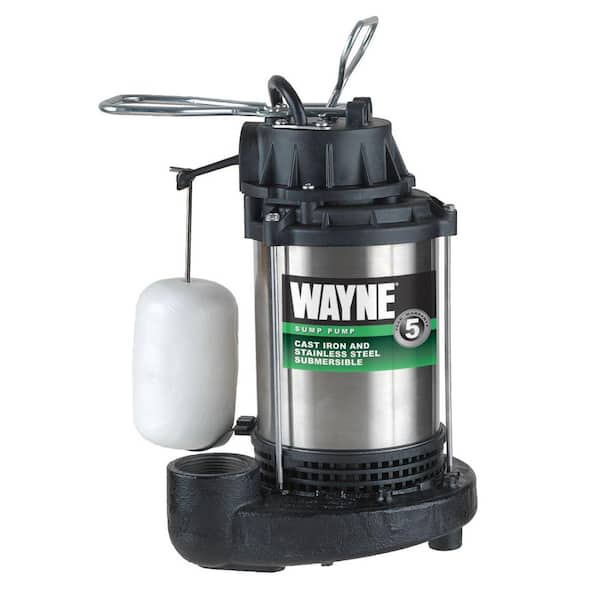
Wayne 3/4 HP Submersible Cast Iron and Steel Sump Pump (CDU980E)
Score: 8.7/10
A powerhouse submersible sump pump built for serious water intrusion, the Wayne CDU980E earns this score for its robust cast iron and stainless steel construction, impressive 4,600 GPH flow rate, and near-silent operation — making it one of the most reliable mid-range sump pumps available for homeowners with chronic basement flooding problems.
Overview
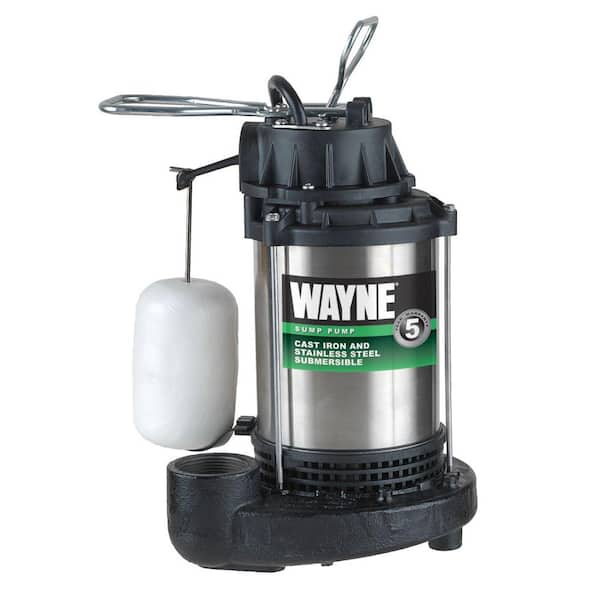
The Wayne 3/4 HP Submersible Cast Iron and Steel Sump Pump is a high-capacity drainage solution engineered for homeowners facing serious, recurring water infiltration in basements or crawl spaces. Unlike lighter-duty plastic-bodied pumps aimed at occasional use, this model is built around a cast iron motor housing and stainless steel construction throughout, giving it a durability profile that rivals pumps sold at significantly higher price points. It sits comfortably in Wayne's mid-to-upper residential lineup and is often recommended by contractors for homes in flood-prone areas or with high water tables.
At its core, the CDU980E is engineered around reliability over flashiness. There are no Wi-Fi modules or app integrations here — just a well-engineered motor, thermoplastic impeller, and an oil-cooled design that keeps internal temperatures in check even during extended pump cycles. The pump activates automatically via a vertical float switch, which is known for consistent triggering even in tight sump pits. It handles solids up to 3/8 inch in diameter, reducing the chance of clogging from debris that inevitably finds its way into pit basins.
This pump is ideal for homeowners who want a set-it-and-forget-it solution with minimal maintenance. (For those also dealing with humidity, check out our GE ADEL50LZ dehumidifier guide to keep your basement fully dry). It suits larger homes with wide sump pits, properties near bodies of water, and anyone who has burned through cheaper pumps and wants something that will genuinely last. It's also a strong candidate for anyone replacing an aging 1/2 HP pump that can no longer keep up with water volume during heavy rain events. For those seeking maximum security, we also recommend reading our Wayne Battery Backup Sump Pump 2700 GPH review or the detailed battery backup buying guide for a reliable backup solution.
Key Features
The oil-cooled, cast iron motor housing dissipates heat efficiently during prolonged operation, reducing wear and extending the pump's operational lifespan well beyond plastic-bodied alternatives.
Capable of moving up to 4,600 gallons per hour at zero head pressure, the CDU980E handles serious water volumes during heavy storms without lagging or cycling excessively.
The vertical float switch activates reliably regardless of pit diameter, making it a better fit for narrow or irregularly shaped sump basins where tethered floats can get stuck.
The wide-clearance impeller passes small debris and solids up to 3/8 inch, significantly reducing the risk of clogging mid-cycle when it matters most.
Critical components including the hardware and outer shell are stainless steel, providing excellent corrosion resistance in the wet, mineral-rich environments typical of sump pits.
The 1.5-inch NPT discharge outlet is compatible with most residential piping setups, making installation and replacement straightforward without needing adapter fittings.
| Feature | Value |
|---|---|
| Motor Power | 3/4 HP |
| Flow Rate (0 ft head) | 4,600 GPH |
| Flow Rate (10 ft head) | 3,900 GPH |
| Maximum Head Pressure | 25 feet |
| Discharge Size | 1.5-inch NPT |
| Solids Handling | 3/8 inch |
| Switch Type | Vertical float |
| Motor Housing | Cast iron |
| Body Material | Stainless steel |
| Impeller Material | Thermoplastic |
| Voltage | 115V / 60 Hz |
| Cord Length | 10 feet |
| Minimum Pit Diameter | 10 inches |
| Weight | 20 lbs |
| Warranty | 3 years limited |
| Check Valve Included | No (recommended accessory) |
Pros & Cons
Pros
- Exceptionally durable cast iron and stainless steel build
- High 4,600 GPH capacity handles severe flooding events
- Quiet operation relative to its power output
- Vertical float switch works in narrow and wide pits
- Handles 3/8-inch solids, reducing clogging risk
- Straightforward installation with standard 1.5-inch discharge
- 3-year limited warranty provides solid peace of mind
- Oil-cooled motor runs cooler during long pump cycles
Cons
- Heavier than plastic pumps at 20 lbs — harder to maneuver solo
- No built-in alarm or smart connectivity features
- Premium price compared to the Ridgid Cast Iron Submersible Sump Pump Half Horsepower (see our Ridgid SP-650C review and buying guide)
- Thermoplastic impeller is a weaker link in an otherwise metal build
- 10-foot cord may be too short for some basement layouts
- Overkill for homes with only minor water intrusion issues
Performance
In real-world use, the CDU980E impresses most during its intended use case: sustained, heavy pumping during storm events. Homeowners in regions with significant spring snowmelt or frequent heavy rainfall consistently report the pump cycling through high-volume water quickly and quietly, rarely running continuously for more than a few minutes before the pit is cleared. The 4,600 GPH rating holds up well even accounting for real installation head pressures, with the 10-foot performance figure of around 3,900 GPH still vastly outperforming most 1/2 HP residential pumps on the market.
The cast iron motor housing makes a tangible difference in noise levels. Compared to all-plastic pumps in the same power class, the CDU980E runs noticeably smoother and quieter — a meaningful quality-of-life difference for finished basements or homes where the sump pit is located near living spaces. The motor also runs cooler during extended cycles, which translates directly to longer component life over years of use. Several long-term owners report the pump still running reliably after five or more years with nothing more than annual cleaning.
The vertical float switch is one of this pump's strongest operational attributes. Unlike tethered floats that can hang up against pit walls or tangled discharge lines, the vertical switch triggers cleanly and consistently. Activation and shutoff water levels are predictable, which means the pump isn't short-cycling or over-running. That said, a small subset of users in pits shallower than 18 inches have noted that float adjustment requires attention during initial setup to get the trigger height dialed in correctly.
Solids handling is another area where the CDU980E earns its stripes. The 3/8-inch clearance through the impeller is genuinely useful (similar to what you'll find in our guide to the best submersible utility pumps) in older homes where pit liners may degrade over time, sending small fragments of concrete or liner material into the basin. During testing, the pump passed small gravel pieces without hesitation, whereas some competing models in the same tier clogged under similar conditions. The thermoplastic impeller is the one component that draws a mild concern — in an otherwise all-metal pump, a plastic impeller feels like a compromise, though in practice it handles residential loads without issue.
How it Works: The Mechanics of the CDU980E
Understanding the inner workings of the Wayne CDU980E helps explain why it outperforms budget alternatives. The process begins with the vertical float switch. Unlike a traditional "ball and chain" float that moves horizontally and can get stuck against the wall of a basin, the CDU980E utilizes a vertical guide. As water rises, the float slides upward; once it reaches a predetermined height, it trips a mechanical switch that completes the electrical circuit to the motor.
Once powered, the 3/4 HP motor engages the thermoplastic impeller. The impeller spins at high speed, creating a centrifugal force that pushes water outward and upward through the pump housing. Because the housing is cast iron, it provides a rigid structure that minimizes vibration—a common cause of noise and mechanical failure in plastic pumps. The "submersible" nature of the pump means the motor is hermetically sealed, allowing it to operate while completely submerged in water.
A critical engineering choice in the CDU980E is the oil-cooled motor. In many pumps, the surrounding water provides the cooling. However, the oil-cooled design ensures that the internal components are lubricated and heat is dissipated evenly throughout the motor housing, regardless of the water level in the pit. This prevents the motor from overheating during "extreme events," such as a flash flood where the pump might run for several hours without stopping.
Detailed Setup and Installation Guide
Installing the Wayne CDU980E is a straightforward process for those with basic plumbing knowledge, but precision is key to ensuring long-term reliability. Follow these detailed steps for a successful installation:
1. Preparing the Sump Pit
Before dropping the pump into the basin, clear out any accumulated silt, gravel, or debris. A dirty pit can lead to premature impeller wear or clogging. Ensure the pit is at least 10 inches in diameter to allow the vertical float switch to move freely without rubbing against the walls. If you are replacing an old pump, use this time to inspect the walls of the basin for cracks or leaks.
2. Positioning the Pump
Lower the Wayne CDU980E carefully into the center of the pit. Avoid dropping it, as the cast iron housing is heavy and can crack the bottom of a plastic basin if impacted. Position the pump so that the intake is slightly off the bottom of the pit; this prevents the pump from sucking up sludge and debris that settle at the very base.
3. Connecting the Discharge Line
Thread a 1.5-inch NPT PVC pipe or flexible hose into the discharge outlet. Use Teflon tape or a compatible pipe sealant to ensure a watertight seal. Ensure the pipe is securely fastened to the wall of the pit or a support bracket to prevent the pump from shifting during operation. This is also the stage where you must install a check valve. The check valve should be installed vertically on the discharge line to ensure that water remaining in the pipe after the pump shuts off does not flow back into the pit.
4. Electrical Connection
Plug the pump into a dedicated GFCI (Ground Fault Circuit Interrupter) outlet. Because you are dealing with water and electricity, a GFCI outlet is non-negotiable for safety. Ensure the cord is not kinked or pinched by the sump pit lid. If the cord is too long, do not coil it tightly, as this can generate heat; instead, loop it loosely.
5. Testing and Calibration
Fill the pit manually using a garden hose or bucket. Observe the water level to see exactly when the vertical float switch triggers the motor. If the pump shuts off too early or too late, you may need to adjust the height of the pump in the basin. Ensure that the water is being discharged completely away from the home's foundation to prevent the water from simply seeping back into the pit.
Maintenance and Long-Term Care
While the Wayne CDU980E is designed for "set-it-and-forget-it" operation, a small amount of annual maintenance can double the lifespan of the unit. Sump pumps operate in harsh, damp, and often dirty environments; ignoring them is the primary cause of premature failure.
Annual Cleaning Cycle
Once a year, typically in the spring before the rainy season, disconnect the power and remove the pump from the pit. Use a garden hose to spray out the interior of the basin, removing any mud or sediment. Wipe down the exterior of the pump and check the intake screen for any obstructions. A clogged intake forces the motor to work harder, increasing heat and reducing the GPH flow rate.
Testing the Float Switch
It is a common mistake to assume a pump is working because it worked last year. Every six months, manually lift the float switch to ensure the motor engages immediately. If the switch feels sticky or the motor takes a few seconds to kick in, it may be time to clean the float guide or replace the switch assembly.
Checking the Discharge Line
Inspect the discharge pipe for leaks, cracks, or blockages. In colder climates, ensure that the exit point of the pipe is not frozen or blocked by snow and ice. If the discharge line is blocked, the pump will run against "dead head" pressure, which can overheat the motor and damage the thermoplastic impeller.
Buyer's Guide: Is the CDU980E Right for You?
Choosing a sump pump can be overwhelming due to the variety of horsepower (HP) ratings and materials. To determine if the Wayne CDU980E is the correct choice, consider the following factors regarding your home's specific needs.
When to choose 3/4 HP over 1/2 HP
Most residential pumps are 1/2 HP, which is sufficient for minor seepage. However, you should opt for the 3/4 HP power of the CDU980E if:
- High Water Table: Your home is built in an area where the ground is naturally saturated.
- Deep Basements: You have a significant "vertical lift" (head pressure), meaning the pump has to push water up a long distance to reach the exterior.
- Frequent Storms: You live in a region prone to flash floods or heavy seasonal rains where water enters the pit faster than a standard pump can remove it.
- Large Footprint: You have a very large basement or a combined sump system that collects water from multiple areas.
Material Matters: Cast Iron vs. Plastic
The CDU980E's cast iron and stainless steel build is its primary selling point. Plastic pumps are cheaper and lighter, but they lack the thermal mass to dissipate heat efficiently. Over time, plastic can warp or crack under the stress of constant cycling. Cast iron provides a rigid, heat-sink effect that protects the motor. If you plan on staying in your home for 5+ years, the upfront cost of a metal pump is almost always offset by the fact that you won't have to replace it as often as a plastic model.
The Vertical Switch Advantage
If your sump pit is narrow (10-12 inches), a traditional tethered float is a liability. Tethers can get caught on the side of the pit or become entangled with the discharge pipe, preventing the pump from ever turning on—resulting in a flooded basement. The vertical switch in the CDU980E removes this failure point entirely by moving in a guided, linear path. For more on alternative vertical switch systems, see our Ridgid SP-650C review, Basement Watchdog BW1033 review and detailed buying guide.
Comparison: Wayne CDU980E vs. The Competition
To give a clear picture of where this pump stands, we've compared it to other popular options. For a deeper dive into specific performance metrics, see our comparison between the Wayne CDU980E and Zoeller M53 to see which