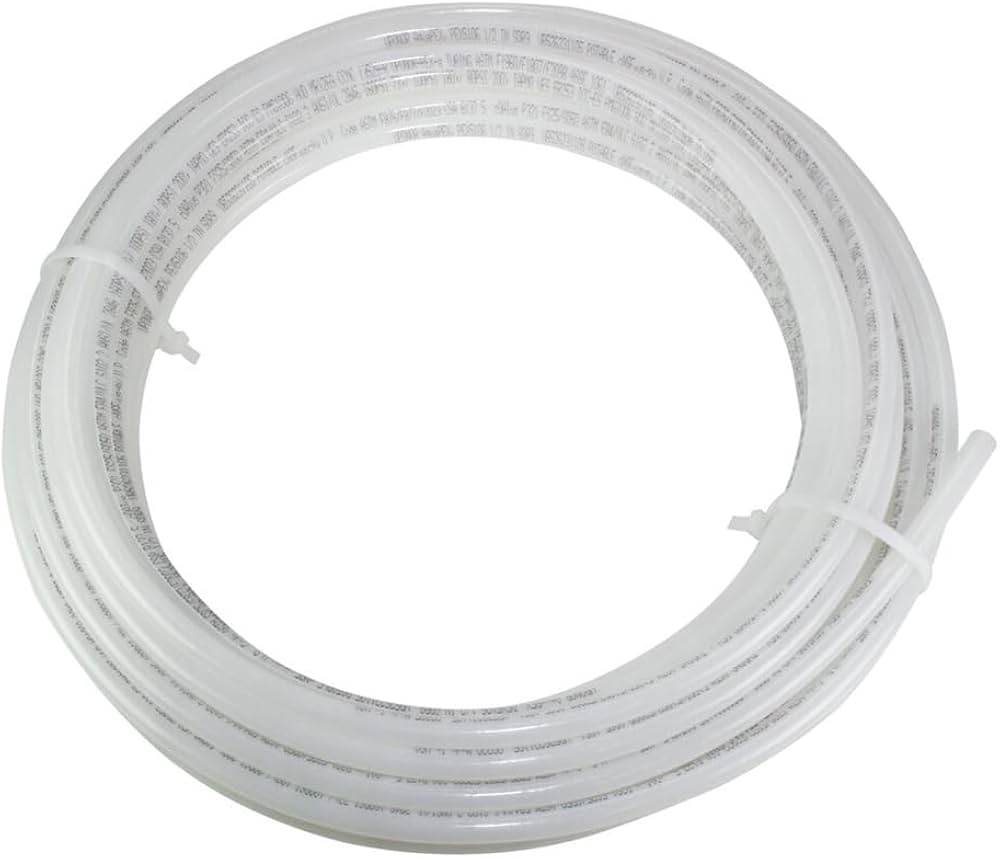
If you are planning a professional PEX-A plumbing installation, the choice of tubing—specifically a high-grade option like Uponor AquaPEX—directly affects installation speed, fitting compatibility, and long-term freeze resilience. The Uponor AquaPEX White PEX-A Tubing Coil (see our detailed Uponor AquaPEX (F1040500) review) is a focused pick for installers and homeowners who want expansion-style PEX-A tubing from a widely used plumbing brand. This guide covers what this specific coil is best suited for, what to verify before buying, and how to decide whether this coil belongs in your potable-water plumbing plan. If you are updating your entire system, consider how your tubing connects to your filtration and water systems; for example, check out our Waterdrop G3P800 review for advanced water processing.
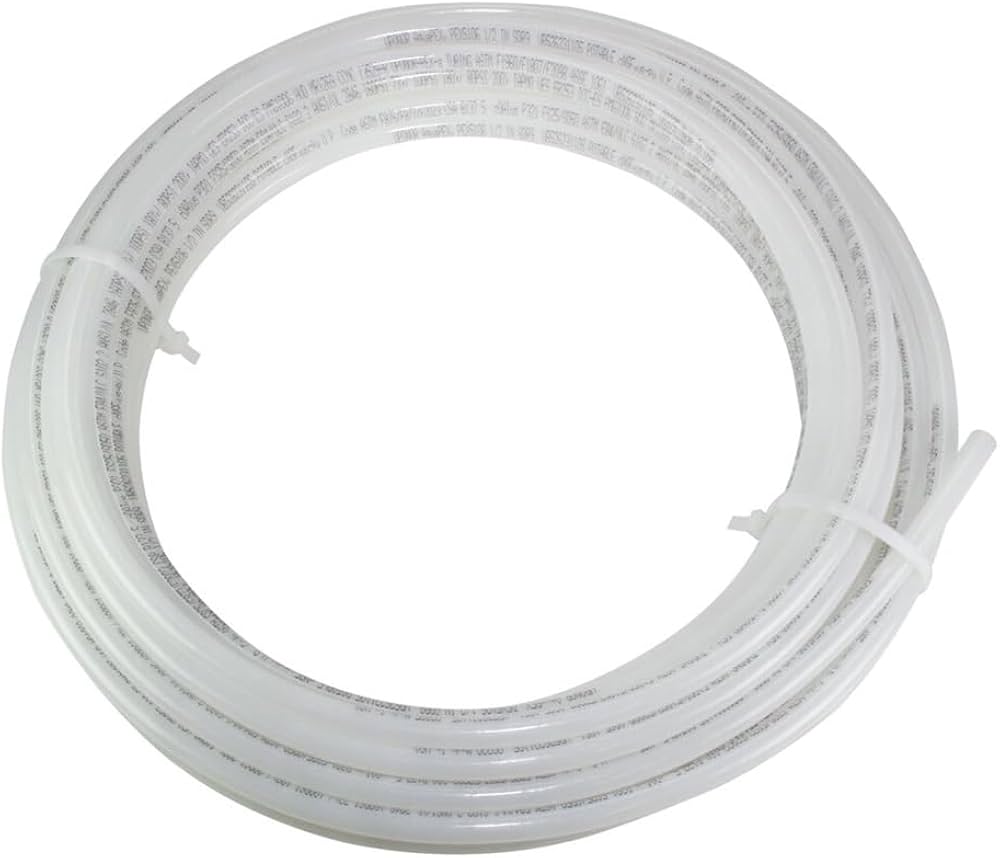
Best Overall PEX-A Tubing Coil: Uponor AquaPEX White PEX-A Tubing Coil
Score: 9.2/10. The Uponor AquaPEX White PEX-A Tubing Coil is the strongest choice for buyers who specifically want flexible PEX-A tubing for potable-water supply lines and expansion-style plumbing systems.
Uponor AquaPEX White PEX-A Tubing Coil
The Uponor AquaPEX White PEX-A Tubing Coil is designed for residential and light commercial water-distribution projects where PEX-A flexibility and expansion fitting compatibility are priorities.
Related parts & accessories
PEX-A is often selected because it is highly flexible compared with rigid piping options or Apollo Half-Inch White PEX-B Flexible Water Pipe Tubing Coil, making it easier to route through framing, around corners, and across longer runs with fewer fittings. This reduction in fittings not only speeds up the installation process but also minimizes the number of potential leak points within the walls of a structure.
This catalog item is identified by model number F1040500. Before ordering, confirm the exact nominal diameter, coil length, and local code requirements against your project documents or supplier listing. That verification matters because plumbing systems depend on correct pipe sizing, approved fittings, proper support spacing, and compatibility with the connection method you plan to use. Using an incorrect diameter or a non-compatible fitting can lead to catastrophic failures or a rejected inspection from local building authorities.
The white color makes this tubing a versatile choice when you do not need red and blue color coding for hot and cold lines. It can be especially useful for installers who prefer to label lines manually or who want one tubing color for mixed supply layouts. For organized mechanical rooms, manifolds, and service areas, plan to add clear labeling so future maintenance is easy. This is especially important when coordinating with new fixtures, such as the MOEN Chateau 7430 kitchen faucet or a Pfister Stellen faucet, to ensure consistent water pressure. When selecting new fixtures, refer to our guide on how to choose the best bathroom sink faucet. For high-quality fixtures that pair well with PEX-A, see our Delta Essa buying guide for high-quality fixture options. White PEX is often preferred in high-end custom homes where the plumbing may be partially exposed in a basement or utility room—perhaps near a professional Ridgid SP-650C sump pump installation (and explore the Ridgid SP-650C sump pump review for emergency drainage) (see also our Wayne ESP25 battery backup review for flood protection), providing a clean, uniform look. If you are updating your basement plumbing, we recommend reviewing our Basement Watchdog buying guide or our Sump Pump buying guide or checking out our Ridgid SP-650C sump pump review for specialized drainage solutions. For those integrating professional-grade couplings, the Watts 3/4 inch Lead-Free Brass FPT Coupling provides excellent performance and durability for system transitions.
This is best for buyers who already know they want an Uponor-compatible PEX-A system, especially if they are using expansion rings and fittings designed for PEX-A. It is less ideal for shoppers looking for a universal “any fitting, any system” pipe without checking compatibility first. The tubing, fittings, tool, and ASTM-Standard pipes and fittings should all be treated as one complete system to ensure the structural integrity of the plumbing network over several decades of use.
Pros
- PEX-A construction is well suited to flexible plumbing layouts.
- Coil format helps reduce the number of joints on longer runs.
- White tubing works for general-purpose supply layouts and manual labeling.
- Good fit for buyers building around an Uponor-compatible PEX-A system.
- Useful for manifold-style plumbing, branch lines, and renovation work.
Cons
- Requires careful confirmation of compatible fittings, rings, and tools.
- White tubing does not visually separate hot and cold lines without labels.
- Not a substitute for checking local plumbing code.
- Not suitable if system is standardized around PEX-B or PEX-C crimp methods.
| Specification | Details |
|---|---|
| Product name | Uponor AquaPEX White PEX-A Tubing Coil |
| Model number | F1040500 |
| Category | Pipes & Fittings |
| Material type | PEX-A tubing |
| Color | White |
| Format | Tubing coil |
| Primary use | Potable-water plumbing and water-distribution layouts where approved |
| Key buying check | Verify nominal size, coil length, fitting system compatibility, and local code approval before installation |
Understanding PEX-A Technology: How It Works
To understand why Uponor AquaPEX is a premium choice, one must understand the "A" in PEX-A. Cross-linked polyethylene (PEX) comes in three main varieties: A, B, and C. The "A" designation refers to the Engel method of cross-linking, where the polymer is cross-linked during the extrusion process using a peroxide catalyst. This creates a more uniform and flexible molecular structure compared to Apollo Half-Inch White PEX-B Flexible Water Pipe Tubing Coil (which is cross-linked after extrusion) or PEX-C (which uses electron-beam radiation).
The primary advantage of the PEX-A structure is "molecular memory." When you use an expansion tool to stretch the tubing to accommodate a fitting, the PEX-A material is designed to shrink back and contract tightly around the fitting. This creates a permanent, mechanical seal that is far more resilient than the crimp-ring method used in PEX-B. If the tubing is kinked during installation, PEX-A can often be repaired by heating the kinked area with a heat gun, causing the material to shrink back to its original diameter—a feat impossible with other PEX types.
In a residential application, this translates to fewer leak points. Because PEX-A allows for larger expansion fittings, the internal diameter of the pipe remains consistent through the fitting. In contrast, crimp fittings often restrict the water flow, creating a "bottleneck" that can lead to reduced water pressure at the fixture. By maintaining a full-bore flow, the AquaPEX system ensures optimal hydraulic performance throughout the home.
Comprehensive Buyer's Guide: Choosing PEX-A Tubing
Selecting the right tubing coil requires more than just picking a brand name; it requires a systemic approach to plumbing design. When evaluating the Uponor AquaPEX White PEX-A Tubing Coil, you should consider four primary pillars: Material Compatibility, Thermal Performance, Code Compliance, and Installation Logistics.
Material Compatibility and System Synergy
A common mistake among DIYers is purchasing PEX-A tubing but attempting to use PEX-B crimp rings. While some "universal" fittings exist, the true strength of the F1040500 model is realized when paired with a dedicated expansion system. You must ensure you have the correct expansion tool—such as the Milwaukee M12 ProPEX Expansion Tool Kit—and matching Uponor AquaPEX expansion accessories. If you use the wrong fitting, you negate the molecular memory benefits of the PEX-A material and risk an immediate leak upon pressurization. For those needing universal transition fittings, SharkBite push-to-connect fittings can provide a quick solution, though they differ from expansion-style joints.
Furthermore, consider the chemistry of the water in your region. While PEX-A is generally compatible with most potable water sources, extremely high chlorine levels in municipal water can potentially degrade the plastic over many decades. Checking if your specific regional water chemistry requires a specialized barrier layer (like an oxygen barrier for radiant heating) is critical. For standard potable water, the AquaPEX line is designed to meet rigorous safety standards, but verification against local water reports—and considering professional filtration options—explore our Pelican PC600 review or general advice on choosing a water softener or our Culligan WH-HD200-C review or a Fleck 5600SXT water softener to provide scale and sediment protection—is a mark of a professional installation.
Thermal Performance and Freeze Resilience
PEX-A is inherently more resistant to freeze-bursting than copper or CPVC. Because the material can expand and contract significantly without fracturing, it provides a critical safety margin in climates prone to hard freezes. However, it is important to remember that while the pipe might survive a freeze, the fittings or the fixtures attached to them might not. Always ensure that your routing avoids uninsulated exterior walls where possible, regardless of the tubing's resilience.
Thermal expansion is another key factor. PEX expands more than metal pipes when heated. If you are running long lines of hot water, you must account for this "growth." If the tubing is clamped too tightly against a rigid structure, the thermal expansion can cause the pipe to bow or put undue stress on the fittings. Using a "floating" installation method—where the pipe is loosely supported rather than clamped tight—is the best way to handle these thermal cycles.
Navigating Local Plumbing Codes
Plumbing codes vary wildly by municipality. Some jurisdictions require specific colors for hot (red) and cold (blue) lines for inspection purposes. Since the F1040500 is white, you must verify if your local inspector requires color-coded tubing. If white is permitted, the best practice is to use high-visibility markers or adhesive labels at every transition point, manifold, and termination. Failure to do this can lead to "blind" plumbing, where a future homeowner or plumber cannot tell which line is which without flushing the system.
Additionally, check for requirements regarding the "support spacing." Some codes mandate that PEX be supported every 32 inches, while others may be more lenient or strict. Using the wrong support spacing can lead to sagging, which creates pockets where air or sediment can collect, or leads to the "water hammer" effect mentioned later. Always keep a copy of your local plumbing code on-site during the rough-in phase.
Logistics: Coils vs. Rigid Pipe
The coil format of the Uponor AquaPEX tubing is designed to reduce the number of couplings. Every time you add a fitting, you introduce a potential failure point. By running a single continuous line from the manifold to the fixture, you eliminate the need for elbows and tees inside the walls. This "home-run" plumbing style is the industry standard for modern high-efficiency homes, as it allows for individual control of water lines from a central hub.
Buying in coils also simplifies transport and storage. However, be aware that "coil set" is a real phenomenon. When you unroll a large coil of PEX, the tubing will naturally want to curve. This requires a bit more effort to straighten out during installation. Professional tip: unroll the tubing and let it sit in the sun for a few hours before installation; the warmth helps the material relax, making it much easier to route in straight lines.
Installation and Setup Process
Installing the Uponor AquaPEX White PEX-A Tubing Coil is a systematic process that requires precision. While the material is flexible, the method of connection is rigid in its requirements. Following a disciplined workflow prevents the need for costly tear-outs.
Step 1: Planning and Layout
Before cutting any tubing, map out the "home-run" paths. Determine the shortest route from the manifold to each fixture. Because PEX-A is flexible, you can route it through drilled holes in studs. However, avoid tight bends that exceed the minimum bend radius of the tubing; over-bending can stress the material and lead to "kinks" that require heat-repair. Ensure that the paths do not cross electrical wiring too closely to avoid potential heat transfer or accidental punctures during future wall work (for safe electrical upgrades, see our guide on comprehensive guide on replacing circuit breakers safely).
Step 2: Cutting and Preparation
Use a dedicated PEX cutting tool to ensure a square cut. A jagged or diagonal cut can prevent the expansion ring from seating correctly, leading to a slow leak. Standard utility knives are not recommended because they often crush the tube wall, creating an oval shape rather than a perfect circle. After cutting, inspect the end of the tube for burrs or debris. Ensure the interior of the pipe is clean; any sawdust or construction debris left inside can clog aerators or dam