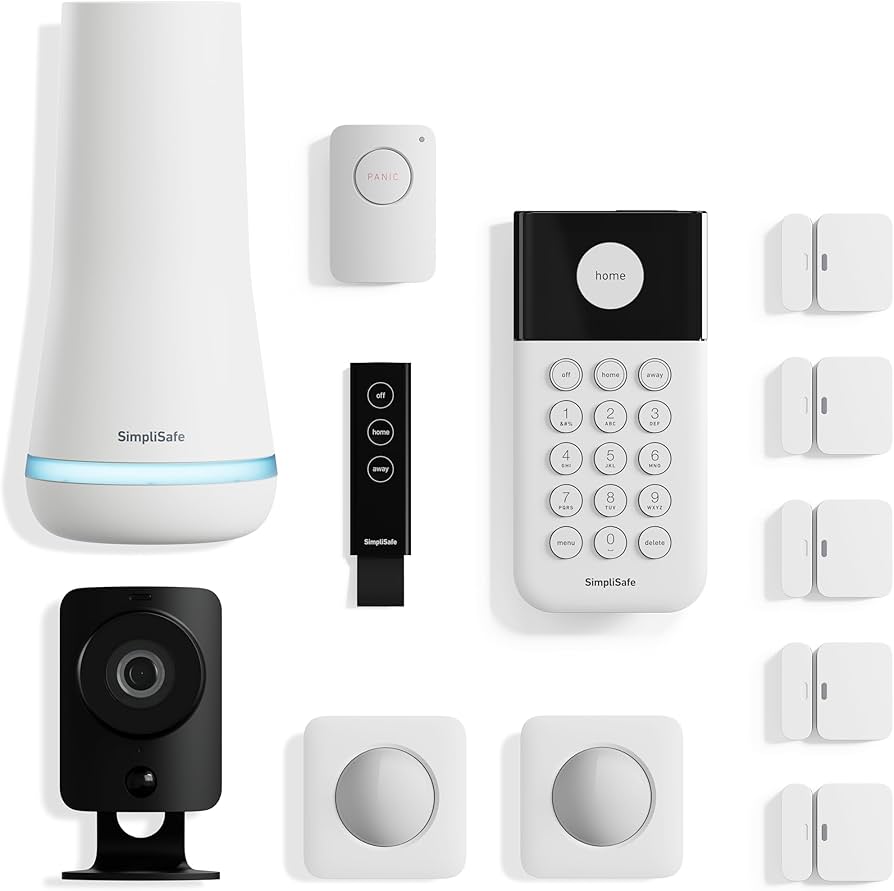
Choosing the right home security system requires a balance of daily usability and flexible coverage that fits your specific floor plan. The SimpliSafe 12-Piece Wireless Home Security System (SS3-12PC-01) is designed for that middle ground: more complete than a basic starter kit, but still wireless, renter-friendly, and contract-free.
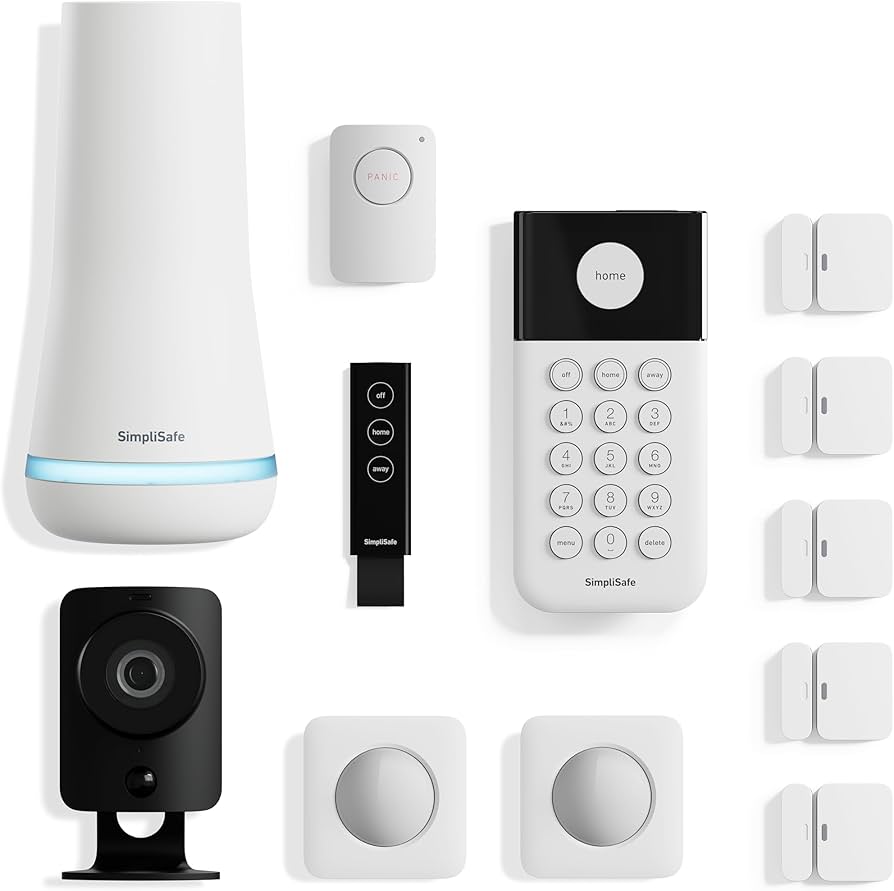
This guide looks at whether the SimpliSafe 12-Piece Wireless Home Security System is a smart buy for homeowners, renters, and families who want professional monitoring options without committing to hardwired equipment. If you are evaluating different DIY approaches, our Eufy Security Alarm (S330) review offers a great comparison, and you may also want to check out our Vivint security system review for a larger home alternative. With the rise of smart home technology, the barrier to entry for high-quality security has dropped, but choosing the right number of sensors and monitoring tiers remains a challenge for most consumers.
Best Overall: SimpliSafe 12-Piece Wireless Home Security System with 24/7 Live Guard Protection
Score: 8.8/10 — A strong whole-home security kit for buyers who want easy DIY installation, flexible monitoring, and broad entry-point coverage without a long-term contract.
SimpliSafe 12-Piece Wireless Home Security System
The SimpliSafe 12-Piece Wireless Home Security System is built for people who want a more complete security setup than a small starter kit, but do not want the expense or disruption of a hardwired installation.
The system includes core components such as a base station, keypad, motion sensor, entry sensors, and additional pieces intended to protect multiple access points and common living spaces. By bundling twelve components, SimpliSafe addresses the "sensor gap" often found in 5-piece kits, which typically leave side windows or back porches unprotected.Its main appeal is simplicity. Because the system is wireless, it can be installed without running cables through walls or scheduling a professional installer. This removes the "installation anxiety" associated with traditional security—no drilling through studs or fishing wires through attics. That makes it especially attractive for renters, apartment dwellers, and homeowners who might also consider a compact hub like the Abode Iota All-in-One Home Security Kit
Related parts & accessories
The optional 24/7 Live Guard monitoring is the feature that pushes this kit beyond a basic self-monitoring setup. For a deeper dive into high-end kits, such as our SimpliSafe (SS3-13PKGCAM) review, you might compare this to SimpliSafe 13-Piece Wireless Home Security System with Smart Alarm Indoor Camera if you need integrated video. With a compatible monitoring plan, trained agents can respond to alerts, visually verify potential threats when supported by connected camera coverage, and help dispatch emergency services in real time. This layer of protection is critical for those who travel frequently or live in areas where response times are a concern; having a human agent verify a break-in via video reduces false alarm penalties and ensures police are dispatched with high-priority information.
This system is best for buyers who want practical, expandable protection without being locked into a traditional security contract. It may not be the right fit if you want a fully hardwired, professionally designed security system from day one (see our Vivint review for a pro-installed alternative), but for most DIY-focused households, the SimpliSafe 12-Piece Wireless Home Security System offers a strong balance of coverage, ease of use, and monitoring flexibility. It bridges the gap between "basic alert" and "full fortress" without requiring a degree in electrical engineering.
| Spec | Details |
|---|---|
| Model number | SS3-12PC-01 |
| Category | Home Security Systems |
| System type | Wireless DIY home security kit |
| Kit size | 12-piece package |
| Included component types | Base station, keypad, motion sensor, entry sensors, and additional home security components |
| Installation | No wiring or professional installation required |
| Monitoring | Optional 24/7 Live Guard professional monitoring support |
| Best for | Renters, homeowners, families, and buyers wanting flexible contract-free protection |
Pros
- Wireless design makes installation easier than hardwired systems
- 12-piece kit is suitable for covering multiple entry points and rooms
- Optional professional monitoring adds reassurance when you are away
- Good fit for both renters and homeowners
- Flexible, contract-free approach compared with many traditional security systems
- Can be adjusted or expanded as your home layout changes
Cons
- Advanced monitoring features may require an ongoing plan
- Not as customized as a professionally designed hardwired installation
- Best Live Guard experience may depend on compatible camera coverage and service availability
- DIY setup still requires careful sensor placement for best results
How the SimpliSafe 12-Piece System Works
Understanding the mechanics of a wireless security system is essential to maximizing its effectiveness. If you are just starting your smart home journey, you may also want to explore our guides on Arlo Essential security systems or the Eufy Security Alarm (S330) review for perimeter monitoring.
If you are comparing different brands, our detailed Eufy Security Alarm (S330) review provides a useful benchmark for the ADT Self Setup 9-Piece Home Security Kit with 24/7 Professional Monitoring for sensor counts. The SS3-12PC-01 operates on a "hub-and-spoke" architecture. The Base Station serves as the brain (the hub), managing the communication between all individual sensors (the spokes) and the external monitoring center.The Base Station and Keypad
The Base Station connects to your home's internet via Wi-Fi or an optional cellular backup. It is the primary communicator; when a sensor is triggered, it sends a signal to the Base Station, which then triggers the siren and alerts the monitoring center. The Keypad is your physical interface for arming and disarming the system. While most users will eventually use the SimpliSafe mobile app, the physical keypad remains essential for children, elderly family members, or guests who may not have the app installed.
Entry and Motion Sensors
The entry sensors use a magnetic contact system. One part of the sensor is placed on the door or window frame, and a small magnet is placed on the moving part. When the magnetic bond is broken (the door opens), the circuit is interrupted, and an alarm is triggered. The motion sensors utilize Passive Infrared (PIR) technology, which detects heat signatures moving across a room. This ensures that if an intruder bypasses a door or window—perhaps by breaking glass—the interior motion sensor will still catch them as they move through the living space.
The Live Guard Ecosystem
For those looking to integrate high-resolution video, checking out our Arlo Pro 4 Spotlight Camera Security Bundle (4-Camera System) (or see our Arlo Essential review for a budget alternative) can help determine the best camera pairing. The "Live Guard" component is what distinguishes this system from standard DIY alarms. In a standard setup, the monitoring center receives a "ping" that a sensor was tripped. In a Live Guard setup, if you have integrated cameras, the agent can actually see the event in real-time. This allows them to distinguish between a pet knocking over a lamp and a genuine home intrusion, drastically reducing the time it takes for emergency services to be dispatched with accurate information.
Step-by-Step Installation and Setup
While installing security, some homeowners also look into structural safety and soundproofing, such as using Rockwool Safe 'n' Sound insulation during renovations. One of the primary reasons users choose the SimpliSafe SS3-12PC-01 is the lack of professional installation fees. (For those handling their own electrical upgrades, our guide on how to replace a circuit breaker safely is a must-read (and see our comparison of AFCI vs standard circuit breakers if you are updating your panel)). The setup process is designed to be completed in under an hour, regardless of technical expertise.
Phase 1: The Brain
Start by plugging in the Base Station in a central location. Centrality is key; since the sensors communicate wirelessly, placing the base station in a far corner of the house may lead to signal drop-off for sensors on the opposite end of the building. Follow the on-screen prompts on the keypad to connect the base to your Wi-Fi network.
Phase 2: Sensor Placement
The entry sensors use a high-bond adhesive backing. Before peeling the tape, we recommend "dry-fitting" the sensors to ensure they align perfectly. For doors, place the sensor on the frame and the magnet on the door. For windows, ensure the gap is narrow enough for the magnetic connection to remain stable. Avoid placing sensors near large metal objects or thick mirrors, as these can occasionally interfere with the wireless signal.
Phase 3: Motion Sensor Calibration
Motion sensors should be placed high on a wall or in a corner to maximize their field of view. Avoid pointing them directly at a heat source (like a radiator or a sunny window), as rapid temperature changes can occasionally cause false positives. The SS3-12PC-01 sensors are designed to ignore small pets, but placing them slightly higher can help ensure accuracy.
Phase 4: Testing and Arming
Before leaving the house "Armed," enter "Test Mode" via the keypad or app. Walk through every door and window to ensure the base station registers the opening. This final check is the most important step in DIY security, as it prevents the frustration of a false alarm during your first night of use.
Long-Term Maintenance and Upkeep
A security system is not a "set it and forget it" appliance. To maintain the integrity of your protection, a small amount of routine maintenance is required. Similarly, ensuring your basement is secure from flooding with a Ridgid SP-650C sump pump (or see our guide to submersible utility pumps) is part of a total home protection strategy, much like how we discuss basement moisture control in our GE ADEL50LZ Dehumidifier guide. If you are performing larger home upgrades, you might also consider how the Wayne ESP25 Battery Backup Sump Pump can add an extra layer of home resilience.
Battery Management
Because the SS3-12PC-01 is entirely wireless, every sensor relies on battery power. SimpliSafe provides low-battery alerts via the app and the base station. We recommend a semi-annual "battery audit" where you check the status of all sensors in the app. Replacing batteries is a simple process, usually involving standard CR2032 or similar coin cells, depending on the specific sensor model.
Connectivity Checks
Wi-Fi networks can fluctuate. If you move your router or change your ISP, you will need to update the base station settings. Additionally, it is wise to occasionally test the cellular backup by temporarily disconnecting the Wi-Fi to ensure the system still communicates with the monitoring center.
Physical Inspections
Over time, the adhesive on entry sensors can weaken, especially in high-humidity environments or on painted surfaces that peel. Every few months, give your sensors a light "tug" to ensure they are still firmly attached. A sensor that falls off a window frame is a security hole that only you can fix.
Comprehensive Buyer's Guide: Is 12 Pieces Enough?
The most common question buyers ask is whether a 12-piece kit provides "complete" coverage. The answer depends entirely on the architecture of your home. To determine if the SS3-12PC-01 is right for you, use the following logic.
The "Entry Point" Calculation
Start by counting every ground-floor entry point:
Front door + Back door + Garage door = 3 sensors
Bedroom window 1 + Bedroom window 2 = 2 sensors
Living room window 1 + Living room window 2 = 2 sensors
Kitchen window + Side door = 2 sensors
In this scenario, you have used 9 entry sensors. If you find this layout fits your needs better than a larger kit, and want a more compact setup, check out the SimpliSafe 9-Piece Wireless Home Security System with Smart Lock and Outdoor Camera.
Otherwise, see our ADT Self Setup 9-Piece Kit detailed buying guide for the ADT Self Setup 9-Piece Home Security KitRelated parts & accessories