We may earn a commission from qualified purchases made through our links.
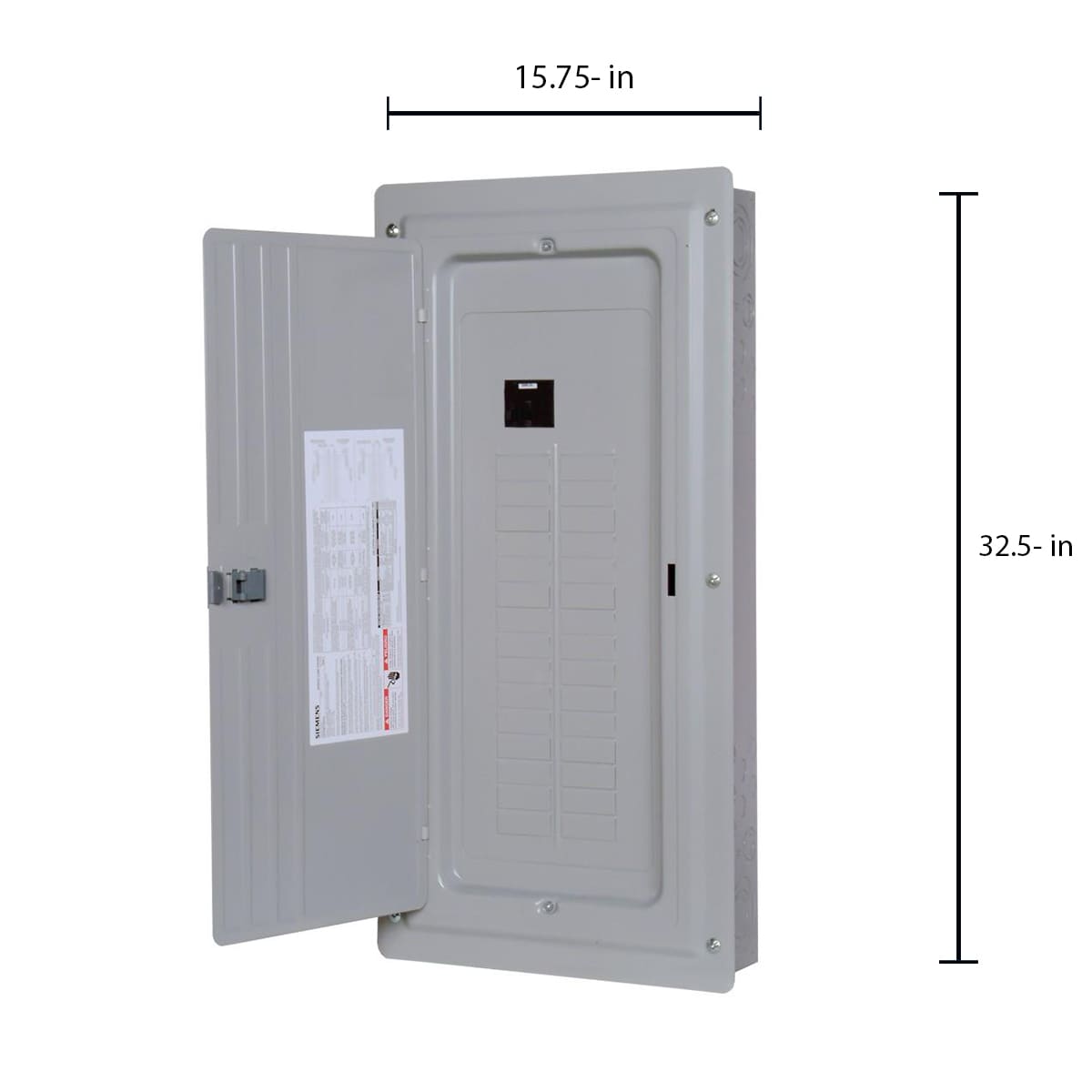
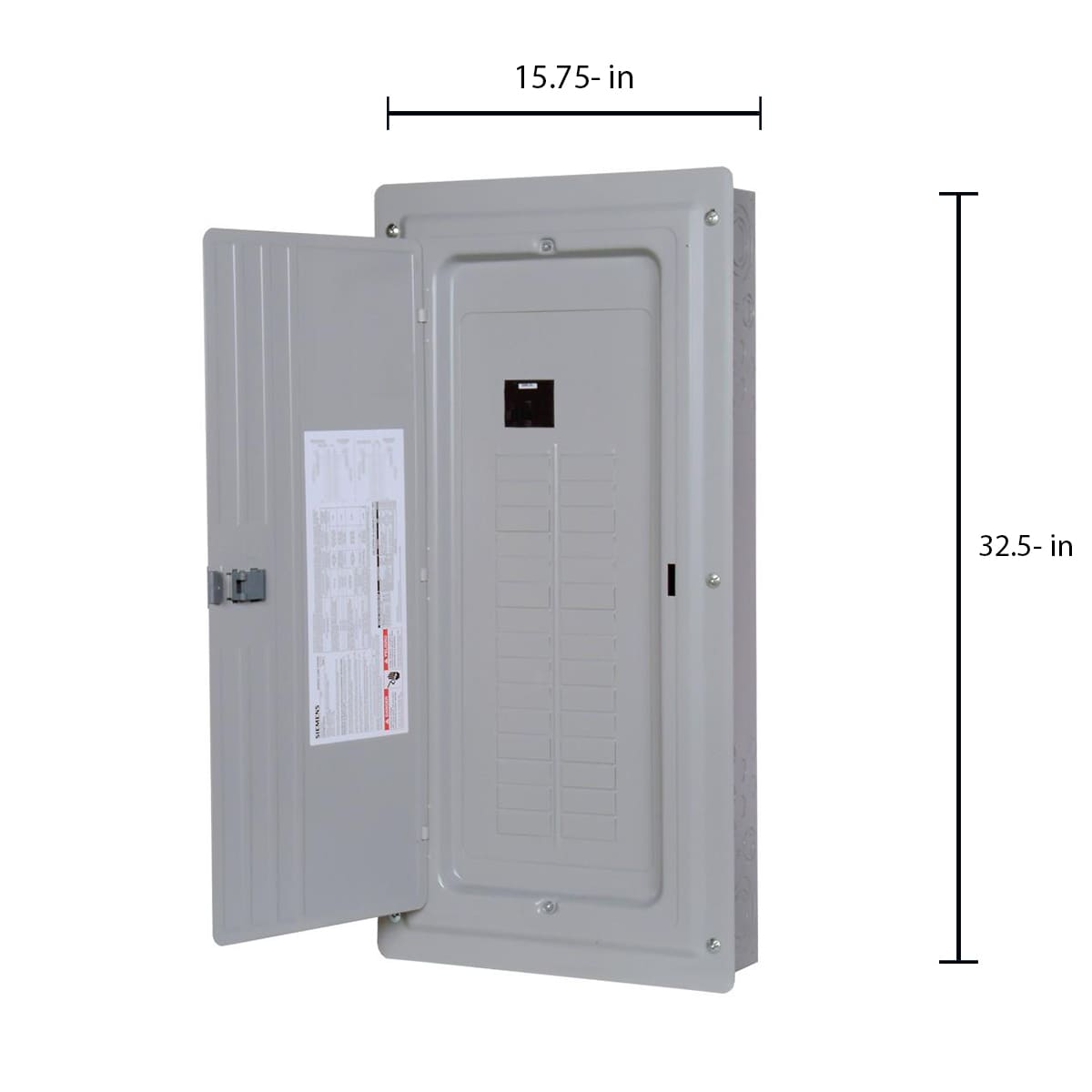
Siemens 200-Amp 30-Space 40-Circuit Indoor Main Breaker Load Center (P3040B1200CU)
Score: 8.6/10 — A dependable 200-amp indoor residential load center with strong capacity, copper bus construction, and practical breaker compatibility for service upgrades, remodels, and new installations.
Overview
The Siemens 200-Amp 30-Space 40-Circuit Indoor Main Breaker Load Center is a professional-grade residential panel featuring a high-conductivity copper bus, designed to serve as the main electrical distribution point for modern homes.
If you are upgrading your entire electrical system, it is often a good time to evaluate your breaker brand ecosystem.Related parts & accessories
With a 200-amp main breaker, 30 spaces, and support for up to 40 circuits, it is aimed at homeowners, builders, and electricians working on new installations or major panel replacements. This unit is engineered to handle the diverse electrical loads of a modern household, from high-draw kitchen appliances to sensitive home electronics. For those planning high-capacity HVAC installs, see our mini-split heat pump buying guide.
Its biggest strengths are capacity, compatibility, and durability. The copper bus construction is a notable advantage for long-term conductivity, reducing the risk of overheating and ensuring efficient current transfer over decades of use. Compatibility with Siemens QP, QPF, and QAF breakers gives installers flexibility when building out standard branch circuits (see our guide on replacing breakers safely), GFCI and AFCI protection, as well as tandem configurations where allowed by electrical code.
The Siemens 200-Amp 30-Space 40-Circuit Indoor Main Breaker Load Center is best suited for indoor residential applications where a modern 200-amp service panel is needed. It is not a DIY-friendly product for most homeowners; installation should be handled by a licensed electrician and inspected according to local electrical code requirements to ensure safety and compliance.
How It Works: The Science of Home Distribution
To understand the value of the Siemens 200-Amp 30-Space 40-Circuit Indoor Main Breaker Load Center (P3040B1200CU), one must understand the role of a load center. The "Main Breaker" acts as the master switch for the entire home. If the utility company delivers 200 amps of service to the house, the main breaker in this panel limits the total draw to 200 amps, protecting the rest of the system from catastrophic overloads.
Inside the enclosure, the copper bus bars act as the high-capacity "highway" for electricity. These bars carry the current from the main breaker to the individual branch breaker slots. Copper is used in the P3040B1200CU because it has superior electrical conductivity compared to aluminum, meaning less resistance and less heat generation during peak loads. This is critical when running multiple high-wattage devices simultaneously—such as an air conditioner, an electric oven, and a clothes dryer.
The "30-space, 40-circuit" designation refers to the physical slots and the electrical capacity. There are 30 physical slots where breakers can be snapped in. However, by using "tandem breakers" (which house two separate circuits in a single slot, similar to those used in the Eaton 200-Amp 30-Space 40-Circuit Indoor Main Breaker Load Center), the panel can support up to 40 distinct circuits. This allows a homeowner to add more dedicated lines for home offices or smart-home hubs (often integrated with professional security systems) without needing to upgrade to a physically larger panel enclosure.
When a breaker "trips," it is reacting to an overcurrent event (see our guide on AFCI vs Standard Circuit Breakers (and our guide on how to replace a circuit breaker safely)). (For those managing DC systems or marine power, see the Blue Sea Systems Marine Thermal Circuit Breaker for DC Applications). If a circuit is rated for 20 amps but a device draws 25 amps, the internal mechanism of the breaker snaps the connection open to prevent the copper wiring in your walls from overheating and causing a fire. The Siemens P3040B1200CU provides a stable platform for these breakers to operate with precision and reliability.
Key Features
Provides a single main disconnect for whole-home service, appropriate for modern residential electrical systems with high demand.
Offers ample room for standard branch circuits while supporting tandem configurations for maximum flexibility.
High-grade copper construction supports efficient current transfer and superior long-term durability over aluminum alternatives.
Optimized for interior installations in utility rooms, garages, or finished basements. In these environments, ensuring proper moisture control is critical to protect electrical components from corrosion and short-circuiting (see our guide to sump pumps for wet basements).
Fully compatible with Siemens QP, QPF, and QAF breakers, facilitating easy sourcing of Siemens Single-Pole Plug-In Circuit Breaker 15 Amp (read our detailed review) and Siemens 20-Amp Single-Pole Self-Testing GFCI Circuit Breaker.
The internal architecture is designed to make wiring cleaner and easier during major residential remodels or service upgrades.
| Feature | Value |
|---|---|
| Product Name | Siemens 200-Amp 30-Space 40-Circuit Indoor Main Breaker Load Center (P3040B1200CU) |
| Model Number | P3040B1200CU |
| Category | Circuit Breakers & Fuses |
| Panel Type | Indoor main breaker load center |
| Main Breaker Rating | 200 Amps |
| Physical Spaces | 30 |
| Maximum Circuits | 40 |
| Bus Material | Copper |
| Compatible Breakers | Siemens QP, QPF, and QAF |
| Best Use | New construction, major residential remodels, and 200-amp service upgrades |
| Installation Location | Indoor Use Only |
| Recommended Installer | Licensed Electrician |
Pros & Cons
Pros
- Strong 200-amp capacity for many modern residential electrical systems
- 30-space, 40-circuit layout provides excellent future expansion flexibility
- Copper bus bars support efficient conductivity and superior long-term durability
- Integrated main breaker gives the panel a convenient single-point shutoff
- Broad compatibility with Siemens QP, QPF, and QAF breaker families
- Ideal for new construction, home additions, and full-service panel replacements
Cons
- Indoor-only design; cannot be mounted in exposed exterior environments
- Professional installation is mandatory for safe, code-compliant operation (see our guide to replacing circuit breakers safely)
- 30 spaces may be insufficient for massive estates or high-tech workshops
- Requires strict adherence to Siemens compatibility rules for breakers
- Overkill for homes that only require 100-amp or 125-amp service
Performance Analysis
In real-world residential use, the Siemens 200-Amp 30-Space 40-Circuit Indoor Main Breaker Load Center (P3040B1200CU) performs as a rock-solid central distribution hub. For a typical upgraded home, the 200-amp main breaker provides the necessary headroom to run high-load HVAC systems (such as those discussed in our MrCool DIY-24-HP-WIF115 mini-split guide), which often require dedicated 200-amp capacity), electric vehicle (EV) chargers, and modern kitchen suites without tripping the main breaker. When comparing this to older 100-amp panels, the difference in stability during peak usage is night and day.
The 30-space, 40-circuit configuration is a strategic middle ground. During installation, electricians often find that having 30 physical slots allows for a "clean" panel. A cluttered panel with wires crossing over each other is more than just an aesthetic issue; it can make troubleshooting difficult and increase the risk of accidental wire nicks. By supporting up to 40 circuits, the Siemens 200-Amp 30-Space 40-Circuit Indoor Main Breaker Load Center (P3040B1200CU) gives the homeowner room to add a dedicated circuit for a home office or a high-end gaming rig in the future without needing to install a sub-panel.
The copper bus is where this panel truly outshines budget alternatives. In a main load center, the bus bars are the heart of the system. Copper's superior conductivity means less voltage drop and lower temperatures during high current flow. Over a 20-year lifespan, this reduces the degradation of the connection points and maintains a more stable electrical flow to the branch circuits. While the physical quality of the steel enclosure is standard for the industry, the internal copper components place it in a higher tier of reliability.
From a compatibility standpoint, the support for QP, QPF, and QAF breakers is essential. Modern electrical codes (such as the NEC) increasingly require AFCI breakers (Arc-Fault Circuit Interrupter)—similar to the Eaton Single-Pole Combination AFCI Circuit Breaker 15-Amp (see our Eaton BRCAF115 review for a deep dive into arc-fault protection)—and GFCI (Ground-Fault Circuit Interrupter) protection in bedrooms, kitchens, and bathrooms. Because the Siemens 200-Amp 30-Space 40-Circuit Indoor Main Breaker Load Center (P3040B1200CU) accepts these specialized breakers, it ensures the home remains compliant with current safety laws without requiring awkward adapters or non-standard equipment.
Buyer's Guide: Is This Panel Right For Your Home?
Choosing a load center is a decision that will affect your home for 20 to 30 years. To determine if the Siemens 200-Amp 30-Space 40-Circuit Indoor Main Breaker Load Center (P3040B1200CU) is the correct choice, consider the following factors:
1. Assessing Your Total Electrical Load
If you are moving from a 100-amp service to a 200-amp service, this panel is an ideal candidate. 200-amp service is now the standard for most medium-to-large American homes. If you have (or plan to add) the following, 200 amps is highly recommended:
- Central Air Conditioning (especially 3+ ton units)
- Electric Range and Oven
- Electric Water Heaters (such as the A.O. Smith EES-40)
- Electric Vehicle (EV) Charging Station (Level 2), or comprehensive plumbing upgrades like a GE GXWH40L whole house water filter system
- Hot Tub or Sauna
- Dedicated Workshop Tools (Table saws, compressors)
2. Understanding Space vs. Circuits
Many buyers confuse "spaces" with "circuits." A "space" is the physical hole where a breaker goes. A "circuit" is the actual electrical line serving a room. Because the Siemens 200-Amp 30-Space 40-Circuit Indoor Main Breaker Load Center (P3040B1200CU) allows for tandem breakers, you can fit two circuits into one space. If you have a very complex home with 40+ separate runs of wire, you may need a larger 42-space panel. However, for 90% of residential needs, 30 spaces/40 circuits is the "sweet spot."
3. Copper vs. Aluminum
Budget panels often use aluminum bus bars. While aluminum is functional, copper—found in the P3040B1200CU—is the gold standard. Copper is more resistant to corrosion and has a higher conductivity rate. In a main panel that will never be moved or replaced unless there is a disaster, investing in copper bus bars is a wise insurance policy against future efficiency losses.
4. Indoor vs. Outdoor Requirements
Crucially, this is an indoor-rated panel. If your main service entrance is located on the exterior of your home, you must purchase an NEMA 3R rated outdoor enclosure. Installing the P3040B1200CU outdoors will void the warranty and, more importantly, create a severe safety hazard due to moisture ingress and corrosion.
Detailed Installation and Setup Process
While we reiterate that this product must be installed by a professional, understanding the process helps the homeowner manage the project and communicate with their contractor. The installation of the Siemens 200-Amp 30-Space 40-Circuit Indoor Main Breaker Load Center (P3040B1200CU) generally follows these steps:
Phase 1: Load Calculation and Permitting
Before the panel is even purchased, a licensed electrician should perform a load calculation based on the National Electrical Code (NEC). This involves listing every major appliance and estimating the square footage of the home to determine if 200 amps is sufficient. Once confirmed, local building permits are obtained. This step is critical because if the utility company's service drop is only rated for 100 amps, installing a 200-amp panel is useless without a service upgrade from the utility provider.
Phase 2: Site Preparation and Mounting
The electrician identifies the optimal location for the panel. Per code, the panel must be accessible and have a clear working space (typically 30 inches wide and 36 inches deep) in front of it. The P3040B1200CU enclosure is mounted to the wall studs using heavy-duty screws. Ensuring the panel is perfectly plumb is important not just for aesthetics, but to ensure that the door closes and seals properly, preventing dust and debris from entering the circuitry.
Phase 3: Routing the Main Feed and Grounding
The main service conductors are routed into the panel. This is the most dangerous part of the i