Pioneer Diamante Series
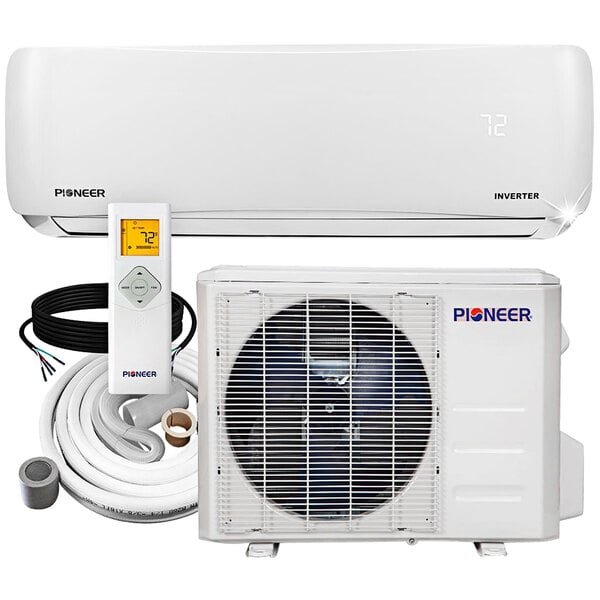
Score: 8.2/10 — The Pioneer Diamante Series 18,000 BTU Mini-Split Heat Pump is a high-efficiency, value-driven solution for homeowners seeking reliable climate control in medium-sized rooms without the cost of central ductwork.
We may earn a commission from qualifying purchases made through links on this page.
Overview
The Pioneer Diamante Series 18,000 BTU Mini-Split Heat Pump is a high-efficiency ductless mini-split system designed for year-round climate control, offering a cost-effective alternative to central air for residential and light commercial settings.
It combines a wall-mounted indoor unit with a matching outdoor condenser, linked by refrigerant lines that require professional installation. The system uses inverter-driven variable-speed compressor technology, allowing it to modulate output rather than cycling on and off, which improves both efficiency and temperature stability.This model targets homeowners looking to add heating and cooling to a single zone — such as a bedroom, home office, sunroom, or garage conversion — without the expense and disruption of extending central ductwork. For those preferring a self-installation route, see our MrCool DIY-24-HP-WIF115 Mini-Split Buying Guide or check out our mini-split comparison for small rooms to compare installation requirements. It operates on 208/230V single-phase power and uses R-410A refrigerant. Pioneer positions the Pioneer Diamante Series 18,000 BTU Mini-Split Heat Pump as a high-efficiency, value-oriented alternative to premium brands, offering many of the same core features at a lower price point.
In practice, the unit performs well in moderate climates and holds its own in colder regions down to around 5°F (-15°C) for heating, though output diminishes at the extremes. The indoor unit runs quietly at low fan speeds, making it suitable for bedrooms and living areas where noise sensitivity matters. By decoupling the temperature control of a specific room from the rest of the house, users can significantly reduce energy waste by not cooling or heating unoccupied spaces.
Key features
Variable-speed operation adjusts cooling and heating output in real time, reducing energy use and eliminating temperature swings common with fixed-speed systems.
Provides usable heating capacity in cold weather, extending the shoulder season and reducing reliance on supplemental resistance heat.
Supports Pioneer’s Wi-Fi module for smartphone control via app, enabling scheduling, remote temperature adjustment, and integration with smart home platforms.
Motorized horizontal and vertical louvers distribute air evenly across the room, reducing hot and cold spots.
Operates in cooling mode at outdoor temperatures as low as 5°F, useful for server rooms or spaces with internal heat loads year-round.
Coated condenser coils resist salt air and environmental corrosion, extending outdoor unit lifespan in coastal or harsh climates.
| Feature | Value |
|---|---|
| Model Number | WYS018GMFI22RL |
| Cooling Capacity | 18,000 BTU/h |
| Heating Capacity | 19,000 BTU/h |
| SEER2 Rating | 20.5 |
| HSPF2 Rating | 10.0 |
| EER2 Rating | 12.5 |
| Voltage / Phase | 208/230V, 1-Phase, 60Hz |
| MCA / MOCP | 15A / 25A |
| Refrigerant | R-410A |
| Indoor Unit Dimensions | 37.0 x 11.8 x 8.7 in |
| Outdoor Unit Dimensions | 33.3 x 27.6 x 12.6 in |
| Indoor Sound Level | 28 / 36 / 42 dB(A) |
| Outdoor Sound Level | 54 dB(A) |
| Line Set Size | 1/4 in / 1/2 in |
| Max Line Set Length | 82 ft |
| Max Elevation Difference | 33 ft |
| Operating Range (Cooling) | 5°F – 122°F |
| Operating Range (Heating) | 5°F – 86°F |
| Warranty | 7 Years Compressor / 5 Years Parts (Registered) |
Pros & cons
Pros
- High SEER2 (20.5) and HSPF2 (10.0) ratings translate to lower utility bills
- Quiet indoor operation at low fan speeds (28 dB) — bedroom-friendly
- Inverter technology maintains steady temperatures without short cycling
- Gold Fin coating enhances durability in humid or coastal environments
- Competitive pricing vs. premium-brand equivalents
- Optional Wi-Fi adapter enables modern smart home control
- Long line set allowance (82 ft) offers installation flexibility
Cons
- Heating capacity drops noticeably below 10°F; not a primary heat source in severe cold
- Wi-Fi module sold separately — adds cost for smart features
- Professional installation required; not a DIY-friendly product
- Warranty registration process can be cumbersome
- Outdoor unit noise (54 dB) is audible at close range
- No built-in occupancy sensor or advanced air purification features
Performance
In real-world use, the Pioneer Diamante Series 18,000 BTU Mini-Split Heat Pump delivers consistent cooling even during peak summer afternoons. The inverter compressor ramps up quickly to pull down temperature, then settles into a low, steady hum that maintains the setpoint within half a degree. Dehumidification is effective — the unit removes moisture efficiently without overcooling, thanks to the variable-speed fan and compressor coordination.
Heating performance is strong above 20°F. At 30°F outdoor temperature, the unit still delivers near-rated capacity. Below 15°F, output declines gradually, and by 5°F it’s producing roughly 60–65% of rated heating — enough to take the edge off but not to fully heat a poorly insulated space without backup. Defrost cycles are brief and infrequent in typical winter conditions, minimizing comfort interruptions.
Air distribution is wide and even. The motorized louvers sweep horizontally and vertically, and the “3D airflow” mode does a good job of mixing room air. At maximum fan speed, airflow is brisk but not drafty. The indoor unit’s low-speed setting is genuinely quiet — barely audible in a quiet bedroom at night — while still moving enough air to maintain comfort.
Deep Dive: How the Technology Works
The efficiency of the Pioneer Diamante Series is rooted in its variable-speed inverter technology. To understand why this matters, it's helpful to compare it to a traditional "on/off" air conditioner. In a legacy system, the compressor operates like a light switch: it is either 100% on or 100% off. When the room temperature rises above the set point, the compressor kicks in at full blast, creating a sudden blast of cold air and a surge in electrical draw. Once the target temperature is reached, the system shuts off completely. This results in "temperature swings" where the room oscillates between slightly too warm and slightly too cold.
The inverter system in the Pioneer Diamante Series operates more like a dimmer switch. It uses a variable-frequency drive (VFD) to adjust the speed of the compressor motor in real-time. If the room is 80°F and you want it at 72°F, the inverter runs at maximum speed to close that gap quickly. As the room approaches 72°F, the compressor slows down to a low-power state, providing just enough cooling to offset the heat leaking back into the room from the walls and windows. This "steady state" operation prevents the energy-heavy startup cycles and keeps the temperature remarkably stable.
In heating mode, the system employs a reversing valve. This allows the refrigerant to flow in the opposite direction, absorbing heat from the outdoor air—even when it's cold—and transporting it inside. While traditional electric space heaters use resistance coils (which are very expensive to run), the heat pump simply moves existing heat from one place to another, which is why the HSPF2 rating is so critical for winter energy savings.
The "Gold Fin" coating mentioned in the specs is also a critical technological component. In standard aluminum fins, oxidation and salt spray can cause pitting, which reduces the surface area available for heat exchange. By applying a hydrophilic gold-colored coating, Pioneer increases the resistance to corrosion. This is particularly vital for units installed in coastal regions where saline air can eat through a standard condenser in just a few seasons, leading to refrigerant leaks and total system failure.
Detailed Installation and Setup Guide
The Pioneer Diamante Series is a complex piece of mechanical equipment that requires a licensed HVAC professional for installation. While some homeowners prefer a self-install approach—using a system like the MrCool DIY 24,000 BTU Ductless Mini-Split (see our detailed MrCool DIY mini-split buying guide)—attempting a DIY installation on this specific model often leads to critical failures, primarily due to the handling of the refrigerant lines. Here is a detailed breakdown of the installation considerations.
The Vacuum Process
One of the most common failure points in budget mini-split installations is the failure to properly vacuum the line set. Because the Pioneer Diamante Series uses R-410A refrigerant, any air or moisture left in the copper lines can cause the oil in the compressor to acidify or create ice blockages in the expansion valve. A professional will use a micron gauge to ensure the system is completely void of non-condensable gases before opening the valves. If you are hiring a contractor, insist that they show you the micron reading; a proper vacuum should typically reach below 500 microns and hold.
Indoor Unit Placement Strategy
Placement of the indoor wall head is key to comfort. For the 18,000 BTU capacity of the Pioneer Diamante Series, the unit should be centered on the longest wall of the room to ensure the 3D airflow can reach all corners. Avoid placing the unit directly above a bed or a dining table, as the direct downdraft can feel uncomfortable even in cooling mode. Ensure there is a minimum of 6 inches of clearance from the ceiling to allow the intake vents to pull in warm air efficiently. If the unit is placed too close to the ceiling, it can create a "short circuit" where it sucks in the air it just pushed out, tricking the thermostat into thinking the room is cooler than it actually is.
Outdoor Condenser Siting
The outdoor unit is the "heart" of the system and needs to breathe. If the unit is placed too close to a wall (less than 12 inches), the hot air expelled by the fan can bounce back into the coils, causing "short-cycling" and reducing efficiency. We recommend placing the Pioneer Diamante Series on a reinforced concrete pad or heavy-duty wall brackets to prevent vibration noise and protect the unit from ground-level moisture. Additionally, ensure the unit is not placed in a narrow alleyway where air can become trapped. Clearance on the top and sides is equally important for maintenance access during annual coil cleanings.
Electrical Coordination
The Pioneer Diamante Series requires a dedicated 208/230V circuit (if you are updating your panel, see our guide on how to replace a circuit breaker safely or our guide to the best 20-amp circuit breakers or our detailed guide on AFCI vs Standard circuit breakers). It is imperative that the wire gauge matches the Minimum Circuit Ampacity (MCA) and Maximum Overcurrent Protection (MOCP) listed in the technical specifications. Using undersized wiring can lead to voltage drops that trigger inverter errors or, in worst-case scenarios, fire hazards. The electrical disconnect should be installed within sight of the outdoor unit to ensure safety for technicians performing maintenance. For those managing overall HVAC electricals, our comprehensive guide to furnace control boards offers additional insights into system logic.
Maintenance and Longevity
To keep the Pioneer Diamante Series operating at its peak SEER2 efficiency, a consistent maintenance schedule is required. Mini-splits are more sensitive to dust and debris than traditional central air systems because the air is processed directly at the unit without a separate plenum.
Indoor Filter Care
The indoor unit contains washable nylon filters that trap dust and pet dander. These should be removed and rinsed with lukewarm water every two to four weeks, depending on the environment. Clogged filters restrict airflow—which is why we recommend high-quality options like the Filtrete MPR 1500 filters for compatible systems—forcing the inverter compressor to work harder (proper filtration is key to maintaining airflow efficiency), which increases energy consumption and can lead to ice buildup on the evaporator coils. Ensure the filters are completely dry before reinstalling them to prevent mold growth. For rooms with high moisture, combining a heat pump with a high-quality ventilation fan is recommended.
Condensate Drain Management
Water produced during the dehumidification process must flow out via a gravity-fed drain line. Over time, algae and slime can build up in the drain pan, causing water to backup and leak into the wall. We recommend flushing the drain line with a mild vinegar solution or a specialized condensate tablet twice a year to prevent blockages and interior water damage.
Outdoor Coil Cleaning
The outdoor condenser is exposed to the elements and will inevitably collect pollen, dirt, and leaves. Once a year, the coils should be gently sprayed with a garden hose—avoid using a high-pressure power washer, as this can bend the fragile aluminum fins. Keeping the coils clean ensures the system can dump heat efficiently, which is the primary driver of the unit's energy efficiency.
Buyer's Guide: Is the WYS018GMFI22RL Right for You?
Choosing a heat pump involves more than just looking at BTU numbers. The Pioneer D
