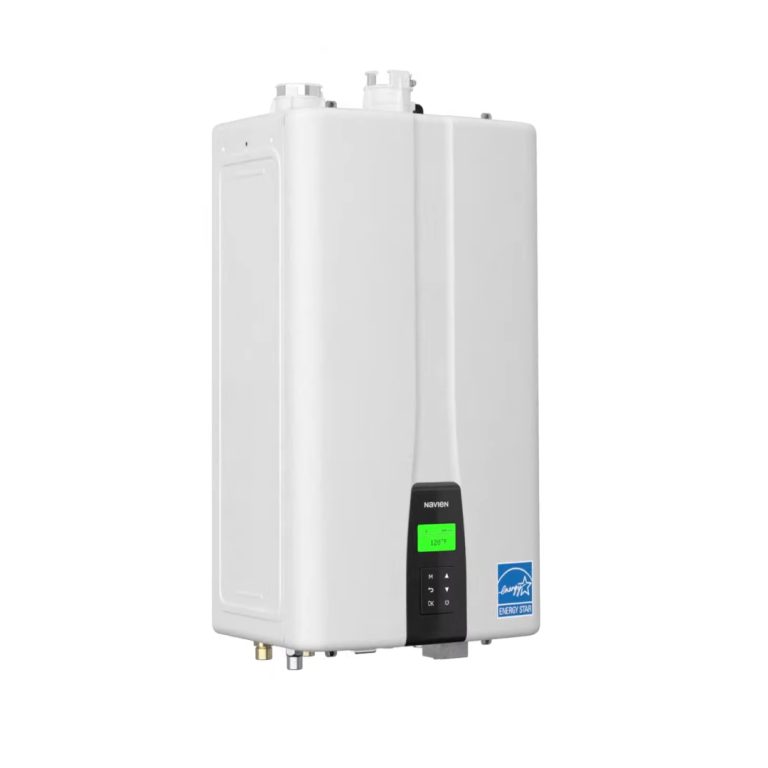
The Navien NPE-240A2 is a premium condensing tankless water heater designed to eliminate the most common frustrations of on-demand heating: long wait times for hot water and the "cold-water sandwich" effect. Featuring dual stainless steel heat exchangers, an integrated recirculation pump, and a proprietary ComfortFlow buffer tank, it provides an endless supply of hot water with industrial-grade efficiency for medium-to-large households.
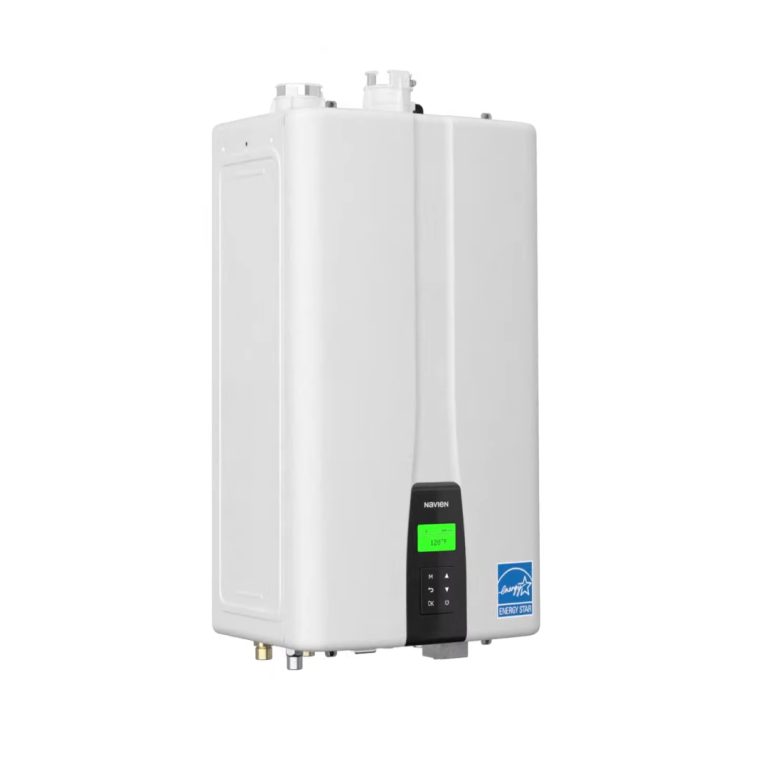
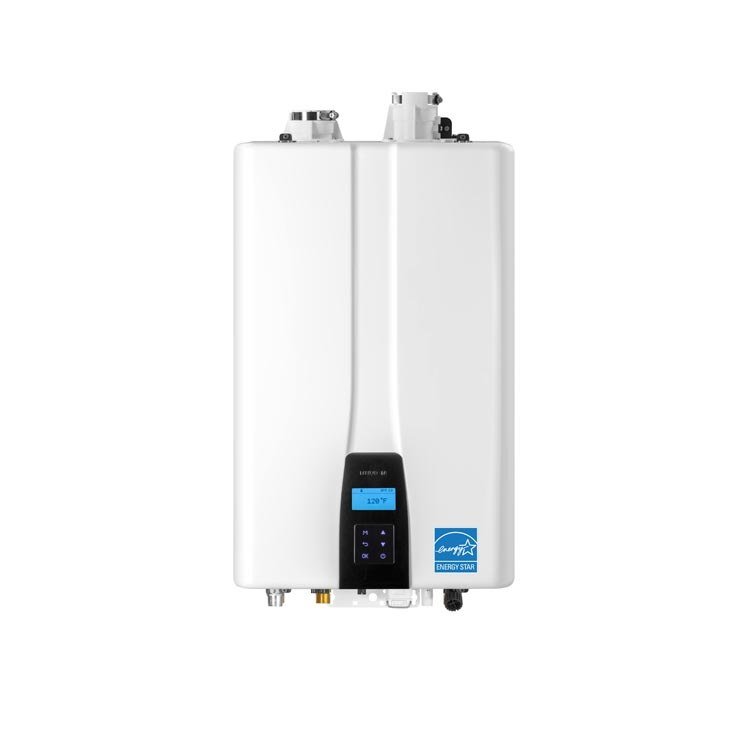
Top Pick: Navien Condensing Tankless Water Heater with Recirculation Pump and Buffer Tank
Score: 9.2/10 — A high-efficiency condensing tankless unit whose built-in recirculation pump and ComfortFlow buffer tank solve the two biggest complaints about going tankless: cold-water sandwiches and slow hot-water delivery.
Navien Condensing Tankless Water Heater with Recirculation Pump and Buffer Tank
The Navien Condensing Tankless Water Heater with Recirculation Pump and Buffer Tank is positioned as a comprehensive whole-home solution rather than a simple point-of-use heater. At its core, the unit utilizes a condensing technology—similar to the Navien High-Efficiency Condensing Tankless Water Heater, which is a streamlined alternative for those who don't require the integrated pump—that differs significantly from standard non-condensing tankless heaters. By employing dual stainless steel heat exchangers, the NPE-240A2 extracts heat from the combustion process twice. This means that exhaust gases, which would normally escape through the vent, are used to pre-heat the incoming water, driving thermal efficiency to levels that significantly reduce monthly gas consumption.
For households that have struggled with the limitations of traditional tanks—such as running out of hot water during back-to-back showers or simultaneous laundry and dishwashing—the NPE-240A2 offers a virtually endless supply. However, the "endless" nature of tankless systems often comes with a trade-off: the time it takes for hot water to travel from the heater to the faucet. Navien addresses this through an integrated recirculation pump. This pump continuously or periodically circulates hot water through the home's piping, ensuring that steaming water is available almost instantly when you open the tap.
Furthermore, this model solves the "cold-water sandwich" phenomenon. In many tankless systems, if the unit is turned off and then back on quickly, a pocket of cold water can get trapped between two bursts of hot water. The ComfortFlow buffer tank mitigates this by maintaining a small reserve of preheated water. This buffer acts as a thermal stabilizer, smoothing out temperature fluctuations and providing a seamless transition from cold to hot, regardless of how many fixtures are being used across the home.
Installation versatility is a hallmark of the NPE-240A2. Many high-capacity tankless heaters require an expensive upgrade to a ¾-inch gas line, which can involve tearing into walls and floors. The NPE-240A2 is compatible with both ½-inch and ¾-inch gas lines, providing a flexible path for retrofitting older homes (for those updating plumbing connections, see our SharkBite 1/2-inch coupling guide). For those with extreme demand—such as estates with six or more bathrooms—the unit supports cascading configurations. This allows multiple NPE-240A2 units to be linked together, operating in tandem to provide industrial-grade flow rates while maintaining residential efficiency.
Pros
- Built-in recirculation pump drastically cuts wait time at the tap
- ComfortFlow buffer tank eliminates the "cold-water sandwich" effect
- High thermal efficiency via dual stainless steel exchangers
- Flexible gas line compatibility (½-inch or ¾-inch)
- Cascading support for high-demand expansion
Cons
- Higher initial purchase price than traditional tank heaters
- Requires a dedicated condensate drain line
- Over-specified for small apartments or single-bathroom homes
- Requires professional installation for warranty validity
| Specification | Detail |
|---|---|
| Model Number | NPE-240A2 |
| Type | Condensing tankless, gas |
| Heat Exchangers | Dual stainless steel |
| Recirculation | Built-in recirculation pump |
| Buffer Tank | ComfortFlow buffer tank included |
| Gas Line Compatibility | ½-inch and ¾-inch |
| Scalability | Supports cascading configurations |
| Controls | Digital control interface |
Deep Dive: How the NPE-240A2 Technology Works
Understanding the mechanics of the Navien NPE-240A2 helps explain why it is priced higher than basic tankless models. To appreciate the value, one must look at the three pillars of its design: Condensing Technology, the Recirculation System, and the Buffer Tank.
The Science of Condensing: Unlike standard heaters that vent hot exhaust immediately, a condensing unit captures latent heat from water vapor in the exhaust. This process turns gas into liquid (condensate), releasing extra energy back into the incoming water stream.
The Mechanics of Latent Heat Recovery
In a standard "non-condensing" water heater, the heat from the combustion of gas is used to warm the water, and the resulting hot exhaust is vented outside. A significant amount of energy is lost in that exhaust. The NPE-240A2 utilizes a second heat exchanger to capture the latent heat from the water vapor in the exhaust gases. As the gases cool, they condense into a liquid (condensate), and that released energy is transferred back into the incoming water.
This dual-stage process allows the unit to achieve an energy efficiency rating far higher than traditional heaters. Because it produces condensate, the unit requires a drain line—similar to a high-efficiency AC unit or a furnace—which is a critical consideration during the installation phase. The use of stainless steel for these exchangers is non-negotiable, as the condensate is slightly acidic and would corrode copper or aluminum components over time.
The Recirculation Pump Mechanism
The built-in recirculation pump is a game-changer for homes with long plumbing runs. In a standard setup, when you turn on the hot water, you must first flush out all the cold water that has been sitting in the pipes between the heater and the faucet. This wastes gallons of water and precious minutes of time. The NPE-240A2 pump moves hot water through the loop, keeping the pipes warm.
This can be configured in several ways: it can run on a timer, it can be triggered by a sensor, it can run continuously, or it can be set to "intelligent" mode where it learns the household's habits. By maintaining a steady temperature in the loop, the unit effectively eliminates the "wait" period. However, it is important to note that this consumes slightly more energy than a standard tankless unit without a pump, though the water savings often offset this cost.
The Role of the ComfortFlow Buffer Tank
One of the most common complaints regarding tankless heaters is the "cold-water sandwich." This happens when a faucet is turned off and then quickly turned back on; the small amount of water that remained in the heat exchanger cools down, creating a pocket of lukewarm water between two streams of hot water. This is particularly noticeable during short bursts of usage, such as washing hands.
The ComfortFlow buffer tank acts as a reservoir. By keeping a small volume of water at a constant temperature, it provides a buffer that masks these fluctuations. The system draws from the buffer tank first, providing an immediate and consistent temperature while the main heat exchangers ramp up to full power. This creates a user experience that feels much more like a traditional tank system, but with the unlimited capacity of a tankless unit.
Comprehensive Buyer's Guide: Is Tankless Right for You?
Choosing a water heater is no longer just about capacity (gallons) but about delivery speed and efficiency. Here is how to determine if the NPE-240A2 is the right investment for your specific home profile.
Household Size and Demand
If you live in a 1-2 bedroom apartment or a small cottage with one bathroom, the NPE-240A2 is likely overkill. The higher upfront cost and the requirement for professional gas/drain installation would not provide a proportional return on investment. However, for families with 3+ bedrooms and multiple bathrooms, the "endless" nature of this unit removes the stress of scheduling showers. (For those seeking a high-output electric alternative, the Stiebel Eltron Whole-House Electric Tankless Water Heater 36kW is a powerful option. If you are weighing this against a traditional tank, our A.O. Smith EES-40 review provides a detailed look at high-efficiency storage options.). (If you are considering a high-efficiency electric alternative, check out our A.O. Smith EES-40 review for the A.O. Smith 40-Gallon Tall Electric Water Heater).
For example, in a house with a master suite, a guest bath, and a children's bath, the NPE-240A2 can handle simultaneous usage without the temperature drops associated with tank depletion. It provides a consistent flow rate that can support multiple high-flow showerheads—like those found in our modern bath guide—and a dishwasher running at the same time, provided the gas line is adequately sized.
The "Wait Time" Analysis
Consider how far your water heater is located from your primary bathroom. If your heater is in the basement and your master bath is on the second floor, you may currently spend 60-90 seconds waiting for hot water. If this is a primary frustration, the built-in recirculation pump of the NPE-240A2 makes it a superior choice over standard tankless units, which would require you to install a separate, external pump and dedicated return line.
This integrated approach reduces the number of failure points and simplifies the plumbing architecture. Instead of managing three different components (heater, pump, and timer), you have a single digital interface on the Navien unit that manages the entire cycle.
This is especially beneficial for homeowners who prefer a "set it and forget it" approach to home maintenance.
Installation Environment and Constraints
Because this is a condensing unit, you must have a way to dispose of the condensate. This means you need a floor drain, a condensate pump, or an exterior exit point. If your utility room is completely sealed with no drainage options, a non-condensing unit might be a simpler choice, though you would sacrifice the energy efficiency gains. (For homeowners dealing with basement water management, see our Ridgid SP-650C sump pump review).
Additionally, the unit is compact, but the necessary venting (PVC/Polypropylene) must be routed correctly to avoid leaks or carbon monoxide issues, making a professional survey of the installation site essential. The wall-mounted nature of the NPE-240A2 frees up significant floor space, which is a major advantage in cramped utility closets or garages where a 50-gallon tank would previously have dominated the room.
Energy Efficiency and Long-Term Savings
Tankless heaters generally cost more than tank heaters initially, but they save money in two ways: they don't maintain a 50-gallon tank of hot water 24/7 (eliminating standby heat loss), and the condensing technology maximizes every BTU of gas. Over a 10-15 year lifespan, these savings can offset the initial cost, especially in regions with high energy prices.
When calculating the ROI, consider that the stainless steel heat exchangers in the Navien unit are far more resistant to corrosion and scaling than the glass-lined steel of a traditional tank (see our A.O. Smith EES-40 review for a look at the A.O. Smith 40-Gallon Tall Electric Water Heater's performance). While a traditional tank might rust from the inside out over 8-12 years, the high-grade stainless steel in the NPE-240A2 is designed for a significantly longer operational life if properly maintained.
Setup, Installation, and Critical Considerations
The Navien NPE-240A2 is not a "plug-and-play" appliance. It is a complex piece of mechanical engineering that requires a licensed professional for installation. Below are the critical technical areas that must be addressed during setup.
Installation Warning: Improper venting or gas line sizing can lead to catastrophic failure or carbon monoxide leaks. Never attempt to install a condensing tankless unit without a certified HVAC or plumbing professional.
Gas Line Requirements
One of the most appreciated features of the NPE-240A2 is its flexibility with gas lines. Many high-output tankless units demand a ¾-inch line to provide enough BTUs to flash-heat water instantly. Navien's engineering allows the unit to operate on a ½-inch line in many configurations, though a ¾-inch line is still recommended for maximum performance.
Your installer should perform a pressure drop test to ensure your home's gas meter can handle the peak load. An undersized line can lead to "error codes" during high-demand periods—such as when two showers and a dishwasher are running simultaneously—because the unit cannot get enough gas to maintain the target temperature.
Venting and Drainage Solutions
Condensing units use PVC or polypropylene venting rather than the heavy metal flues required by older heaters. This makes venting much easier and cheaper to install. However, the condensate produced by the dual heat exchangers must be managed. If the unit is installed in a location without a drain, a condensate pump must be added to push the water up and out of the home.
Be aware that in extremely cold climates, the condensate line must be properly insulated or buried to prevent freezing. If the condensate line freezes, the water has nowhere to go, and the unit will shut down for safety, leaving you without hot water until the line is thawed.
Recirculation Loop Configuration
To get the most out of the built-in pump, your home needs a dedicated return line. This is a separate pipe that brings water from the end of the hot water run back to the heater. Without a return line, the pump simply pushes water forward, and the "warmth" only stays in the pipes closest to the heater.
If your home does not have a return line, there are "non-return" solutions involving bypass valves, but these are less efficient and may not provide the instantaneous hot water experience the NPE-240A2 is capable of. If you are building a new home or doing a major renovation, always insist on a dedicated recirculation return line to maximize this feature.
Long-Term Maintenance and Care
Unlike a traditional tank, which is largely ignored until it leaks, a tankless system requires proactive maintenance to ensure longevity. Because the NPE-240A2 uses high-efficiency heat exchangers, mineral buildup (scale) is the primary enemy.
The Descaling Process
In areas with hard water, calcium and magnesium can accumulate on the stainless steel walls of the heat exchangers. Over time, this creates an insulating layer that forces the unit to work harder and run hotter to reach the target temperature, eventually leading to decreased efficiency and potential part failure.
The NPE-240A2 features a simplified flushing process. If you struggle with high mineral content, you might also consider a GE GXWH40L whole house water filter guide for sediment and scale protection to protect your appliances from sediment and