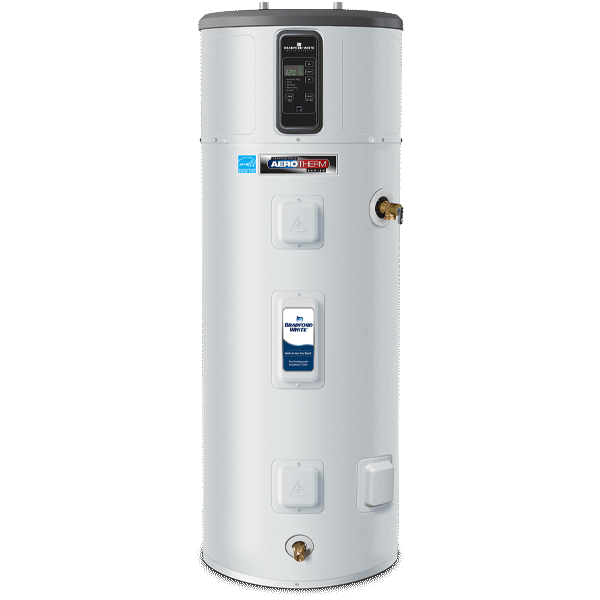
Switching to a high-efficiency heat pump water heater is one of the most effective ways to cut household energy costs. The Bradford White AeroTherm 50-Gallon Hybrid Heat Pump Water Heater (RE2H50R10) provides ENERGY STAR certified efficiency with the recovery flexibility modern families need. This buying guide explores its operating modes, installation requirements, and whether this hybrid model is the right choice for your home.
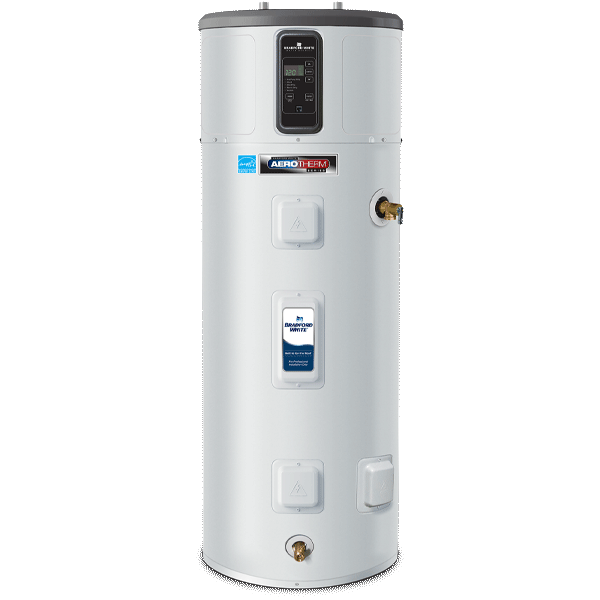
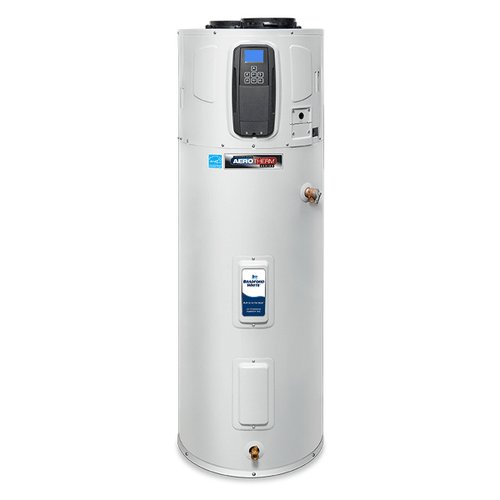
Top Pick: Bradford White AeroTherm 50-Gallon Hybrid Heat Pump Water Heater
Score: 9.2/10 — A versatile, efficient hybrid that balances energy savings with dependable hot water recovery, making it our best overall choice for residential installs.
Bradford White AeroTherm 50-Gallon Hybrid Heat Pump Water Heater
The Bradford White AeroTherm 50-gallon hybrid is a sophisticated residential unit engineered to bridge the gap between traditional electric water heating and high-efficiency heat pump technology. Its core appeal lies in its dual-nature design: it utilizes a heat pump to pull warmth from the surrounding air to heat the water—a process far more efficient than creating heat via electricity—while maintaining traditional electric resistance elements that step in when fast recovery is non-negotiable. This pairing allows the unit to lean on maximum efficiency for the majority of its duty cycle while still handling peak demand spikes without leaving your family cold.
What truly sets the AeroTherm apart from basic electric heaters is its mode flexibility. Homeowners are not locked into a single performance profile. You can run the unit in heat-pump-only mode for maximum energy savings, hybrid mode for a balanced approach to efficiency and recovery speed, or electric mode when you need the fastest possible reheating. This is genuinely useful for modern households; you can favor savings during a typical Tuesday but switch to a high-performance mode before a holiday weekend when guests are arriving and shower demand triples.
The 50-gallon capacity is widely considered the "sweet spot" for households of two to four people. While smaller homes might consider an A.O. Smith 40-Gallon Tall Electric Water Heater or the A.O. Smith 50-Gallon Power Vent, the extra volume here provides a safety net for larger families. It provides enough thermal mass to cover standard showering, laundry, and kitchen needs without the excessive footprint or energy waste associated with 80-gallon tanks. To maximize the lifespan of the unit and the quality of your water, we recommend pairing this heater with a whole-house water filter to protect the internal tank from sediment and scale buildup. Because the heat pump draws heat from the ambient air, the unit performs best in spaces with adequate air volume and reasonable temperatures—think a finished basement (see our Ridgid sump pump review for managing basement water), garage, or a large utility room rather than a tight, sealed closet.
This water heater is a strong fit for homeowners who want to lower long-term operating costs, qualify for federal or local efficiency rebates, and possess the right installation environment. It is less ideal for those with extremely restrictive mechanical closets or those who require the instantaneous, endless hot water provided by Navien High-Efficiency Condensing Tankless Water Heaters. If you are weighing other hybrid options like the Rheem Performance Platinum 50-Gallon Smart Hybrid or the Rheem ProTerra 50-Gallon Smart Hybrid, ensure you compare the recovery rates and noise levels, as heat pump compressors generate a distinct hum that differs from the silence of a standard electric tank.
Pros
- Heat pump efficiency drastically lowers monthly operating costs versus standard electric
- Three distinct operating modes allow users to balance savings and recovery speed
- ENERGY STAR certified, making it eligible for various utility and tax rebates
- 50-gallon capacity is ideal for the average 2–4 person household
- Electric resistance backup ensures hot water is available during extreme demand
Cons
- Requires significant ambient air volume to operate at peak efficiency
- Heat-pump-only mode has a slower recovery rate than traditional electric mode
- Not suitable for installation in tight, sealed, or unventilated mechanical closets
- Higher initial purchase price compared to conventional electric tank heaters
Deep Dive: How Heat Pump Hybrid Technology Works
To understand why the Bradford White AeroTherm (RE2H50R10) is so efficient, one must understand the fundamental difference between generating heat and moving heat (a concept also central to mini-split heat pumps). A standard electric water heater uses immersion elements—essentially large toaster wires—to turn electricity directly into heat. This is a 1:1 energy transfer; for every kilowatt of electricity used, you get exactly one kilowatt of heat. While reliable, it is the most expensive way to heat water.
The AeroTherm uses a heat pump, which functions like an air conditioner running in reverse. Instead of pumping heat out of a room to cool it down, the AeroTherm pulls thermal energy from the air surrounding the tank and transfers that heat into the water. Because it is moving heat rather than creating it, the energy efficiency is exponentially higher. In many cases, a heat pump can move 3 to 4 units of heat for every 1 unit of electricity used. This explains the drastic drop in utility bills experienced by users switching from standard electric tanks.
The "Hybrid" designation means that the RE2H50R10 doesn't rely solely on the heat pump. Because heat pumps depend on ambient air temperature, they can struggle in extremely cold environments or during periods of extreme water depletion. To solve this, the AeroTherm includes backup electric resistance elements. The onboard controller manages these two systems, deciding when to use the efficient heat pump and when to engage the "brute force" of the electric elements to ensure the water temperature remains consistent.
Detailed Specifications
| Specification | Detail |
|---|---|
| Model Number | RE2H50R10 |
| Technology | Hybrid Heat Pump + Electric Resistance |
| Tank Capacity | 50 Gallons |
| Operating Modes | Heat Pump Only, Hybrid, Electric |
| Efficiency Certification | ENERGY STAR Qualified |
| Intended Application | Residential Indoor/Semi-Conditioned |
| Air Volume Requirement | High (Requires adequate ambient air) |
| Backup Heating | Integrated Electric Elements |
Installation Requirements and Space Planning
Unlike a standard water heater, the AeroTherm is not a "drop-in" replacement in every scenario. Because it breathes air to function, the environment where it is installed directly impacts its efficiency and the lifespan of the compressor. If you place this unit in a tiny, sealed closet, it will quickly exhaust the available warm air, causing the water temperature to drop and forcing the unit to switch to the expensive electric backup mode more often.
Ideal Locations
The best spots for the RE2H50R10 are basements, garages, or dedicated utility rooms. These areas typically provide a large volume of air. While the unit can work in semi-conditioned spaces, it's important to ensure there is enough cubic footage to sustain the heat pump's operation without creating a "cold pocket" around the tank. If the room is too small, the unit may effectively "air condition" the room to a point where the heat pump can no longer extract enough energy to heat the water efficiently.
Electrical Needs
Ensure your electrical panel can support the hybrid load. While it consumes less energy over time, the initial installation requires a dedicated circuit that meets the amperage specifications listed in the manual. If you are upgrading from an old gas heater, you will need to have a licensed electrician run a new 240V line to the installation site (similar to the electrical planning required for a Wayne battery backup sump pump). The hybrid system is designed to minimize peak load, but the installation must be up to code to ensure safety and stability.
Condensate Management
One critical detail often overlooked is that heat pump water heaters produce condensate—essentially water that drips from the cooling coils as they pull moisture from the air. The AeroTherm requires a condensate drain. This means you must have a floor drain nearby or install a condensate pump to move the water to a proper drainage point. Installing a unit without a plan for condensate management can lead to water damage, mold, and structural rot in your utility area.
Comprehensive Maintenance Guide for Long-Term Efficiency
To keep the Bradford White AeroTherm running at its peak, a proactive maintenance schedule is essential. Heat pump water heaters have more moving parts than standard tanks, specifically the fan and compressor, which require periodic attention to avoid premature failure.
1. Air Filter Cleaning
The air filter on the heat pump is the "lungs" of the system. If dust, pet hair, or lint clogs the filter, the unit has to work harder to pull in air, which reduces efficiency and puts strain on the compressor. We recommend checking and cleaning the filter every 3 to 6 months. Use a vacuum or a soft brush to remove debris. If the filter is visibly damaged, replace it immediately to prevent dust from entering the heat exchanger coils.
2. Anode Rod Inspection
Like all tank-style heaters, the AeroTherm uses a sacrificial anode rod to prevent the tank from rusting. Depending on your local water chemistry (hard water vs. soft water), this rod can deplete over time. We suggest inspecting the anode rod every 2 to 3 years. Replacing the rod before it's completely gone is the cheapest way to extend the life of your tank by a decade. If you live in an area with high mineral content, you may need to replace the rod more frequently.
3. Tank Flushing
Sediment naturally builds up at the bottom of the tank. This sediment acts as an insulator, forcing the heating elements to work harder and reducing the overall capacity of the tank. A yearly flush—where you drain a few gallons of water from the bottom valve—helps clear out these minerals and maintains the unit's efficiency. Be cautious when flushing; if you haven't done it in years, the sediment may block the valve, requiring a professional to clear it.
4. Condensate Line Clearance
Over time, algae or slime can build up in the condensate drain line, leading to backups. Periodically check the drain line to ensure water is flowing freely. If you use a condensate pump, test the float switch to make sure the pump activates when the reservoir is full. A failed pump can lead to immediate flooding around the base of the heater.
Comparative Analysis: Hybrid vs. Standard vs. Tankless
| Feature | AeroTherm Hybrid | Standard Electric | Tankless Electric |
|---|---|---|---|
| Monthly Operating Cost | Very Low | High | Moderate to High |
| Upfront Purchase Cost | High | Low | Moderate |
| Installation Complexity | High (Drainage/Air) | Low | Moderate (Electrical) |
| Recovery Speed | Variable (Mode based) | Consistent/Slow | Instantaneous |
| Space Requirement | High Air Volume | Small Footprint | Very Small |
| Environmental Impact | Low (Eco-friendly) | High | Moderate |
Advanced Buyer's Guide: Making the Switch to Hybrid
Choosing a water heater is often a "set it and forget it" decision, but with hybrid technology like the Bradford White AeroTherm, there are several strategic considerations that can change the ROI (Return on Investment) of the unit. Because the initial cost is higher than a standard electric tank, the value is found in the operational savings and the potential for tax credits.
Evaluating Your Thermal Demand
Before purchasing the 50-gallon RE2H50R10, evaluate your "peak hour" water usage. If your household has three people showering back-to-back while a dishwasher and washing machine are running, you are entering a high-demand scenario. In these cases, the "Hybrid" mode is your best friend. While "Heat Pump Only" mode is the most efficient, its recovery rate—the speed at which it heats the tank back up—is significantly slower than a traditional element. By using the Hybrid setting, the unit manages the balance, ensuring you don't run out of hot water while still keeping the electric elements as a secondary resource.
Understanding the "Cooling Effect"
One overlooked benefit of the AeroTherm is that it effectively dehumidifies and cools the air in the room where it is installed. Because the heat pump removes heat from the air to put it into the water, your basement or garage will feel cooler and drier. In hot, humid climates, this is a secondary "free" air conditioning benefit, similar to the effects of a GE ADEL50LZ dehumidifier. However, in very cold climates, this can be a drawback. If your basement is already 50°F, the heat pump has less thermal energy to pull from, which may cause the unit to rely more heavily on the electric backup elements, slightly reducing the efficiency gains.
The Financial Equation: Rebates and Payback
A hybrid water heater is an investment. The "payback period" is the time it takes for the energy savings to cover the price difference between this unit and a cheap standard electric heater. For many users, this period is between 3 to 7 years. However, this can be accelerated significantly through ENERGY STAR rebates. Many local utility companies offer several hundred dollars in rebates for installing heat pump water heaters. Additionally, federal tax credits for energy-efficient home improvements may apply. Always check your local utility provider's "Energy Efficiency" portal before finalizing the purchase to ensure you aren't leaving money on the table.
Common Installation Pitfalls to Avoid
Even with professional installation, there are common mistakes that can sabotage the performance of the Bradford White AeroTherm. Avoiding these ensures you get the 9.2/10 performance we've rated it for.
1. The "Too Small Closet" Mistake
The most common error is installing