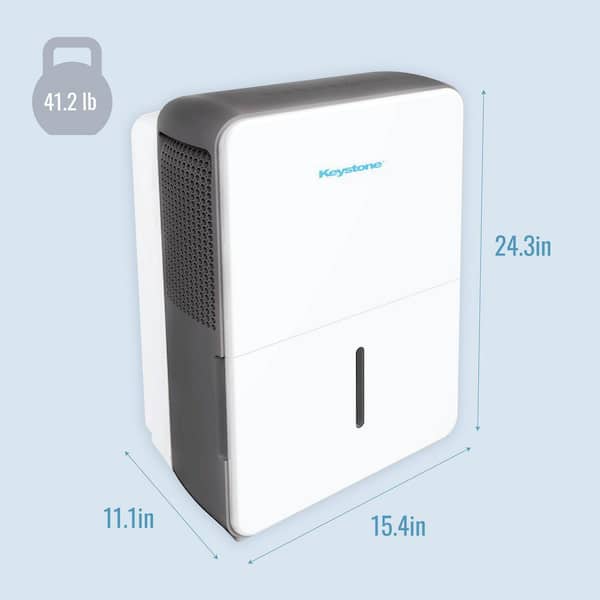
Keystone 50-Pint Dehumidifier for Large Rooms (KSTAD50B)
Score: 8.0/10. A straightforward, budget-friendly dehumidifier that delivers strong moisture removal and practical everyday features for medium to large spaces without premium extras.
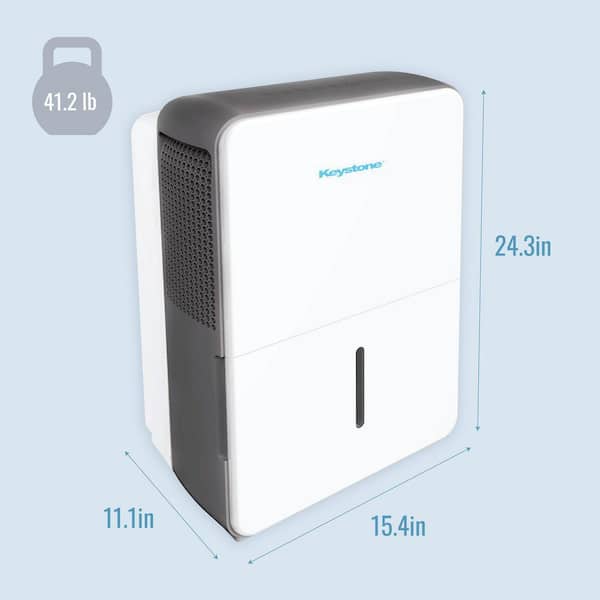
Overview
The Keystone 50-Pint Dehumidifier for Large Rooms (KSTAD50B) is a high-capacity moisture control solution designed for homeowners who need to reduce excess humidity in basements—perhaps alongside a Ridgid SP-650C sump pump review—bedrooms, living areas, laundry rooms, or other medium to large spaces. With a rated capacity of 50 pints per day and coverage for rooms up to 3,000 square feet, it sits in the sweet spot for buyers who want meaningful moisture control without moving into a higher-priced commercial-style unit. For a different take on high-capacity units, see our GE ADEL50LZ review.
This review focuses on the Keystone 50-Pint Dehumidifier for Large Rooms, a model that keeps the experience simple: a digital control panel, full-tank indicator, auto-shutoff, auto-restart after power outages, and a continuous drain option. It is best suited to buyers who want reliable day-to-day dehumidification and do not need smart-home controls, app scheduling, or built-in pump functionality.
Looking for a budget-friendly high-capacity unit? Check the current price for the Keystone 50-Pint Dehumidifier.
As a budget-oriented dehumidifier, the Keystone 50-Pint Dehumidifier for Large Rooms (KSTAD50B) makes the most sense for damp basements, humid apartments, seasonal moisture problems, and households that want a practical set-it-and-check-it appliance. It is not the flashiest option in the category, but its appeal is that it covers the core needs well for the price.
Key features
Removes up to 50 pints of moisture per day, making the KSTAD50B suitable for sustained humidity control in larger residential areas.
Designed for medium to large rooms, including basements, family rooms, bedrooms, and other high-humidity spaces.
The simple control interface makes it easy to adjust humidity settings and operate the unit without dealing with complicated menus.
Allows hands-free drainage when connected to a compatible drain setup, reducing the need to manually empty the water tank.
The unit alerts you when the tank is full and shuts itself off to help prevent overflow and accidental water damage.
The auto-restart function resumes operation after power is restored, which is essential for remote basements or rental properties.
| Feature | Value |
|---|---|
| Product Name | Keystone 50-Pint Dehumidifier for Large Rooms |
| Model Number | KSTAD50B |
| Category | Dehumidifier |
| Moisture Removal Capacity | 50 pints per day |
| Recommended Room Size | Up to 3,000 square feet |
| Control Type | Digital control panel |
| Drainage Options | Manual tank emptying or continuous drain option |
| Full-Tank Indicator | Yes |
| Auto-Shutoff | Yes |
| Auto-Restart | Yes |
| Best For | Basements, medium to large rooms, budget-conscious buyers |
Pros & cons
Pros
- Strong 50-pint daily moisture removal for the price
- Suitable for medium to large rooms up to 3,000 square feet
- Simple digital control panel is intuitive and easy to use
- Continuous drain option supports low-maintenance operation
- Auto-shutoff and full-tank indicator help prevent overflow
- Auto-restart is a critical feature for power-unstable areas
- Excellent fit for those seeking dependable, basic humidity control
Cons
- Lacks advanced smart-home or Wi-Fi connectivity
- Utilitarian design may not blend into high-end finished interiors
- Manual tank emptying is tedious without a gravity drain
- No built-in pump for vertical water transport
- Budget positioning means fewer premium convenience features
Performance
In everyday use, the Keystone 50-Pint Dehumidifier for Large Rooms (KSTAD50B) is best judged by how well it handles the practical problem of persistent indoor humidity. Its 50-pint capacity gives it enough headroom for spaces that feel damp, smell musty, or collect condensation during humid seasons. For basements and larger rooms, that capacity is the main reason to choose this model over smaller 30-pint or compact units.
The control experience is intentionally simple. The digital panel should appeal to users who want to set a target humidity level and let the appliance run without much interaction. This is especially important for a dehumidifier because the best units are often the ones you can place in the right spot, configure once, and leave to manage moisture consistently.
The continuous drain option is one of the most important performance features of the KSTAD50B. In a genuinely damp basement, a 50-pint unit can collect a lot of water, so relying only on the tank may require frequent emptying. If you can position the unit near a suitable drain, continuous drainage makes the experience much more hands-free. For those with extreme water ingress, check out our comparison of the best submersible utility pumps. For those managing deeper water issues in the same space, pairing a dehumidifier with a reliable sump pump, like the Basement Watchdog BW1033 buying guide or the Ridgid SP-650C, is a smart strategy for total basement protection.
The full-tank indicator and auto-shutoff are also practical safeguards. If the tank fills while you are away, the unit can stop operation instead of risking overflow. The trade-off is that dehumidification pauses until the tank is emptied, which is why continuous drainage is strongly preferred for high-humidity areas.
The auto-restart function is a meaningful convenience in real-world use. If a power outage occurs, the Keystone 50-Pint Dehumidifier for Large Rooms (KSTAD50B) can resume operation once power returns. That matters in basements, vacation homes, storage rooms, or any area where humidity control is important even when you are not checking the appliance every day.
How It Works: The Dehumidification Process
Understanding how the Keystone 50-Pint Dehumidifier for Large Rooms (KSTAD50B) functions helps users optimize its placement and expectations. This unit utilizes a refrigerant-based cooling system, which is the standard for high-capacity home dehumidifiers. Unlike desiccant dehumidifiers that use a chemical drying agent, the KSTAD50B uses a compressor and condenser coils to pull moisture from the air.
The process begins when the internal fan draws warm, humid air from the room into the unit. This air passes over a series of cold evaporator coils. Because the coils are colder than the dew point of the air, the moisture in the air condenses into liquid water droplets—essentially the same process that creates condensation on a cold glass of water on a summer day.
This water then drips into the internal collection bucket or flows through the continuous drain hose. After the air has been stripped of its moisture, it passes over a warmer condenser coil, which slightly reheats the air before blowing it back into the room. This is why you may notice that the air exiting a dehumidifier feels slightly warmer than the air being pulled in.
The digital control panel allows you to set a "Humidistat" target. The Keystone 50-Pint Dehumidifier for Large Rooms (KSTAD50B) monitors the current ambient humidity; once the target level is reached, the compressor shuts off to save energy. When the sensors detect that the humidity has risen above the threshold, the unit automatically kicks back in.
Installation and Setup Guide
Setting up the Keystone 50-Pint Dehumidifier for Large Rooms (KSTAD50B) is a straightforward process that requires no professional tools. However, a few strategic choices during setup can significantly impact the unit's efficiency.
Step 1: Unboxing and Stabilization
When you first receive the unit, remove all packaging materials and tape. It is highly recommended to let the unit sit upright for 24 hours before plugging it in. Because the refrigerant is under pressure, tilting the unit during shipping can cause oil to migrate into the cooling lines; letting it settle ensures the compressor operates smoothly and avoids premature failure.
Step 2: Strategic Placement
Placement is the most critical factor for performance. To maximize the 3,000 square foot coverage, place the unit in a central location with a high volume of air movement. Avoid placing the KSTAD50B directly against a wall or behind furniture; leave at least 12 to 18 inches of clearance around the air intake and exhaust vents to prevent the motor from overheating and to ensure efficient airflow.
Step 3: Choosing Your Drainage Method
You have two choices for water management:
- Manual Bucket: Ensure the water tank is properly seated in the chassis. This is best for smaller rooms or areas where a drain is not accessible.
- Continuous Drain: Connect a standard garden hose (size may vary, check manual) to the rear drain port. Ensure the hose is sloped downward throughout its entire length. Since this unit does not have a built-in pump, it relies entirely on gravity. If the hose loops upward at any point, water will back up into the tank.
Step 4: Configuring the Panel
Plug the unit in and use the digital panel to set your desired humidity level. For most homes, 45% to 55% is the ideal range to prevent mold growth while maintaining comfort. Test the "Auto-Restart" feature by briefly unplugging the unit and plugging it back in to ensure it returns to your previous settings.
Maintenance and Long-term Care
To ensure the Keystone 50-Pint Dehumidifier for Large Rooms (KSTAD50B) lasts for several years, a basic maintenance routine is required. Dehumidifiers are prone to dust buildup and biological growth (mold/mildew) due to the moisture they handle.
Cleaning the Air Filter
The KSTAD50B includes a washable air filter. Over time, dust, pet hair, and lint will clog the filter, restricting airflow and forcing the compressor to work harder, which increases energy bills and reduces the unit's lifespan. We recommend checking the filter every two weeks. Vacuum the filter (similar to how you'd maintain a Filtrete MERV-12 air filter review) or rinse it with lukewarm water and mild soap. Ensure it is completely dry before reinstalling it.
Sanitizing the Water Bucket
If you are using the manual tank, you will notice a "slime" or biofilm develop over time. This is common in all dehumidifiers. To prevent odors, scrub the bucket with a mixture of white vinegar and water or a mild detergent once a month. This prevents mold from growing inside the reservoir and smelling throughout the room.
Coil Maintenance
While the internal coils are not meant to be serviced by the user, you can use a vacuum attachment to gently remove dust from the exterior intake grills. If you notice a significant drop in moisture removal, it may be a sign that the internal evaporator is iced over (common in very cold basements). In this case, turn the unit off and let it defrost naturally.
Comparison: Keystone vs. The Competition
When shopping in the 50-pint category—perhaps comparing this to the GE 50-Pint Dehumidifier with Auto Shutoff (see our GE ADEL50LZ performance review) or our GE dehumidifier buying guide for damp rooms—it is important to understand where the Keystone 50-Pint Dehumidifier for Large Rooms (KSTAD50B) sits relative to more expensive brands like the Frigidaire 50-Pint Dehumidifier with Continuous Drain, the Midea 50-Pint Smart Dehumidifier with Built-In Pump, or the GE 50-Pint Dehumidifier with Auto Shutoff.
Keystone vs. Smart Dehumidifiers
Many modern units now feature Wi-Fi connectivity and app control. These allow you to monitor humidity from your phone and change settings remotely. The Keystone KSTAD50B lacks these features. While this is a "con" for tech enthusiasts, it is a "pro" for those who find apps cumbersome or who are installing the unit in a rental property where they want a physical interface that any tenant can understand without an account.
Keystone vs. Pump-Integrated Units
Some high-end 50-pint units include a built-in condensate pump. This allows the unit to push water vertically up into a sink or laundry drain. The KSTAD50B is a gravity-drain unit. This means it is significantly more affordable and has fewer mechanical parts that can fail, but it requires the unit to be placed above the drain point. If your basement has a floor drain or you prefer a pump-integrated model like the hOmeLabs Energy Star 50-Pint Dehumidifier with Built-In Pump, or a Ridgid SP-650C review (see our guide to the best submersible utility pumps), the KSTAD50B is perfect; if you need to pump water up to a first-floor sink, you would need a different model.
If you need a built-in pump, consider the LG PuriCare Smart Wi-Fi Dehumidifier with Air Filter or the Winix 50-Pint Dehumidifier with Built-In Pump.
Keystone vs. Compact (30-Pint) Units
While 30-pint units are cheaper and smaller, they often struggle in spaces over 1,500 square feet. Using a smaller unit in a large, damp basement often means the compressor runs 24/7 without ever reaching the target humidity, which can actually shorten the life of the motor. The KSTAD50B provides the necessary "horsepower" to actually lower the humidity in a 3,000 sq ft space, making it a more efficient long-term investment for larger homes.
Buyer's Guide: Choosing the Right Dehumidifier
Selecting a dehumidifier involves more than just looking at the pint capacity. To help you decide if the Keystone 50-Pint Dehumidifier for Large Rooms (KSTAD50B) is the right choice, consider these critical factors.
Understanding Pint Capacity (The "2023 Standard")
It is important to note that the Department of Energy updated how dehumidifiers are rated. Older "50-pint" units were rated at 80°F and 60% humidity. New standards are often more rigorous. The KSTAD50B is designed to handle substantial moisture, but always check if the "50-pint" rating is for a "large" or "medium" room according to the specific standard. For most residential basements, 50 pints is the industry standard for "heavy duty" home use.
Assessing Your Square Footage
A common mistake is buying a unit that is too small for the space. If you have an open-concept basement or a large living area, a 20 or 30-p