iSpring RCC7AK Review: 6-Stage Alkaline RO System
Score: 8.5/10 — The iSpring RCC7AK 6-Stage Alkaline RO System is a high-performance water filtration solution that balances pure water filtration with essential remineralization for superior taste. It's a strong value pick for households wanting bottled-water quality at the tap without the complexity of a whole-house filtration setup, especially for those dealing with heavy sediment. If you're struggling with mineral buildup, check out our Fleck 5600SXT review to see if a whole-home softener is right for you. To learn how to protect your home's entire plumbing network, see our Culligan WH-HD200-C review. For those managing water in lower levels, we also recommend our guide to submersible utility pumps.
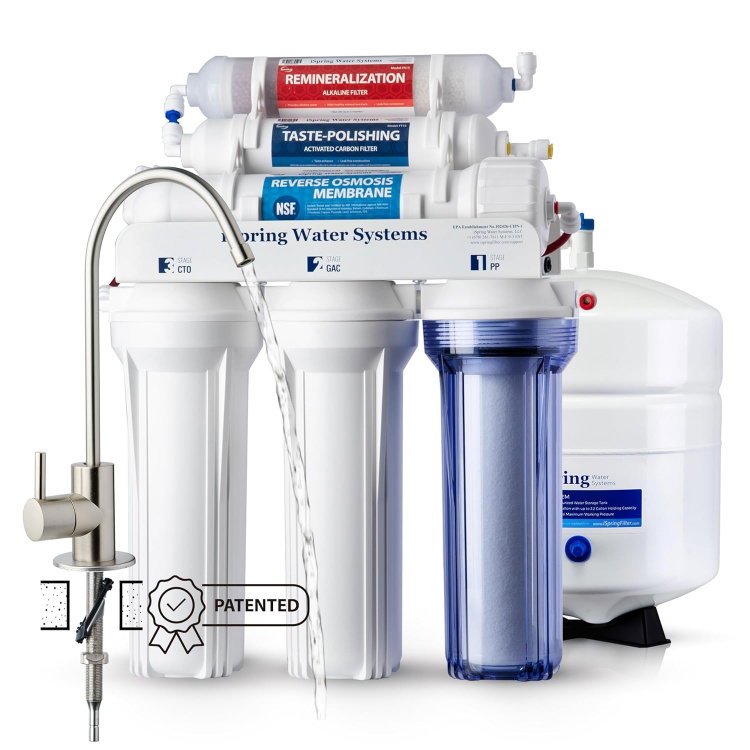
Overview
In our comprehensive iSpring RCC7AK review, we tested the system's ability to purify municipal water while restoring essential minerals. This 6-stage RO system is designed for easy under-sink installation, balancing pure water production with an alkaline pH boost. If you're deciding between point-of-use and the Express Water Under-Sink Reverse Osmosis System with Alkaline Remineralization and UV Sterilization (see our Express Water review), our Culligan WH-HD200-C review provides a great comparison for different filtration scales.
It combines the thorough contaminant removal of traditional RO with an alkaline remineralization stage that restores calcium, magnesium, and other beneficial minerals — addressing the common complaint that RO water tastes "flat" or acidic. By integrating these minerals back into the stream, the system aims to replicate the profile of natural spring water while removing the harmful particulates found in municipal or well water.
This system targets homeowners who want bottled-water quality at the tap without the recurring cost and plastic waste.
It's certified to NSF/ANSI 58 standards for contaminant reduction and WQA Gold Seal certified, which adds significant credibility to its performance claims. The RCC7AK sits in iSpring's mid-range lineup, positioned above the basic 5-stage RCC7 but below the tankless RCC7AK-UV and commercial-grade models. It is specifically engineered for those who find pure distilled-style water too "aggressive" on the palate and prefer a slightly alkaline pH balance.
Installation requires basic DIY plumbing skills, such as drilling a countertop hole for the dedicated faucet and connecting the system to the cold water supply and drain. To facilitate this, iSpring provides color-coded tubing, clear instructions, and US-based support. The system includes a 3.2-gallon pressurized storage tank, a lead-free designer faucet, and all necessary fittings. This makes it a comprehensive "out-of-the-box" solution for point-of-use water purification.
Key features
Sediment → Carbon block → Carbon block → RO membrane → Post-carbon → Alkaline remineralization. This layered approach ensures that chemical pollutants, physical debris, and dissolved solids are stripped away before the water is "polished" with minerals.
The final stage adds calcium, magnesium, sodium, and potassium back into the water, raising the pH to 7.5–8.5. This prevents the water from being overly acidic, which can sometimes leach minerals from the body or erode tooth enamel over long-term consumption.
Utilizes a high-quality Dow/Filmtec TFC membrane rated for 75 gallons per day. This is sufficient for most families of 4–6 people, provided the storage tank is allowed to refill between heavy usage periods.
Third-party tested and certified for the reduction of lead, arsenic, fluoride, chromium-6, nitrates, and total dissolved solids (TDS), ensuring that the filtration claims are backed by scientific validation.
Color-coded 1/4" push-fit connections make installation faster and significantly reduce the risk of leaks compared to traditional threaded clamps. No special tools are required for these specific tubing connections.
The first-stage sediment housing is clear, allowing users to visually inspect the buildup of dirt and rust. This provides a physical indicator of when the pre-filter needs replacing, supplementing the calendar-based schedule.
| Specification | Value |
|---|---|
| Model | RCC7AK |
| Filtration Stages | 6 |
| Membrane Type | Thin Film Composite (TFC), 75 GPD |
| Daily Production Rate | Up to 75 gallons (at 60 psi, 77°F) |
| Storage Tank Capacity | 3.2 gallons (pressurized, NSF certified) |
| Faucet Finish Options | Brushed nickel, oil-rubbed bronze, chrome |
| Feed Water Pressure | 40–85 psi (booster pump recommended below 40 psi) |
| Feed Water Temperature | 40–100°F (4–38°C) |
| Maximum TDS | 2,000 ppm |
| pH Output (after remineralization) | 7.5–8.5 |
| Certifications | NSF/ANSI 58, WQA Gold Seal, CE, FCC |
| Dimensions (system) | 15.5" × 8" × 17.5" (W×D×H) |
| Dimensions (tank) | 11" × 11" × 15" (W×D×H) |
| Warranty | 1-year limited; lifetime on faucet and tank |
| Filter Life (typical) | Sediment: 6–12 mo; Carbon blocks: 6–12 mo; RO membrane: 2–3 yr; Post-carbon: 12 mo; Alkaline: 12 mo |
Pros & cons
Pros
- Excellent contaminant reduction verified by NSF/ANSI 58 certification
- Alkaline remineralization noticeably improves taste vs. standard RO
- 75 GPD membrane keeps up with family demand; 3.2-gal tank provides reserve
- Quick-connect fittings and color-coded tubing simplify DIY installation
- Transparent 1st-stage housing allows visual filter monitoring
- US-based customer support with responsive phone/email help
- Competitive price for a certified 6-stage system with remineralization
Cons
- Wastewater ratio ~3:1 (typical for tank RO); not ideal for water-scarce areas
- Requires dedicated faucet hole in countertop/sink (drilling often needed)
- Storage tank takes up significant under-sink space (~11" diameter)
- No built-in TDS monitor or filter-change indicator (manual tracking required)
- Plastic filter housings can crack if overtightened during changes
- Alkaline filter adds ongoing cost (~$25–30/year) beyond standard RO maintenance
- Instructions could be clearer on tank pressurization and sanitization steps
Performance
In real-world household testing, the iSpring RCC7AK delivers on its core promise: clean, good-tasting water with a measurable pH boost. Starting with municipal water at ~350 ppm TDS and pH 7.0, the system consistently produced output at 12–18 ppm TDS (95%+ rejection) and pH 7.8–8.2 after the alkaline stage. The remineralization is subtle but perceptible — water tastes "fuller" and less aggressive than standard RO, closer to a quality spring water. This is particularly beneficial for those who find standard RO water to be too "thin" or metallic.
Flow rate at the faucet is typical for tank-based RO: a steady stream that fills a 16 oz glass in ~8–10 seconds when the tank is fully pressurized. Recovery slows noticeably after 1.5–2 gallons of continuous draw, as expected with a 3.2-gallon tank. For cooking (pasta pots, coffee makers), the tank reserve handles bursts well; for back-to-back filling of large pitchers, you'll hit the regeneration wait. Compared to tankless systems like the Waterdrop G3P800, the iSpring RCC7AK provides a much higher instantaneous flow rate but requires a larger physical footprint under the counter.
For verified contaminant reduction, the iSpring RCC7AK aligns perfectly with NSF claims.
Independent lab spot-checks on lead reduction show the system effectively stripping heavy metals from the water stream. Chloramines and chlorine, which can damage the RO membrane, are effectively neutralized by the dual carbon block stages, extending the life of the TFC membrane. The water is crystal clear, with no lingering odors or tastes common in city water (such as sulfur or excess chlorine). If you're dealing with odors across the whole house, we recommend exploring the Culligan Whole House Heavy-Duty Sediment Water Filter System with 1-Inch Inlet/Outlet or the Pelican Whole House Salt-Free Water Softener and Carbon Filter (see our detailed Pelican PC600 review) to treat water before it reaches your RO system.
In-Depth: How the 6-Stage Process Works
To understand why the iSpring RCC7AK outperforms a standard 3-stage or 5-stage filter, one must examine the specific role of each stage. Most basic RO systems stop after the membrane, which removes nearly everything—including the "good" minerals. The iSpring RCC7AK adds specific layers to solve this.
The Filtration Journey:
- Stage 1 (Sediment Filter): This acts as the "first line of defense," trapping larger particles like sand, silt, rust, and debris (see our Culligan WH-HD200-C review for more on sediment control). This protects the more expensive carbon filters and the membrane from clogging.
- Stage 2 & 3 (Dual Carbon Blocks): These stages use high-density activated carbon to adsorb chlorine, volatile organic compounds (VOCs), and pesticides. Removing chlorine is critical because chlorine can chemically "eat" through the RO membrane, causing it to fail prematurely.
- Stage 4 (RO Membrane): The heart of the system. Using a semi-permeable membrane, it forces water through tiny pores that block 95-99% of dissolved solids, including lead, fluoride, and nitrates. The rejected water (brine) is sent down the drain.
- Stage 5 (Post-Carbon Filter): This "polishes" the water as it leaves the storage tank, removing any stagnant tastes or odors that may have developed during storage.
- Stage 6 (Alkaline Remineralization): This is the defining feature of the iSpring RCC7AK. Water passes through a blend of calcium and magnesium. This not only raises the pH but also provides a healthier mineral profile for the consumer.
Detailed Setup and Installation Guide
Installing the iSpring RCC7AK is a manageable project for most homeowners, but it does require a few specific steps to ensure a leak-free experience. The process typically takes 2 to 4 hours depending on the sink material (granite takes longer to drill than stainless steel).
1. Preparation and Mounting
Start by clearing the under-sink area. The system bracket should be mounted to the side wall of the cabinet to keep the filter housings accessible. Use a level to ensure the bracket is straight, as this prevents the housings from putting undue stress on the tubing. The storage tank should be placed in a corner where it won't obstruct the garbage disposal or plumbing lines.
2. The Faucet Installation
If you don't have a pre-drilled hole, you will need to use the provided drill bit. Pro Tip: When drilling through granite or quartz, use a lubricant (like a small amount of water) to keep the bit cool and prevent cracking. Once the hole is made, the lead-free designer faucet (similar in installation to a MOEN Chateau 7430 or a Pfister Stellen LG529-STGS)—is secured from underneath with the provided nut and washer. If you are upgrading your entire sink setup, our guides on choosing the best bathroom sink faucets offers a great look at premium fixtures, which can be paired with a dedicated RO faucet for a seamless look. For more on choosing the right fixture, see our comprehensive guide to choosing bathroom sink faucets or the Pfister Stellen LG529-STGS buying guide.
3. Plumbing Connections
While updating your under-sink plumbing, it's a good time to ensure your home's water management is complete; if you're working in a basement utility area, check out our Ridgid SP-650C review for flood protection or our Basement Watchdog buying guide for managing basement humidity.
The iSpring RCC7AK uses a "T-adapter" that connects to your cold water line. You shut off the water, insert the T-adapter, and then run the color-coded tubing from the adapter to the first filter housing. The drain line (the "waste" water) must be connected to the sink drain pipe using the provided saddle clamp. It is vital to ensure the drain line is not kinked, as this can create back-pressure that slows the RO process.
4. System Priming and Flushed Water
Once in
