This buying guide contains affiliate links. If you buy through these links, Home Systems Guide may earn a commission at no extra cost to you. Recommendations are based on product fit, features, and buyer use cases.
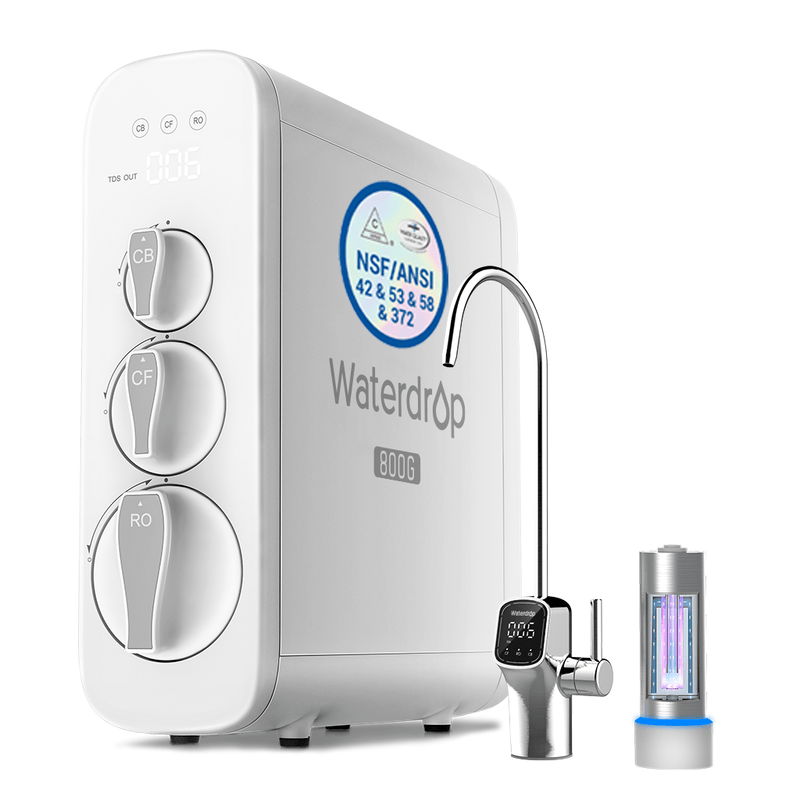
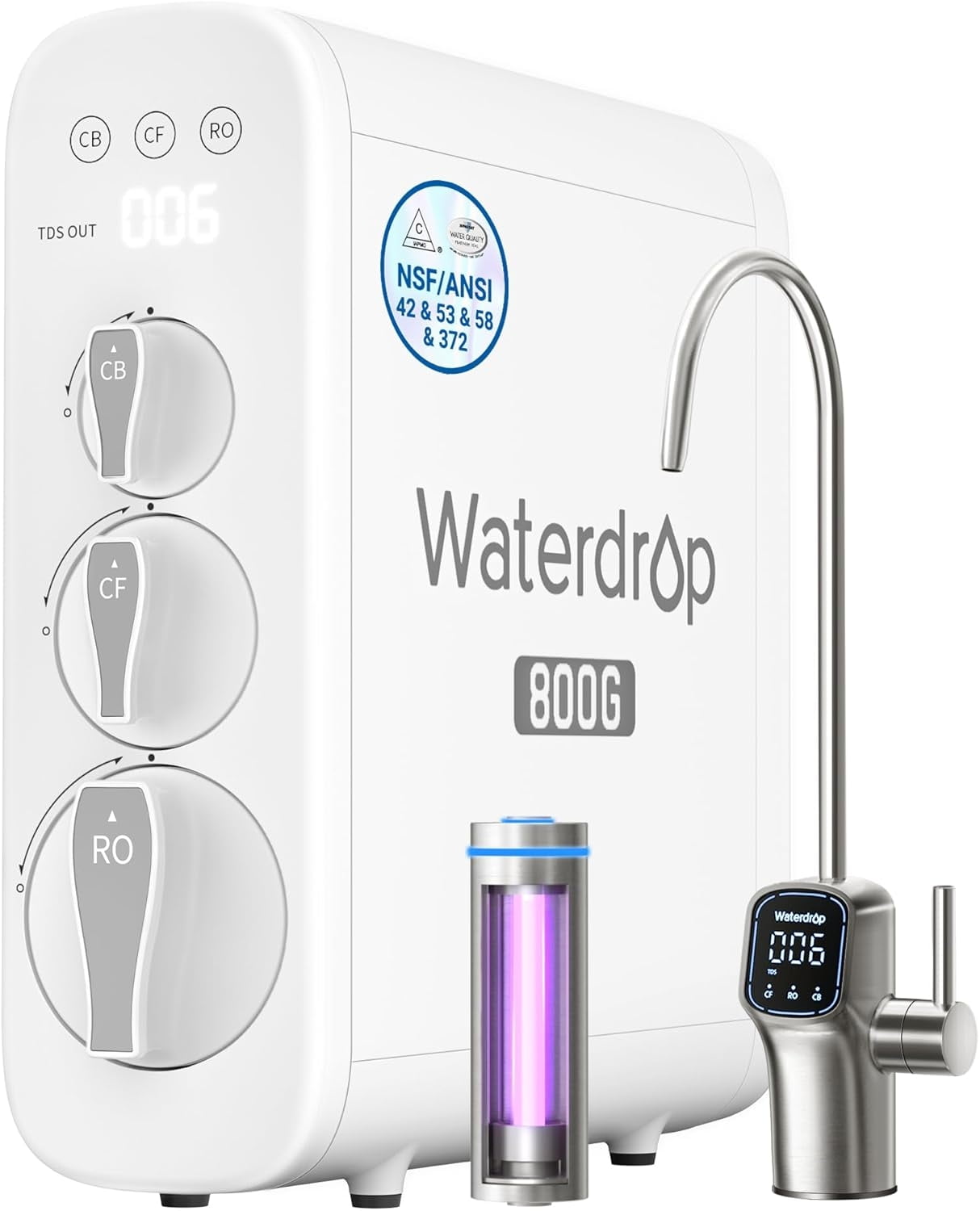
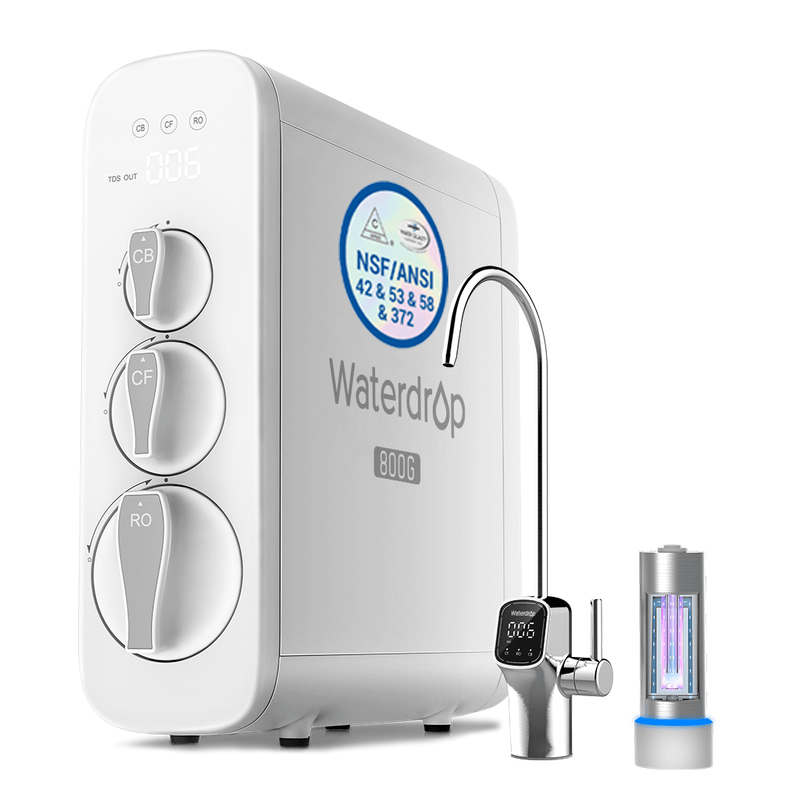
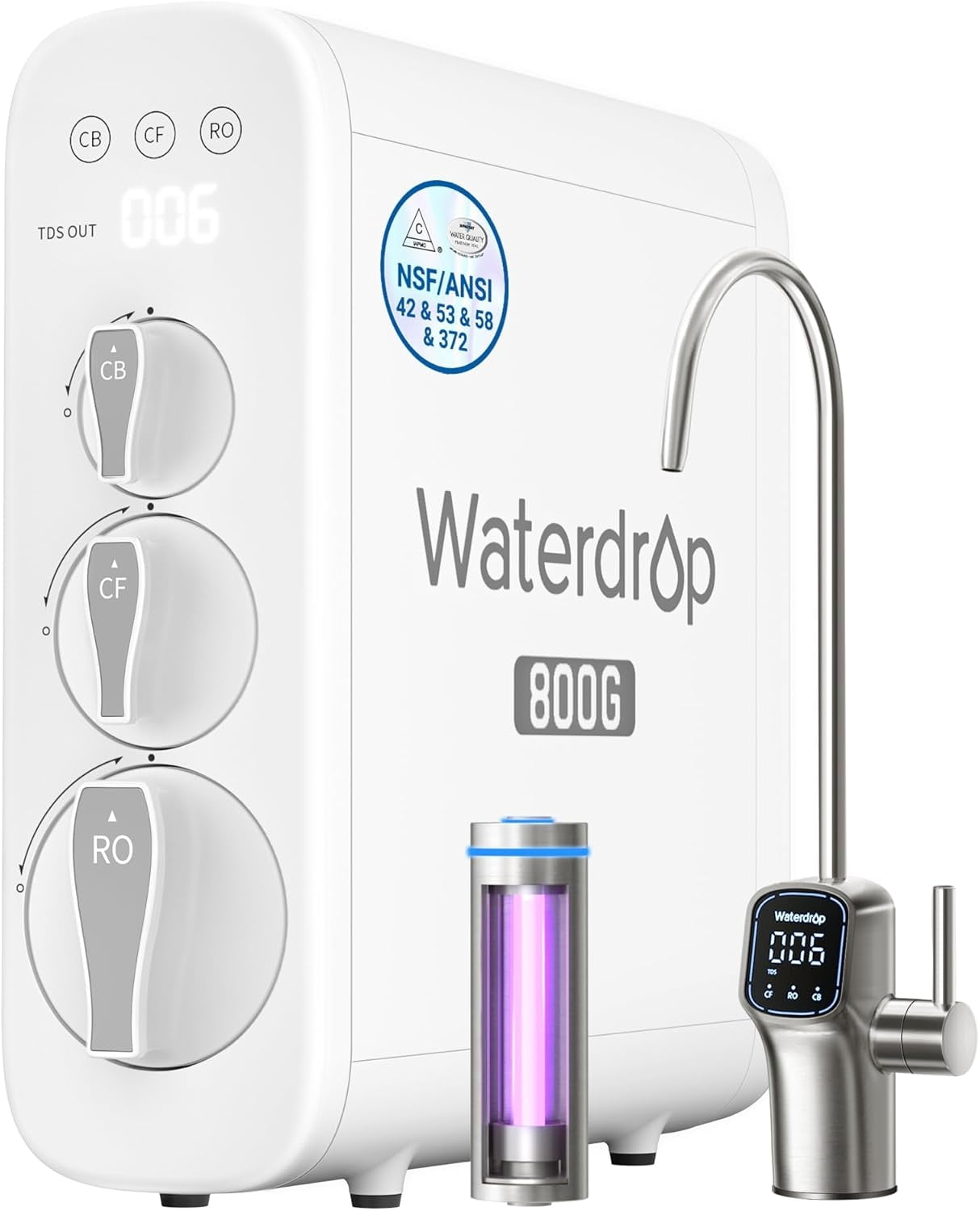
If you want reverse osmosis water without a bulky storage tank, the Waterdrop Tankless Under-Sink Reverse Osmosis System 800 GPD is one of the most compelling options.
If you're still deciding on the right technology, check out our guide on whole-house filtration or explore the GE GXWH40L whole house water filter guide to see if a point-of-use or whole-home system is better for you. It combines high daily output, smart monitoring, and a compact tankless design for households that want purified drinking water with less maintenance and faster dispensing.Best Overall: Waterdrop Tankless Under-Sink Reverse Osmosis System 800 GPD
Score: 9.1/10. A high-capacity, tankless under-sink RO system that delivers fast filtered water, smart monitoring, and strong everyday convenience for households willing to pay more upfront.
Waterdrop Tankless Under-Sink Reverse Osmosis System 800 GPD
The Waterdrop Tankless Under-Sink Reverse Osmosis System 800 GPD (Model G3P800) is a premium under-sink RO system designed for households that want serious water purification without giving up a large section of the cabinet to a pressurized storage tank.
Looking for high-purity drinking water without the bulk? The Waterdrop 800 GPD Tankless RO System is an ideal compact choice for modern kitchens.
Its 800-gallon-per-day (GPD) capacity is far beyond what most families will actually consume in drinking water, but that high rating is critical because it enables a "tankless" experience. By increasing the flow rate through the membrane, the system can dispense purified water instantly at the faucet, eliminating the slow trickle often associated with non-tank systems.The system utilizes a sophisticated seven-stage filtration process. While this handles drinking water, you may also want to consider a GE GXWH40L whole house water filter guide to protect all your appliances.
Unlike basic carbon filters that only address taste and odor, the G3P800 targets a wide array of contaminants, including lead, chlorine, arsenic, and various dissolved solids (TDS). This makes it an ideal solution for homeowners dealing with "hard" water—who might use an Aquasana Salt-Free Whole-Home Water Softener and Conditioner to protect their pipes (similar to how a quality water heater like the A.O. Smith EES-40 water heater review protects your home's hot water supply) —who might also consider a GE High Flow Whole House Water Filtration System or a Culligan whole-house filtration system as a critical first line of defense. For a broader look at treating water for the entire home, check out our GE GXWH40L whole house water filter buying guide. Because it filters water on demand, the water is always fresh, avoiding the stagnation and potential bacterial buildup that can occur in the rubber bladders of traditional RO storage tanks.Integration of technology is a standout feature of this model. The smart LED faucet provides a real-time digital readout of Total Dissolved Solids (TDS). This means you don't have to guess if the system is working; you can see the purity level of the water as it pours. Furthermore, the system tracks filter life automatically, alerting you via the faucet display when it is time to perform a swap, removing the need for calendar reminders or guesswork.
Pros
- High 800 GPD output supports faster dispensing than many lower-capacity RO systems.
- Tankless design saves significant cabinet space and improves water freshness.
- Seven-stage filtration targets lead, chlorine, and dissolved solids with 99.99% efficiency.
- Smart LED faucet provides instant TDS feedback and filter life alerts.
- Reduced waste water ratio compared to older, traditional RO designs.
Cons
- Higher upfront purchase price compared to Brita Standard 10-Cup Pitcher with 1 Filter or standard under-sink filters.
- Requires an electrical outlet under the sink for the pump and smart features.
- Installation requires drilling a hole for the faucet and connecting to a drain.
- Ongoing cost for proprietary replacement filter cartridges.
| Specification | Waterdrop G3P800 Details |
|---|---|
| Model Number | G3P800 |
| System Type | Tankless Reverse Osmosis |
| Daily Capacity | 800 Gallons Per Day (GPD) |
| Filtration Stages | 7-Stage Process |
| Contaminant Removal | Up to 99.99% of TDS, Lead, Chlorine |
| Monitoring | Real-time TDS LED Display |
| Installation Site | Under-sink (requires power & drain) |
Pro Tip: If you are installing this in a kitchen with very limited under-sink space, measure your clearance carefully. While the unit is compact, you still need room for the power adapter and the tubing loops to prevent kinking.
Deep Dive: How Tankless Reverse Osmosis Works
To understand why the Waterdrop G3P800 is a significant upgrade over traditional systems, it's important to understand the mechanics of "tankless" RO. In a traditional system, water is pushed slowly through a membrane and stored in a 3-to-5 gallon pressurized tank. You drink from the tank, and the system refills it in the background. This is why traditional iSpring 6-Stage Under-Sink Reverse Osmosis Systems
Related parts & accessories
The G3P800 replaces the storage tank with a high-pressure pump and a high-flux membrane. Instead of relying on natural house pressure to slowly push water through the filter, the internal pump forces water through the membrane at a much higher velocity. This allows the system to produce 800 gallons of purified water per day on demand. The result is a steady, strong stream of water from the faucet without the need for a reservoir.
The seven-stage process is a sequence of specialized filters. It starts with sediment and carbon pre-filters to remove large particles and chlorine (which can damage RO membranes). The core stage is the reverse osmosis membrane, which strips away microscopic contaminants. Finally, post-filtration stages polish the water for taste and ensure that the water being dispensed is of the highest possible purity.
One of the most critical advantages of this design is the elimination of the "stale water" problem. In tanked systems, water can sit for hours or days in a rubber diaphragm tank. This can lead to a flat taste or, in extreme cases, the development of biofilms. The G3P800 filters water the moment you turn the handle, ensuring every glass is as fresh as the first.
The Role of the Booster Pump
A common question for new RO buyers is why a tankless system requires electricity. The answer lies in the "osmotic pressure." In nature, water moves from low concentration to high concentration. To reverse this process and push water through a microscopic membrane, you need significant pressure. Traditional systems use a storage tank to build this pressure slowly. The G3P800 uses an electric booster pump to achieve this pressure instantly. This is what enables the "tankless" speed; without the pump, the water would only trickle out at a rate of perhaps 1-2 gallons per hour, which is impractical for modern kitchen use.
Understanding TDS and the 7-Stage Process
TDS, or Total Dissolved Solids, refers to the combined content of all inorganic and organic substances dissolved in the water. This includes minerals like calcium and magnesium, as well as potentially harmful contaminants like nitrates or lead. The 7-stage process of the G3P800 is engineered to tackle these in a specific order:
- Stage 1 (Sediment): Removes sand, rust, and silt to prevent clogging.
- Stage 2 (Carbon Block): Absorbs chlorine and VOCs that can degrade the RO membrane.
- Stage 3 (Fine Carbon): Further polishes the water for taste and odor.
- Stage 4 (RO Membrane): The "heart" of the system, removing 99.99% of TDS.
- Stage 5 (Post-Carbon): Final taste adjustment before the water hits the faucet.
- Stages 6 & 7 (Advanced Polishing): Additional filtration layers to ensure consistent purity and remove any residual odors.
Comprehensive Installation and Setup Guide
Installation Tip: Before purchasing, ensure you have a 110V power outlet under your sink. Unlike traditional RO systems, tankless models require electricity to power the internal booster pump.
Installing the Waterdrop G3P800 is a straightforward process for those comfortable with basic plumbing, but it is more involved than a simple faucet attachment. The process generally follows these five phases:
1. Faucet Mounting
You will need to drill a hole in your countertop or sink deck (if one isn't already present) to install the smart LED faucet. If you are upgrading your entire sink area, you might also consider a MOEN Chateau 7430 kitchen faucet (see our detailed MOEN Chateau 7430 review) or explore alternatives like the Pfister Stellen LG529-STGS for better budget value, or check out our Pfister Stellen LG529-STGS review for a complete refresh. This faucet is the "face" of the system and handles all the user interface. If you already have a dedicated drinking water faucet hole from a previous system, the G3P800 is typically a drop-in replacement. Ensure the faucet is tightened securely to prevent leaks from entering the cabinet below.
2. Cold Water Connection
The system connects to your home's cold water line using a T-adapter. This diverts a small amount of water into the RO system while allowing the rest of your faucet to function normally. It is vital to shut off the water valve completely before installing the T-adapter to avoid flooding your cabinet. Use Teflon tape on threaded connections to ensure a watertight seal.
3. Drain Line Setup
Reverse Osmosis, by definition, creates "brine" or waste water—water that contains the concentrated contaminants filtered out of your drinking supply. This must be routed into your sink's drain pipe via a saddle valve or a direct connection. Ensure the drain line is secure so that waste water doesn't leak back into the cabinet. If you have a garbage disposal, ensure the drain clamp is positioned above the disposal's intake to avoid backflow.
4. System Mounting
The compact main unit is mounted to the side wall of the under-sink cabinet, keeping the floor clear and maximizing storage space. Because the unit is lightweight and slim, it can be tucked away even in small kitchenettes or apartments. Use the provided mounting brackets to ensure the unit doesn't vibrate against the cabinet walls when the pump is running.
5. Initialization and Flushing
Once connected, the system must be flushed. This involves running the water for a set period to clear the filters of manufacturing dust and to prime the pump. Do not drink the first few gallons of water; instead, let them run through the faucet until the TDS reading stabilizes. This ensures that any carbon fines from the initial filters are fully purged from the line.
Long-Term Maintenance and Filter Replacement
One of the primary pain points of water filtration is remembering when to change filters. The G3P800 addresses this with its integrated monitoring system. The LED display on the faucet tracks the volume of water processed and alerts you when a specific stage needs replacement.
The maintenance is designed to be "tool-free." The filter cartridges are typically "twist-and-lock," meaning you can swap them out in seconds without needing a wrench or worrying about leaks from poorly tightened seals. This removes the intimidation factor associated with older RO systems that required housing wrenches and manual lubrication of O-rings.
Filter Life
Depending on water quality and usage, filters typically last between 6 to 12 months. The smart system will notify you precisely when the threshold is reached.
Cost of Ownership
While the initial unit is an investment, the ongoing cost is limited to the replacement cartridges. Budget for a yearly or bi-yearly filter set based on your household's water consumption.
Step-by-Step Filter Replacement Process
When the LED indicator flashes, replacing the filters is a simple three-step process. First, turn off the water supply valve to the RO system. Second, locate the filter that needs replacing; the system's design makes it clear which cartridge is which. Third, twist the old filter counter-clockwise to remove it and insert the new one, twisting clockwise until it locks. Once the new filter is in place, turn the water back on and run the faucet for 2-3 minutes to prime the new media.
The Tankless vs. Tank Comparison
| Feature | Traditional Tank RO | Waterdrop G3P800 (Tankless) |
|---|---|---|
| Space Required | Large (Unit + Tank) | Compact (Unit only) |
| Water Freshness | Water sits in tank | Filtered instantly (Fresh) |
| Flow Rate | Fast (until tank is empty) | Consistently Fast (800 GPD) |
| Power Needs | None (usually) | Required (Electric pump) |
| Sanitation | Tank can harbor biofilm | No storage; lower risk |
| Monitoring | Manual / Guesswork | Digital TDS & Life Display |
Common Pitfalls to Avoid When Buying RO Systems
Warning: Do not ignore the "Waste Water" factor. Every RO system produces some waste water. While the G3P800 is efficient, you should be aware that some water is sent to the drain to keep the membrane clean.
Many buyers make the mistake of choosing a system based on the "GPD" (Gallons Per Day) number without understanding what it means for their specific home. A 800 GPD system like the G3P800 isn't meant to provide 800 gallons of water every single day; rather, it indicates the capacity of the membrane. A higher GPD means the water flows faster at the faucet. If you buy a low-capacity tankless system, you will find the flow rate agonizingly slow; in such cases, a staged system with a tank, such as the