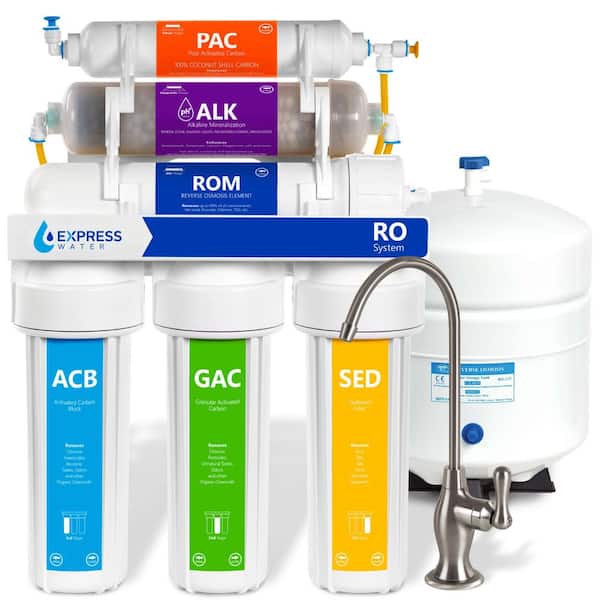
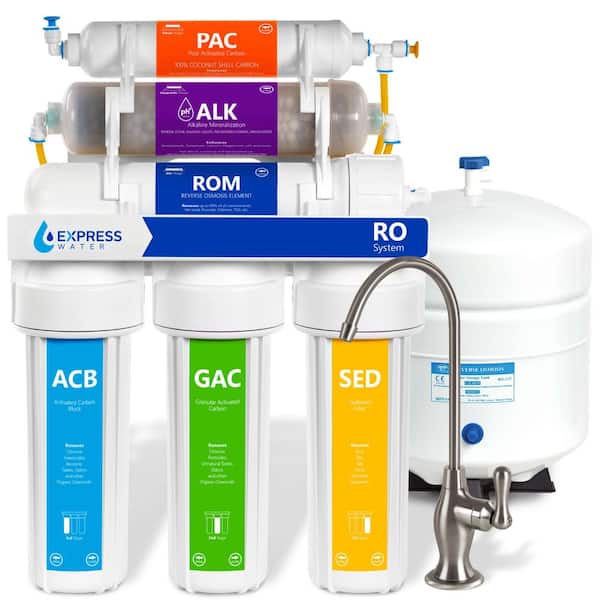
Express Water Under-Sink Reverse Osmosis System with Alkaline Remineralization and UV Sterilization — 8.5/10
A strong-value under-sink RO system for buyers who want comprehensive filtration with alkaline remineralization and UV sterilization, though it is more involved to install and maintain than simpler systems.
We may earn a commission from qualifying purchases made through links on this page.
Overview
The Express Water Under-Sink Reverse Osmosis System is a high-capacity, 10-stage under-sink reverse osmosis system designed for homeowners who want medical-grade purity and pH-balanced drinking water. By combining RO technology with alkaline remineralization and UV sterilization, it provides a comprehensive solution for removing dissolved solids and biological contaminants directly beneath the kitchen sink. Its main appeal is breadth: instead of stopping at a standard sediment, carbon, and RO membrane configuration, this model adds alkaline remineralization and a UV sterilization stage for a more complete filtration approach.
The system combines multiple filtration stages with a faucet and tank for point-of-use drinking water. By integrating these diverse technologies, it addresses not just common impurities like chlorine and sediment, but also targets dissolved solids and biological contaminants that standard carbon filters typically miss.
Looking for medical-grade purity? Check the current price of the Express Water RO system here.
That makes the Express Water Under-Sink Reverse Osmosis System with Alkaline Remineralization and UV Sterilization especially attractive for health-focused buyers, households concerned about taste and odor, and anyone who wants filtered water with some minerals added back after reverse osmosis.
The alkaline stage is meant to raise pH and improve the character of RO water, which can otherwise taste flat or slightly acidic to some users.
This is not the simplest under-sink filter to own or maintain, and it is more involved than a basic 3-stage or 5-stage system. However, for those who prioritize water purity and alkalinity over ease of installation, it provides a comprehensive solution. If you want a feature-rich reverse osmosis setup at a competitive price point, the Express Water Under-Sink Reverse Osmosis System with Alkaline Remineralization and UV Sterilization offers a compelling balance of filtration depth, convenience, and value.
Looking for a comprehensive filtration setup? Check the current price of the Express Water RO system here.
Key Features
The Express Water Under-Sink Reverse Osmosis System with Alkaline Remineralization and UV Sterilization (ROALK10DCG) uses a multi-stage layout that goes beyond standard under-sink RO systems to provide laboratory-grade purity.
The RO membrane is the core filtration stage, utilizing a semi-permeable membrane to reduce many dissolved contaminants and heavy metals that typical carbon filters cannot address. For those in hard-water areas, pairing this with a GE GXWH40L whole house water filter, a Fleck Digital Metered Water Softener (or check our comprehensive guide on whole-house water filtration) or an Aquasana SimplySoft Salt-Free Conditioner can help prevent scale buildup and extend the membrane's lifespan.
The remineralization stage is designed to add essential minerals like calcium and magnesium back into the water and raise the pH level after the RO process.
A UV lamp is included to neutralize biological contaminants such as bacteria and viruses, adding an critical layer of protection beyond mechanical filtration.
The system is engineered for a discreet point-of-use installation under a kitchen sink, keeping the bulky components hidden while providing a dedicated tap for drinking water.
The Express Water Under-Sink Reverse Osmosis System with Alkaline Remineralization and UV Sterilization (ROALK10DCG) is positioned as a high-tier alternative to basic 5- or 6-stage RO systems.
Specifications
| Feature | Value |
|---|---|
| Product Name | Express Water Under-Sink Reverse Osmosis System with Alkaline Remineralization and UV Sterilization (ROALK10DCG) |
| Model Number | ROALK10DCG |
| Category | Water Softeners & Filters |
| System Type | Under-sink reverse osmosis drinking water filtration system |
| Filtration Stages | 10-stage filtration |
| Core Technologies | Sediment, Carbon, RO Membrane, Alkaline Remineralization, UV Sterilization |
| Alkaline Remineralization | Yes; raises pH and adds minerals for taste/health |
| UV Sterilization | Yes; included lamp for biological contaminants |
| Installation Location | Under sink / point-of-use |
| Best For | Comprehensive RO filtration with pH balance and UV safety |
| Maintenance Needs | Periodic filter replacements and UV lamp replacement |
| Not Ideal For | Renters or those seeking zero-maintenance simplicity |
Pros & Cons
Pros
- Comprehensive 10-stage filtration setup for maximum purity
- Alkaline remineralization prevents "flat" tasting water and improves pH
- UV sterilization adds critical protection against biological contaminants
- Significantly more capable than basic 5- or 6-stage RO systems
- Dedicated faucet ensures a clean, separate source for drinking water
- Competitive pricing for the amount of technology included
Cons
- More complex installation process compared to basic filters
- Higher ongoing maintenance costs due to the number of filter stages
- UV stage requires a power outlet under the sink
- Takes up significant cabinet space beneath the sink
- Produces wastewater (brine) during the RO process, as is standard for RO
Performance Analysis
The biggest performance strength of the Express Water Under-Sink Reverse Osmosis System with Alkaline Remineralization and UV Sterilization (ROALK10DCG) is its layered approach. Most systems focus on one or two areas—either taste (carbon) or purity (RO). This system attempts to solve for everything. Sediment filtration captures larger debris; carbon stages target chemical tastes and odors; the RO membrane strips away dissolved solids; the alkaline stage restores balance; and the UV lamp provides a final biological safeguard.
The ROALK10DCG’s multi-stage layout is specifically designed to improve taste and reduce dissolved impurities. For everyday use, this combination makes the system feel like a major upgrade over pitcher filters or faucet-mounted attachments. The water quality is remarkably crisp, and the remineralization stage ensures that the water doesn't feel "empty" or stripped, which is a common complaint with high-purity RO systems.
The UV stage is a meaningful addition for those living in areas with inconsistent water quality or those using well water. However, it is important to understand that UV treatment is a "polishing" step. It relies on the water being clear enough for the UV light to penetrate (which is why the preceding filtration stages are so important). If the pre-filters are clogged or bypassed, the UV efficacy can drop. When installed correctly, it provides a level of peace of mind that mechanical filters alone cannot offer, similar to the protection found in a GE GXWH40L whole house water filter or a professional Culligan filtration setup.
The main performance tradeoff is complexity. A 10-stage system has more potential points of failure—more fittings to tighten and more cartridges to track. Water pressure can also be a factor; if your home's incoming pressure is very low, the RO membrane may produce water more slowly, though the included storage tank mitigates this by ensuring a steady supply is always available at the faucet.
Deep Dive: How the 10-Stage Process Works
To understand why the Express Water Under-Sink Reverse Osmosis System with Alkaline Remineralization and UV Sterilization (ROALK10DCG) is positioned as a premium option, it is helpful to break down the journey of a single drop of water through this system.
Stage 1-3: Pre-Filtration (The Guard)
Before water even reaches the RO membrane, it passes through sediment and carbon filters. Sediment filters remove sand, silt, and rust that could clog the membrane. For those with very sediment-heavy water, installing a Culligan Whole House Heavy-Duty Sediment Water Filter System (detailed in our Culligan WH-HD200-C buying guide) before the RO system can significantly extend the lifespan of the internal cartridges. The carbon stages are critical because chlorine can actually degrade the RO membrane over time. By removing chlorine and organic chemicals early, the system extends the life of its most expensive component.
Stage 4: The RO Membrane (The Purifier)
This is the heart of the system. Using high pressure, water is pushed through a semi-permeable membrane. This process separates "pure" water from "concentrate" (waste water containing the filtered contaminants). This stage is what removes arsenic, lead, fluoride, and other dissolved solids.
Stage 5-7: Post-Filtration and Polishing
Water from the RO membrane is stored in the pressurized tank. As it leaves the tank toward your faucet, it passes through additional polishing filters that remove any lingering tastes or odors that may have developed while the water sat in the storage tank.
Stage 8-9: Alkaline Remineralization (The Balancer)
Pure RO water is often slightly acidic because it lacks minerals. This system passes the water through a remineralization cartridge that adds small amounts of calcium, magnesium, and potassium. This not only brings the pH back up to an alkaline level but also gives the water a more natural, refreshing taste.
Stage 10: UV Sterilization (The Final Shield)
Just before the water exits the faucet, it is exposed to a UV-C light. This light disrupts the DNA of microorganisms, effectively neutralizing bacteria and viruses. This is the "last line of defense," ensuring that the water is biologically safe.
Installation and Setup Experience
Installing the Express Water Under-Sink Reverse Osmosis System with Alkaline Remineralization and UV Sterilization (ROALK10DCG) is a project that requires a bit of patience and a basic set of tools. Unlike "twist-and-click" modern tankless systems, this is a traditional RO setup with a variety of tubing, a storage tank, and a dedicated faucet.
Physical Space Requirements
The first thing buyers should note is the footprint. Between the filter housings, the storage tank, and the UV ballast, this system takes up a significant portion of the under-sink area. If you have a very small cabinet or a garbage disposal that already occupies most of the space, you will need to plan your layout carefully. We recommend clearing the area entirely before starting the installation to ensure you can arrange the components without restricting water flow or creating kinks in the tubing.
The Drilling Process
You will need to drill a hole in your countertop or sink rim to install the dedicated RO faucet. If you have a granite or quartz countertop, you may need a diamond-tipped drill bit. If you are upgrading your utility area or considering a new water heater (see our A.O. Smith EES-40 review), or just upgrading your sink area, see our MOEN Chateau 7430 review or buying guide or check out the Pfister Stellen budget faucet review for more budget-friendly options. The kit typically includes the necessary hardware, but ensure you have a steady hand to avoid cracking the surface. If you prefer not to drill into your countertop, some users install the faucet on the sink ledge or use an existing soap dispenser hole if one is available. (For similar high-quality fixture installations in other rooms, see our Delta Essa bathroom guide).
Plumbing Connections
The system connects to your cold water line using a T-adapter (if you need heavy-duty fittings, refer to our SharkBite 1/2-inch coupling installation guide). Once connected, the water flows through the stages into the tank. A separate "drain line" must be connected to your sink's drain pipe to allow the RO waste water to exit. This requires drilling a small hole in the drain pipe and using the provided connector. If you are uncomfortable with plumbing, this is the stage where hiring a professional is recommended, as a leak in the drain line can lead to significant cabinet damage over time.
Powering the UV Lamp
Because this model includes UV sterilization, you will need an electrical outlet under the sink. Most kitchens have one for the garbage disposal or dishwasher; if yours doesn't, you'll need an extension or a new outlet to power the UV ballast. The UV system is a "plug-and-play" electronic component, but the cable management must be handled carefully to avoid water splashes on the power strip or outlet.
Maintenance and Long-Term Ownership
Maintaining the Express Water Under-Sink Reverse Osmosis System with Alkaline Remineralization and UV Sterilization (ROALK10DCG) is more complex than a simple pitcher filter, but it is a predictable process. Because there are 10 stages, you are managing multiple filter lifetimes simultaneously.
Filter Replacement Schedule
Typically, the pre-filters (sediment and carbon) need replacing every 6 months to prevent the RO membrane from clogging. The RO membrane itself generally lasts 12 to 24 months depending on your incoming water quality. The alkaline remineralization filter and the UV lamp have their own specific lifespans—usually 12 months. Neglecting the UV lamp replacement can lead to a loss of biological protection, even if the water looks clear.
Managing the Tank
The pressurized storage tank is essential for immediate water delivery, but it can occasionally lose pressure. If you notice the flow at the faucet slowing down even when the tank is full, you may need to repressurize the tank using a bicycle pump or air compressor through the Schrader valve located on the tank. This is a common maintenance task for all tank-based RO systems.
Cost of Ownership
When calculating the cost, remember that you aren't just buying one filter; you are buying a suite of cartridges. Whi