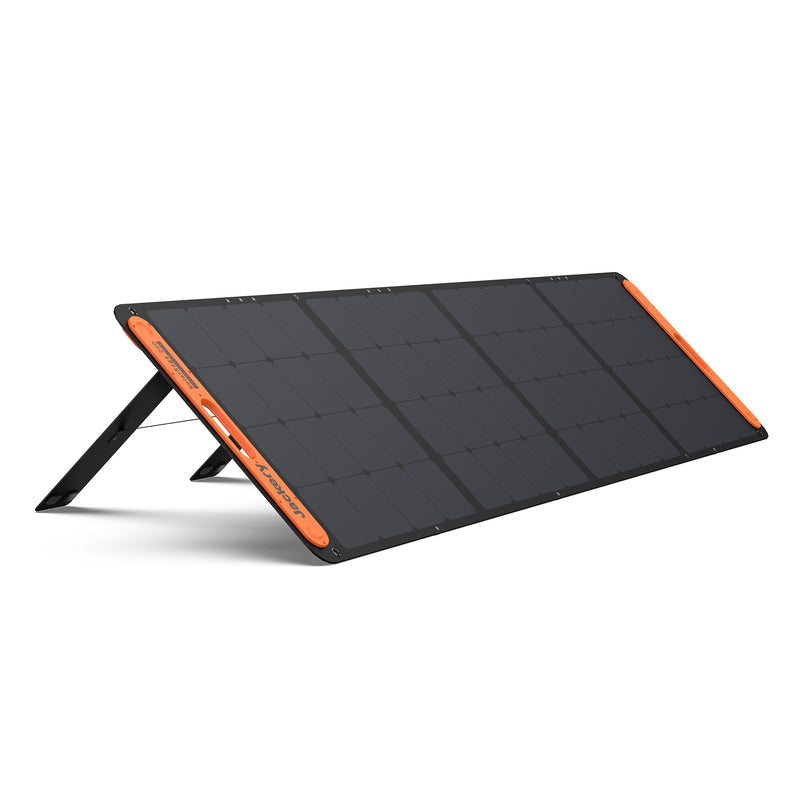
When searching for the best portable solar panels for off-grid power and emergency backup, the Jackery SolarSaga series stands out as a streamlined, plug-and-play charging solution. Designed specifically for the Jackery Explorer lineup, these panels provide a reliable way to maintain power during outages or while camping. Ranging from compact 40W panels to the high-output Jackery SolarSaga 200W Foldable Bifacial Portable Solar Panel—widely considered the gold standard for high-efficiency portable solar charging for home backup and outdoor use. These foldable monocrystalline panels are the ideal power solution for campers, van lifers, and those investing in emergency home preparedness. While they carry a premium over generic panels, the integration and build quality make them the gold standard for effortless off-grid power. This reliability is critical for anyone building a home resilience system to ensure critical electronics stay online during prolonged outages. For those securing their basement, a battery backup sump pump guide is a critical companion to a solar power strategy. For a complete security layer, consider integrating an advanced home security system into your backup plan. For those planning full-home backups, integrating portable solar with a battery backup sump pump system or reviewing submersible utility pumps as part of a resilience plan is a great starting point.
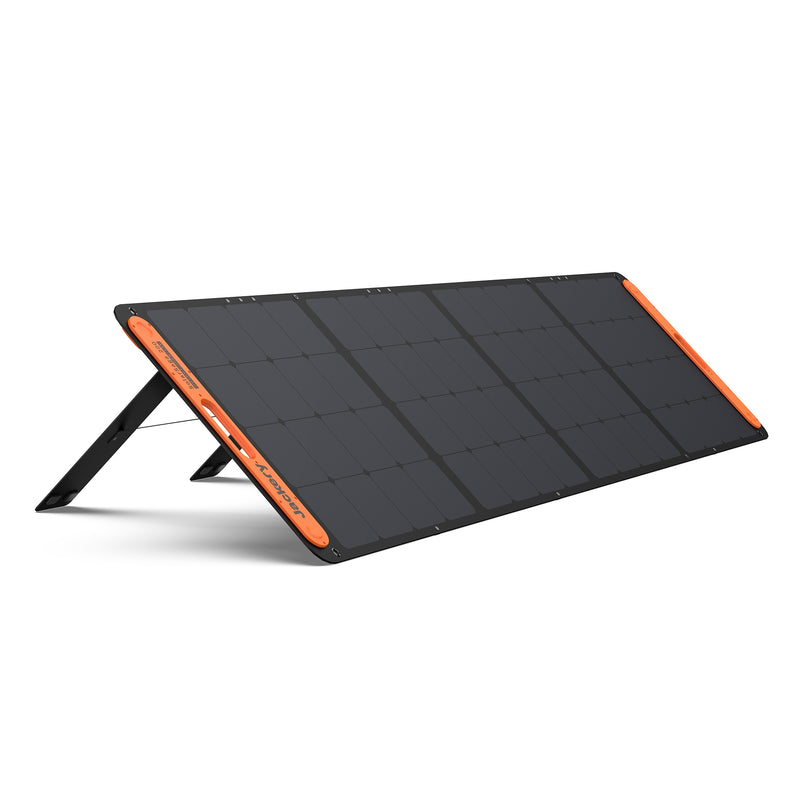
Top Pick: Jackery SolarSaga 200W Foldable Bifacial Portable Solar Panel
Score: 9.5/10 — The most efficient and fastest-charging portable option in the lineup, offering dual-sided energy absorption for maximum power gain.
Jackery SolarSaga 200W Foldable Bifacial Portable Solar Panel
The Jackery SolarSaga 200W is the flagship of the portable solar line, engineered specifically for users who need to recharge high-capacity power stations—such as the Jackery Explorer 1000 Portable Power Station or the Jackery Explorer 2000 Plus (or high-capacity alternatives like the Bluetti Expandable Portable Power Station)—in the shortest time possible.
Unlike traditional monofacial panels that only capture light from the top, this bifacial model is designed to capture sunlight from both the front and the back. This technology allows the panel to utilize reflected light from the ground (albedo), significantly increasing the total energy yield in bright environments.
Built with high-efficiency monocrystalline silicon cells, the SolarSaga 200W is encapsulated in a durable ETFE laminate. This material is superior to cheaper PET coatings as it is more resistant to heat, UV degradation, and physical wear, ensuring the panel maintains its efficiency over years of folding and unfolding. The panel features a robust integrated kickstand that allows for precise angling toward the sun, which is critical for maximizing the wattage output throughout the day.
For the user, the experience is entirely plug-and-play. There is no need to install complex charge controllers or strip wires; the panel connects directly to the Jackery power station's input. With an IP67 rating on its waterproof connectors, it is built to withstand the rigors of outdoor use, though the panel itself should be treated as splash-resistant. It is the ideal choice for those who prioritize speed and reliability over the ultra-lightweight profiles of the smaller 40W or 100W models.
| Specification | Detail |
|---|---|
| Model Number | SolarSaga 200 |
| Cell Type | Bifacial Monocrystalline Silicon |
| Peak Power Output | 200 Watts |
| Lamination | ETFE |
| Waterproof Rating | IP67 Connectors |
| Weight | Approx. 17 lbs |
| Compatibility | Jackery Explorer Series |
Strengths
- Bifacial technology increases energy capture from reflected light
- High-grade ETFE lamination prevents peeling and degradation
- Seamless integration with Jackery power stations
- Strong integrated kickstand for optimal sun tracking
Trade-offs
- Heavier and bulkier than the 100W version
- Higher price point compared to standard monofacial panels
- Proprietary connectors make third-party use require adapters
The Science of Portable Solar: How SolarSaga Works
To understand why the SolarSaga 200W stands out, it is important to understand the physics of portable solar. Most portable panels use Monocrystalline Silicon. For those integrating these into a larger home setup, understanding proper electrical safety and how to and how to replace a circuit breaker safely when integrating backup power is essential for safety, especially when coordinating with Eaton AFCI circuit breakers in a mixed-power home setup. The silicon is sliced from a single crystal, which allows electrons more room to move, making it significantly more efficient than Polycrystalline or Amorphous silicon. Jackery enhances this by using ETFE (Ethylene Tetrafluoroethylene). While many budget panels use PET plastic, which clouds over time and peels, ETFE is a fluoropolymer that is highly transparent and heat-resistant, ensuring the cells receive maximum photons for a longer lifespan.
The "Bifacial" aspect of the 200W model is a game-changer for off-grid users.
For those planning broader home energy improvements, comparing efficient hardware is key to optimizing home resilience and climate control. A standard panel only captures direct sunlight. A bifacial panel captures direct light on the front and albedo light (light reflected off the sand, snow, or concrete) on the back. While the back-side gain is typically lower than the front, in high-reflectivity environments like a white sandy beach or a snowy campsite, this can increase total wattage by 5% to 25% over a standard 200W panel.The final piece of the puzzle is the MPPT (Maximum Power Point Tracking). The SolarSaga panels do not have a built-in controller; instead, they rely on the MPPT controller inside the Jackery Explorer power station. The MPPT acts as a sophisticated DC-to-DC converter that constantly adjusts the electrical load to ensure the panel is operating at its "peak power point" (a critical component for anyone auditing their home battery backup needs or reviewing a battery backup sump pump for storms) regardless of whether the sun is partially blocked by a cloud or the angle is slightly off. Without MPPT, a panel might only operate at 60-70% of its rated capacity; with it, you squeeze every possible watt out of the silicon.
Furthermore, the internal wiring of the SolarSaga 200W is optimized to minimize voltage drop (a key principle when planning DC breaker setups for off-grid power) (similar to managing load in AFCI circuit breaker panels). In lower-quality panels, thin gauge wiring can lead to heat buildup and energy loss before the current even reaches the cable. Jackery utilizes high-conductivity wiring and reinforced junctions to ensure that the 200W generated at the cell surface translates into actual charging power at the battery terminal.
Comprehensive Buyer's Guide: Choosing Your Wattage
Selecting the right panel depends entirely on your energy budget—how many watt-hours (Wh) you consume per day versus how many hours of peak sunlight you have available. A common mistake is buying a panel that is too small for the battery, leading to charge times that span several days.
Low-Energy Users (The Minimalists)
If your primary goal is keeping a smartphone, a tablet, and a small LED lantern running, the 40W or 80W options are sufficient. These are lightweight and can be clipped to a backpack or placed on a car dashboard. They pair best with the Jackery Explorer series, specifically the Jackery Explorer 1000 Portable Power Station. However, be aware that these smaller panels are highly susceptible to "voltage drop" if they are partially shaded. For the minimalist, the priority is portability, and the lower wattage is a fair trade for the ability to carry the system in a standard daypack.
If you need more headroom for growth, the Jackery SolarSaga 200W Foldable Bifacial Portable Solar Panel offers the best long-term value.
Mid-Range Users (The Weekend Campers)
The 100W panel is the industry standard for a reason. It provides a balance between portability and speed. For a user with an Explorer 500, a 100W panel can replenish the battery in about one to two full days of sun. It is the best choice for those who move camp every few days and cannot afford a massive, heavy gear footprint. It offers enough "oomph" to handle a small 12V fridge for a few hours without draining the core battery, making it the sweet spot for car camping and short-term excursions.
High-Demand Users (The Van Lifers and Home Backup)
For those running portable fridges, CPAP machines, or high-powered laptops, the Jackery SolarSaga 200W Foldable Bifacial Portable Solar Panel is the only logical choice.
For maximum storage, pair it with the Jackery Explorer 2000 Plus. If you are managing larger loads, such as a mini-split heat pump, calculating your total daily watt-hour requirement is essential. If you're scaling up your power needs, exploring a high-capacity battery backup sump pump system or assessing storm-ready battery backups for critical home infrastructure can help you determine the right capacity for your home. When paired with the Jackery Explorer 2000 Plus, the 200W panel significantly cuts down the "down-time" of the battery. Because high-capacity stations like the EcoFlow Delta 2 Portable Power Station or the Delta 2 Max have more "room" for energy, using a small panel is like trying to fill a swimming pool with a garden hose. For those considering alternatives, the EcoFlow DELTA 2 Portable Power Station 1024Wh LiFePO4 is another high-efficiency option for solar pairing. The 200W model provides the necessary "flow" to make solar viable for long-term off-grid living, especially when managing water systems with high-performance submersible utility pumps. If you are using the system for emergency home backup—such as powering a battery backup sump pump during a storm—the 200W panel ensures that you can recover your battery capacity quickly during the limited window of daylight hours following a storm.For the highest capacity setup, we recommend the Jackery Explorer 2000 Plus for maximum solar intake.
Doubling your input wattage is the only way to achieve a "true" 24-hour power cycle where you generate more than you consume.Setup, Optimization, and Field Maintenance
Getting 200W of power from a 200W panel is rarely as simple as unfolding it. Environmental factors play a massive role in efficiency. To get the most out of your investment, follow these optimization strategies.
Optimal Positioning (The 90-Degree Rule)
The goal is to have the sun's rays hit the panel surface at a perpendicular (90-degree) angle. If the panel is lying flat on the ground, you are losing a significant percentage of potential energy, especially in winter when the sun is lower in the sky. Use the integrated kickstand to tilt the panel. As the sun moves throughout the day, you should reposition the panel every 60 to 90 minutes. This "active tracking" can increase your daily harvest by up to 30% compared to a "set it and forget it" approach. In a pinch, propping the panel up against a rock or a vehicle tire can help achieve this angle.
Managing Temperature and Airflow
Solar panels actually become less efficient as they get hotter. This is a paradox of photovoltaic cells: they need light, but they hate heat. If you are using the SolarSaga 200W on a scorching 100°F day, try to ensure there is a gap of a few inches between the panel and the ground to allow airflow. If the panel is resting on hot asphalt, the heat will soak into the cells, increasing internal resistance and dropping your wattage output. Airflow helps the cells maintain a lower operating temperature, which keeps the voltage stable and the efficiency high.
Cleaning and Surface Care
Dust, pollen, and bird droppings create "micro-shading." Because the cells in a solar panel are often wired in series, a single dirty spot can create a bottleneck that limits the current for the entire string. A layer of dust as thin as a few microns can drop output by 5-10%.
- Daily: Use a soft-bristled brush or a dry microfiber cloth to swipe away loose dust.
- Weekly: Use a damp cloth with water only. Avoid using Windex or abrasive chemicals, as these can strip the ETFE coating or leave a residue that attracts more dust.
- Storage: When not in use, store the panel in a cool, dry place. Avoid leaving it folded in a hot car for weeks at a time, as extreme heat cycles can eventually stress the fold creases.
Comparison: SolarSaga 200W vs. The Competition
When comparing the SolarSaga 200W to generic MC4 panels or other brand-name portable arrays, the trade-off usually comes down to Convenience vs. Customization.
| Feature | Jackery SolarSaga 200W | Generic MC4 Panels | Rigid Rooftop Panels |
|---|---|---|---|
| Setup Time | < 1 Minute | 5-10 Minutes | Permanent |
| Portability | High (Foldable) | Medium | None |
| Efficiency | Very High (Bifacial) | Variable | High |
| Integration | Native Plug-and-Play | Requires Adapters | Complex Wiring |
| Durability | High (ETFE) | Low to Medium (PET)< |